Somewhere in every vendor contract is a clause called limitation of liability. It sets the maximum the vendor will ever owe you if something goes wrong, and that number is almost always tied to what you paid them last year, not to what the problem actually costs you.
If your annual contract is $36,000, that may be the most you can ever recover, no matter how bad the failure is.
Most companies assume a vendor who causes real damage will cover it. That assumption feels reasonable. It’s often wrong.
What the Contract Actually Says
Buried near the end of most vendor agreements is that same section, limitation of liability. Most buyers never look at it until after the contract is signed.
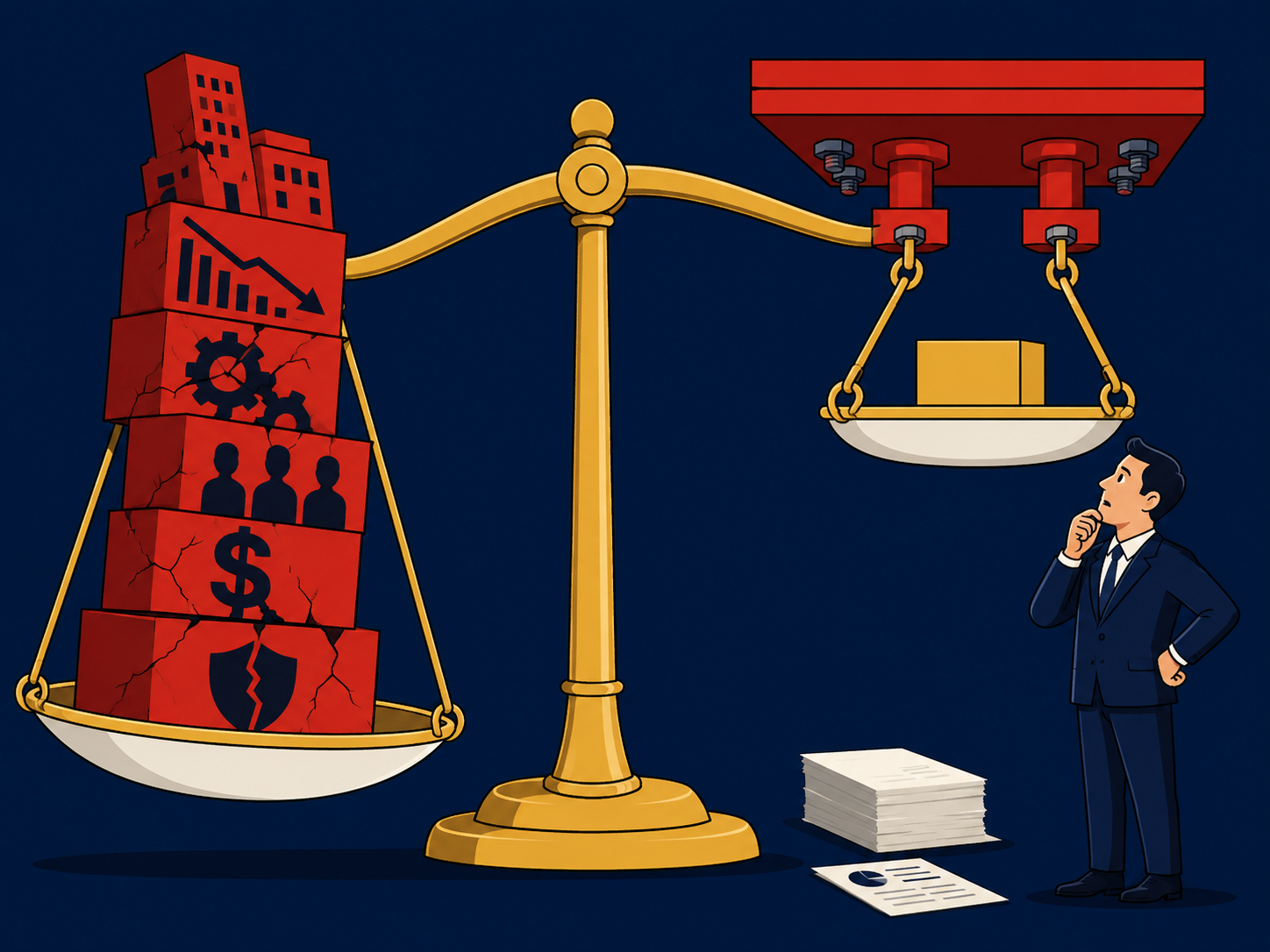
Here is what that looks like in practice. Your ERP vendor pushes a software update that corrupts financial data two weeks before quarter close. Outside consultants cost $180,000 to fix. Internal labor to rebuild records manually runs another $120,000. Audit and reporting delays add $60,000. Operational disruption accounts for another $40,000. The total business impact comes to approximately $400,000.
The maximum the vendor owes under a standard contract is $36,000.
You absorb everything above that number. The vendor caused the problem. The contract limits what they owe you to the fees you already paid them.
Which Contracts Actually Matter
Not every vendor contract deserves the same scrutiny. The cap only matters if the vendor can actually hurt you.
Think in terms of business impact, not contract value. Some of the smallest software subscriptions support the most critical business processes. An $800 a month identity provider can matter far more than a $150,000 collaboration platform if it fails at the wrong moment.
Start with vendors whose failure would stop your business or create serious financial, legal, or reputational damage. That typically means ERP and financial systems, identity and access management platforms, payment processors, cloud hosting providers, backup and recovery systems, and core security platforms. A failure in any of these has consequences that extend well beyond a cap based on a year of fees.
A low-stakes SaaS subscription is a different conversation. Spending legal hours negotiating liability on a survey tool or a whiteboard app is rarely worth the effort. Focus the scrutiny where the exposure is real.
What to Check Beyond the Cap
Once you have identified the vendors that could cause serious damage, the cap amount is only the starting point.
Check whether the cap applies to all claims or whether certain types of failures are handled under separate terms. Data breaches, confidentiality violations, and IP infringement are sometimes carved out and subject to higher or uncapped limits. If those carve-outs exist in your contract, they matter more than the general ceiling.
Check which types of damages are excluded entirely. Many vendor contracts exclude lost revenue, lost data, and reputational harm regardless of the cap. Even if you reach the liability ceiling, what you can actually claim may be a fraction of what you lost.
Also check whether the contract requires the vendor to carry cyber or errors and omissions insurance. Insurance does not automatically increase what you can recover under the contract, but it does affect whether the vendor has the financial ability to satisfy obligations that fall outside or alongside the cap.
Before your next renewal, take fifteen minutes to run this exercise. Find your three most business-critical vendors. Write down each liability cap. Estimate what a serious failure would cost your business for each one. Compare the numbers. Most organizations find a meaningful gap immediately. The question is whether they find it before or after something goes wrong.
What Experienced Buyers Actually Negotiate
Most buyers who negotiate liability caps ask for a higher number. That is a reasonable place to start. It is not where experienced buyers stop.
A more effective approach is negotiating different caps for different categories of risk rather than trying to raise the general ceiling across the board. General service failures often stay at 12 months of fees because vendors will accept that framing more readily. Data breaches and confidentiality violations are more likely to be negotiated to two or three times annual fees. IP infringement claims and gross negligence often end up as uncapped obligations because the potential exposure in those scenarios is genuinely unpredictable and both sides know it.
Vendors are generally more willing to accept higher limits on specific, lower-frequency risks than to raise the ceiling that applies to every possible claim. The buyer gets more meaningful protection where the real exposure lives. The vendor limits the scenarios where a higher cap creates open-ended exposure.
Pay attention to how the vendor responds when you raise the topic. Standard templates sometimes have more flexibility than the sales team suggests. Legal teams sometimes trade liability terms for price adjustments or stronger SLAs. The negotiation itself is information.
If the Vendor Will Not Move
Not every vendor will negotiate the cap, particularly smaller SaaS companies with standardized contracts across thousands of customers. When that is the case, the contract terms are fixed but the risk management is not.
Shorter contract terms limit how long you are committed to a relationship where the risk is not shared the way you would prefer. Stronger cyber and errors and omissions insurance coverage on your end fills gaps the vendor’s contract does not cover. Independent backups and documented disaster recovery processes reduce the damage a vendor failure can cause. Exit planning developed before you need it means you are making clear decisions rather than urgent ones when something goes wrong.
The contract is one control. It is not the only one. Buyers who understand the cap tend to make better decisions about the others.
Before Your Next Renewal
Find the limitation of liability section in your most critical vendor contracts. Write down the cap. Then ask whether that number would make a meaningful difference if the vendor caused your worst realistic failure scenario.
If the answer is yes, you are in a reasonable position. If the cap is a fraction of your real exposure, you are carrying risk the vendor is not, and you made that decision without knowing it.
A renewal is the moment to change that. Before you re-sign, you still have the option to negotiate. Most buyers re-sign the same terms because nobody flagged the gap the first time. That changes when someone on your side is reading the contract before you do.
We compare your liability cap against your actual business exposure and tell you where the contract leaves you carrying more risk than you realize. We know what caps look like across the market and what is realistic to push for before you sign again.