Your Security Stack Has 52 Tools. Is It Actually Making You Safer?
June 2, 2026

Most organizations have a process for buying security tools. Almost none have a process for removing them.
That’s not an observation about vendor sales tactics. It’s an indictment of how security programs actually operate. The stack doesn’t become bloated because someone made a bad decision. It becomes bloated because nobody ever went back to revisit the good ones. Every tool earned its place when it was purchased. Nobody checked whether it still earned its place two years later.
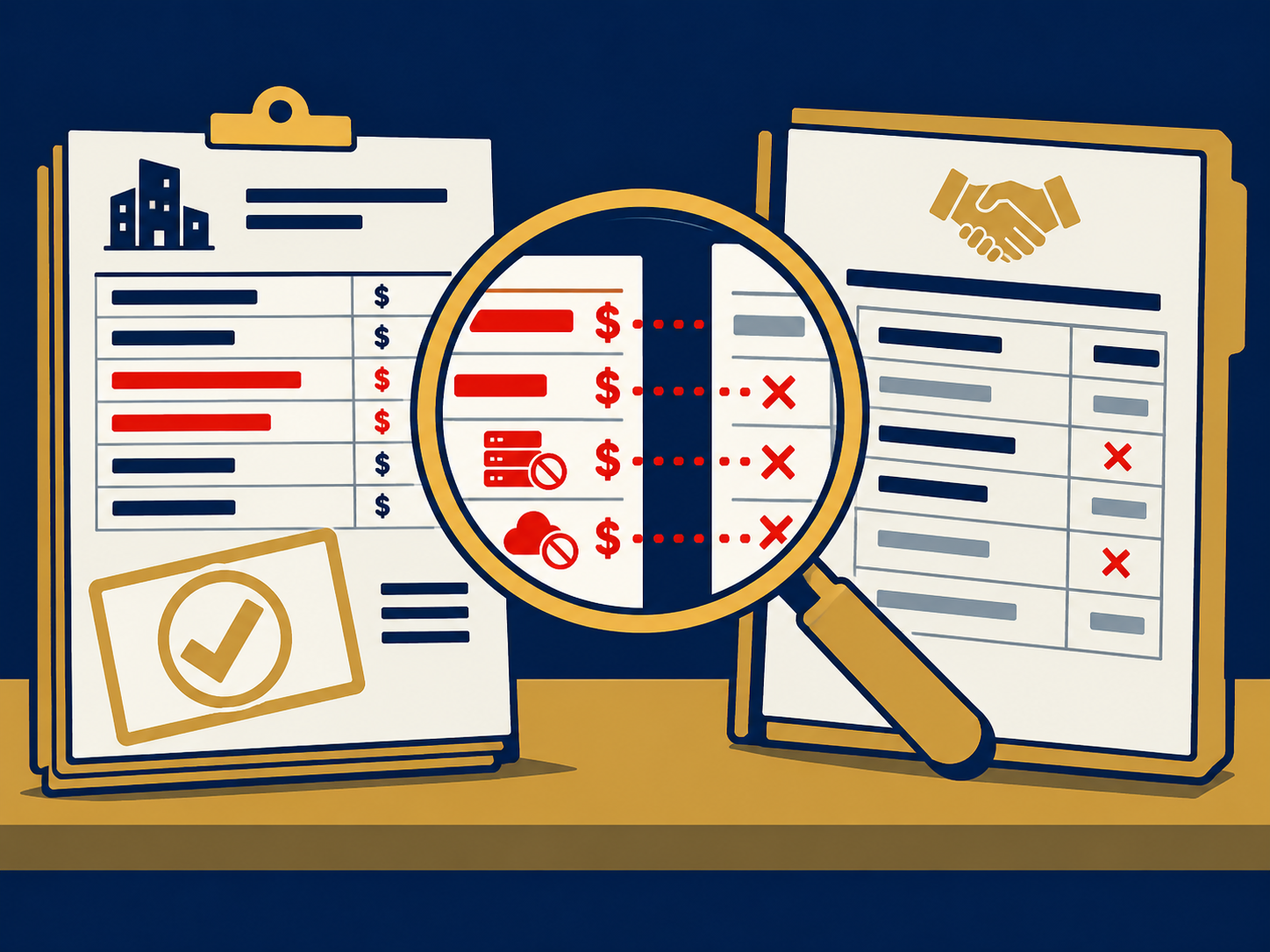
The result: the average enterprise owns 52 security tools and uses 44% of what it purchased (Panaseer, 2023 Security Leaders Peer Report). That’s not a vendor problem. That’s an architectural problem — and it compounds every year the stack grows without a corresponding process for removing what no longer belongs.
The question worth asking before any consolidation conversation: is your security stack growing faster than your security capability?
Why stacks accumulate
Security purchasing doesn’t follow a roadmap. It follows incidents.
A breach scare adds an endpoint tool. A compliance audit requires a new logging platform. A cyber insurance renewal mandates MFA and vulnerability scanning. Each purchase was defensible in the moment. Each one made sense given the pressure that triggered it. None of them were evaluated against what was already running.
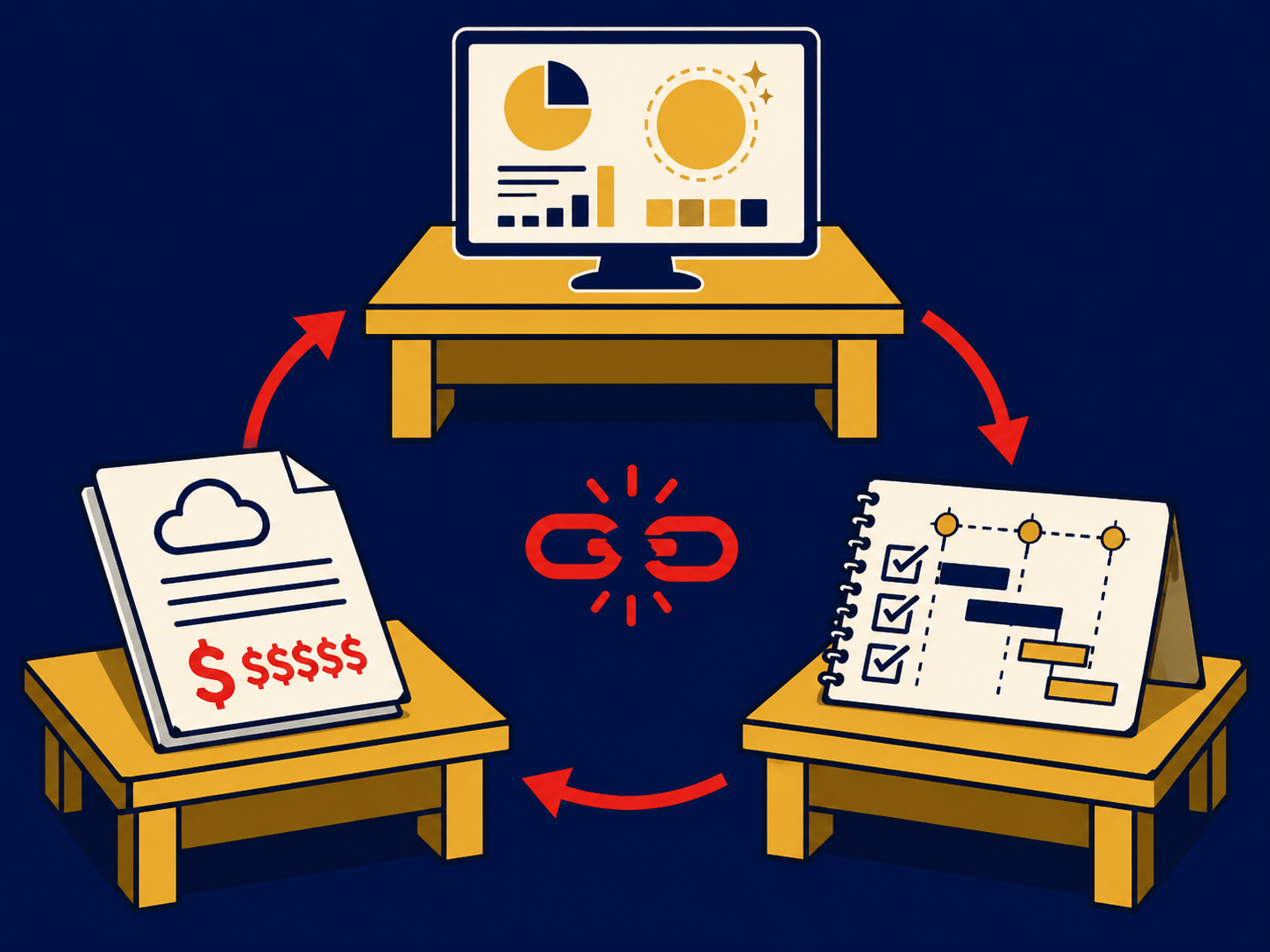
Over time, the stack becomes a record of every threat you were afraid of — not a coherent architecture designed to protect the business. Tools overlap. Alerts multiply. Nobody can tell you which product owns which outcome. And the team that was supposed to be running your security program is spending half its time managing integrations instead of investigating threats.
That’s not a security posture. That’s accumulated technical debt with a security budget attached to it.
The real cost of tool sprawl isn’t licensing. It’s analyst time.
The conversation around tool sprawl almost always focuses on licensing cost. That’s the wrong number to watch.
The real cost is analyst time. When the stack generates alerts across 20 or 30 platforms, the work of correlating those alerts — figuring out which ones matter, which are duplicates, which point to an actual incident — becomes the job. Not investigating threats. Managing signal noise.
Over-tooled environments develop tribal knowledge to compensate. The senior analyst knows that Tool A and Tool B fire simultaneously on the same event type, so you can ignore one. The junior analyst doesn’t know that. When the senior analyst leaves, that institutional knowledge walks out with them.
That’s fragility dressed up as process.
Five warning signs your stack is hurting your team
These aren’t theoretical. They’re patterns that show up consistently in environments where the stack has outgrown the team’s ability to operate it.
Your analysts spend more time correlating alerts than investigating incidents. If the work is predominantly triage — sorting signal from noise across multiple platforms — the stack is generating more friction than protection.
No one can explain which tool owns which outcome. Ask your team: if ransomware hit your environment tonight, which tool detects it, which tool contains it, which tool gives you the forensic record? If the answer involves more than two people and a long pause, ownership is unclear. Unclear ownership is a gap.
Multiple products generate alerts for the same event. Overlap isn’t redundancy. Redundancy means two independent systems can each catch what the other misses. Overlap means two systems are watching the same thing, generating duplicate work, and creating false assurance that gaps elsewhere are covered.
Your team trusts tribal knowledge more than dashboards. When experienced analysts work around the tooling rather than through it — because they’ve learned the tooling can’t be trusted — that’s not a people problem. That’s a signal that the stack isn’t doing what the purchase order said it would.
Every new security initiative requires another tool purchase. If the answer to every new threat category is “we need a tool for that,” the stack will keep growing — not because threats are new, but because existing tools can’t be configured to address them. That’s a coverage architecture problem, not a procurement problem.
What mature security teams do differently
The difference between a mature security program and an over-tooled one isn’t budget. It’s discipline around measurement and removal.
Mature teams measure outcomes, not tool count. They track mean time to detect, mean time to contain, mean time to recover — and they use those numbers to evaluate whether the stack is actually performing. A tool that doesn’t move those metrics doesn’t earn its renewal.
Mature teams map tools to outcomes. Every tool has an owner. Every tool has a defined purpose. Every tool has a success metric. When a tool can’t be mapped to an outcome the business cares about, it becomes a candidate for removal — not a renewal.
Mature teams consolidate deliberately. Not because a vendor suggested it. Because operational evidence supports it. The decision to consolidate follows an honest audit of what the current stack covers, where it doesn’t, and whether a consolidated platform closes those gaps or just reduces the vendor count.
And critically: mature teams remove tools. They have a process for it. They set a review cadence, they evaluate tools against current threat coverage and team capacity, and they retire what no longer belongs. This is the capability most organizations are missing entirely — and it’s the one that prevents the next 52-tool stack from accumulating five years from now.
The Security Stack Stress Test
Before any consolidation conversation — with a vendor or internally — run this against your current environment. Score each dimension 1 to 5. One means the capability is absent or broken. Five means it’s operating as designed.
Visibility — Can you see what’s happening across your environment in real time, with enough fidelity to distinguish noise from signal?
Response — When something is detected, can your team act on it quickly enough to contain the damage? Or does response depend on manual correlation across multiple platforms?
Ownership — Does every tool have a named owner and a defined outcome it’s responsible for? Or does ownership live in tribal knowledge and institutional memory?
Efficiency — Can your team realistically operate the stack at current headcount? Or is the stack sized for a team you don’t have?
Economics — Does the cost of each tool reflect the protection it actually provides — benchmarked against what the market charges, not what the vendor invoices?
A score of 20–25 means the stack is functioning. The question is whether it’s right-sized.
A score of 15–19 means there are operational gaps worth addressing before adding or removing anything.
A score below 15 means the stack is working against your team. Consolidation may help — but only after you understand which dimensions are failing and why.
The Stress Test doesn’t tell you what to buy. It tells you where the program is breaking down — which is the only honest starting point for a consolidation decision.
Consolidation: when it helps and when it doesn’t
Consolidation is the right answer when the primary problem is operational complexity. Too many consoles, too many agents, too many vendor relationships for a lean team to manage. In those environments, fewer platforms with broader coverage reduces management overhead and lets the team focus on outcomes.
Consolidation is the wrong answer when the primary problem is coverage gaps. Fewer tools with real gaps is worse than more tools with overlapping coverage. A consolidated platform that looks comprehensive in the demo may not cover your specific environment at your specific scale. That question doesn’t get answered in the demo. It gets answered in an honest coverage audit — before you sign, not after.
The question that separates the two: are we struggling to operate what we have, or are we struggling to cover what we need? The first problem is solved by consolidation. The second problem gets worse if you consolidate onto the wrong platform.
If a vendor is driving the consolidation conversation, understand what they’re not saying: consolidation moves you from a competitive best-of-breed environment — where each vendor earns your renewal — into a platform environment where switching costs compound every year you’re inside. That’s not an argument against consolidation. It’s an argument for going in with your eyes open and your exit terms negotiated before you commit.
The question worth sitting with
Most organizations know how to buy security tools. Almost none know how to retire them.
If that’s true of your program — if the stack grew reactively and nobody has a process for evaluating what no longer belongs — then the consolidation conversation is premature. The first conversation is an honest audit of what you have, what it covers, and what the Stress Test reveals about where the program is actually breaking down.
That conversation is worth having before a vendor frames it for you.
If vendor sprawl is what’s forcing this decision right now, this is where to start — it covers what’s actually at stake when the stack has grown past what your team can manage, and what independent representation changes about how you approach it.
This applies to you right now if:
You’re managing a security stack that grew reactively and you’re not certain what it actually covers. Or a consolidation proposal is on the table and nobody has run an independent audit of whether the platform closes your gaps or just closes your vendor count.
Before vendors shape the direction — that’s when Strategy matters most.
No pitch. No prep. Just answers.