EP 214 Audio Full Episode
===
Ali Shaikh: [00:00:00] A good story on this one that I’ll tell you is when Viptela got acquired into Cisco, there was this conversation around would it be a separate business unit or not?
Max Clark: Mm-hmm.
Ali Shaikh: Right? Would it operate like Meraki, where Meraki has been able to operate quite independently for a very long time-
Max Clark: Mm-hmm …
Ali Shaikh: which has been very good for them.
At that point, it was a decision, no, it’s t- not. So people were, “Okay, but does that mean you’re gonna invest in it or is this going away?”
Max Clark: Mm-hmm.
Ali Shaikh: It definitely got integrated into the ecosystem, but it was a painful integration. There was a lot of lessons learned along the way. There were a lot of bumps along the way, and a lot of customers had to be re-won in terms of satisfaction because they were very unhappy with the experience they were getting.
Prices went up, and not by a little, by a lot. Mm-hmm. By a lot, a lot.
Max Clark: A week before we recorded this, Lumen agreed to buy Alkira for $475 million. Alkira was one of two leading independent network as a [00:01:00] service companies left in the enterprise market. With this deal, there’s basically one. Today’s guest runs it.
If you’re a buyer who signed a multi-year networking contract recently or is about to, this is for you. I’m Max Clark. This is Signed. My guest is Ali Sheikh, the CEO of Grafiant
Okay, let’s, let’s just, let’s, let’s dig into it and let’s, let’s get into the, the elephant. Let me start with the elephant, right? So, uh, when we’re recording this, what is it, like a week, week and a half, two weeks ago? Lumin announces they’re acquiring your competitor, right? Now, um, there’s a whole lot I’m, I’m fascinated with in this one, right?
And of course your background, you’ve been through, you’ve been through a few of these. Mm-hmm. You’ve been on the acq- you know, acquired side of things. And, and what’s interesting about it, and I’m gonna, I’m gonna kind of throw a bunch of stuff, but I’m gonna try to stay in a little bit of a linear thing here, right?[00:02:00]
What’s, first and foremost though, being on the side that’s been acquired, you got a lot of people that are now making commentary. Mm-hmm. You got a lot of presses trying to fill in some blanks. You’ve got the press releases from the companies themselves. What do outsiders get wrong about these acquisitions, and what’s going on on the inside as they’re happening?
Ali Shaikh: So first of all, I think I’m going to acknowledge how exciting and a great news it is. Yeah. Uh, Okira is part of the family.
Max Clark: Mm-hmm.
Ali Shaikh: Amir, Atif. Uh, Atif was the one who hired me into Viptela, so the history goes way back. They’re a sister company, and I never saw them as competitors. So it is a beautiful thing.
I’m very, very happy for their success and for the success of all the people at Okira. So it is a wonderful, wonderful thing to have happen. Now, to answer the question that you asked about what people don’t know, just the acquisition itself, when these things happen, it isn’t an immediate [00:03:00] kuma ya, wonderful, happy fun times.
A lot of work happens even as part of the acquisition. Just the act of going through an acquisition is itself a very painful ordeal. So a lot of what they are going through now is going to be integrating into Lumen’s ecosystem, and that is a very, very painful thing to go through when you are the acquiree, or, or the, the acquired- Mm
not the acquiree.
Max Clark: Yeah.
Ali Shaikh: And so that ends up being the thing that people really, you know, misunderstand. Oh, you huge windfall, lots of money coming in. The work that goes in, the work that now begins will be something tremendous. It will be several quarters of how do you align the go-to-market strategies on the seller side?
What happens to existing arrangements with partners and ecosystem players? How do you integrate this into the existing offerings? [00:04:00] Does it work with the existing offerings? Is it going to be a separate business unit? Does it get merged into existing business units? What does the engineering effort look like to first onboard the existing ecosystem inside a place like Lumen?
And then how do you integrate, and then how do you iterate and evolve? Very painful. And this, even when a tech company absorbs another tech company, it’s still difficult. So when a carrier absorbs a tech company, that comes with its own challenges, and I’m ignoring all the human element of the politics and the budgets and everything else.
Just the effort that goes into it, people really underestimate how much work it is.
Max Clark: If, if you’re a carrier agnostic networking company-
Ali Shaikh: Mm-hmm …
Max Clark: right, you know, and, and, you know, some sort of overlay, underlay, side lay, whatever, you know, the proper terminology is now, and then you’re acquired by a carrier Uh, that creates some friction as well, right?
And I, [00:05:00] I mean, again, we’re so… Like, the acquisition hasn’t closed yet, so I mean, to call this, like, early innings, but it, it’s more of like a, a f- a f- a foreshadowing, right? So how, you know, how does the go-to-market then evolve? You know, there’s the one side of it, which is, you know, how much additional network asset does Lumen sell off?
And it’s just this, like, reactionary, “Hey, we’ve sold off all of our prime network asset, and now we need to have something that we can sell as a network,” right? I’ve, I’ve thought a- I’ve talked about that with people. But, you know, from a, from a carrier-agnostic situation to then be acquired by a carrier who makes money by selling their own network, It’s…
Ali Shaikh: When you have to think about the network-as-a-service space as it’s evolving and how the carriers and vendors have to look at this, the carriers have to find a way to drive differentiation.
Max Clark: Mm-hmm.
Ali Shaikh: Because otherwise everybody has circuits, everybody has the same VLANs, everybody has the same MPLS, everybody has…
Technology-wise from a carrier, there’s [00:06:00] very little that differentiates them. One carrier is more or less the same as the other carrier, for good or bad reasons. When you are an end consumer, you are looking for the best possible service, and you don’t really care how it gets built or how it gets done.
When new software capabilities arise, when new vendors arise, a carrier really has to think about, does this help us deliver a better service or not? Now, for a vendor that has built a technology that was carrier agnostic and suddenly is getting absorbed by a carrier, that’s, that’s the harder part around…
Well, their motivation is very clear. They have to find something differentiated that nobody else has.
Max Clark: Mm-hmm.
Ali Shaikh: But when you’re the, the entity that’s being acquired, it does paint you into a difficult corner of, well, I had all these relationships with all these other carriers and all these other service providers and all these channel partners and people who are doing all these different things.
That’s [00:07:00] all up for debate now. The end statement that you have to rationalize is, does the acquisition and being part of this carrier and exclusively to this carrier in the long term
Max Clark: benefit the outcome that you want? Network as a service, right? Emerging- Mm-hmm … emerging space, right? And different people, uh, uh…
The, the thing that drives me crazy in tech and, is like how terminology starts, but people have different intentions behind that terminology. Absolutely. Or then they try to shoehorn into categories. SD-WAN. Like everybody- Yes … and their brother was an SD-WAN company, and like, what did that actually mean? But you look at the original, like, inception of, of SD-WAN, the intent, it was you’ve got a very expensive MPLS network that’s not very flexible for you, and we’re trying to, you know, whether it was create flexibility in, for your operations, or it was, um, you know, drive down costs for you because you’ve, you’ve got this really expensive network, or…
And I, I really believe a lot of it was just looking for an easier [00:08:00] way to operate and be a customer of these networks, right? And, and so when I, when I look at this acquisition, I’m like, how much of this is just trying to compete with the fact of, you know, carriers and telcos make it very difficult to do business with them?
Like the whole idea of like, just be easy to work with, you know, and so like then you interact with a telco, and you’re like, “Okay, great. Now what do we do?” Right?
Ali Shaikh: It, it’s so true. I think even when you look back to the SD-WAN aspect itself, the net- networking purists will say, well, it wasn’t even about the MPLS internet thing.
Max Clark: Mm-hmm.
Ali Shaikh: It was fundamentally, how do you separate control plane and data plane? How do you apply SDN principles? Because the classical MPLS VPNs, right, that’s tightly coupled control plane, data plane. This was like the first application of SDN principles to wide area networking. Now, the purists will say that’s what SD-WAN’s supposed to mean.
Max Clark: Mm-hmm.
Ali Shaikh: It became, how do you offset expensive MPLS circuits with commodity internet? And it drove the market based on that. So even when you have the [00:09:00] almost philosophical purity of what the tech was built on, it can still change, and the market can change definitions and terms in lots of different ways.
So when I see NaaS and what I see with the Alkira acquisition, I have to really recognize the carrier is fundamentally not even really thinking about what a network as a service definition is or what the principles were that drove Alkira in terms of how it got created or other NaaS companies. They are fundamentally looking at, we have a giant hole in our portfolio.
We have to sell something that is differentiated- Mm-hmm … from all the other carriers, and we’re gonna do it this way. Mm-hmm. So the NaaS definition, it’s so vague in this construct, right? Well, like what are they thinking about NaaS in this to begin with? And fundamentally, you can make the argument, because they’ve promoted it, they claim to already have NaaS.
So why would you buy NaaS if you already have NaaS? And the definition things can, can get murky that way.[00:10:00]
Max Clark: I, I, listen, I, I, you know, I don’t wanna, like, pick on telcos and carriers and big carriers, but there’s this, there’s this funny thing that happens, which is as you’re successful and you get big, and you have a lot of assets, you have a lot of infrastructure, you have a lot of equipment, you have a lot of-
Mm-hmm
like, you get to a point where you’re unmanageable, and you just, you just, you end up there because you’re too big, right? So then somebody starts smaller, and we’ve seen this with backbones all the time. Somebody can start up smaller, and they have less infrastructure, so they’re more nimble. They can respond faster.
They have more efficiency. You know, like, you’re just touching less devices. Mm-hmm. And maybe they start without all that legacy cruft, and they can say, “Oh, you know, we can build a, uh, config automation platform- Mm-hmm … that’s, you know, has a web interface to a database that’s gonna build a config and push it to a router.”
And then you go to the next step where it’s like, okay, now we’re gonna do this with, you know, um, you know, Terraform, and we’re gonna get into infrastructure as code, you know, kind of principles. Or we’re gonna use FlowSpec to push c- you know, config out. But it’s like you don’t have the legacy investment of, like, 10, 15 years’ worth of gear that you have to [00:11:00] maintain.
So I get that cycle. But then, you know, there’s the other side of it, which is, like, how hard is the network to deploy and manage? But then it’s just how hard are you to work with because you’re trying to force contract structures, right? Like, like, the, the f- initial push for NaaS was just like, “Hey, I’m not gonna force you into a five-year contract,” you know?
Ali Shaikh: And honestly, the point that you’re highlighting is what it’ll always come back to. The tech is never the problem. NaaS, even when we started out, you know, with Graphene to build out all this, a huge component of it was the commercial structures.
Max Clark: Mm-hmm.
Ali Shaikh: The licensing models, the contractual structures around these things.
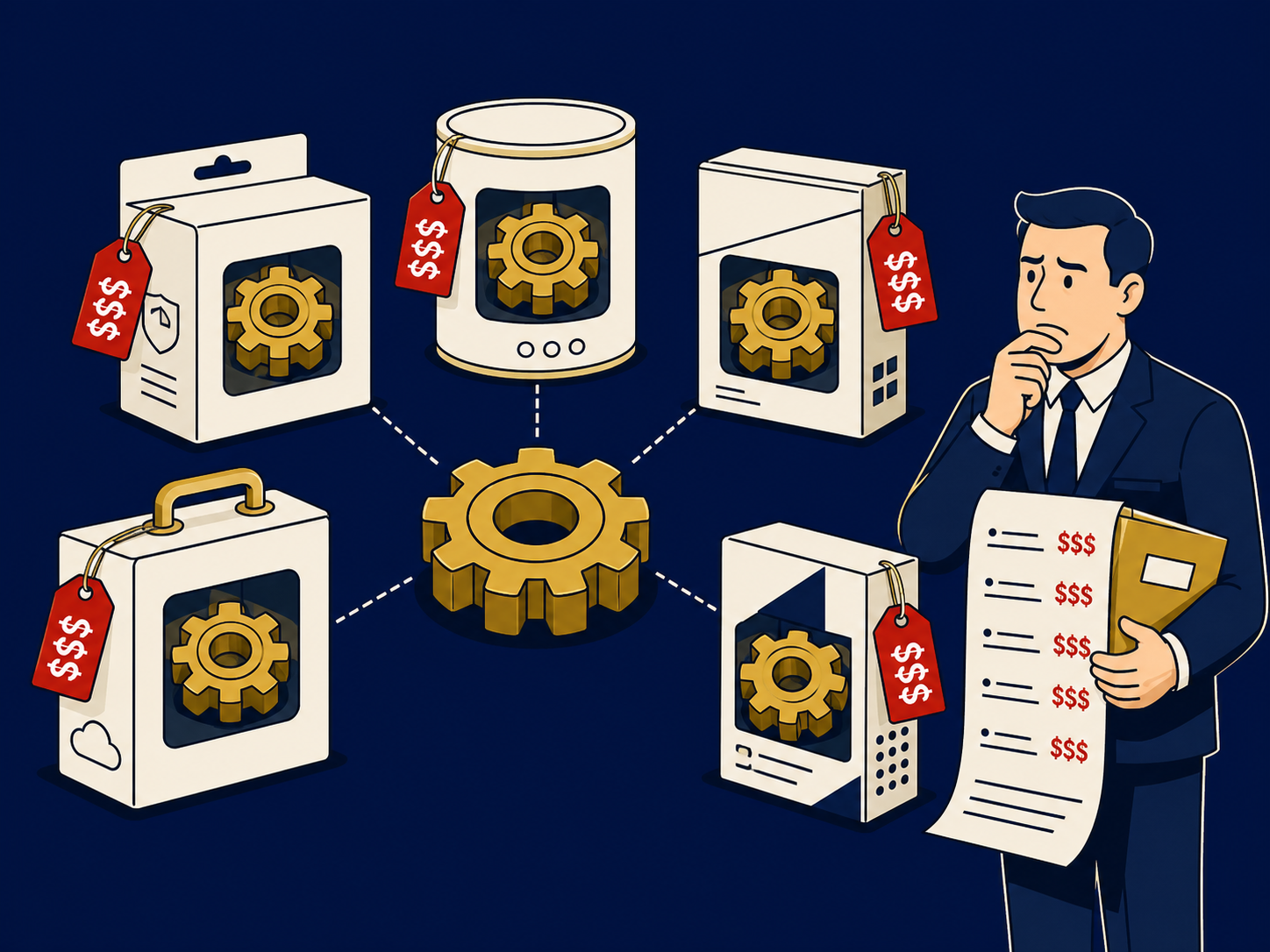
’Cause the tech you could have evolved in lots of different ways, and that holds true for NaaS in a lot of different ways. It really does come down to how easy is it to do business. Why are there 28 different license tiers? I mean, and, and it’s just those kinds of things- … that drive people crazy. Uh, the tech could otherwise organically evolve.[00:12:00]
Max Clark: Mm-hmm.
Ali Shaikh: We’ve seen that happen in, in telco space and network space for so long, where a certain kind of financial model, some mix-match of CapEx and OpEx, and the license SKUs that get created along the way become so rigid that you are almost forced as an, as a carrier to incentivize the market almost, “Hey, can someone go out there, create something new?”
Mm-hmm. “Because we can’t get out of our own way.”
Max Clark: Mm-hmm. It’s… That’s a great point. Um-
I, I don’t wanna … I’m gonna, I’m gonna touch a few more questions on this Yeah And I, but I don’t wanna make the whole thing about this Um
From a customer standpoint, you know, again, you’ve been on the v- vendor s- I’ll say the [00:13:00] vendor side, the- Mm-hmm … the provider side of this. From a customer standpoint, you’ve just done a deal, and then you find out that your, your, like, network strategy core component linchpin piece was just bought by somebody.
You know, besides the initial, like, panic and, like, “What do we just do?” that, like, sets in, um, what are these, what are the, you know, what do they need to be asking? Like, how, how do you go through… I mean, now, look, it takes time, right? Mm-hmm. So your first one is, like, how long does it take for the acquisition to close?
And then, and then what happens post-acquisition, and then what’s integration? So I mean, we could be talking about years’ worth of-
Mm-hmm …
you know, whatever before something changes. But for a person in that perspective, you know, when you were sitting across the table from a, from a customer, you know, Viptela in previous life, right?
You went through this. So how, what questions are they asking, and how do you make this softer for them? So
Ali Shaikh: it’s a balancing act that ends up happening when these things happen. One is customers feel de-risked, so there is that sense of comfort. [00:14:00] “Oh, this small company got bought out by a big company.”
Max Clark: Mm-hmm.
Ali Shaikh: “It won’t disappear overnight.” Mm. So there’s definitely that element of s- they suddenly feel much more easy. But if they were already ready to do business, then that was a risk that was acceptable, so it doesn’t really move the needle by that much. The two things that come up almost immediately are, are you going to jack up the prices?
And two, if not that, are you gonna kill this product line because you have 28 other products inside your portfolio, and this is almost a means to acquire customers, talent- Mm … but you don’t actually intend to keep this product alive for very much longer, for very, for whatever reasons you might have.
Those two are the things that the customers immediately think of, as they should Invariably, when these things- in network infrastructure, you typically don’t see too many things get killed off that fast. Nothing happens that fast. So the [00:15:00] lifetime is long enough, but people tend to s- notice development slows down, bugs creep in a whole bunch, product quality stops, a lot of the key talent starts to move on.
Max Clark: Mm-hmm.
Ali Shaikh: Those are signals that customers are, “Okay, this is not really going to be around for very much longer or gonna see much development,” and the prices still go up. So that’s something that customers are very sensitive to, as they should be. And so when they think about this acquisition, they should simultaneously be looking at, at the carrier and saying, “Are you gonna raise the prices, and what’s your investment plan?
Not a product roadmap, but an investment plan into this. Do you intend to continue to grow this and develop this?“ And alternatively, they should be looking at other vendors in the space to say, “Okay, if this is happening, what’s my hedge? If this goes sideways, I should be prepared if I need to adjust for costs or if I need to adjust for the fact that this product won’t be there.”
A good story on [00:16:00] this one that I’ll tell you is when Viptela got acquired into Cisco, there was this conversation around would it be a separate business unit or not?
Max Clark: Mm-hmm.
Ali Shaikh: Right? Would it operate like Meraki, where Meraki has been able to operate quite independently for a very long time-
Max Clark: Mm-hmm …
Ali Shaikh: which has been very good for them.
At that point, it was a decision, no, it’s to not. So people were, “Okay, but does that mean you’re gonna invest in it or is this going away?”
Max Clark: Mm-hmm.
Ali Shaikh: It definitely got integrated into the ecosystem, but it was a painful integration. There was a lot of lessons learned along the way, there were a lot of bumps along the way, and a lot of customers had to be re-won in terms of satisfaction because they were very unhappy with the experience they were getting Prices went up, and not by a little, by a lot.
By a lot, a lot. And so there was a lot of those questions that even if there were answers, the answers weren’t the best answers. [00:17:00] The customers experienced time of prices going up, quality not being great, not really having clarity on if this was going to be around for the long haul or not.
Max Clark: All right.
Let’s, let’s segue into this for a little bit, right? There’s another m- monster integration acquisition going on right now. We have HP buying Juniper, we think. And I took some heat on that online because, you know, I was just posing the question of like, what product survives this integration?
Mm-hmm.
And who, you know, who comes out on top?
And, and you can see that usually by the executive teams, like who’s put in charge of whatever segment they have. But HP has a lot of overlapping segments now.
Mm-hmm.
You know, Cisco had the same problem, or still does have the same problem, right? You know, you’ve got, you’ve got your legacy router line, you’ve got your legacy switch.
I mean, I say legacy, right? But, you know, you have your ISR line, you have your switch line, you have your Catalyst line. Then you go out and you buy Meraki. Now you’ve got your, like, next gen SD-WAN, SDN- Mm-hmm … you know, line that you then have to integrate in your product line. You go out and you buy Viptela.
You know, you have your own SD-WAN [00:18:00] that you’re trying to bring to market. You’ve got this SD-WAN you’re trying to bring to m- And, and, uh, y- you know, so my natural reaction to all this becomes What are we investing in, and how much do we trust… Has, has there been any, you know, can we infer any signals that come out of it to make me believe that this is safe?
Ali Shaikh: That’s a good question, and it plays out two ways, whether a vendor acquires or a carrier acquires.
Max Clark: Mm-hmm.
Ali Shaikh: The carriers are so operations-focused, and they have to be operator-oriented, that they have to make those kinds of decisions around, are we gonna keep investing in this, because it’s part of our operational framework?
With vendors, especially the large ones, they become holding companies. They end up having all of these product lines still there, even if they compete with each other in almost every way possible. So when I look at HP, and I think about the fact that it has Aruba, Silver Peak, [00:19:00] Juniper, Juniper Mist-
Max Clark: Mm-hmm
Ali Shaikh: they’re going to have six, seven, eight different product lines.
Max Clark: Mm-hmm.
Ali Shaikh: And even if… And they’ll still have the 128 Technologies piece that folds into Mist. So you’ve got layers upon layers. I don’t necessarily think any of them go away. I think all of them will be in some shape or form there. The question really becomes which ones are seeing investment and which
Max Clark: ones are seeing their prices go up?
I mean, this is the, this is the Oracle model, right? Oracle buys something, and it doesn’t kill it. It, you just… Is it invested? Well, you know, maybe, maybe not. I mean, a lot of these things, they, they don’t feel like they have any investment or, or forward motion, but they have an entrenched customer base that can’t get off of them.
Ali Shaikh: Yep.
Max Clark: And then what do they, can they do? They can just turn the dial, you know? And we see, uh, you know, Broadcom’s doing this with VMware, right? They just know they can just turn the dial.
Ali Shaikh: And what are you gonna do? I mean, as much as people talk about Proxmox or OpenStack or KVM, that is not [00:20:00] easy. And VMware, VMware built a very solid, credible base, and they had a very, very, very good hypervisor solution.
Max Clark: Well, y- yeah, so then you’re dealing with two different issues, right? You’re dealing with a technology issue. Can you go to another HCI- Mm-hmm … system, uh, or a virtualization platform, right? And for, I don’t know, probably 90, 95% of people, they’re not using the full VMware stack- That’s true … of what it does. So yeah, you could go…
I mean, you don’t even have to go to Proxmox. You can just run KVM or- Absolutely … you know, yourself on a box, right? Yep. We do that. Uh, it works great, actually , you know? But- But then you have this other side of it, which is always the people side. Mm-hmm. And this is the part where I’m like, “Man, I never thought I would be com- you know, like, become a network engineer and then have to study, like, psychology along the way,” right?
But you kinda, like, learn these lessons painfully of, you know, we call them, like, the layer eight issues.
Ali Shaikh: Absolutely.
Max Clark: Companies associate risk, and it becomes, it, it becomes inferred pain risk decision-making process.
Ali Shaikh: Mm-hmm.
Max Clark: Okay, VMware just got really [00:21:00] expensive. My finance team is yelling at me. I’m in trouble, but I’m not really in trouble because it wasn’t me doing it.
Exactly. Uh, and I’m like, and it’s like, “Sorry, I can’t do anything about it.” It’s like, it’s just more expensive. Oh, we could migrate, but we think it’s gonna take a year, you know, and a lot of money.
Ali Shaikh: And, and the, it’s becomes fuzzy, where it’s ironic where the world of sales, marketing, and everything has become much more by the numbers, much more fact-oriented around is this gonna happen, is this not gonna happen, is, this is the deadline.
Mm. Whereas engineering has become increasingly fuzzy as around, “Well-” “… this project is a two and a half year project.” Based on what? Vibes. Based on vibes. And so this is where I think in a way, when we look at the network infrastructure’s landscape, this itself has… It’s a lower churn rate space.
Max Clark: Mm-hmm.
Ali Shaikh: People compound risk there because no one wants to mess with infrastructure. People worry if [00:22:00] something breaks down. And when they think about the technologies that they are comfortable using, I, I think it goes to what you made a comment about psychology. There are people who have said to me, “Hey, I put my kids through college on that vendor.
Why would I touch any of it?“
Max Clark: Hm.
Ali Shaikh: And then you see decision-making is so far removed and so distributed around. You have the decision-makers, budget owners who don’t know the tech, the engineers who can, for various motivations, say we do or don’t wanna do something. And then people who are really passionate about new tech, they can sometimes be just lone voices in the wilderness who are just saying, “This is very cool.
We should be able to do this. This would save our lives, help us, you know, save a lot of time, enable new things.“ But everybody else says, “But do we really want to? Do we really wanna rock the boat that much?” And so it’s a hard game, and [00:23:00] it is definitely a huge amount of it is just psychology.
Max Clark: It’s an interesting double-edged sword problem for you, though, right?
Mm-hmm. You talk, you start talking about, like, entrenched technology- Mm-hmm … that has very low churn. So immediately people go, “Oh, this is great to sell and be in,” because in- Yeah … you have very low churn, but you have to go sell into a, an environment that’s very low churn- Yes … and convince them that what they’re currently doing, they shouldn’t do anymore, and then take on the risk of change.
Ali Shaikh: Mm-hmm.
Max Clark: And, and that makes your process interesting,
Ali Shaikh: right? Absolutely. In infrastructure, I think that is reflective of the fact that infrastructure is the only real moat. When you think about pure software capabilities- Mm-hmm … pure application layer capabilities, increasingly they’re more easily replicable.
Uh- If you wanted to be a fintech tomorrow, it is a much lower barrier of entry.
Max Clark: Mm-hmm.
Ali Shaikh: You can actually code pretty much everything that you would get in most of those financial services yourself now. Spend a couple of weeks [00:24:00] in Claude Code and suddenly you’ll find you have your own fintech. Oh, please.
But that’s the thing, right? It’s the underlying infrastructure that’s the moat, that’s the hard part. Do you have the right network built the right way, the data structures, how to use the data that you have, where to house it to begin with? Do you have the right encryption, the right compliance? Mm-hmm. Yes, it’s a harder place to go into to drive transformation and upgrades, but it is the relevant place.
It is the thing that endures, and that’s why you have low churn because it is the place that endures. You have so many different applications that will come and go, and you can swap them so easily now, but infrastructure is meant to be something durable.
Max Clark: I still call myself a network engineer, even though I’m not, like, configuring routers that much anymore day-to-day. When SD-WAN came out and there was the what we’re trying to solve [00:25:00] and then versus what people were deploying it to solve- Mm-hmm … were disconnected for me in a lot of ways. And, and there was a segment for me that was just we didn’t have the talent inside of the enterprise to actually manage a network anymore, and so we could just displace that onto this magic box that did certain things for us.
Mm-hmm. You know, how many SD-WANs were just site-to-site VPNs that were just auto-configured be- between the devices, right? Absolutely. So, so then you get into a situation where it’s like, okay, I don’t have network engineering talent, or my, my supposition, right? You don’t have the network engineering talent, so you can get the magic box that does the networking for you, which you still have to deploy and manage, right?
Mm-hmm. Which creates its own operational overhead and cost. And then now we see this emergence of NaaS. So in that world, like, that, like, very small box of like, okay, y- you can do all this yourself still if you had the ability to do it all yourself, but you don’t ha- I, I… So is NaaS now just a r- a reinvention of where the act- of, of the box?
We’ve taken the physical box away, and we’ve moved it into a hosted [00:26:00] service?
Ali Shaikh: I don’t think that that’s where that is. I think that the big difference is, you’re right in sort of the SD-WAN experience of-
Max Clark: Mm-hmm …
Ali Shaikh: people wanted to get away from the lock-in that they had. They wanted new capabilities, and they wanted them quickly.
So SD-WAN felt very appealing for those reasons. Oh, I’ll get internet connections, I can connect into the cloud, I can do a bunch of things. Whereas trying to renegotiate a carrier contract would take too long. Mm. So that happened. They deploy, they realize it is non-trivial, it comes with a tremendous amount of c- complexity, and you almost have to relearn all the things that you probably had forgotten or never bothered to learn to begin with.
Right? You go into an application, it, you know, there’s a bunch of DevOps teams, and they don’t know what BGP is.
Max Clark: Oh, geez. I don’t wanna throw any shade on DevOps, but I have so many bad stories. But
Ali Shaikh: that wasn’t their domain expertise, and now they’re having to build automation and tooling for a system that, that operates very differently That [00:27:00] then leads into the enterprise starting to shift the running of enter- of the N- SD-WANs that they had purchased and deployed to all the different MSPs, MSSPs, CSPs, whoever would take on the complexity.
And so the carriers were, again, one of those who started to absorb a lot of that complexity. That complexity comes with margin hit for them. Mm. So financially, the SD-WANs have not been good for the network carriers. They inherited far too much complexity for a thing that was designed for enterprise, not the carriers, and it affects their numbers.
The enterprises are happy either way, right? They bought it, they get to use it, they benefit from it, and they have found a vehicle to offload the complexity. When we think about network as a service, I think this is a opportunity for the carriers to reset the table a little bit if they are wise about it, which is we’re entering this world [00:28:00] where the consumption patterns will change.
The human beings aren’t the only audience we have to cater to The networks are going to get more complicated because we’re going to use not just the public clouds and the data centers, we’re gonna use GPU wherever on earth we can find it.
Max Clark: Mm-hmm.
Ali Shaikh: So the complexity is gonna go up. There will be increasing demands on your classic C-suite to be like, “I want this to be rock solid.”
Your network engineering teams to go, “I need new capabilities, but I don’t wanna lose my job.”
Max Clark: Mm-hmm.
Ali Shaikh: And then the whole agentic side of, “We don’t really care about any of this stuff. The agent just needs to deploy this workload, and it doesn’t care, and it’ll find a way to bypass the system.” If you’re a carrier, you have to think about, can I create a service that has that on-demand functionality for this agentic world that’ll just want dynamic networks here and there?
Does it help the existing engineers [00:29:00] appreciate new capabilities so they aren’t feeling like they’re about to get eliminated? In fact, they’re being enhanced in terms of new capabilities, about new optionality of how to construct networks. And the executives who are just gonna say, “Is there AI adoption?”
And you can just say, “Yes, there is. This is happening.” It’s, it’s an evolution, and I think Network as a Service is that vehicle because the tech can evolve on its own. These are contracts and relationship vehicle changes that we need to revisit. We don’t need 10,000 licenses. We don’t need to bury people in complexity.
We have to find a way to simplify the business relationship. Now, granted, the carriers have not historically been the best to do that, but that is the fundamental ethos of Network as a Service. Can we create a business relationship that makes it better to transact, do these things, build the networks that we need, enhance our [00:30:00] capabilities without making it so difficult?
That, I believe, is the ethos of Network as a Service.
Max Clark: There’s so much I, I wanna unpack in that. Uh, okay. I, I have a very primitive view on a lot of things, so let’s start from my, like, really primitive view on a lot of things. Uh, the first misconception dealing with for decades now is what MPLS actually is.
And y- I don’t care what the terminology is, MPLS, VPLS, IPVPN, blah, blah, blah this, blah, blah, blah, people call it waves, it’s not. Very little, there’s very little networks that have an optical core with an ethernet, a s- you know- Mm-hmm … service layer, right? Um, but it, you know, you, you talk about like operational complexity.
You know, if you’re building on an MPLS network between two different geographies with two different underlying carriers, right? Like who’s… Now you’ve just displaced that. I mean, it’s, it’s, it’s a great point, right? Because you, you went to whatever your primary integration- Mm-hmm … operating carrier was, and they went out and they bought the circuit from somebody else and they integrated.
Now of [00:31:00] course, you’re talking about two like horrendously bad operational companies dealing with each other to then deliver a circuit, and you’re like, “Yeah, that took us nine months.” Mm-hmm. And you’re like, “Of course it took you nine months.” You know? Like, there’s, there’s reasons why people like me exist because I, you know, we just yell at people every day.
Right. You know, like, like, y- you know, we do it politely, but I mean fundamentally that becomes part of the, like where are you in this process? Now, now you, you touched on two things that were very fascinating. The first one was, you know, shifting costs and margin and who’s actually the operational provider for it, and then where does that integration actually take place and where is it get operated and managed from.
And on, on one side of that coin, you’re making a pitch towards a carrier where now the carrier can offer the service in a more efficient basis. But on the other side of the coin, you’ve just commoditized the carrier to the absolute purest form of saying, “Oh, great, you know, go out and buy whatever cheap internet circuit you can get from this carrier in this location.
It doesn’t [00:32:00] matter because there’s nothing smart or intelligent or fancy there.“ So now you have, uh, you know, like are you friendly with the carriers or are you competitive with the carrier, you know, in that world?
Ali Shaikh: It’s, there’s two elements to this and two competing tracks almost. Yeah. But let me walk you through how we envision and how we experience it as well.
When we look at the network as a service from a business vehicle standpoint, we have made it easy to transact, and what we see is when you make it easier to transact, even across carriers, it actually accelerates the business.
Max Clark: Mm-hmm.
Ali Shaikh: Right? These delays, these nine months to get a circuit make you angry, make you not want to do more business.
If the business happens very quickly, you’re incentivized to do more. And so we see that organic growth by virtue of NaaS being easy to transact.
Max Clark: Mm-hmm.
Ali Shaikh: Even if it’s a commodity, right? So even on the commoditization side, the acceleration of revenue is there. [00:33:00] So that plays to the carriers, it plays to the vendors.
It plays in all of our favors that it makes it easier to transact. No one should have to buy a five-year term contract. They don’t need to. So that’s one part. I think the commoditization of a lot of things does help. We would say commoditization, another word for that would be standardization. Mm-hmm. Where if it’s applicable everywhere, then it’s available to everyone in a way that business can be done easily.
So that’s one part. The other side would end up being is when a carrier sees, oh, if you’ve commoditized me completely, right? There’s no value that’s coming from some of these other things that I used to provide. It’s really a question of, okay, how do you provide that differentiation? How do you provide value?
And realistically, the carriers have to move in the direction of just the circuit in and of itself does not provide value. The value comes from how do you accelerate new opportunities for the [00:34:00] data.
Max Clark: Mm-hmm.
Ali Shaikh: Just having fiber optic means nothing, unless it doesn’t connect you to the relevant places you wanna go to.
If I want GPU as a service on demand, that’s what your circuit is supposed to facilitate for me. It’s much more about outcomes than what it is the thing that you provide, because the thing that you’ve provided is in a way commoditized. The fiber optic in the earth is a commodity. You know, sunlight is a commodity.
Oil is a commodity. It’s the outcome that you can drive that differentiates you. So if you are connected into more GP as a service places, into more public clouds, into private clouds, if you make it easier to move the data with compliance, with risk assurance, that’s the value. Because an enterprise doesn’t wanna figure out how to do that.
That’s not their core competency. They, they would much rather somebody else did that. That is an outcome that service providers, [00:35:00] that service integrators, that consultants, advisors, that’s, that’s the outcome. That’s where value will be created. Because otherwise, if you ask me, if none of that is done, is a carrier commoditized?
The answer is yes. They’re one hop away from being a utility
Max Clark: Been doing this too long. We used to have, you know, awesome sort of optical layer, and there was like ATM or SONET. Mm-hmm. SONET. And then Ethernet came out on top of it. So the, we consider the internet was like what was a core layer two, then what was, you know, I mean, you can argue whether ATM and SONET, you know, where it really fits.
I’m not gonna get into that argument. Please argue with me online. Uh, and then we had the internet, like Ethernet put on top of it, right? So you had this delineation, and then you get, you know, SD-WAN and, and- Mm-hmm … you know, stacked on top of it, right? So it’s like I, I think, and now, now these two have been collapsed typically for most- Yep
carriers, right? So, you know, the joke for me almost all the time is MPLS is the internet, is the, is an MPLS or VPLS or whatever term. Who cares? So, you know, and in terms of [00:36:00] like are you buying MPLS from a carrier? Are you buying internet from a carrier? Are you running your own VPN, SDP, ZTNA, whatever the heck you wanna call it, fill in the blank, you know, on top of that S- you know?
Ali Shaikh: Mm-hmm.
Max Clark: And, and- You know, so when we start talking about, like, network as a service, you know, uh, uh, you know, we’re, we’re talking about, like, a contractual operating model, but we’re also talking about what the end user’s actually receiving and, and doing with it. Yeah. And, and it’s like, oh, you wanna go out and acquire GPU as a service from somewhere.
Well, that somewhere’s connected to the internet already. You can talk to it via the internet. You can use HTTPS and encrypt your internet traffic. You can run a VPN on top of it. WireGuard is not that complex or- Mm-hmm … have a lot, much overhead on top of it. You know, you can run any one of these z- you know, ZTNA.
Mm-hmm. You know, different STPs. There’s lots of different things there. So why is that customer then driving into, we need to reinvent what looks like MPLS again in a different way with a network as a [00:37:00] service provider to then go talk to a GPU that’s here versus here versus here versus, you know, some other pipe, right?
Ali Shaikh: So it, I think it starts from the outcome that you want.
Max Clark: Mm-hmm.
Ali Shaikh: The outcome being if this is a business relationship that allows us to connect anywhere on demand, if that’s w- our start point, then we start engineering in terms of, okay, what the technical elements are. Could you use ZTNA in some space?
Would you use MPLS as an underlay in some locations, or VPLS, Layer 2? All those technology elements can be part of the solution. The network as a service has to be able to do all of those things. Too often, I think we have done this thing where we created a tech, whether it was frame relay, ATM, IP MPLS, VPNs, SD-WAN, SASE, all of these things, these are technical constructs that we created, and then we would jam through a business relationship.
Max Clark: Mm-hmm.
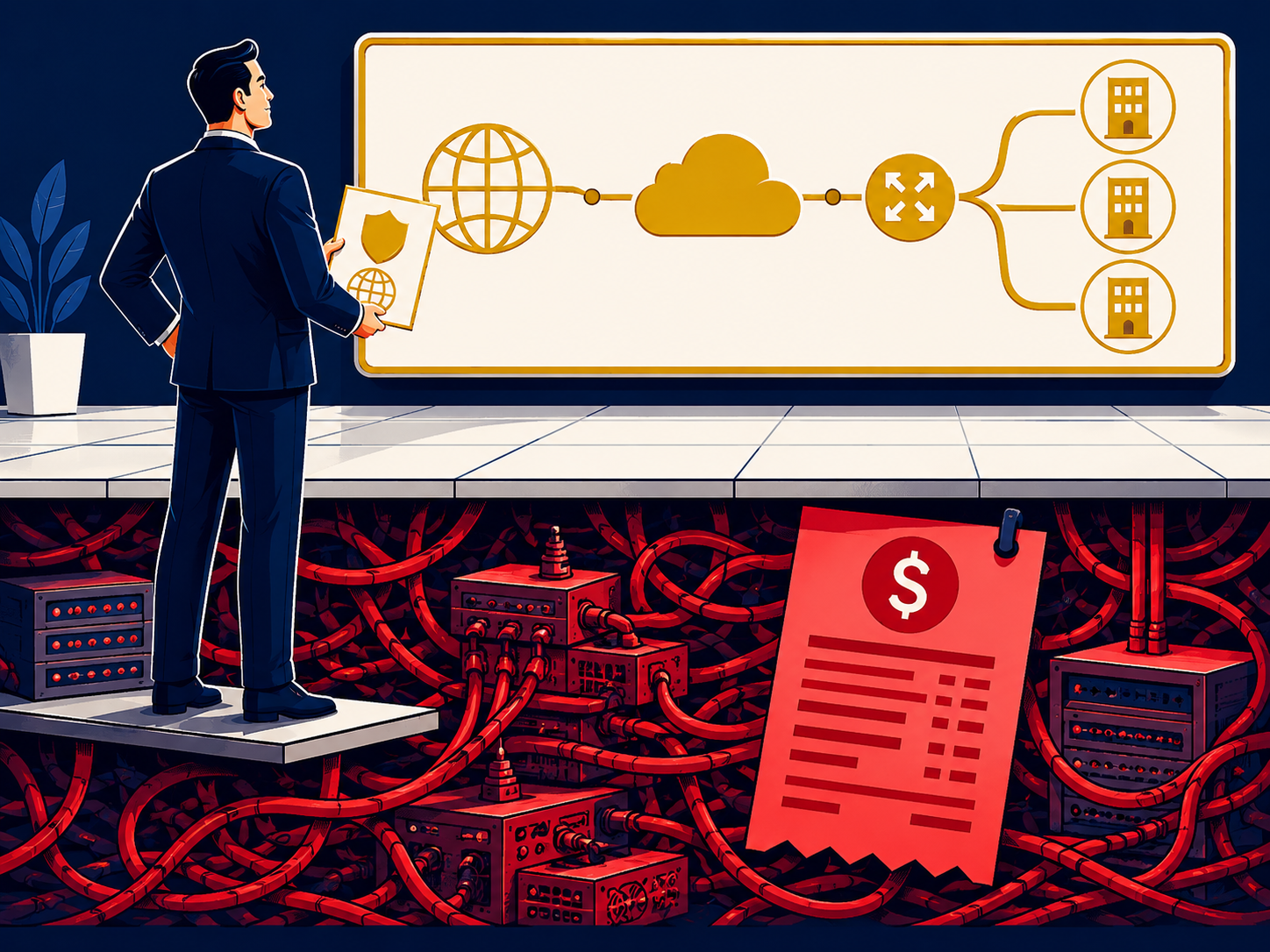
Ali Shaikh: And you [00:38:00] got licenses, and you got all these tiers. You know, MPLS VPNs, whether it was L2 or L3, you had different QoS, and then you would be charged on each QoS profile, you know, being charged on CAR or all these different constructs that come around. Similarly with SD-WAN, oh, you’re gonna get a branch license, but then you also have a maintenance license, then you have a security license, then you have a boost performance license, then you have a license to turn on certain things on the ASIC Technical architectures being jammed into a business model.
Max Clark: Mm-hmm.
Ali Shaikh: I think network as a service has to, and the, the time in the world kind of demands that, is we don’t really care if it’s IP VPN, WireGuard, MPLS VPN, segment routing. Doesn’t matter what’s under the hood. Do we agree that the outcome we want is this, which is if I want non-demand connection into GPU-as-a-service cluster over there, my data resides here, I use these public clouds, [00:39:00] and I want it to be uniform, and I want it to be secure.
I don’t wanna think about how that happens, but this is the contractual vehicle I want with the vendor, the supplier, the carrier. That is the NaaS start point. Now, how do you solve that? This is where now you can have a more honest conversation about what are the limits of point-to-point VPNs? What are the limits of multi-point VPNs?
What are the limits of MPLS VPNs? Do you layer on encryption on top of an MPLS VPN? Where do you benefit from segment routing? Do we get into the religious debate of IPv4 and IPv6? Like, you know, you can go into all of these things, but now you have the honesty about it, which is forget the licensing, forget all of this other stuff.
This is the outcome we want. Can we build it? And this is where, for us, even on our journey, was, you know, we would have all these debates at Graphiant and even before. It was always this question of, [00:40:00] first of all, do we need to build it? What problem does it solve? Could it be done with existing tech? Could it be done with DMVPN, with SD-WAN, with MPLS VPN, with, uh, SRv6, with all these different things?
And you would get the answer of, “Yeah, kinda, but not really.”
Max Clark: Mm-hmm. “
Ali Shaikh: It requires a lot of stitching together that no one really is willing to do, but it could be done.“ So that’s the technical. And then the moment you’d be like, “Okay, if we even tried to create a proposal for a customer, oh, our licensing model will kill us.
We have no contractual… We have no way to do business with someone without them going, ‘I can’t make heads or tails of this.’“ Mm-hmm. “What is this SRv6 license under the SP p- you know, program, whereas my SD-WAN license is a different license, whereas my security license is a different license, and then I have users and seat-based and capacity-based.
How do I rationalize any of it?“
Max Clark: Mm-hmm. [00:41:00]
Ali Shaikh: This is why I so fundamentally say it’s not just a technical thing. It’s a business and technical thing. The business is an outcome we want. We don’t wanna have to figure out how to stitch together new data centers each time. When agentic workloads come online, we want them to be able to have ephemeral connectivity And have a commercial model that facilitates that.
The analogy I’ll draw for you here, ’cause sometimes this can be esoteric for people who are not in the, the networking knowhow. For the longest time, we had SMS text messaging, and we had anytime minutes, and those text bundles we would buy. Technically, you could text anyone on earth. We really didn’t need to create the iMessages, the WhatsApps, the Signals, all these different messengers that we ended up getting.
But there was a problem. The commercial model around [00:42:00] text messaging was broken. Everybody hated it.
Max Clark: Mm-hmm.
Ali Shaikh: Kids, if they’ve used up the plan, the parents would be losing it. It was like, “What happened to all the minutes and the data on the plan? Now we’re… Why are we paying these overages?” There’s a business problem.
You could have made the argument we never needed to leave text messaging. It was always there. The evolution is driven by the outcome we want. WhatsApp was beautiful because it made it easy. You didn’t have to worry about… You know, BlackBerry Messenger, I suppose, gets a lot of the credit to, to lead the way, is around it was on data, and you didn’t have to think about individual text message rates.
You didn’t have to think about contracts. You didn’t have the limits, and you could message anyone. That outcome drove technology evolution. We were finally able to move away from all of that. We still use text. It didn’t go away, but now it’s much more oriented to the [00:43:00] outcome we actually care about
Max Clark: It’s a, it’s a, it’s an interesting analogy. Let’s talk about this, okay? WhatsApp specifically starts and, and blows up internationally.
Mm-hmm.
Not because of technology. I mean, it was more user-friendly, you could say that and you can argue it, and they did a beautiful job with WhatsApp, right? Still to this day, it’s a, it’s a beautiful application.
The… But the issue behind it was a old business trying to extract old business revenue- Mm-hmm … out of technology, right? And the, and the joke about SMS specifically was SMS is a byproduct, technically, of what you need to have in order to run a cellphone, a cellular network. It wasn’t some product that they had to go out and buy and develop and exist.
It was, it was already there. And even more frustratingly to anybody in the know, is it was free for them- Yes. … to run SMS. But then somebody goes and looks at it and says, [00:44:00] “Hey, here’s something that people wanna do. We can extract money out of this, generate value for ourselves, and we can squeeze-” Mm-hmm
until finally somebody figures out how to bypass us completely, and then i- uh, completely eradicate our value,“ right? And, um, y- y- you know, so to apply that to networking is also… I mean, it’s, it’s like this constant thing. It is. Right? And I end, end up in this conversation weekly where, you know, people talk about, and we’ve been tracking for a long time, you know, what’s the actual cost, you know, of a circuit.
Mm-hmm. You know, like, not in a data center. Well, we track that too, but let’s say delivered to an o- to a location, to an office. You know, and that, and that trend goes one direction. Yeah. And people freak out. They’re like, “Oh, it’s getting so cheap and there’s no value in this thing anymore.” And I’m like, I’m like, “I’m really sorry that you feel like a Gig E circuit has gotten too cheap for you to make any money [00:45:00] selling, but we’re planning for 1.6 terabit ethernet in a heartbeat,” right?
It’s a heartbeat away, and 3.2 terabit ethernet is right behind that as well, right? So…
Ali Shaikh: Exactly. It’s… If you make it easier, people will consume more. People want more. People want to be enabled more to do more things.
Max Clark: Mm-hmm.
Ali Shaikh: They want to feel more empowered to make better decisions, faster decisions, to, to change their lives in the way they would like to, both at an individual level as well as at a corporate level.
All those things are true. And this is where so much of… And networking is particularly painful because infrastructure is such a hard road to go down. You feel trapped sometimes that change doesn’t happen as fast as it does in other segments. You see the application space, you see the AI space, you’re just like, “Man, that transforms constantly and so fast, and new things come out all the time.”
Whereas why does infrastructure take forever-
Max Clark: Mm-hmm …
Ali Shaikh: to see that kind of evolution? [00:46:00] So that, that I think is a, is a natural… We all become a little bit sad and upset if we stay in infrastructure that long ’Cause we get a little bit jaded and cynical, but it also forces some of us to go, if we really focus on the outcomes that people want, there is a way to do transformation.
We have some incredible tech in our space. We’ve been building some incredible things for a very long time. We have fiber literally covering the entire Earth. We’ve laid cables in the oceans. Mm-hmm. We have satellite internet basically everywhere now. We’ve done incredible things. We should take pride in it and be optimistic, but somehow find a way to get out of our own way of the old business models and think about delivering value.
Max Clark: So, I mean, are we… Okay, business problem, right?
Ali Shaikh: Mm-hmm.
Max Clark: Contractual issues Absolutely Networking talent issues
Ali Shaikh: Mm-hmm
Max Clark: Um, operation issues, [00:47:00] right? Like, like three, I think those are the three primary buckets we keep talking back. W- how much of this is solving which one of those buckets, right? Like, is NaaS really about solving a, a business contractual relationship more than it is about who’s operating it and responsible for the operations?
Or y- you know, I mean, it’s crazy. I, you know, uh, people coming into the space that ha- or they’re carrying the title of, like, network engineer, and you get into conversations with them, and they have no idea what’s going on under the hood. And, and you’re like, “Okay, great, I’m really scared for this company that you’re working for.”
I mean, you’re, you know, they’re … Not to say that they’re not doing a, a good job in, in really trying to move the needle forward, but i- you know, like, the, the skill set, I- I mean, I feel like a COBOL dinosaur. It’s like I know how to configure RIP at this point, and, like, nobody ever wants to run RIP. That’s true.
Right? But, like, you know, and, and for my Cisco fans, [00:48:00] like, I mean, I can remember doing EIGP- EIGRP unnumbered- … which is probably a horrible idea when you actually take it apart. But, um, but you, but you know what I mean? Like that, y- you know, like, hiding that, hiding, hiding the, um, hiding the awareness of complexity behind a screen that then people don’t understand what’s going on underneath the hood.
Like, I’m, I’m never really sure if this is a good thing or a bad thing.
Ali Shaikh: I think with Network as a Service, we have to think about three things that it has to solve. One is definitely the contractual model. It has to make commerce easier.
Max Clark: Mm-hmm.
Ali Shaikh: And we have to find a way to rip out some of the older ways to find a better way to do this, just to address the world we’re in.
So that goes without saying. When we get into the build and operate aspects, we have to recognize the talent is being pulled in other directions as well. We have new libraries, new SDKs, new ways of developing applications, new ways of thinking about data structures. [00:49:00] That is happening. We don’t want networking to be just this alien thing that no one really ever touches, and I don’t think that’s gonna happen, but we have to move along with it as well.
We also have a tendency to be very nostalgic. We love talking about RIP, ISIS. Oh,
Max Clark: geez. Yeah, OS-
Ali Shaikh: OSPF. OSPF.
Max Clark: Yeah. I mean…
Ali Shaikh: You know, get somebody talking about Dijkstra’s algorithm and it’s just like-
Max Clark: You’re going deep. Okay.
Ali Shaikh: But those are the things, right? We have a tendency to, to really love the glory days.
Even, I mean, I haven’t been around forever, but even now, the tendency to wanna talk about what happened with SD-WAN and SDN and NSX and all the… There is a lot of look back, because it was such hard work to build in the first place.
Max Clark: Mm-hmm.
Ali Shaikh: You couldn’t build it overnight. It wasn’t like social media. Uh, it, it has those elements where we have to think about the future around how do we solve for [00:50:00] future talent too?
How do we speak networking language to that?
Max Clark: Well, I, you know, I mean, uh, you know, the, the question, the point is, is are we continuously solving the same problem? Have we actually solved the original problem, or are we just inventing a new way to solve the problem that was already solved, but then was solved again, but was solved again?
And then for somebody buying it, they’re just like, “Oh, this is just a new thing I have to buy to solve the problem that I still haven’t solved with the other pro- you know, thing.”
Ali Shaikh: This, this is a fun… I think this, this could easily be a tangent because it goes in-
Max Clark: We’re, we’re on it.
Ali Shaikh: Yeah … it go- it goes in two directions.
One, I suppose in one way, I would say the problem space shifts. The, the workloads, the applications, those kinds of things shift, so you do end up needing to have to evolve. The counterargument is time is a flat circle. Nothing really changes. We’re solving the same problem- Mm … since creating the wheel or discovering fire.
Max Clark: Right.
Ali Shaikh: Uh, we still have energy problems. We still have heating and cooling problems. We still have housing problems. We still, in many ways, nothing ever changes, uh, because ultimately that’s the human condition. We live, we work, we try to [00:51:00] provide for ourselves and our families, try to connect with other people, and then we die.
So in many ways, so much of everything is just tied in that loop. But that, that can go into- Yeah … a whole other track. But, but that’s why I think so much of it is reflected in the things we create, the things we build, and how they interact with the world. Right now we’re in the AI hype, right? Everything everywhere is AI.
But we’ve been talking about AI for a long time, and the goalpost on what constitutes AI keeps shifting.
Max Clark: Mm-hmm.
Ali Shaikh: I suppose you could have said we had AI when, when Turing made his machine. It figured th- I mean, automation, the sheer amount of automation we’ve had and the things that it can do, would that not be considered AI by, by a different measure?
So the goalposts move. If we think about what it’s solving- Okay, and AI now is building PowerPoints and Excels. Sure. [00:52:00] I mean, we’ve been, we’ve been doing a lot of- And
Max Clark: hallucinating along the way.
Ali Shaikh: Exactly. We’ve been doing a lot of things, you know, broadly speaking, the big context, you might say, yeah, it’s the same stuff just over and over and over in just different forms.
But in the, in the micro, in the moment, the work has changed. Our day-to-day experience h- of it has changed, and so the solutions that we need for it must change
Max Clark: You opened this door. I’m gonna have fun with this. Okay. You s- you used the word AI hype. Um, my parallel to this in industry is 5G and 5G hype.
Mm-hmm. Oh,
yeah. And you have wireless providers that come to market and say, “Hey, we’ve got this thing called 5G.” And you’re like, “Well, what is it actually?” And like, what they claim is 5G isn’t 5G by any, any measure of the world, right?
But now you’ve got, I, I mean, I don’t know, a decade of marketing around 5G being the second coming, and it’s gonna [00:53:00] solve all these things, and it’s gonna do all this different stuff. And it’s, and it’s… But they’ve been trying to sell this story really to the street. Mm-hmm. And instead of the story just being like, “Hey, we just upgraded our network.
It’s faster now. You should get it because it’s cool, and it’s faster, and you want faster.“ Mm-hmm. It’s like, “Oh, we’re gonna empower this theoretical, nonsensical, we hired the digital prophet, you know, guy, and he came up with this crazy idea, you know, on his, like, you know, psychedelic trip one night,” you know?
And- But there’s no connection to the actual underlying problem, right? Mm-hmm. So now we have, we have this, this push nonstop of like 5G, 5G, 5G, 5G. Mm-hmm. And I’m surprised it hasn’t turned into 6G yet, you know, because we’re like, we’re like due for, you know, the next
Ali Shaikh: cycle. I think
Max Clark: you
Ali Shaikh: probably weren’t in Barcelona this year.
Max Clark: Well, I’ve, I’ve actually tried to tune all this out, right? And not to say, I mean, don’t get me wrong. You know, Steve Jobs said this great. You know, if you ask somebody what they want, they say they want more, they want it faster. You know, technology exists to like elevate the human condition. I believe in that.
That’s my l- that’s my core thing. We always want life to be better. Like, you know, faster network is always [00:54:00] better. But y- you know, AI as a hype cycle connecting to everything that’s being labeled onto AI, and in your world, specifically around network and data transference. Mm-hmm. Right? Really, what is a network?
It’s just moving data from point A to point B. Y- y- you know, AI isn’t driving this, like massive, like the average endpoint needs to have, you know, 10 gig of network anymore. Mm-hmm. You know? Like, most AI sessions are really, are small. They’re text. Mm-hmm. In any wa- in any cases, I think I see a lot of enterprises probably driving down their overall data consumption because of how they’re interacting with the network.
Ali Shaikh: That’s an interesting… I think the jury’s still out on what enterprise is doing with AI. I think that’s- Right … still TBD on what, what’s gonna happen there. With network, I think there is an important distinction to make between network and AI and sort of the hype, and I agree with you, not landing into making ludicrous promises of what network will do here.[00:55:00]
Fundamentally, network is a foundational element, and when we think about the outcome from a business outcome as a tangible thing that people then go, “I understand this,” there is an X amount of data in the world, whether it’s in the clouds or inside the enterprises. We have a certain amount of data center capacity and power to power them up.
Our grid does require distribution, so we are gonna move compute around, and network is our way of connecting all these things together. Now, network still is today what it was back then, which is move from point A to point B. That’s what it is. That’s what its purpose is. It can’t make promises of, oh, it’ll change your entire workflow, or somehow do…
I don’t even know what promises these days are made on these things. It’s not gonna cure cancer. It’s not gonna do any of those things. [00:56:00] It’s really about the movement of data, and can I move it on demand to where I need it to for the things that I need to do? That’s really what network should claim, should claim to solve.
Max Clark: So now we’ve got competing moat issues.
Ali Shaikh: Mm-hmm.
Max Clark: Um, data is the moat for most cloud environments. Mm-hmm. And, and I’ll, I’ll say why, right? Um, AWS. AWS
Getting data out of, moving data around inside of AWS or getting data out, out of AWS until you actually go and say, “How much does it cost to take da-,” storing data in S3- Right … super efficient.
Yep.
Doesn’t cost you a lot. Putting data into S3, super efficient, doesn’t cost you a lot. Taking your data out of S3 and sending it somewhere that is not AWS, hold on now.
Mm-hmm.
Very expensive.
Mm-hmm.
And, and going through, you know, enough business cases with clients about looking for a different operational [00:57:00] structure for their cloud platforms, or whether, you know, they’re, or what, you know, so many different permutations of that. But getting to the end of it and actually looking at a spreadsheet and being like, “It is going to be very financially painful for you to actually pull this off and to take this out of this environment.”
Ali Shaikh: Mm-hmm.
Max Clark: You know, you s- you, and then all of a sudden another contract issue kicks in because you find out there’s a committed capacity contract in play. Yeah. And then you’re like, “Oh, we can’t do this.” Like, it’s not… So when, when we, uh, uh, when we talk about, like, enterprise drivers, you know, I, I, you know, who knows what the actual real percentage of compute and capacity that’s still in some sort of, like, on-premise or what looks like on-premise- Mm-hmm
for that enterprise versus what’s already shifted to a cloud. And in my version of the cloud, the cloud also means data centers, like the enterprise- Mm … has a data center. If you’re in a data center, getting capacity quickly, I mean, you still have to deal with contracts, you have to deal with cross-connects, you have to deal with some other s- procurement rules and s- Mm-hmm
there’s stupid stuff you have to go through. But [00:58:00] to say, if you’re in a data center, I want 1 gig, 10 gig, 100 gig, 400 gig, 4-by-400 gig network circuits- Mm-hmm … relatively simplistic problem to solve.
Ali Shaikh: Yep.
Max Clark: You know? I wanna talk about capacity planning this, but if you’re, you know, let’s, I don’t even know what the edge is anymore, but, like, if you’re not in a data center, I’ll just use that phrase, if you’re not in a data center, ’cause all clouds are in data centers, if you’re not in a data center, delivery and installation becomes very complicated.
Mm-hmm.
Right? And so, so then is, is NaS solving… Y- you know, so then you look at it, it’s like, okay, are we solving the data center problem, the capacity problem, the interconnection problem, the fact that my DevOps team is now in charge of doing all this stuff, and they want an API to go say, “Hey, I wanna talk between these two boxes,” which, I mean, that in and of itself, uh, I’m not saying it’s not a viable, valuable thing, right?
But we still have this edge issue, which is I need capacity now, like, this building that we’re sitting [00:59:00] in- Is fantastic, except it doesn’t have any fiber pulled into it yet. Why? Because it’s small. Mm. You know? So it doesn’t fit any financial model for anybody to do the expense of trenching fiber, ’cause guess what?
It’s really expensive to trench fiber, right? Um, uh, you know, and that’s, that’s, so like where, where does the hype cycle for AI actually intersect now with these things? Because, you know, where that data actually sits, we have this data that we wanna do something with. Mm-hmm. We wanna interact with it. We have an agentic flow.
We need to, we need to have a, you know, we have RAG that we wanna run against it. We wanna, we wanna do, train a model with it. We wanna whatever, right?
Ali Shaikh: Mm-hmm.
Max Clark: Uh, y- you know, how, how does, how does that overlay with all this?
Ali Shaikh: So if we keep the, the three, you know, sort of premises that I keep alluding to with network as a service, we’ve got the business contract aspect-
Max Clark: Mm-hmm
Ali Shaikh: the engineering, the, the effort to build it, and then the operational to keep it going. With NaS in particular, when we look at all this, how does the AI hype cycle inter- intersect [01:00:00] with this? Putting aside what people are using AI for, I think first people want to have that recognition of commercial contracts around, if I don’t need a three-year commitment with Equinix on this port going into AWS, I shouldn’t have to have that.
Max Clark: Mm-hmm.
Ali Shaikh: So there is that contractual element of I want flexibility to get capacity on demand, but not be locked in. So that’s that commercial element. AI is definitely accelerating that because people have a lot of variability in their consumption. A lot of the companies, everyone wants to think line goes up, not necessarily.
A lot of people are rationalizing, going, “Oh, we don’t actually use that much, but I have this long-term contract that I’m stuck in. I need contractual advantages.” NaaS is meant to be one of the vehicles for that. That’s one. In terms of the build, right, from a technical standpoint, what does this enable? To give an example of the problem that you described, you have no fiber in the building because no one can make the business case to build [01:01:00] fiber to the building.
Now imagine someone goes, “I have spare rack space in the building. I could put in a bunch of GPUs here, and I could rent them out,” ’cause they have spare power, and they know there’s demand in the market. But now they’re like, “Well, I have spare GPU. Number one, is there a marketplace I can list this on so I can make money off of it?
And number two, how is it gonna connect into the people that need to use that GPU on demand?“ This is where the NaaS build overlaps with AI, where now if I have some spare rack space, which, you know, I do, I’ll put a couple H200s, list GPU on a marketplace. And I know how to do networking to connect people into it.
No
Max Clark: big deal. I’ll just go out and get a couple H200s and just, just, yeah, run, run… “Hey, honey, uh, we’re not using the garage anymore.”
Ali Shaikh: It’s true ’cause it pays the mortgage.
Max Clark: Oh, geez.
Ali Shaikh: So it’s almost, you know, and it, it’s laughable for sure. It, it’s entertaining, [01:02:00] but we have precedence on how this was done. Crypto, whether you have good feelings or bad feelings about it, literally what happened there?
You started buying a bunch of Nvidia to run mining rigs. Mm-hmm. And because the, the crypto landscape had its own infrastructure to deal with the cryptography and the tokens and the blockchain and everything else They didn’t have to really worry about the networking and security issues in the same way that we have to, where our data is structured and unstructured, all kinds of things over the last 30, 40 years.
Very sensitive, high risk. We have to really be conscious about it. So there is a very ample appetite in the market to have more distributed access because GPU is hard to get and power is harder to get still. So if you can get it anywhere, there’s demand for that, and there’s latent demand that is gonna build.
I don’t necessarily put too much stock into edge computing yet. It still remains to be seen what local [01:03:00] inferencing will happen and things like that. But it is interesting to see that people are willing to list it on a marketplace, and there are people who are willing to buy.
Max Clark: Mm-hmm.
Ali Shaikh: So putting aside all the hype, there are willing sellers and there are willing buyers, and if there’s a marketplace to be made for it, there is money to be made for it.
Right. And then finally, you get to the operational layer. Networking is not trivial. There’s no magic AI that will take care of all networking. It just… And there’s a, you know, it’s not even on the hype side. There’s, there’s a philosophical reason for it. Networking requires such determinism. You can’t guess your way.
Max Clark: Mm-hmm.
Ali Shaikh: We need… You know, we all get angry if, oh, a hop changes along the way. Okay, our telemetry told us, oh, there’s a… We have, we call them man-in-the-middle attacks. We call them BGP route hijacking. We have bad words for things when they happen non-deterministically This [01:04:00] is why on the network side, what’s, what’s actually difficult is our engineers won’t have less to do, or that we will need less network engineers.
We actually need more network engineers. We have a giant problem of increasing complexity, and we need a significant amount of expertise and a lot of hard work to go into it. Uh, this is where I think NaS intersects with the AI hype cycle. It isn’t AI itself. It’s not gonna magically do things. It’s a very disciplined area.
We need to solve the business problem. We need to build for the fact that there is a market where people want to buy and sell compute in a distributed fashion, and it has to be operationalized by people who have expertise. Because you may have the expertise, but most of the people in this building don’t, and if they have spare compute or spare power, or like the landlord goes, “I don’t even need to tell my tenants that I’m gonna, you know, make more money off of the GPU.”
Oh, [01:05:00] geez. It’s happening. Uh, we’re seeing companies whose entire business model was one thing, and now they are in the GPU data center business. I don’t know if you saw, there’s a shoe company that’s now an AI company, but it’s, it’s ridiculous.
Max Clark: I, I’m sorry. That- Anybody who, who put money into that just deserves what’s coming.
Uh, you know, I don’t know what else to say, right? Like, it’s, um… I mean, that was spectacular. It’s
Ali Shaikh: ridiculous.
Max Clark: Um, the
Okay. I’m, I’m… This is, this is the business case, right?
Mm-hmm.
You know, why do I need to go out and sign a three-year contract or a five-year contract? I mean, in some cases, right, what you’re really doing is you’re helping a f- um, amortize cost out over- Sure … a f- a fixed duration of time, and you’re giving somebody, you know, an annuity on their investment dollars, right?
Sure. I mean, the, the stuff is really not complex to figure out. Yeah. [01:06:00] If it’s gonna cost $10,000 to do the construction and $5,000 in hardware, you know, you wanna make a, you wanna, you need an X percent return over that time, plus whatever you ca- your financing charge was. Yep. And the financial model makes a lot…
It’s really simplistic. Oh, and then you end up with a asset that’s a 20-year asset delivered to a location, and you can make additional- Mm-hmm … marginal revenue off of it, which is great. But, you know, fiber’s very expensive to put in the ground- Yep … and wonderful once you own it, right? Yep. But, but you’re, a lot of what you’re talking about really just comes down to an innovator’s dilemma.
Ali Shaikh: Yes.
Max Clark: Right? Where, um, all of these companies, in theory, have the ability at any time to go and flip their business model upside down, and, you know, and deal with whatever the fallout is- Mm … from it with their existing customer base. But, uh, you know, and, and a new entrant can come in without that risk and overhang and say- Hey
“Hey, we’re gonna do this differently.” How big does the market have to get for the entrant before the incumbent goes, “Oh, we either need to buy you and take you out of the market, we wanna buy you and, [01:07:00] um, y- you know, use you against our competitors,” or, “We, we now see a strategic fit”- Mm … or, or, “Heck, we just need to change our business model,” because telling a customer, “You have to sign a X year deal in order to get this me- you know, benign thing”- Mm-hmm
no longer makes sense anymore?
Ali Shaikh: I think it’s not even a question of how big the market has to be. The market is already substantially big, especially when you deal with infrastructure.
Max Clark: The thing- Not how big the market, like how, what percentage of the, you know, new entrant?
Ali Shaikh: It still doesn’t change anything.
It’s when, when I look at, for the large entities to have to change their business model, I think in the history of at least the last 30 years, I would say Microsoft’s the only one.
Max Clark: Yeah.
Ali Shaikh: The only one. We, we can’t really call IBM a huge success based on what they did. Microsoft’s the, literally the only one.
Max Clark: I mean, it’s, it, that transformation’s bonkers.
Ali Shaikh: Exactly.
Max Clark: Right. Mm-hmm.
Ali Shaikh: They made the business model change. They made the change to do these things and accept the risk, [01:08:00] and they’ve been rewarded for it, right? They’ve done incredibly well from where they were because of that evolution. When I look at everything else, if we put them aside for a moment- The business models restrict people so much that they’re not able to do it.
Max Clark: Mm-hmm.
Ali Shaikh: Fundamentally, you could talk about the fact that every networking company, from Arista to us, didn’t really need to exist if Cisco would’ve just done
Max Clark: it.
Ali Shaikh: Tell me I’m wrong
Max Clark: Oh my goodness.
No, but I mean, look, uh, we, we… I mean, we’re in the US. I love capitalism, right? Because, I mean, this is it in its purest form. Like, you’re not doing it, somebody else can do it. They can make a ton of money. They force you to change, right? Yeah. It’s good for the end user. Yes. It’s good for me. Absolutely. I want competition.
Ali Shaikh: Absolutely.
Max Clark: You know? [01:09:00] The more, the merrier. C- you know, uh, uh, like the whole, like, government regulation f- market fixing, like, for insurance makes me crazy, ’cause it’s like, you know, okay, create some f- guardrails. E- But let anybody come in.
Ali Shaikh: Exactly. If there was competition, we would have an incentive. Yeah. We would have the opportunity to go, “Oh, we have a way to solve insurance that’s slightly better.”
And you could do that. Same with… It- that’s what’s propelled networking and network infrastructure, is the incumbents become so large, their business models become so entrenched, that it becomes painful, and the customer, and there’s market demand for can you make it easier? Can you adapt to the new outcomes that we want?
Max Clark: Well, the other issue, you know, with the Cisco, is they have to build a box that can be used by everybody. You know? Like, like, that router, you know, same thing with, like, server hardware in a data center. Mm-hmm. You know, we talk about it. You know, you go back and you’re like, oh, the average data center is horribly inefficient.
You know, PUE is terrible. Mm-hmm. Heat loss is terrible. Efficiency on a node is terrible, and it’s like, why? Well, you look at the actual architecture of the actual physical server, [01:10:00] and you’re like, how many different voltages does the back plane have to support? Yeah. Google makes a box. It’s all the same voltage.
It plugs straight in. There’s nothing going on with it. Very simplistic architecture. Their data centers are more efficient, right? Mm-hmm. But Dell has to support every enterprise on the planet with that box, and Cisco, right, has to build a box that supports lots of different use cases. You know, like, there is, there is- You see-
there is a problem there, right?
Ali Shaikh: There is, and I think that’s the problem that we, we put ourselves into as we get, you know, bigger and bigger, as enterprises get, is this is why a new entrant can come in and do the things it needs to, which is it says, “We aren’t going to try and do everything. We are going to do that thing, and we’re gonna do that really well.”
For us as a new entrant, this is, like, my second go around in terms of a startup life, it’s the case of I don’t have to solve everything.
Max Clark: Mm-hmm.
Ali Shaikh: And trying to solve everything is what cripples when you are the big company. A box doesn’t have to be designed [01:11:00] such that it goes into a data center as well as a US warship.
Granted, you have contracts for both, but that, you d- you can’t design everything that way. Imagine if every car was designed precisely that it could be run the same way everywhere.
Max Clark: Mm-hmm.
Ali Shaikh: We would have no diversity. It’s that case of you can’t let your business model dictate what customer outcomes are.
The customer outcome should dictate what your business model is. They want the solution. You have to construct it a certain way. Otherwise, we end up in the situation we do, where everybody goes, “Why do I have this chassis that has all these slots, and I have to pay for all of these things I don’t even know what I use it for?”
Max Clark: Mm-hmm.
Ali Shaikh: And if that’s the more complex side, you go to the simpler side, there are so many customers who ask themselves, “Why do I have this Equinix Cross Connect, and what am I doing with that?” The answer is no one knows. [01:12:00]
Max Clark: This show exists because of what we do at itbroker.com. If you’re in the middle of a real tech decision right now, new technology, vendor selection, a contract that doesn’t feel right, an M&A event that just landed on your lap, and so on, we help buyers like you get it right.
Independent strategy, sourcing, and contract negotiation. No kickbacks, no sales quotas, just someone in your corner. Schedule a call at itbroker.com. Back to the episode.
Oh my goodness. Um, okay, so, see there’s a so. Consolidation and bundling.
Mm-hmm.
Right? We start in technology and you have, you know, I hate these terms, right, like best in breed, you know, whatever box service. And that company will then go and do, um, a tr- you know, TAM expansion or s- Mm-hmm … or SAM, technically SAM, right?
Where they wanna address more of the market. Sure. So how do you do that? Well, you get pushed into doing additional things. [01:13:00] Mm-hmm. Um, what do we see in the networking, like the physical box manufacturers? Well, they had a physical box and they had a physical firewall, and now, you know, they have to go out and they have to, you know, be an EDR- Mm-hmm
and then have a this and then be an XDR and then have this and this and this and, right? And then, and then you end up with this thing where you’re like, “Okay, now I have this behemoth-
Ali Shaikh: Yep …
Max Clark: behind me.“ Same thing with the s- with the carriers. Carriers have to provide and operate, you know, SD-WAN- Mm-hmm
firewall. Now we call it SSE and SASE.
Ali Shaikh: Yep.
Max Clark: You guys have the same pressure here, right? We do. Buyers want to reduce operational complexity-
Ali Shaikh: Mm-hmm …
Max Clark: and the amount of vendors that they’re dealing with. But how, how do you layer in, you know, it’s not SASE really, it’s SSE by definition, even though It’s like- What?
It’s like it’s PAT, it’s not NAT, people. It’s not NAT, it’s really PAT. I will, I, I just can’t help myself, right? Um, but that, like, d- drives, like is that mission [01:14:00] complementary? Is it, is it mandatory just because this is what the market demands at this point? Or do they, or are they, you know, competing with each other to some degree?
Ali Shaikh: The, the situation where what the market demands and your philosophy aligns is when things are good. When they’re in conflict, that’s when you have the problem. Mm-hmm. So for example, for us, it’s always been a case of our fundamental principle is we can never have possession of the customer data. We can’t have payload.
We can’t see it. We can’t have the encryption keys. It’s a confidentiality, privacy-driven motto. So if the market demands a bunch of things from us, as long as it doesn’t break that principle, we can build it, and it is fairly straightforward for us to build it. But when someone comes in and says, “Actually I need you to basically be the equivalent of a TLS proxy and look at everything,” well, now we go, “That is a problem for us This is where having clear [01:15:00] understanding of what your core principles are and how you can service the market and can you hold that line becomes important.
If you end up being with your principle is we’ll do anything, then, then the market will push you in a thousand different directions, then you will have these problems of building this, these God boxes that are supposed to do everything, and then they end up doing nothing really that well, and everybody just gets upset.
And then over years, it’s the same thing. It, it’s a vicious cycle, right? Same with SD-WAN. It’s like, oh- Mm … we had these simple lightweight boxes, but now we need to make bigger, and now they’re heavier. Now they have all these things, and now there’s an ASIC in them. And it’s just like, now you can run local inference.
What is this thing now? It’s the same problem. It’s… And it’s not just any one vendor. It’s w- you know, we have to stay true to ourselves, otherwise we’ll fall into the same trap.
Max Clark: So I, I, I think you, um, I mean, your pitch, your branding around this, uh, what’s the line? Security as a common good at no [01:16:00] charge, I think is the actual tagline, right?
Yes.
Ali Shaikh: Absolutely.
Max Clark: Now, when people hear the like at no charge, I mean, come on, we’re su- people are suspicious.
Ali Shaikh: Yep.
Max Clark: Right? We’ve been burned in the past. So how do you walk through that then when people, like that response is gonna be like, “Oh, come on, what’s the catch here with this?” You know, like…
Ali Shaikh: And so we tell them, it’s just like, look, a lot of what you are being charged for is just the same SMS story.
Max Clark: Mm-hmm.
Ali Shaikh: It comes with the solution. There’s no added cost to build it. It’s part of software. It’s already there. I mean, imagine if someone came to you and charged you, and it would be entirely possible, thank God it can’t happen now, someone came and charged you for AES 256 versus AES 128. Could have entirely been possible, and someone could have made the argument, “Well, this is military grade encryption.”
Oh,
Max Clark: jeez.
Ali Shaikh: Right? There’s no such thing as military grade encryption.
Max Clark: It’s just encryption. Post, post quantum. Is it post quantum? Uh, yeah.
Ali Shaikh: Even with post quantum encryption, right? Like that’s a particular set of algorithms. [01:17:00] Oh, would someone charge you extra for each algorithm? It’s possible it should not be the case.
Max Clark: Mm-hmm.
Ali Shaikh: With a lot of security capabilities, a lot of them are software capabilities that are already there. So much of it doesn’t make sen- why does a user seat exist for remote worker VPN? Like I don’t understand that one.
Max Clark: Okay. Uh, let’s, let’s, let’s, let’s play that one out, right? Mm-hmm.
I have to buy something from a service provider. Yes. Right? Like, or a, or a vendor, a box vendor.
Ali Shaikh: Sure.
Max Clark: Am I buying it per megabit? Am I buying it per port? Am I buying it per theoretical total capacity? Or am I buying it based on the amount of users behind it? And this, this is a very interesting thing, right?
Because I think to your point, each one of those has a problem.
Ali Shaikh: Yes.
Max Clark: Right? Which is like, well, how much bandwidth do you need at this office? I don’t know. I need all the bandwidth.
Ali Shaikh: [01:18:00] Mm-hmm.
Max Clark: Okay, now pick one. You know? And this was a, the, this was the most annoying thing with SD-WAN for a long time with a lot of the vendors.
It was like, “Oh, okay, well the box supports this capacity.”
Ali Shaikh: Right. “
Max Clark: Your MPLS supports this capacity, and oh, by the way, you have some sort of service that has to go through a gateway so you don’t have nat traversal issues that has a different price point attached to it.“ Yep. Right? And now explain that to a financial buyer.
Ali Shaikh: And that has been, I would say, when it comes to actually building the security capabilities, building the network stack, the hardest thing for us in Grafian’s journey has been navigating that contractual business landscape, where so much of the time we have to construct flexibility for customers so it can fit into their models.
Max Clark: Mm-hmm.
Ali Shaikh: Which is, oh, you want it by capacity, by megabit per second, so it’s all aggregated. You don’t have to worry about users and seats. Here’s this model. We’ll still have people who say, “Actually, can you do it by user?” It’s like, okay, we’re gonna make some assumptions about what a user does. The end goal, and this has been the goal that I always wanted to get to, but I am, I realize it’s gonna be [01:19:00] hard because that’s a, that itself is a transition Is this notion of tokenization, which is network and network capabilities and network capacity has the ability to be tokenized.
Which means eventually, not now, I suppose, in the future we’ll have the ability to say, “This token entitles us to do a whole bunch of things.” It gives us connectivity, it gives us capacity, it gives us security. We can min-max it in any which way we like. That would be the ideal for where NaaS ends up, where I know people have misgivings about tokenization, what, how AI tokens and all those things are used, but it gives you that flexibility.
It frees us up to construct contracts in new ways. Whereas right now, we still have to deal with the, is this megabit aggregate capacity? Is it user? Is it license? Is it three-year, five-year term? Do I lock all these things in? How do I rationalize different licensing models? [01:20:00] For us, it’s always been, can I build a philosophical layer on top of which I have the flexibility to construct it as the market demands, but it doesn’t break my philosophy?
So underneath the hood, it’s still I can quantify by a token level what it takes me to do all of these things, provide you networking, provide you security, provide you all of these things. So when a customer comes to me, I don’t have to walk them through tokenization. I think that was the lesson I learned, was it’s, it’s still fairly complicated.
Max Clark: Mm-hmm.
Ali Shaikh: Agentic systems will get it naturally. They exist in that universe. Mm-hmm. They operate on tokens, so a network token will mean nothing extra to them. Right. It’ll be like, “I totally get it. I can build an on-demand network, use this many tokens. When I’ve used it, I tear down the network. Done But for enterprise, for business, it was, we have the mechanism to construct the vehicle that you like, but you should know we’re not charging [01:21:00] you extra for things that come in software.
If I have the software capability to give you privacy, to give you security, why would I charge you extra for that?
Max Clark: Don’t you run into still the same capacity planning problems? I mean- We do. Yeah, yeah. I mean, ’cause, right, like you go through the cycle and it’s like, okay, well how, what do we need to buy here?
Oh, I don’t know. Like, h- what’s your budget? You know? I mean, that’s, that… In a lot of cases that becomes a conversation. It’s like, okay, well how much money has already been allocated to solve this problem? Mm-hmm. And what can we get you for that? Oh, we can get you 300 meg. We can get you 2.5 gig. We can get you whatever it actually is.
And then how does that capacity get increased? Oh, you’re running your network at some level that you’ve decided, oh, we wanna run this at 60%, 70%- Mm … 80%. And you’re like, “Hey, we’re consistently at 70% with peaks up to- Mm-hmm … you know, whatever, and we need to go get more capacity, AKA, we need to go get more budget allocated to us- Yeah
to do this. But that’s, you know, that is the, the purchasing [01:22:00] cycle when we start talking about technology inside of most enterprises, which is my two least favorite words, ROI and TCO. Okay? Because trying to figure out how to justify this nebulous thing to somebody to then understand why they’re spending money on it, it usually just comes from a frame of reference around this is what we’re currently spending.
Right. Right?
Ali Shaikh: So how does that change? For us, a lot of what we find is we’ll have two categories of customers. One is those who are really pushing the envelope, who are pushing the boundary in consumption growth. They are a whole beast unto themselves. Classical capacity planning models do not work with them.
There we end up min-maxing to the nth level, but they are few and far between. They are the ones who stress us out.
Max Clark: Mm-hmm.
Ali Shaikh: The vast majority, when we look at people and what they’re spending, one, it’s very easy to find out more often than [01:23:00] not they’ve oversized.
Max Clark: Like 100% of the times.
Ali Shaikh: And they’re overspending on licenses-
Max Clark: Mm-hmm
Ali Shaikh: that they don’t know.
Max Clark: Also 100% of the times. Mm-hmm.
Ali Shaikh: And they’re spending on things they never needed to begin with, because it got packaged into the bundle at some point, and it seemed like a good deal to get this extra thing at, like, 90% off, but you never use it.
Max Clark: Mm-hmm.
Ali Shaikh: And so you end up seeing traditionally, wherever we go, we are able to make the bold claim it’s gonna cost you 50, 60% less.
I might be off by a few percentage points, but not by a lot. Because I’m gonna look at your network and go, “Oh my God. You’re buying 200% what you actually need.”
Max Clark: Mm-hmm. “
Ali Shaikh: You have 28 different license tiers, 19 of which you don’t need. I can package most of them up into a single thing that you aren’t even gonna pay for because it comes with the service.
Yeah, I’m gonna save you money.“ Like, this is not even a no-brainer. So that happens organically with bloat, because we know what happens in [01:24:00] network infrastructure. Prices go up, things get added on, everyone has to upsell, and so over time you have bloat in the system that has to be rectified at some point, and that gives us the, the in immediately
Max Clark: How do you, how do you solve the edge problem?
And what I mean by that is ultimately a company needs a circuit- Mm-hmm … a port physically connected to your network.
Ali Shaikh: Yep.
Max Clark: Or they need, um, a box-
Mm-hmm …
that can then, you know, I mean, basically everything becomes an IPsec tunnel at some point in its life, right? Yeah. A box that can connect to your network.
Yep. Y- so, y- y- you know, now, now, you know, you’ve, you’ve got, like, this fork in the road. Mm-hmm. You can say, “Hey, we can support anything that supports an IPsec
endpoint.“
Mm-hmm. “And here’s how you configure Cisco or Juniper or, you know, this or that or Palo, whatever you want,” right? “Or here’s our box that we give you because part of the reason you’re talking to us in the first place is because operational complexity, not being able to manage it,” right?
Yep. Like, the, the original secret sauce of the SD-WAN. [01:25:00] So on that front, I think
Ali Shaikh: we’ll get to the box ’cause that’s a longer one. For the endpoint piece, yes, the software capability is there. You can deploy it. You can connect it. If it can support IPsec, yes- Mm-hmm … it can connect it, so that’s not a problem at all.
Users, remote workers, all that sweet stuff. On the box front, when we started out, this would have been 2020, we were in the middle of the pandemic, and at that point in time, we were coming out of the Cisco, the HP life and everything else, and everyone was like, “Well, a network box has to be a specialty box,” and all kinds of supply chain problems, and customers are gonna worry about all these things.
And we spend a good amount of time looking at hardware, looking at, okay, what if we supplied the hardware? Mm-hmm. But handling all of that, that hardware comes at a certain price point and all these things, and then you start to look at, well, what are the manufacturers actually manufacturing that’s un-customized?
It’s like, it’s the same [01:26:00] thing.
Max Clark: Mm-hmm.
Ali Shaikh: Literally the same thing. The same box that Zscaler uses, that Netskope uses, it’s the same box.
Max Clark: Mm-hmm. There’s
Ali Shaikh: nothing unique about any of these. I,
Max Clark: I might have one here on a shelf somewhere.
Ali Shaikh: It’s just painted.
Max Clark: Yeah.
Ali Shaikh: Right?
Max Clark: Yeah.
Ali Shaikh: I have … Like, I can look at them, and I can t- I know who the OEM is that manufactures
Max Clark: them.
Ali Shaikh: Of course, yeah. And so it ends up being the case of, okay, so it’s the same box, so we don’t really have to customize this at all. Then the second question was, well, will customers wanna be able to source it themselves or go through, like, a VAR or handle it in a different way, or do they want the vendor to provide it?
And this was where this was going to be, like, a make or break moment for us in terms of decision-making around do we have to do the hardware ourselves? And what we found, because of all the supply chain madness that had happened, not just the pandemic, but then after the pandemic, compounded by tariffs and everything else that had happened [01:27:00] People wanna be able to source their own equipment ’cause they wanna be able to find their own best deal.
They don’t want to have this, “We’re going to buy it from you,” and you could charge whatever premium you want because you can claim it’s a RAM shortage or it’s a tariff or it’s a supply chain issue. People are very sensitive to those things now. Uh-huh. And we found less and less people saying, “Oh, you have to give us the box.”
We found more and more customers saying, “Just tell us what are the different certified profiles, and we’ll, we’ll figure out who we wanna source it through. We’re gonna get our own VAR, we’re gonna handle it.” Or like, “Here’s a platform we use from the Philippines. Here’s one from Taiwan. Here’s one made in the USA.
Here’s a bunch of options. We have no preference. You are free to do whatever you want. That box costs $10,000. This one costs 280.“[01:28:00]
“You are free to make your own choices.”
Max Clark: Mm-hmm. “
Ali Shaikh: The software service will deliver as expected. There’s no restriction on features on any of them. So even on the small end, all it will change is how much throughput you can push, and we’re going to give you numbers, not hypothetical numbers, ’cause it’s not our box anymore.
This… These are numbers of our software with all the features turned on,“ because that box is not our box anymore. Now we can be neutral as well- Mm … between here’s a Dell box, here’s an HP box, here’s a Lan or box, here’s a Silicon box, here’s all these different boxes.
Max Clark: Yep.
Ali Shaikh: That neutrality also helps. It also means import/export rules.
It means sourcing. It means for customers in the enterprise space, they’re like, “This is, this is really handy. Now we can figure out our best price point. Now we can negotiate even with you that if we’re gonna source our own box, then can you give me a discount here?” Make… Gives them optionality. When you think about [01:29:00] smaller customers who just want the convenience, we’re like, “That’s fine.
Made in the USA.“
Max Clark: Yeah.
Ali Shaikh: If you want something cheaper, we’ll bundle it up.
Max Clark: If you’ve never tried to import hardware- Oh … across borders, like you just don’t understand. Yeah. Like it’s just, it’s just so It is such a undis- like surprising black hole of pain the first time you have to go through it- Absolutely
and depending on the jurisdiction you’re getting through. It,
Ali Shaikh: it changes your view- Yeah, for sure … on, on equipment entirely.
Max Clark: Oh, we had, uh… What were, what were two my f- uh, Brazil and Hong Kong. We had- Oh. We had, we had projects going on at the same time, and it was just… You know, you’re just like, “Okay,” you know, “What do you do?”
You know? You, you just, you, you, you just do.
Ali Shaikh: Exactly.
Max Clark: I had, um, you know, for a long time I saw a lot of SD-WAN mar- you know, vendors come to market, and the core pitch of course became we’re gonna, you know, we’re gonna be way cheaper than your MPLS [01:30:00] network. And, and there was a lot of other stuff into that.
Mm-hmm. But like let’s just distill it to that. But then you would see the cost model break.
Mm-hmm.
You know, you would cross a certain speed, and then all of a sudden it just didn’t make financial sense anymore. Mm-hmm. Like the math broke. And of course, I’m looking at this and I understand why the math is breaking.
It’s like you’ve made infrastructure decisions as this SD-WAN provider ’cause your team probably didn’t really understand what they were doing, and you went and put it into Azure, and you’ve got an egress rate that you’ve gotta deal with. Yep. Or you’ve done X, Y, and Z. You’ve done this. You’ve done that.
You know, and I’m looking at these things since… And h- how, as you guys scale and you start talking about customers’ data throughput scaling- Mm-hmm … right? You know, like a customer coming to you and saying, “Hey, we need 10 gig.” Like 10 gig is like whatever. But a customer saying, “Hey, we want 400 gig- Mm-hmm … in 15 different locations,” very different-
Ali Shaikh: Mm-hmm
Max Clark: demands.
Ali Shaikh: We have an, we have an interesting challenge where for us, the difficult part is at the very low bandwidths [01:31:00] And then at the very high bandwidths. So the middle tends to be smooth sailing.
Max Clark: Mm-hmm.
Ali Shaikh: On the very low bandwidths, it’s hard because the overall revenue is so low that the level of effort is just like, “Okay, man.”
But you wanna do right by the customer, and you’re like- Yeah … that’s all they need. Um, so that poses a challenge. On the very high end, this was again a big concern for us, is like how bad will this get where somebody just like, “I want four- multi 400 gig connections all over the world.” And it was again that case of people tend to think they need way more than they actually do.
Max Clark: Mm-hmm.
Ali Shaikh: We have a customer that is on the very high end of consumption, but even their consumption, you can start to see the patterns, which is it’s US East. It’s US East One where the consumption is. It’s not all over the world.
Max Clark: Yeah. The internet has become Virginia.
Ali Shaikh: Exactly. Like,
Max Clark: it’s in one place now, yes.
Ali Shaikh: And then you go, they might [01:32:00] say, “We need 400 gig,” but you’re not, you’re not even crossing 10 gig in most of these places. Oh, I know. And so that made our mathical- mathematical modeling so much simpler, where we could go, oh, we could go into a customer and say, “We have the ability to multiplex, so we are not restricted to one carrier.
We are gonna get lots of carriers in lots of markets.“ But now I have optionality where I could talk to the carrier ahead of time, “I’m gonna get 100 gig port, but I’m only gonna light up 10 gig on this right now.” And then when I need to expand, I can expand, but otherwise I can downgrade as well. Very rarely, to which I would say Virginia is the only place where we needed to have sort of an exclusion to how we adapt and build.
Everywhere else, it was very predictable, and we had a significant amount of lead time where the consumptions didn’t go zero to 100 overnight. We were able to predict, and because [01:33:00] our network design doesn’t require us to be strictly tied to a single wave or a single L2 or a single L3, multiplexing options meant we could use a lot of carriers in the intermediate as capacity grew and plan accordingly.
So when people say, “Oh, what are you doing underneath?” I’m like, “Yeah, I’m using Equinix, I’m using PacketFabric, I’m using Megaport, I’m using Cogent, Cox, NTT.” A lot of my connections are people who migrate off of Equinix to me.
Max Clark: Mm-hmm.
Ali Shaikh: Because they’re like, “You’re gonna provide me the same thing, but with better flexibility.”
And so I anticipate as these things grow, will I hit those problems, the capacity planning, planning problems? Absolutely. I definitely will, and I anticipate that, but I think that’s still gonna be very US-centric, and it’ll still be very Virginia-centric. The data patterns [01:34:00] are what they are. No one’s moving multiple hundreds of gigs between Hong Kong and Singapore.
That doesn’t happen. It does in US East One.
Max Clark: Yes.
Ali Shaikh: And so until things are truly more distributed, and that there are more data centers in the rest of the world, and that data gravity has somehow moved away from Virginia, until then, I don’t anticipate this being a near-term problem.
Max Clark: Is this another argument to separate control plane from data plane?
And then, I mean, at… When you do that, though, I mean, to the, to the extreme that I’m thinking about- Mm-hmm … you didn’t, you just shift where the cost goes, right? Mm-hmm. Because in order to do that effectively, now you have to have something that’s then processor intensive-
Ali Shaikh: Yes …
Max Clark: you know, doing that work, right?
Ali Shaikh: And when you think about at the network layer, there’s two, the control plane and data plane, as we think about, like, what the processing is. Control plane ended up consuming a lot of processing power over the years because we’ve bloated [01:35:00] control plane. We have… I mean, just when you think classical IPsec VPNs IKE, BGP, DPD, IPSLA, PFR, I can keep going.
How many things are you gonna process before you make a decision?
Max Clark: Mm-hmm.
Ali Shaikh: That’s, you know, from a g- in human language, you’d call that cognitive fatigue.
Max Clark: Mm-hmm.
Ali Shaikh: You’ve run out of computes now. You need more compute just to think about a forwarding decision. Whereas forwarding plane is just fire off data. Yep.
So when you simplify the control plane and you separate the control plane, you do see massive benefits from SDN. The data planes become simpler, they perform better. Even data plane features can be delivered, and they still perform really well, as long as you don’t bloat the control plane. And that’s when, if you’re really honest about the operational cost to deliver a service, it’s in control plane.
If [01:36:00] you do control plane right, if you manage control plane right, your OPEX goes down, your margin improves, you deliver a much more efficient service. ’Cause at the end of the day, data plane is just forwarding packets
Max Clark: Uh, I think the majority of the carriers you rattled off, I’m not gonna name names, don’t actually own a network. They purchase network from other people- Mm-hmm … and they dis- intermediate or aggregate that network, right? So now you’ve got network aggregator, aggregator. I mean, you’re not an aggregator, but aggregator, right?
Mm-hmm.
If you, I mean, I don’t even know where I wanna go with that. It’s like y- there’s so many stacks of like tiers of people like, like… I mean, let me phrase this a different way, right? For a customer, where is NaaS not a good fit, right? Because now we start talking about in that stack-
Mm-hmm …
you know, they could go here, they could go here, they could go here.
Now I will argue, by the way, [01:37:00] looking into the camera, I will, I will make this point, I love all those companies, and we use them because the underlying provider is such a nightmare to work with that you can’t work with them. Mm-hmm. Right? And we don’t ever expect the underlying to ever… They haven’t fixed themselves in 30 years, they’re not gonna wake up tomorrow and fix themselves.
Like, let’s be real. So we love these other companies. Mm-hmm. And we love them for specific reasons. But, you know, but for, for, for an operator, for a buyer, for, for an enterprise, you know, where does NaaS not fit? And, and what should they be doing differently then, right?
Ali Shaikh: Where does it not fit at all? I think this is where if we’re purely talking data center network and just within data center, not necessarily a fit just because you already know the space you’re in, you know exactly what you need to do.
So NaaS typically I wouldn’t say is the best fit there. Uh, when we talk about things that are very niche, that gets very hard as well when people start talking satellite and some of those kinds of things. [01:38:00] “Oh, you wanna build a satellite mesh.” I’m not so sure. We, some prototype designs, but nothing that clear about how you would deliver that.
Um, how do you construct overlays on top of that, manage that in an effective way? You’re still using satellite, still vague, still needs to be resolved. I think people are thinking that Starlink might be a panacea for pretty much everything Unlikely. Fiber in the ground is still fiber in the ground. It moves faster and does everything that much more efficiently
Max Clark: Wireless companies sold off all their fiber and then just went back to buy it all back up, right?
Ali Shaikh: And that cycle is vicious because then you realize the performance limitations. Yeah. Fiber optic is good for a reason. Uh, all of those things are sort of outside the realm, but if we go back to what the fundamental tenet of what NaaS is supposed to do is, if it makes the, the buying cycle easier, if it gets you that outcome that you want, and it builds this network that’s simpler to operate, then it applies at all layers.
[01:39:00] Which means if you are branch to cloud, it makes sense for you. If it’s branch to branch, it makes sense for you. If it’s cloud to cloud, it makes sense for you. If it is roll out new GPU services, it absolutely makes sense for you. If you wanna consolidate contracts, it makes sense for you. There is an inherent simplification.
It is not inherently tied to the hype cycle. It is tied to business value, which is you can simplify contracts, you can simplify operations. This is the big NaaS driver, and it should be. NaaS isn’t built, in my view, on a hype tech. NaaS is a consequence of having so many different techs that we have to think about, how do we rationalize this?
Max Clark: Mm-hmm.
Ali Shaikh: And this is where networking as a thing, and this could be, you know, controversial as a thought, is it needs to return to the carriers, and the carriers need to do right by it, otherwise it will end up with the hyperscalers, [01:40:00] which is straight up monopoly.
Max Clark: Mm-hmm.
Ali Shaikh: Right? Then, ’cause the enterprises won’t have the expertise or depth to run it themselves.
There’s only a handful of enterprises that could, and even they don’t want to. If it was up to them, it would be run by the carriers. That’s why we had MPLS VPNs run by carriers for so long. Everybody wants that to be the model. We don’t have it. The hyperscalers make inroads all the time because they will take everything if they can.
And you know what? More power to them if we don’t stand up and find a different model. But having seen, especially if you’re a networking person, having seen how networks are built inside the cloud, you do not want that to happen. They’re terrible.
The layers of constructs. Y- your favorite NAT, PAT.
Max Clark: Mm-hmm.
Ali Shaikh: Good God. Mm-hmm. I don’t know what is it inside the cloud environments. It’s neither NAT nor PAT. I don’t know [01:41:00] what it is.
Max Clark: Mm-hmm.
Ali Shaikh: Uh, oh, there’s no broadcast domain. What? There’s no L2? Okay. Uh, we have all these VPC and inter-VPC constructs. Why?
Max Clark: Well, you know, look, if we actually had real competition between the cloud, you know, the hyperscalers, it would be different, right?
It
Ali Shaikh: would be very different.
Max Clark: But, you know, the average enterprise does not understand that as soon as they scale to any size with any one of these things, I mean, they’re not… Multi-cloud is a marketing myth, right? Like, it’s something you tell your people to say we have business continuity, you know, dealt with, and con- you know, risk concentration, but let’s be real.
There is no such thing as multi-cloud. Yeah.
Ali Shaikh: And I think if you look at from the network as a service, you know, we do it, some of the others do it, and, you know, Alkira, big move for them on that space as well. The business case was, oh, people are forced to use the multiple clouds, and they have to use them.
Yeah. The network has to stitch them together. There is nothing universally magical or any [01:42:00] reason to go multi-cloud other than you have ended up going multi-cloud, because they’re all the same.
Max Clark: Uh, you have investors. Yeah. Which means you have one of, like, four or five possible outcomes at this point. Mm-hmm.
Right? We don’t have to list them off, but, uh, with, with Alkira coming off the market, and now this conversation’s gonna change a little bit for you, right? Because this thing that was always going to happen now is front and center for people again.
Mm-hmm.
First off, y- you know, when you start talking about, like, normal network purchasing, three to five-year contracts, you know, capital deployment, support overlay on top of that, the first thing I would say to you is, is like, how are you fundamentally different in those worlds for these, for, for a buyer?
And the second part is, you know, like, you’re not transacting tomorrow. At least if you were, you would not tell me. So I’m not even gonna ask. Um, but how does that change the conversation of what they’re thinking about and how they’re evaluating? Like, you know, [01:43:00] I mean, I don’t care how big you are, there’s always a potential of something happening.
Sure. Right? So how does that play into the sales cycle for you?
Ali Shaikh: So I’ll tackle it in three ways. One is sort of how we do the things we do and what it does to, from an outlook standpoint for us, and then looking at what we’re seeing from a market standpoint, and then broadly where we would ideally like to be.
The way we operate, because we don’t have a heavy dependence on the native cloud constructs, our costs aren’t linear. We actually, and this is why the bandwidth capacity planning aspect was so much more around finding the right math around what capacity we need to make the associated revenues and so on.
Max Clark: Mm-hmm.
Ali Shaikh: So we don’t have linear cost growth. Our costs stay flat until we need to make a substantial investment to grow aggressively. So that gives us a lot of leverage from a strategic planning standpoint. If AWS costs go up tomorrow, ours don’t. [01:44:00] We, in fact, have now more incentive to go to customers. We can provide you better arbitrage and network egress costs and things of that nature.
So there’s advantages for us. It gives us the ability to look ahead and think about where we want to partner and how we want to partner, ’cause our footprint is very low cost to operationalize. This is why GPU as a service is so interesting to me. Beyond just the hyperscalers and beyond the big data centers, I’m seeing demand of, “I have GPU, and I wanna connect it.”
Mm. So there’s a lot of acceleration on that front. We see sovereign demands around, “We don’t want to be in US East One.”
Max Clark: Yep. “
Ali Shaikh: How do we make sure that our entire nation state isn’t bound up in Virginia?“
Max Clark: Mm-hmm.
Ali Shaikh: Because at that point in time, we may as well say the rest of the world doesn’t exist. Everything exists in Virginia.
So there’s those elements that are accelerating a lot of things for us. You’ve got post-quantum encryption, you’ve got all these kinds of elements, but fundamentally it comes down to [01:45:00] you still have enterprises that want business outcome. You have sovereignty aspects that people are thinking about. People are worried about what happens to costs.
Then we look at sort of the market events. I think for a long time, because Naas is not glamorous, not in the AI way, it is a market. Yep. It has a lot of different products and vendors in it, and it provides services and is a substantially large TAM, but it’s a, it’s a market that moves at its own pace.
Max Clark: Mm-hmm.
Ali Shaikh: And so everyone’s just, “All right, same old, same old.” Yeah. “Business continues as usual. No need to worry.” I think the event with Lumen acquiring has a triggering event, and from the sheer number of phone calls and flights I’ve had to take in the last little while, yes.
Max Clark: Mm-hmm.
Ali Shaikh: Because I think implicitly, a lot of people just assumed that even the Naas vendors were gonna get picked up by the large networking vendors.
Max Clark: [01:46:00] Mm-hmm.
Ali Shaikh: Everyone just assumed, “Oh, the vendors will pick it up.”
Max Clark: Yep.
Ali Shaikh: No one really thought that the carriers are going to be looking at it to pick it up. And so that, I think, is accelerating a lot of different kinds of conversations about if carriers are gonna pick this up before the vendors take it and raise the rates and do everything else, this could be a perfect opportunity for the carriers to take it, especially if they’re being asked to do sovereignty, if they’re being asked to do data controls.
Max Clark: I’m gonna say it. You’re, you don’t have to answer it. Right. This is a, it’s l-
Lumen buying, right, it depressures their cost model-
Ali Shaikh: Mm-hmm …
Max Clark: from what they have to go out and buy.
Ali Shaikh: Yes.
Max Clark: Now, big for Patella, lot of Fortinet, lots of other hardware in there. In theory, how much of that can they now replace with a cost that has, you know, zero marginal cost for them in order to operate? That’s very interesting.
Changes their operational- Absolutely … m- changes their margin, their cost purchasing, operational [01:47:00] overhead. They’re selling off a lot of their network. Can they displace what they’ve sold off with a different service? There’s lots of things there. Um, and, and, you know, you basically just kinda spelled it out.
It makes it very interesting now also for you because- Yes … you know, I mean, you could go back to Cisco again in the future. Who knows, right? Uh, or, you know, another carrier comes in and, and this is, I mean, it’s, it’s interesting. Yes. Like, that- that’s interesting outcomes. Now, I mean, from a, from a buyer, from a customer standpoint, I mean, so from a vendor standpoint, I’ve been on both sides of this table, so I understand it, right?
From a vendor, you want really long contracts that are very predictable, that are annuity- Mm-hmm … and you trade margin with that contract duration annuity and, and- Mm … predictability for your business. From a buyer, I want a zero duration contract with 100% certainty of cost structure going into- Mm … infinite into the future, right?
And with no changes ever allowed.
Ali Shaikh: Yeah.
Max Clark: How do you balance those two?
Ali Shaikh: I think this is where we give customers that flexibility [01:48:00] because exactly as you described, I think this is the advantage of having a sophisticated buyer, especially when it comes to network infrastructure. Most of the time they are sophisticated buyers.
They understand the trade-off.
Max Clark: Mm-hmm.
Ali Shaikh: If you stay pay-as-you-go, you’re not going to get the lock-in that you want, but you’ll have the flexibility. If you want to lock it in, you can lock it in. We, I think philosophically, would prefer the dynamic model I know people would find that odd. It’s like, why wouldn’t you want long-term contracts?
For me, it’s just, it comes back to infrastructure is a low churn environment. No one’s ripping out their network every two weeks.
Max Clark: Mm-hmm.
Ali Shaikh: I’m okay if they do it month by month. I’m okay with that. I would rather they have the flexibility. Now, granted, that gives me some additional leverage, which means if the price goes up, it goes up.
But it goes back to that principle. Infrastructure is serious business. It doesn’t get replaced every two weeks. Give [01:49:00] people the flexibility. If they consume it and they like it, they will grow it. If you didn’t do it right by them, they’re gonna find a way to get out anyway.
Max Clark: Mm-hmm.
Ali Shaikh: That long-term contract is just a clock.
That doesn’t change anything.
Max Clark: You know, for me, and I, I, I counsel, you know, providers in our portfolio all the time. It’s like if you don’t force people to make decisions with their infrastructure, a lot of times they won’t make a decision with their infrastructure, right? Mm-hmm. So, like, what are you actually try- Oh, you’re trying to, like, shove this, like, renewal and making it really hostile down somebody’s throat, and then what do they do?
They go, “Well, do we actually need this? Do we have it the right size? Is there a competitor? What’s going on?” And all this stuff just goes- Mm-hmm … you know, like, everything just gets cheaper, especially, you know, every two to three years we have a new ethernet standard that hits the market. Everything gets faster.
Ali Shaikh: Yep.
Max Clark: Carriers have to go through, networks have to go through replacement cycles, cost them a lot of money, but they, you know, capacity goes through the roof. Exactly. So the, so the incremental cost of that, you know, unit goes down a lot. Uh, you know, from a, [01:50:00] a, this is, this is fun, right? So from a buyer standpoint, you know, your provider was just purchased.
Does this elicit a response of, I need to go out and sign the longest contract I can stomach right now to have predictability through this acquisition process? Or do I want to figure out how to have the shortest possible duration, not re-sign, wait and see what happens with this thing, accept the impending increase in cost, but, like, kind of like wait it out and then make a decision?
Ali Shaikh: I think this is where This is a tricky one, right? Mm-hmm. Where on the acquisition side if it had been a vendor acquire I’d have said, “Get your long-term, long-term contract right now.” ’
Max Clark: Cause you know the playbook.
Ali Shaikh: Exactly.
Max Clark: Yep.
Ali Shaikh: It’s gonna go up so much. With a carrier, there’s a delicate balance because they are an operator, and if a lot of what they provide is commoditized in lots of different ways, it’s not so difficult to switch carriers if you really, if you set your mind to [01:51:00] it.
Max Clark: Mm-hmm.
Ali Shaikh: It’s not that hard. There’s enough aggregators who will switch you from AT&T to Verizon to Lumen easily.
Max Clark: Mm-hmm.
Ali Shaikh: So I think there’s reason to believe that that will still be a good balance. I couldn’t counsel one way or the other. I’m much more inclined, just because of the nature of how industry and business and everything is changing these days, to be careful, to do more of the on-demand as you go.
Because you don’t know what, what’s gonna happen in the next six months or a year. There’s too much volatility at this point. That’s why I’m much more an advocate for pay as you go, pay as you grow. See what’s right for your business. Three months later, something might change, and you might need to pull back dramatically, or you might need to grow dramatically.
Right now, everything that’s happening, there’s just so much volatility, I worry about getting into too many long-term contracts.
Max Clark: It, it… Does this business support independence going forward, or d- are we looking [01:52:00] at the same thing in compu- uh, consumer packaged goods, where, like, the goal is to get big enough that you c- you know, somebody wants to come buy you because they have a more efficient distribution structure, right?
Like, you know, Dollar Shave Club, right? They go out and they sell, and they… I mean, phenomenal outcome for them, but what was the next problem that they had to face was distribution. Mm-hmm. And they’re like, “Oh,” you know, I think it was Procter & Gamble can come in and just say, “Hey, we’re gonna buy you for a billion dollars, and we’re gonna put you on every shelf on the planet,” and- Right
you know. And, you know, the scenario of, like, HP, you know, Broad- Broadcom, Oracle, all these, like, tech holding companies- Mm-hmm … as you, as you kind of, uh, uh, put it, d- do independents survive in this, in this world? Do we see people actually staying, you know, here, or does everything become owned by the hyperscaler, or, or owned by the conglomerate?
Ali Shaikh: So I think there is… In the current market state, it’s hard.
Max Clark: Yeah.
Ali Shaikh: Because there’s such a tilt towards ridiculously large valuations, large growth multiples, and then [01:53:00] all the power and capital being cons- concentrated in, in that space. It’s made it harder to stay competitive and be smaller for a very long duration.
It’s definitely harder. I think there is going to be a reset where, because so much will end up being concentrated here, people will want optionality, because those costs will go up. I think those costs have been subsidized for a very long time, but the monopolies are kicking in. We’ve seen AWS bill, and the shock of AWS bills now is a common theme.
It, it took, what, 10 years for Uber to start becoming so unaffordable that we’re now back to taxis.
Max Clark: Mm-hmm.
Ali Shaikh: Uh, it happens. There’s a cycle. I don’t know how fast it is and how long these subsidies last, but there is a cycle to it, because it just becomes too expensive to do what they’re doing. So competition will find a way, and it goes back to this is still a very competitive market.
There is always opportunity to be more efficient, to do things differently, to [01:54:00] create new value, and there will be willing buyers for it, because again, they are competitive as well in their markets. So I don’t worry about the US market. Internationally, yes, there’s other kinds of problems, but in the US, I think there is possibilities.
Now, for us, when I look ahead, this is one of the reasons when we created Graphene and the approach to network as a service, we always wanted to create a path to standardization. This was not meant to be a proprietary protocol or proprietary system, so that it creates the avenue where if given us the opportunity and the time with the carriers, with the ecosystem, this would become a standard, which would mean anybody could do this.
Everyone could do this. It’s taking… Instead of MPLS being a product, MPLS being a protocol, the idea here, NaS goes back as well as a protocol, which means everyone can do this. If you want to offer an easy way to transact [01:55:00] with a network that can be built on demand, that is easy to operate, that should be available to all
Max Clark: I, I love startups. They’re, they’re intoxicating. There’s a certain, like, addictive quality to it, right? But if you’ve been through the process- Mm-hmm … of going zero to one, one to 10, you know, acquisition exit, whatever, you know, there’s a certain toll that goes on top of that as well. Yeah. So correct my pronunciation, but Kelly Raza-
Ali Shaikh: Mm-hmm
Max Clark: you know, you guys, you guys had this idea with Viptela. Yep. You build Viptela, you sell Viptela, you go through integration of Viptela. You know, you’re dealing with… By the way, I’m, I’m a Cisco guy. I love Cisco, right? But I can, I can call Cisco the morgue. Um, I’ve- When the ASRs hit, it was like the coolest thing that ever happened in my life.
It was like, “Oh, man, this is so awesome,” right? Um, but this just wasn’t, like, a startup junkie, you know, going in, looking for another, another hit, you know. Um, when, when, when, when Grafiant was founded, like, what was the, like, “This is why we’re gonna do this again,” you know? And what was, [01:56:00] what was, what was that conversation with him?
Ali Shaikh: This is where… And Khalid and I were experiencing two different things. He’s always been the visionary. He’s always looking ahead. He’s always, like, 10 years ahead of where things are going to be. And at that point in time, he’s just like, “Look, systems are getting disaggregated. This is not just, uh, one data center to 10 data centers.
Data is getting disaggregated. Everybody thinks it’s getting concentrated. It’s not. It’s everywhere, and it is moving everywhere, and we’re still trying to stitch these point-to-point VPNs together, and we’re bloating state to the point that you don’t actually need sophisticated attackers. The vulnerabilities are in the network cores.
You can do lateral movement. The state is exposed. All these concentration points are bad. We actually need to return to that principle of distributing state, removing state from the middle, enabling new security and new capabilities that allow for that more dynamic internet, like that principle of the [01:57:00] internet.“
So he was very excited and very enthusiastic about what that future looks like. I was on the crisis response side of, “Oh my God, everything is just terrible every day. What is this?” Ugh. Oh, this crisis. You go from one crisis call to the next crisis call.
Max Clark: Sorry. Knowing Viptela installations, it’s really funny.
Sorry.
Ali Shaikh: It, it would happen, right? Like, and especially post-acquisition.
Max Clark: Well, it’s not just Viptela. It’s like, you, you know, it’s like Viptela and the carrier, then integrating it, and whatever service provider’s involved, and then a customer having their own ideas of what it is, and you put those four in a room together, and you, like, stir up the pot, and you’re like, “Okay, let’s have a running network.”
Ali Shaikh: And it was, it was something to manage. And even the technical challenges, I would’ve said if it was just technical, been fine.
Max Clark: Mm-hmm.
Ali Shaikh: It’s engineering, it’s code. You work through the problem.
Max Clark: Yeah.
Ali Shaikh: The business side of it was brutal. [01:58:00] I spent more time looking at bill of materials and SKU lists, going like- Right
“How do I make sense of this? The customer doesn’t even need this. Why are we doing this, not just to them, but to ourselves? Why is this the way it is?” And it was just like, you know, somebody made the statement, “Oh, there is an Oracle database with a SKU list somewhere, and you cannot change it.” Yes. Okay. I guess it is what it is.
And so Khalid was the one advocating the most. He’s like, “We need a return to the telecoms. It can’t just be over-the-top vendors. We need a return to making standards. We need a return to upgrading the internet. We need to return to sort of the, the pedigree that we once had of the ’90s, of when the internet was first dramatically expanded, and new standards, and new protocols, and new innovations happened at breathtaking speed.
We wanna return to that as we think about this distributed data [01:59:00] problem.“ Mm-hmm. It’s not about edge, it’s not about cloud, it’s not about AI. It’s about data is distributed, and you need a better network that interacts with it My conversations with him were always, we also need to think about the people that buy and sell this.
We have to make their life easier to do commerce beyond just the network building protocols and exchanging labels and keys.
Max Clark: Mm-hmm.
Ali Shaikh: That has to be delivered as a service. That has to be the transformational element. Now granted, and this is before all the AI hype had hit, we were just like, “If we do this right, this is Skynet.”
And it was like, it was jokingly said, right? Like a network that’s dynamic everywhere on demand with a distributed data system. It could come up, it could come down. Fantastic. And then everything happened, we’re like, “Oh no, this is happening.” “What have we done?” So there’s some fun moments as well, but it is…
Like, the startup life is, is a [02:00:00] madness-filled journey, without a doubt. You have these really high highs and really low lows. Mm-hmm. Every day is an intense journey. Every day, every hour. It’s like 10,000 things happening all at once- Mm-hmm … and you are responsible for all of them, but there is an excitement to it that is really hard to, to convey.
You know, people- People feel like this is, you have no life. You’re always working, you’re always running around, you’re always doing these things with like… You feel alive in a way that you don’t elsewhere. It is insane. It’s hard to describe to anybody what Silicon Valley does to you, but once it gets into your blood, it is impossible to get rid of.
Max Clark: It’s, it’s intoxicating. I mean, it’s… Dotcoms are fun. So you’re- you’ve been in the CEO seat for seven-ish, seven, eight months now. Mm-hmm. What’s the change for Grafiant that the outside hasn’t seen yet? [02:01:00]
Ali Shaikh: The biggest change is our go-to-market motion and how we’re thinking about scaling up.
Max Clark: Mm-hmm.
Ali Shaikh: There’s still the, the transition that, that Khalid made and the board made was around we need to start thinking about going beyond early stage and now into the scale-up stage, where we’ve got those critical customers, we’ve been doing crazy amounts of innovation, you know, writing a, a stack in Rust so that we’re memory safe from all the potential vulnerabilities.
We’ve been doing a lot of engineering work, which is cool and exciting, but now we have to think about what that business model looks like and how do you rapidly scale up.
Max Clark: Mm-hmm.
Ali Shaikh: That meant how do we think about certain go-to-market motions? How do we think about engagement with the carriers? How do we think about standards?
How do we think about government engagements, where I could tell you a lot of people are like, “Oh, go pitch to Air Force, DOD, all these things.” I’m like, “The government does not transact that way.” There is a method to it, [02:02:00] and it has its own madness. Uh, same with the US. It’s just like, “Oh, go to just all the top enterprises.”
Like, no, there is a, there’s a motion, there’s a channel that does the overwhelming amount of the heavy lift of the commerce side of it, whether they do the technical side or not. That is where the focus has to be. It’s still cool to build stuff, but that is the, the side of business that has to get done.
Mm-hmm. So that’s been the biggest focus on how do we make it simpler to transact? How do we make it simpler to onboard channel partners who can accelerate the velocity? How do we make it easily, you know, more easy to fit into carriers’ existing contractual models? As much as we’ve talked about all the problems with it, they exist, and we have to fit into them.
And so contractual work, working with the carriers, structuring the business so that we can scale up rapidly. That has been the biggest focus, [02:03:00] uh, since I took over.
Max Clark: It’s a fun challenge. It’s a fun challenge. I mean, scaling s- going, going from inception to product to then scale, like very radically different issues- Absolutely … you start dealing with. And, um, and all equally important, but all, and but very, very different.
Ali Shaikh: Yes.
Max Clark: Because then of course, you’re at the point now where people, I have to imagine, are breaking you in ways that you guys wouldn’t have expected, right?
’Cause it’s like, “Oh, we, we decided to do this with it.” And you’re like, “Oh, I didn’t know it… That’s weird. Like, why are you trying to do that?” And, and it, and it broke. And you’re like, “Okay, well, it’s not weird that it broke because it wasn’t sup-” You know, but like that’s interesting that you’re trying to do that with that now, you know?
And you get into those kind of conversations.
Ali Shaikh: Those are fun. Those are still the ones that excite me the most, around, “Okay, you found new applications for it.” Fascinating. Uh, the painful ones, the things that take up the most time are still the contractual ones.
Max Clark: Oh, geez. It’s like, it’s like every, [02:04:00] every problem is either a contract problem or a billing platform problem.
Yes. You know, it’s like 100% though. Like, the, the, you know, like…
Ali Shaikh: It, it’s so much of the time we’re just like, “Guys, we’ll get into it and, and we’ll look at the diagram and go, ‘Yeah, this, this can be done, like, in a month.’”
Max Clark: Mm-hmm. “
Ali Shaikh: But it’s gonna take us six.“
And so that is really how do you shorten the cycle? How do you make it so much simpler to go, “This is what that deployment model will look like. This is day one, and day one is gonna give you the feel for what the next 60 days looks like.” Oh, it’s that simple? Yes, it’s that simple. What about the transaction model?
Okay, if you want to boil the ocean, you certainly can.
Max Clark: Mm-hmm.
Ali Shaikh: Please don’t.
And so there’s ways that we work around, okay, if you want a T-shirt size, here’s small, medium, large.
Max Clark: [02:05:00] Mm-hmm.
Ali Shaikh: If you want an aggregate for a three-year TCO exercise with an ROI number, I will build that for you.
Max Clark: By the way, we all know that a three-year TCO is complete fantasy, right? Like, uh, we’ve, we’ve done it for you, but, like, n- nothing in here is actually gonna be accurate in, in, in 60 days.
Ali Shaikh: It- It… These things change. Yeah. Business changes. Everything evolves. But if that’s the thing that you need, we will build it. We will take the assumptions, we’ll run the calculations, we’ll tell you, “This is what it is.” And so that ends up being the big focus, because at the end of the day, it’s still people who are in decision-making positions, who have to adjudicate the risk, the business outcome, and make a decision.
And we have to engage with people-
Max Clark: Mm-hmm …
Ali Shaikh: respect everything they’ve done before, show them a path on how this could make their lives easier and deliver certain business outcomes, and that’s the journey. It’s not the glamorous technical response of, oh, fast coding and do this.
Max Clark: My, my brother’s [02:06:00] line that I will always steal from him is, “Just be easier to work with.
And, like, if you do nothing else, just be easier to work with.“ And he’s like, and his point is, like, at every stage of the process, right? Can you, like, call you on the phone? Mm-hmm. Can I buy something from you? Can you ship it to me? Can I receive it? You know, like… Um, we talked about AI hype, you know, and but what does that actually mean in terms of, like- Mm-hmm
networking and the networking world? And, and a lot of your examples, actually, uh, it’s fascinating because it’s like cloud to cloud, cloud to data center, d- you know, data center, data center, data center, edge, edge to cloud. Like, there’s all these, you know, like, always in, in, in any s- I mean, graph, right? Mm-hmm.
Graphiant, you know, go figure. But in all these things, it’s like the complexity as you add nodes, it’s not just like, you know, it’s like you go from one, really simple. Yep. And then you go to three, and you’re like, “Okay, we’re still relatively simple.” And you go to four, and you’re like, all of a sudden there’s a lot of lines there.
And you go to five, and you’re like, now there’s a lot. You know, like, all of a sudden you turn into, like, 15, and you’re like, “Holy smokes, there’s a lot here.” But what’s fascinating about that statement to me [02:07:00] of, like, cloud to cloud, cloud to data center, is these are east-west issues, right? This is a lateral issue within the network.
And so- You know, are we really, like, is, is this r- really, like, new architecture, or is this just, like, we’re now actually finally addressing something that’s been ignored for a long time of actually solving the east-west lateral issue inside of networks?
Ali Shaikh: It’s definitely, it’s definitely the latter, that we, we’ve kinda not bothered with it for a long time.
Uh, because when you think about the transition where MPLS VPNs were for voice, and it was fine.
Max Clark: Mm-hmm.
Ali Shaikh: And so we solved that any-to-any communication, but it was voice, and we didn’t really bother with anything else really. You get to the overlay networks with the SD-WANs and IPsec VPNs, okay, we need encryption and we need policy control and all these things, but we’re still north-south.
Mm-hmm. It was hub and spoke. We didn’t bother with anything else. We added cloud, but cloud just added so much complexity, and that was it. We didn’t actually solve the [02:08:00] east-west problem, because it required interacting with the underlay. Mm-hmm. It required understanding what the network cores were, how the edges were distributed, what was a data center, what was not, where was compute, where was storage, almost treating the wide area as a mesh, as a service mesh.
We didn’t look at, I mean, what, what Kafka has done on the message bus side, what other things have done with, with storage fabrics have done. We didn’t do it for the wide area network. I think this is that moment of looking at the network cores and the carrier cores to go Why does it require a config change?
This has to be done at the source. This is an east-west, north-south, any direction movement. This is a data movement that should be set by the source on where it wants to go. And the network builds it based on whether it’s label switching, whether it’s metadata tags, what- whatever you choose to call it.
Mm-hmm. It’s encapped and the logic is carried with it. So context intelligence carries that information, and it is with the [02:09:00] packet itself. So when I think about an AI world, when I think about network engineers and operators building these networks now where they are just told, “That cluster is over there, that data is over there, build a path,” that should not be a change control of a whole bunch of configs and ACLs and firewall rules.
Their life has to be made easier. Build a network, and then eventually they’re gonna program agents to do that. When a certain network engineer with expertise goes, “I’m going to write this kind of engineer, an agent that builds networks in this way, because I have a discipline on how I used to look at the router configs and what steps I would take.
I wouldn’t put the BGP config until I had put in the router ID at the system ID level, because I know it would create a conflict later.“ All those nuances of how you do your job have to be made easier for you to do it, [02:10:00] so you get more time to do other things. That’s the east-west, but more importantly and broadly, I think of dynamic network programming.
You should be able to program in any direction. I want that cloud region, I want that GPU cluster, I want that dataset. I want this ca- underlay carrier with these SLA attributes, and this is what I want. And this is the attributes and policy construct I want around it, and this is the security wrapper encryption I want for it.
Build.
Max Clark: So I, y- okay, so you said publicly, right? I’m gonna read the quote, “Infrastructure must be directly programmable by AI, not config automation or apps.”
Ali Shaikh: Mm-hmm.
Max Clark: What does that actually mean, right? Because we’ve been sold infrastructure as code and config automation and, like, these different processes for a long time.
Ali Shaikh: Mm-hmm.
Max Clark: What is the difference?
Ali Shaikh: The big difference that I envision, we’re not there yet by any means. Where we want to get to is if we are at a point where the [02:11:00] networks understand the different context that can be set in the headers, then the application itself can write to the headers to say when you build basically an application and deploy it and say, “This is the patterns that you want for it.
It is a business-critical application. It needs the highest SLAs. It wants this kind of QoS. It wants this kind of data sovereignty. It wants this kind of PCI requirement.“ Right now, that sits somewhere else-
Max Clark: Mm-hmm …
Ali Shaikh: that we configure, that we push down, and goes into the system If it was protocol and it’s basically in the IP header itself, why can’t the application write it itself?
Now, we may have made the argument that a whole bunch of applications and getting a bunch of app devs to understand networking will be hard. If they don’t have to do it, they don’t need to. It’s easier to just write the code that they already have to write in the first place. But now, with the [02:12:00] systems that we have with AI, it becomes the question of why can’t we add that?
Why can’t it add it to the headers into the p- IP packet as it sends it?
Max Clark: Okay, so I, I hear two things when you say this, you know, ’cause I’m, I’m a comparison brain guy. I immediately hear like you’re inventing a new routing protocol effectively, right? Because what is a routing protocol? You know, you have a source, you have a destination, you have something going on, the router then says, “Okay, I, I need to send this traffic in this direction.”
Now, it’s a little bit deeper than that because you’re also exposing and saying, you know, encryption, QOS, uh, I mean- Mm-hmm … but, but you’re, but if the dev- the network is taking and reading whatever is in that header- Mm-hmm … and then making decisions based on that, that, that to me, that goes, okay, this is a… I mean, we’re talking about a routing protocol.
Now, it’s a lot more than a routing protocol, but it’s a routing protocol.
Ali Shaikh: It is. And it- I would say this is where we distinguish where we’re saying we’re not building a proprietary n- routing protocol. We’re looking at how do we take [02:13:00] the MPLS VPNs, BGP segment routing, and extend those? How do we make that more easily palatable for somebody who does not have the deep expertise of MPLS VPN segment routing and BGP?
Max Clark: So how do you do that without shooting yourself in the foot? Because BGP and FlowSpec- Mm-hmm … right? You know, what happens with that? People do all sorts of intentional accidental things- Right … inside of BGP routing all the time without realizing it. Maybe that, that even d- like, oh, you can’t path prepend 57 times and have s- you know, like, what happens to the routing table?
Mm-hmm. Or, you know, FlowSpec. You know, FlowSpec has this really interesting idea when it comes out of like, oh, you can now influence upstream routing and policy and ACL and whatever else you want with a tag inside of the BGP announcement itself, right? Mm-hmm. And this other thing. Simplifying this too much, but they’ll get the point across.
A- and, and what happens? Okay, some carriers roll it out, exceptional disasters take place, and then everybody goes, “Oh, whoa, whoa, whoa, whoa. We gotta put the, you know, training wheels [02:14:00] back on,” right?
Ali Shaikh: It’s, it comes back to where the state machine lives. If you are going to propagate all of that state through the backbone core, you will do this to yourself.
Max Clark: Mm-hmm
Ali Shaikh: If you eliminate state from the carrier core, your blast radius is the source itself. It’s gonna shoot itself in the foot if it tries to do something weird. You are not going to be able to inject a thing that takes over the entire backbone.
Max Clark: Mm-hmm.
Ali Shaikh: Because if you build the full BGP route table with all the address families and everything else into every core, core node, then yes, your entire blast radius is your whole network, because your state machine is propagated everywhere.
It’s why BGP has the challenges it has these days. You can hijack it, you can inject things, you can do all kinds of things because that state machine is propagated everywhere.
Max Clark: Well, and also because all these protocols came out when it was a place of trust.
Ali Shaikh: Yes.
Max Clark: And, and these things weren’t concepts. Also, when BGP was invented, the size of the routing table-
Ali Shaikh: So small
Max Clark: you know, like it wasn’t, it [02:15:00] was like, it was like, okay, we don’t need, this isn’t a problem we have to deal with, right? Now, now of course, we’re looking at, oh, you know, you need to have, you know, four gig of TCAM if you wanna even plug a device in, you know? And, and that doesn’t give you any overhead. So, um-
D- you to- you touched on data sovereignty. I wanna come back to this for just a second, right? Like, how, how much of this is
Is this, is this a real architectural issue of a network? Or is this, is this like now, you know, we’ve got a compliance and governance model that we have to impose, and so therefore as a result of it, now we have to actually… You know, again, customer requirement, right?
Mm-hmm.
Um, how much of this is actually native into a network going forward, and how much of this is just marketing that says, “Yeah, stamp the box.
We can do this“?
Ali Shaikh: No, it’s definitely a native requirement more so. I think geopolitics has a huge effect on this. Uh, [02:16:00] and we in, in the US haven’t been the best stewards when it comes to these kinds of things. Uh, we’ve let it be Wild West-
Max Clark: Mm-hmm …
Ali Shaikh: because we operate that way ourselves. It’s like, “Ah, we’ll figure it out in post.”
Max Clark: Mm-hmm.
Ali Shaikh: So it’s really a case of too much infrastructure, the concentration of it in the data centers, in the hyperscalers, and it’s still dependent on a classical IP network that was built, uh, at a time where trust was actually there, to what you just said, right? Which is why you now have the biggest outages are network-related outages.
DNS-
Max Clark: Oh, geez. It’s always
Ali Shaikh: DNS. BGP, AS numbering. Like, it’s, it’s some foundational stuff.
Max Clark: Uh-huh, yeah.
Ali Shaikh: And when it happens, it knocks out everything at, like, a worldwide… We have gotten to a point where people don’t even bat an eye that SLAs get [02:17:00] missed.
Max Clark: Yes. “
Ali Shaikh: Oh, Slack and Teams and everything is down for the whole day.
Everybody go home.“ Just is.
Max Clark: I heard an argument which was the reason why you wanna be in AWS US East is because that way, when it goes down, the entire planet’s down as well, and it’s not, you know, like, you’re not some outlier.
Ali Shaikh: I have heard the same thing. Yeah. I have heard literally the same thing, and it’s wild that that’s where we’ve gotten to, that that’s acceptable.
So it’s the case of we’ve definitely been wild on the US side. We’ve definitely played fast and r- loose with some of the models. I think internationally more so than domestically, there is that concern around, well, yes, when Virginia goes down, everybody goes down. The rest of the world doesn’t feel too comfortable about that.
So there is definitely an element of we need to, to bring that back. It wasn’t just for SLA. I think AI accelerated even further-
Max Clark: [02:18:00] Mm-hmm …
Ali Shaikh: because your national data, your citizens’ data, your healthcare, your financial data, that has now ramifications if it exists somewhere else. And so now there’s even more about how do we contain the flow of data that is important at a national level.
And then you get into the politics, the wars, the everything else that happens, where now there’s increasingly going beyond just thought pieces, that data is a national security commodity, just like oil or energy. It has to be treated in policy that way. And so you’re seeing regulations come out with real teeth that you have to make sure that the networks are sovereign and compliant to making sure data stays sovereign.
Not here, pretty much everywhere else. And so if it might, it might have been marketing five years ago, it isn’t now. There are rules and there are harsh penalties. Oh,
Max Clark: geez, yes. Uh, you know, I hate the Europeans [02:19:00] for making me click cookie consent banners, um, and I love them for, you know, the other side of it, right?
Like, it’s, it’s unfortunately one of those, like-
Ali Shaikh: It, it’s the double-edged sword, right? Yep. Now you know how much of your data was being scraped-
Max Clark: Oh, it’s
Ali Shaikh: so bad … and sold, but at least now you are forced to give consent, which, a misnomer, I suppose, if you’re forced to give consent to use a website.
Max Clark: Well, no, what I want is I want a, I want a browser setting that says, “You do not have consent to do anything but necessary cookies.
Never ask me again.“ Mm-hmm. Right? But that’ll never happen. And, you know, the good thing about technology is, is that there’s always… It’s like nature finds a way, right? It’s true. It’s,
Ali Shaikh: it- It’s, it’s been funny to see Brave had taken off as a, as a… And then Firefox has returned with, with some, some real responses.
Yeah.
Max Clark: Okay, let’s, let’s, let’s round this out here and, and take it home. Um, what is a question that buyers ask that they think makes them look sharp but isn’t actually getting [02:20:00] them the answer that it should be?
Ali Shaikh: Ooh. I think the question that sometimes, and this will happen within the same meeting where different people from the same customer will say it, and you’ll see it in that moment where someone will say, “I want outcome-based business.”
Max Clark: Mm-hmm.
Ali Shaikh: It’s like, in principle, yes, I agree with you. Everything you’re saying 100%. Somebody else will say, “How do we do that through procurement?” And it’s like, okay. Yes, we want to move to that world, but you have to spell it out beyond just that. What do you want? When do you want it? How quickly would you like to have it?
And then we can give you a much more material answer-
Max Clark: Mm-hmm …
Ali Shaikh: as opposed to saying, “This is just outcome-based.” Because we understand where that brain is coming from, right? Where an executive in [02:21:00] particular is like, “There’s so much going on, I just need this. This is the outcome I want.” But just asking me that question of, “Well, how are you gonna deliver this outcome?”
isn’t gonna get you the full answer. It has to be a much more rich answer because I have to fit within the framework that your organization works with.
Max Clark: So what’s the question they’re not asking, and what would be the honest answer to that if, if
Ali Shaikh: somebody did? I think the much more s- the simpler language we can use ends up being the thing, which is, “Graphene, your network as a service.
What are you gonna do for my costs? Are you gonna make it easier for me to build my network for all the different use cases I have, or are you gonna make it easier to operate? Tell me how you’re gonna do it.“ That kind of simple language allows us to give a very, very honest answer without the marketing fluff.
It’s like, “This is how this works. This is what your engineers will do. This is how it’s gonna cost, and it will deliver the outcome you want.” But if you [02:22:00] start from a very broad outcome without giving me some substance around what you’re trying to accomplish, it’ll be a little markety around, “Well, this is what you can do with AI, and this is what you can do with data, and this is what you can do with…”
Let’s bring it down to something that I can tangibly do for you right away.
Max Clark: So you’re on the other side of the table-
Ali Shaikh: Mm-hmm …
Max Clark: and instead of building and selling, you’re buying.
Ali Shaikh: Mm-hmm.
Max Clark: The, the market’s really messy. What is the top thing that you would be looking for to actually differentiate hype from reality to make a, to make a decision?
Ali Shaikh: I think there’d be two competing forces here. First would be, if I have a mandate from the board and from my executives about AI adoption, I would just be like, “Can you give me a real insight into what is happening inside my infrastructure? How much of it is real AI and how much of it is not? Like, what, what are the data patterns?
Are, is our data even being used for AI purposes, or are people just chatting? Give me a measure of what is happening. Give me a [02:23:00] data point to make sense of it so I can tell my board and my leadership where is AI adoption, how far have we adopted, how much traffic load, how much of our infrastructure load is now AI.
If it’s still 2% of our infrastructure, we are not an AI first company. If it’s 50, 60%, okay, that’s a lot of traffic going towards AI.“ Mm-hmm. That would be item one for an executive. The second one would be infrastructure always requires rationalization. If you are concerned about cost and spending and operational efficiency, network as a service is a very powerful vehicle to get money back.
There are people I know, clients of ours, some of them made bonuses the year they signed because, like, it saved them that much money.
Max Clark: Mm-hmm.
Ali Shaikh: And there’s always going to be those adages, right, of How do you help me make money? How do you help me save money? How do you help me stay out of trouble? And with network as a [02:24:00] service, the carriers are primarily the beneficiary of how do you make money.
Max Clark: Mm-hmm.
Ali Shaikh: Everybody else will certainly save money because it simplifies the business process, it simplifies operations. But when you really think about the staying out of trouble and looking ahead, you want risk, you want compliance, you want trust, but everyone is telling you to do AI. You need a way to quantify is it even happening?
What is the adoption across my infrastructure?
Max Clark: Awesome. Oli, thank you very much. I, uh- Thank
Ali Shaikh: you for having me. This was, this was fun.
Max Clark: It’s, uh, it’s a, it’s an not too painful, I hope.
Ali Shaikh: Not at all, no. It’s, it’s actually enjoyable to sit down and sometimes just talk through the things that are happening and everything that’s affecting us.
Max Clark: No, it’s fascinating. Thank you very much. I appreciate it. That’s it for this episode of Signed. If you got something out of this, share it with someone in your world who’s staring down a tech decision, a CIO, a CFO, a founder, a procurement lead, whoever. That’s how the show grows. Everything from today lives at [02:25:00] itbroker.com/podcast, show notes, transcript, links to anything we’ve mentioned.
If you’re in the middle of a real tech decision right now and you want someone in your corner without the vendor bias, that’s what we do at itbroker.com. Schedule a call on our website, buy tech without regret. I’m Max Clark. Thanks for listening. See you on the next one.