Cloud Computing at a Glance
- Delivers computing resources — infrastructure, platforms, software — over the internet rather than through hardware you own and operate
- The cost model shifts from capital expenditure (hardware you buy) to operational expenditure (services you pay for monthly)
- The bill scales with usage — which means it can scale up unexpectedly as easily as it scales down intentionally
- Three primary service models exist: infrastructure (IaaS), platform (PaaS), and software (SaaS) — each with distinct ownership boundaries, cost structures, and lock-in profiles
- A small number of hyperscalers (AWS, Azure, Google Cloud) control most of the market — and the commercial terms, pricing levers, and negotiation dynamics differ substantially from every other technology category
- The decision to move to cloud, which model to use, and which provider to use are three separate decisions that vendor pitches routinely collapse into one
Where Cloud Computing Fits
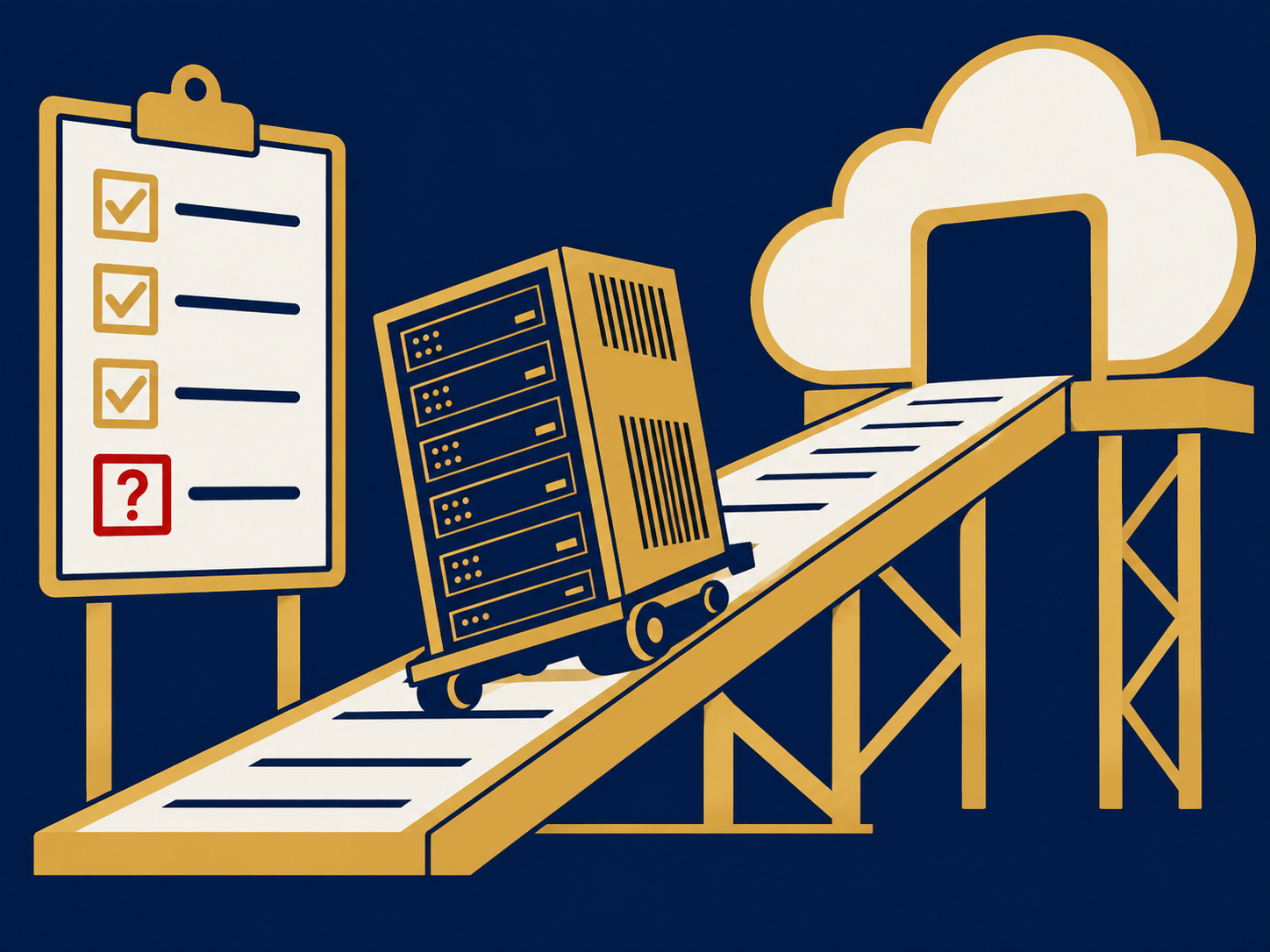
Cloud computing is three separate decisions that vendors routinely sell as one. Which workloads move, on which model, and with which provider each carry different cost structures, contract terms, and exit paths. Collapsing them — which every vendor pitch does — is how organizations end up with a transformation story and a surprise bill.
When someone says "we're moving to cloud," they could mean migrating servers, subscribing to SaaS applications, building on a managed platform, or all three simultaneously. The distinction matters because the cost structure, the contract terms, and the exit path are fundamentally different depending on which model is actually in play.
The Problem Cloud Computing Solves
Owning and operating infrastructure requires capital, headcount, physical space, and operational discipline that most organizations would rather apply elsewhere. Hardware refresh cycles are expensive. Scaling capacity requires procurement lead times. Disaster recovery means a second data center nobody wants to fund. Cloud shifts that burden to a provider in exchange for a consumption-based fee — and for the right workloads, that trade is genuinely worth making.
Cloud computing typically belongs on the shortlist when:
- Hardware refresh cycles are creating capital expenditure pressure the business doesn't want to absorb
- Scaling capacity for growth, seasonality, or geographic expansion requires faster provisioning than on-premises allows
- Remote workforce requirements are exposing limitations in data center-centric architectures
- Business continuity and disaster recovery requirements demand geographic redundancy that a second owned data center can't justify on cost grounds
- A compliance, security, or redundancy requirement is easier to meet through a managed provider than through internal operations
- The organization is preparing for a transaction — acquisition, IPO, or divestiture — where infrastructure flexibility matters
How Cloud Computing Actually Works
Cloud computing is the delivery of computing resources — including servers, storage, databases, networking, software, and analytics — over the internet by a third-party provider, on demand, billed by consumption.
The provider owns and operates the physical infrastructure. The customer configures, provisions, and uses it through a management interface, typically paying only for what they use. This is the foundational economic difference from traditional on-premises infrastructure: the capital cost and the operational overhead of running a data center shift to the provider.
Three service models define what the provider manages and what remains the customer's responsibility:
Infrastructure as a Service (IaaS) provides raw compute, storage, and networking. The customer controls the operating system, middleware, applications, and data. The provider manages the physical hardware. AWS EC2, Azure Virtual Machines, and Google Compute Engine are examples. IaaS gives maximum control; it also means maximum operational responsibility on the customer side.
Platform as a Service (PaaS) adds a managed layer — operating systems, runtimes, middleware — so developers can build and deploy applications without managing infrastructure. The provider handles more; the customer retains control of the application and data. PaaS accelerates development but introduces deeper platform dependency.
Software as a Service (SaaS) is the application itself delivered over the internet. The provider manages everything — infrastructure, platform, and application. The customer manages configuration and data. Salesforce, Microsoft 365, and ServiceNow are SaaS. This is the model most employees interact with directly.
Not all cloud is the same deployment model. Public cloud uses shared provider infrastructure accessible over the internet. Private cloud dedicates infrastructure to a single organization, either in a provider's data center or on-premises. Hybrid cloud combines both — typically keeping sensitive or regulated workloads on-premises while running other workloads in public cloud. Multi-cloud uses more than one provider simultaneously, usually to avoid concentration risk or to optimize by workload.
Each deployment model carries different cost structures, security profiles, compliance implications, and vendor relationships. For the right workloads, cloud genuinely delivers — faster provisioning, elastic capacity, global reach, managed services that would require dedicated headcount to run internally, and developer velocity that on-premises infrastructure can't match. The key qualifier is "for the right workloads." Matching workload requirements to the right model, provider, and cost structure is a decision that happens before commitment, not after. "We're moving to cloud" without specifying which model and which provider is a direction, not a decision.
What Cloud Computing Does NOT Do
This matters as much as what it does.
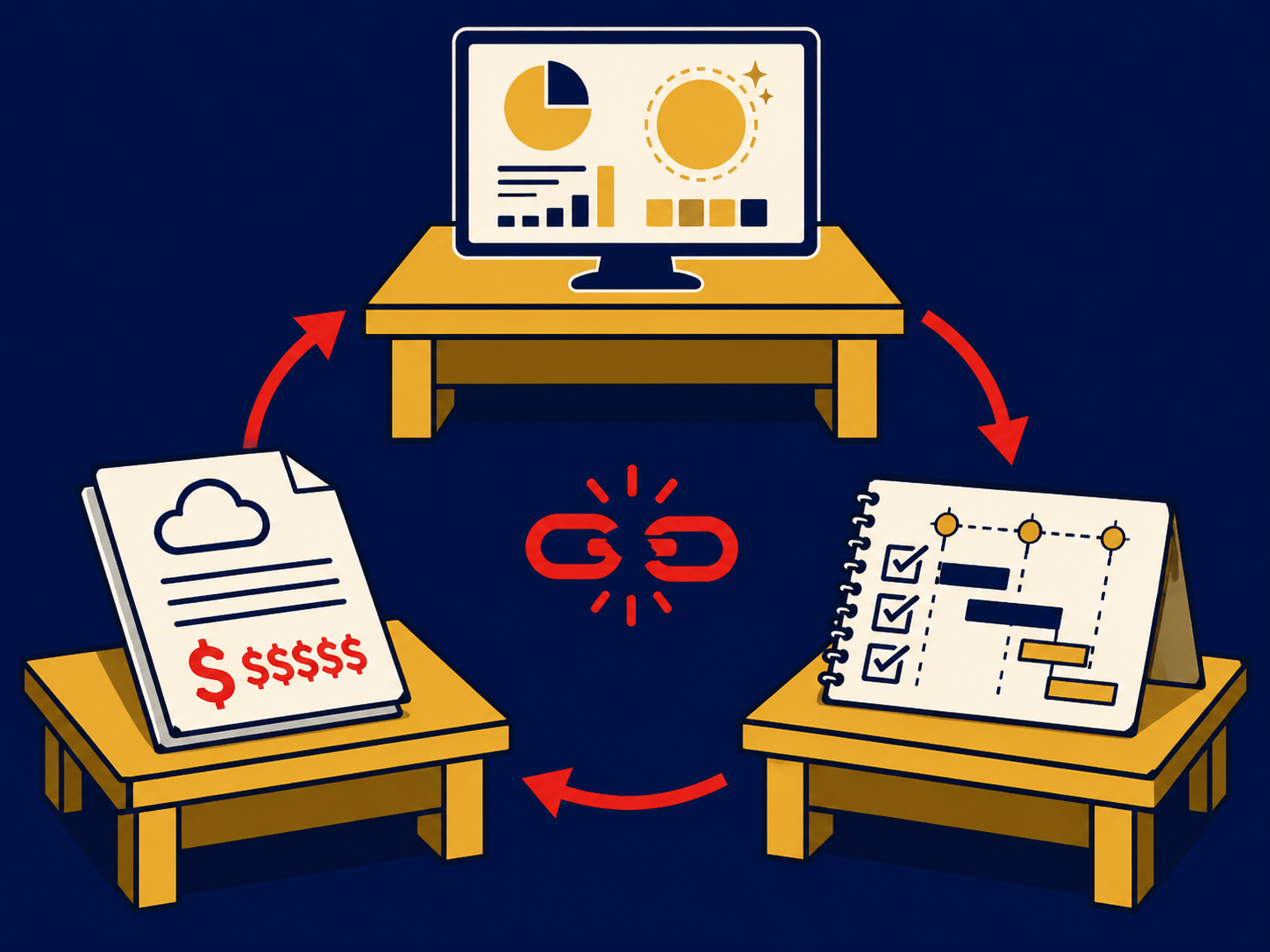
Cloud does not automatically reduce costs. The consumption-based model is elastic in both directions. Resources provisioned but not rightsized, storage that accumulates without cleanup, data egress charges that weren't modeled, and reserved instance commitments that don't match actual usage patterns — these are recurring sources of cloud bills that exceed the original projection. Cloud cost management is a discipline in itself. Organizations that don't practice it pay for the hyperscaler's margin instead of their own efficiency.
Cloud does not simplify security — it shifts security responsibility. Physical security, infrastructure maintenance, and patching the underlying hardware all move to the provider, and for many organizations that's a genuine improvement. But everything running on that infrastructure — configurations, access controls, identity management, data classification, and compliance posture — remains the customer's responsibility. Misconfigured storage buckets, over-permissioned IAM roles, and inadequate logging are among the most common enterprise security incidents, and all of them are customer-side failures in a cloud environment. The provider's security certifications protect the provider. Your security posture is still yours to manage — just in a different operating model than before.
Cloud does not eliminate vendor lock-in — it relocates it. Proprietary managed services, platform-specific APIs, and tightly integrated tooling make moving between providers expensive and technically complex. Organizations that build on hyperscaler-native services accumulate switching costs with every workload they deploy. The flexibility cloud promises at the architecture level often disappears at the contract and cost level once workloads are running.
Cloud is not a strategy. "Moving to cloud" is a direction. The actual decisions — which workloads move, on which model, with which provider, under which contract terms, governed by which cost management practices — determine whether the outcome matches the pitch. Vendors who lead with the transformation before helping you define the requirements are selling the destination without a map.
Cloud vs. On-Premises vs. Colocation
This is the comparison most organizations face at some point, and it's rarely as binary as vendor pitches suggest.
On-premises is still the right answer for specific use cases: ultra-low latency requirements, highly regulated data that cannot leave a defined perimeter, or workloads where the economics of ownership beat consumption pricing at sustained scale. The problem is that most cloud migration conversations don't start there — they start with the vendor's preferred answer and work backward.
Colocation means your hardware in a provider's data center. You own and operate the equipment; the provider supplies the facility, power, cooling, and connectivity. Colocation is often underrepresented in cloud migration conversations because it doesn't serve a hyperscaler's revenue interest — but it's the right answer for organizations that want data center economics without the capital cost of building their own. We've seen cloud-to-bare-metal or cloud-to-colocation projects identify savings of 60–70% for steady-state workloads that don't need elastic scaling.
Cloud makes the most economic sense for variable workloads, development and test environments, applications that need geographic distribution, and organizations that genuinely can't predict capacity requirements. It's the wrong answer — at least at hyperscaler pricing — for predictable, steady-state workloads that could be rightsized and owned.
The right question isn't "on-premises or cloud." It's which workloads belong where, under what model, and at what cost — compared against real market alternatives, not just what the vendor pitching you would prefer.
The Hyperscaler Commercial Reality
Understanding cloud computing requires understanding that three providers — AWS, Azure, and Google Cloud — control the majority of the market. This concentration creates commercial dynamics that differ from virtually every other technology category.
Hyperscaler pricing is published list pricing. It's also a ceiling, not a floor, for organizations above a certain scale. Enterprise Discount Programs, committed use discounts, reserved instances, savings plans, and private pricing agreements all exist — but the terms, qualification thresholds, and negotiation levers are opaque to buyers without independent market data. An organization negotiating directly against published pricing, without benchmarks from comparable engagements, is negotiating blind.
Commitment structures are the most consequential commercial decision in a cloud engagement. Reserved instances and savings plans offer significant discounts in exchange for one- or three-year usage commitments. The discount is real. The risk is committing to capacity projections that don't hold — which produces either underutilization you've already paid for or overages you didn't budget for. Getting commitment sizing right requires independent usage modeling, not the hyperscaler's preferred configuration.
Egress fees are the cost that appears after the decision is made. Moving data out of a cloud provider's environment — to another provider, back on-premises, or to end users in certain configurations — incurs charges that were typically not prominent in the sales conversation. For data-intensive workloads, egress costs can materially change the economics of a cloud deployment.
Contract terms in hyperscaler agreements are not negotiated the way enterprise software contracts are. The standard agreements are largely non-negotiable at small scale. At enterprise scale, more is possible — but only if you know what to ask for, and only with leverage that comes from having real alternatives documented.
What Most Cloud Conversations Leave Out
Vendor pitches focus on what cloud does well. A few things that don't get equal airtime:
The total cost of migration is almost always underestimated. The hyperscaler's migration tooling is designed to reduce friction on the way in. It's not designed to surface the full cost of moving — replatforming applications, retraining staff, establishing governance frameworks, and managing a parallel environment during transition. Lift-and-shift migrations that appear cost-neutral often surface unexpected complexity once workloads are actually running in cloud.
Multi-cloud is harder than it sounds. The theoretical benefits of multi-cloud — avoiding lock-in, optimizing by workload, building redundancy — are real. The operational reality of managing security posture, identity, networking, and cost governance across two or three hyperscalers simultaneously requires tooling, processes, and expertise that most mid-market IT teams don't have. Vendors who pitch multi-cloud as a straightforward lock-in mitigation strategy are describing the goal, not the work required to get there.
Governance doesn't build itself. Cloud's elasticity is also a governance problem. Resources provisioned without tagging policies, environments that sprawl without ownership, and spend that accumulates without visibility are among the most common cloud maturity failures. Organizations that haven't designed cost governance, security controls, and resource lifecycle management before migration spend the following 12–18 months trying to impose them retroactively.
The category is genuinely noisy — and harder to navigate than most vendor pitches suggest. Across 967 providers, we've seen cloud engagements range from straightforward SaaS migrations to hyperscaler-native architectures that create decade-long dependencies. These are meaningfully different decisions sold under the same word. What makes sense for a 200-person company moving off on-premises email performs differently from a 1,500-person company rebuilding core infrastructure on a hyperscaler platform — and vendor pitches rarely surface that distinction unprompted.
Independent Reading Before the Vendor Pitches Start
If you're early in cloud evaluation, these provide independent framing before vendors shape the conversation:
- Understand the cost model: The Cloud FinOps Foundation's documentation on cloud cost management, unit economics, and commitment modeling is practitioner-grade and vendor-neutral. Understanding the cost model before choosing a provider is the single highest-leverage preparation step.
- Understand the shared responsibility model: Each hyperscaler publishes a shared responsibility model that defines the security boundary between provider and customer. Reading it before you deploy — not after — determines what governance you need to build.
- Understand the contract reality: Hyperscaler standard agreements, enterprise discount program terms, and the gap between list pricing and what comparable organizations actually pay all require independent data. The questions that matter most at the contract stage are about commitment sizing, egress modeling, and exit provisions — not feature comparisons.
- Understand provider fit: The choice between AWS, Azure, and Google Cloud is not primarily a capability question for most workloads. It's a commercial relationship question, an existing ecosystem question, and an operational skills question. Evaluating these requires understanding your actual requirements, not the provider's preferred use case.
If you're comparing cloud providers, evaluating a migration proposal, or reviewing a renewal on existing cloud spend and want an independent perspective — on the architecture, the commercial terms, or whether the approach being proposed actually matches your requirements — that's where we help.
No pitch. No prep. Just answers about your cloud decision. Get Started →