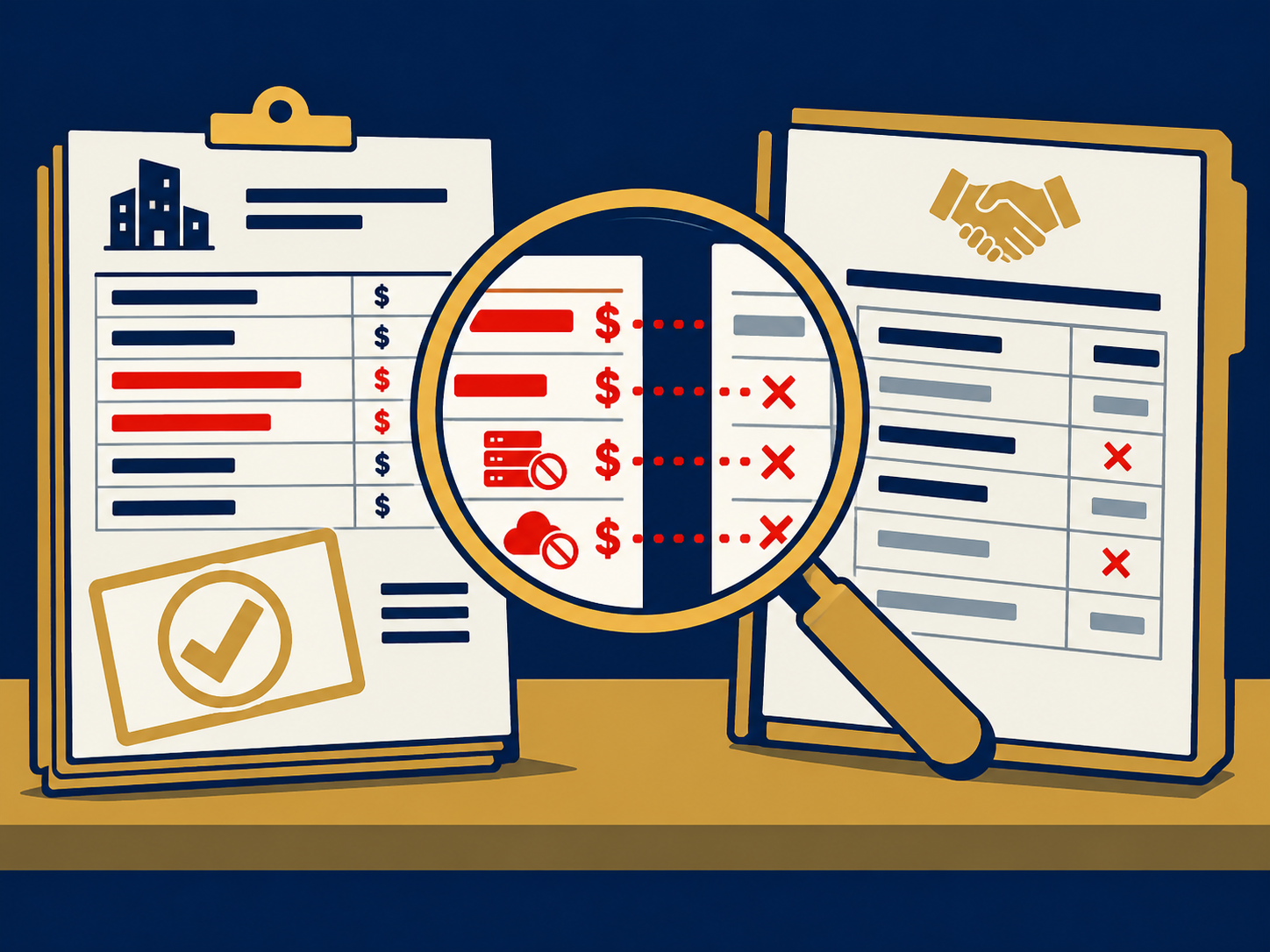
Wireless expense management (WEM) is the practice of keeping track of an organization’s mobile lines, plans and devices, checking carrier bills against contracts and usage, and cutting lines and plans that aren’t needed. It can be run in-house with software or bought as a managed service, and it is often part of a broader telecom expense management program.
Not to be confused with Work Environment Measurement (measuring workplace conditions such as noise, air quality and lighting) or Workforce Engagement Management (contact center tools for scheduling, quality and agent engagement), which are also abbreviated WEM.
At a glance
- WEM keeps an inventory of mobile lines, SIMs, devices and who has them.
- It audits carrier bills for unused lines, oversized plans, roaming charges and billing errors.
- It often includes processes for ordering, reassigning and cancelling lines and devices; scope varies by provider.
- It can be software you run or a service a provider runs for you.
- It is a subset of telecom expense management focused on mobile.
What problem it solves
Mobile spend is made of many small charges, which makes it easy to lose control of. Every employee with a company phone has a line, a plan and a device; add tablets, hotspots, IoT SIMs and vehicle trackers and the count grows quickly. People leave and their lines keep billing. Plans are chosen once and never revisited as usage changes. Someone travels abroad without an international plan and returns to a large roaming bill. If the company uses more than one carrier, each has its own portal and invoice.
WEM brings that into one view: every line and device, who it belongs to, what it costs, and how much it’s actually used. That makes it possible to cancel what isn’t needed, move people to plans that fit, and catch problems before the next bill.
How it works
Inventory. Lines, SIMs, devices and users are pulled from carrier accounts and matched to employees and cost centers. Keeping this matched to your HR records is what lets you catch lines belonging to people who have left.
Bill audit and optimization. Invoices or carrier data feeds are compared with contracted rates and actual usage. Typical findings are zero-usage lines, plans that are too large or too small, pooled data that could be rebalanced, unexpected roaming and billing errors. Many providers file disputes with the carrier on your behalf; with software-only products, your team does it.
Lifecycle management. Some services handle the operational side too: ordering and setting up devices, upgrades, repairs, replacements, and suspending, reassigning or cancelling lines when people change roles or leave. Device setup often works alongside a mobile device management (MDM) tool, which handles security and configuration.
Policy and reporting. Eligibility rules (who gets a phone, which models, which plans), approval workflows, and spend reports by department or cost center.
See our wireless expense management page for how programs are typically scoped, and business cell phone plans for sourcing the lines themselves.
When it matters for buyers
- When the number of mobile lines grows past what someone can track in a spreadsheet. The exact point varies, but churn makes it worse.
- After layoffs or reorganizations. Lines belonging to departed staff are a common source of waste; see also device lifecycle management.
- Before renewing a carrier agreement. Usage data shows which plans and pools you actually need.
- When roaming bills keep surprising you. Policy and travel plans fix that before the bill arrives.
- When you’re deciding between company-paid lines and BYOD stipends. Accurate cost data makes the comparison possible.
Questions to ask vendors
- Which carriers and countries do you support, and how do you receive our billing data?
- Do you file disputes and make plan changes with the carrier for us, or only recommend them?
- How do you match lines to employees, and can you connect to our HR system?
- Do you handle device ordering, repairs and retirement, or only lines and bills?
- How is your fee calculated: per line, per device, a percentage of spend or a share of savings?
- How do you handle IoT SIMs, hotspots and other non-phone lines?
- Can we export our inventory and history if we leave?
How it differs from telecom expense management (TEM)
Telecom expense management (TEM) covers all telecom spend: circuits, phone lines, voice services and, often, mobile. WEM is the mobile-focused part. Mobile differs from fixed services because it is tied to individual people, changes constantly as staff join and leave, and involves devices as well as services. Some organizations handle mobile inside their TEM program; others buy WEM, or a broader managed mobility service, separately.
Problems this helps with
- Paying for phone lines nobody uses
- Surprise roaming charges after business trips
- Not knowing who has which company phone
- Mobile bills from several carriers that nobody reviews