Build vs. Buy Security: The Real Risk Is What Neither Option Guarantees
June 4, 2026

The case against building an internal security function is real. It’s also the argument every managed security vendor leads with — because it ends with you signing their contract.
That’s worth keeping in mind before you take it at face value. If you haven’t mapped your threat surface, assessed your internal capacity, or answered the five questions that should precede any vendor conversation, start there first →
What the internal build problem actually looks like
A basic 24/7 security operation requires multiple analysts across shifts, detection and response tooling, logging infrastructure, integrations, and continuous tuning. Fully-loaded costs can run past $2M annually just to keep the function operational — before it’s actually effective.
The hiring problem is what kills most internal builds. Security talent is genuinely scarce. Roles take months to fill. Analysts leave every 12 to 18 months, and when they leave, institutional knowledge leaves with them. Most internal security builds don’t fail because the plan was wrong. They fail because the team never stabilizes long enough to become effective.
That’s the honest version of the internal build problem. It’s accurate. And it’s exactly what every managed security vendor tells you — because it leads somewhere they want you to go.
What managed security vendors don’t volunteer
The external model is faster and more predictable on paper. You’re operational in weeks instead of 12 to 24 months. You don’t own the hiring problem. The cost structure moves away from multi-million fixed overhead.
What you do own is whatever the contract says — and that’s where most buyers stop reading carefully.
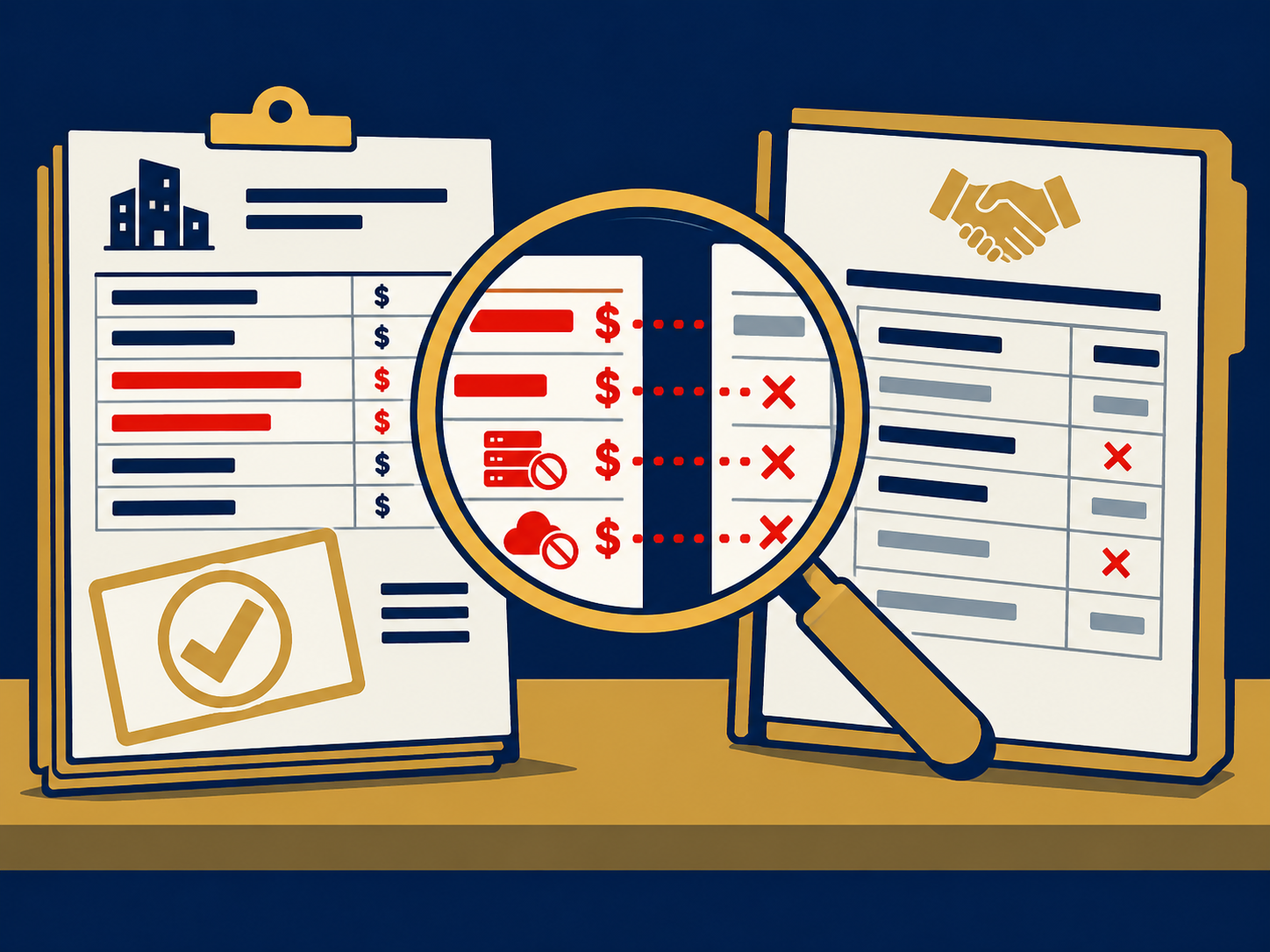
“24/7 coverage” is a marketing claim until you read the SLA. Most managed security contracts offer service credits when response SLAs are breached. Credits are the vendor’s preferred remedy: difficult to claim, worth less than the actual cost of the failure, payable in future service from the vendor that just missed.
“Coverage” and “response” are also different things. Coverage means the vendor is monitoring. Response means they act — within a defined window, with a defined escalation path. Those distinctions should be explicit in the contract before you sign.
Consider what that gap looks like in practice. An organization with a managed security contract discovers a breach on Friday at 6pm. Their SLA guarantees one-hour response. Their contract measures response time from business-hours triage — a clause buried in the schedule, not the main agreement. By Monday morning, dwell time is over 60 hours. The vendor met their SLA. The organization owned the damage.
Contracts structured this way are more common than buyers expect. The gap between what buyers believe they purchased and what the contract actually commits to is where the real exposure lives. And when the vendor meets their SLA while the organization owns the damage, the question regulators and boards ask is not about the vendor. It’s about you.
What managed security doesn’t transfer
Monitoring can be outsourced. Alert triage can be outsourced. Tool administration can be outsourced. Certain response activities can be outsourced.
Accountability cannot.
If a regulator investigates, the organization is accountable. If the board asks questions, the organization is accountable. If a customer demands answers after a breach, the organization is accountable. The vendor can support the response. The vendor does not inherit the responsibility.
That is the single biggest misconception in managed security purchasing — and one that the sales process for every external security model is structured to leave unaddressed. Buyers evaluate managed security on coverage breadth, response times, and cost. They rarely evaluate it on the question of what they still own when something goes wrong.
The answer is: everything that matters to regulators, boards, and customers.
Understanding that before you sign doesn’t change whether external security makes sense for your organization. It changes what you need the contract to say, what internal ownership you need to maintain regardless of model, and what “coverage” actually needs to mean in practice rather than in the SLA.
When cyber insurance is part of the decision
If a cyber insurance requirement is part of what’s driving this decision, confirm that what the insurer requires and what the vendor’s contract actually commits to are the same thing. They frequently aren’t.
Insurers specify controls — EDR coverage, SOC monitoring, MFA enforcement, incident response capability. Vendors sell products that satisfy those requirements on paper. Whether the implementation actually delivers what the insurer intended is a different question — and it typically surfaces at claims time, not at renewal.
Buying managed security to satisfy an insurance requirement and buying it to actually reduce risk are not always the same purchase. The inspection questions below apply to both — but the stakes when they diverge are worth understanding before you sign.
The path most mid-market teams actually take
Most serious mid-market security decisions are not pure build or pure buy. They’re a combination — and the combination matters as much as either option alone.
One clarification worth stating directly: most organizations at the 200–2,000 employee scale don’t have a dedicated CISO. The IT leader, the CTO, or the IT Director is the de facto security owner — alongside everything else they’re managing. The hybrid models below assume that reality, not a fully-staffed security organization.
Common structures that work at this scale:
-
An internal security owner — whether a dedicated hire or a CTO or IT Director wearing that hat — who owns risk decisions and vendor relationships, paired with an external MDR for 24/7 monitoring and response capability they couldn’t build or staff themselves.
-
An internal IT team that owns the environment and controls access, paired with an outsourced SOC for detection and escalation — keeping internal ownership without internal overhead.
-
Internal ownership of compliance, audit, and risk documentation, with external providers handling detection, response, and specialty coverage like cloud or identity security.
Both directions have predictable failure modes that don’t get discussed in vendor sales cycles. Internal builds most often fail when a key analyst or security lead departs and the institutional knowledge that made the function effective walks out with them — the tooling stays, the context doesn’t. External models most often fail when telemetry is incomplete at onboarding and never corrected — the vendor is monitoring what they can see, and coverage gaps that existed at signing persist invisibly through the contract term. Neither failure mode is unusual. Both are preventable if they’re surfaced before the commitment is made.
What makes hybrid combinations work isn’t the model — it’s the contract structure on the external side and the clarity of accountability between internal and external functions. Who has authority to isolate an endpoint during an active incident? What escalation path exists when the external team identifies a threat at 2am? Those aren’t technology questions. They’re contract and operations questions that most buyers don’t resolve before they sign.
The wrong combination — internal ownership without the budget to staff it, paired with an external contract that doesn’t actually commit to response — creates the worst of both options. You pay for coverage. You own the risk.
What you’re actually evaluating — and what to inspect before you sign
Not all external security models are solving the same problem, and the contract inspection questions below apply differently depending on which category is on the table.
An MDR — managed detection and response — focuses on threat detection, investigation, and response within a defined scope. An MSSP — managed security service provider — typically covers a broader set of security operations including monitoring, compliance support, and tool management, with variable depth on response. A co-managed SOC model splits responsibilities between an internal team and an external provider, with the internal team retaining more direct control. An incident response retainer provides access to expertise when something goes wrong but is not a continuous monitoring engagement.
These are not interchangeable. A contract inspection checklist built for an MDR engagement looks different from one built for a co-managed SOC. Before reviewing contract terms, confirm which model you’re actually buying — because vendors don’t always make that distinction clear, and the difference determines what protections matter most. Vendor category naming is also inconsistent — what one provider calls MDR, another calls MXDR or managed SOC. The acronym on the proposal matters less than what the contract scope actually defines.
The worst time to negotiate a managed security contract is when the board has already decided you need one — urgency compresses exactly the due diligence that matters most.
With that context, the questions that surface real exposure are:
Is the SLA measured from alert creation, triage, confirmation, or customer notification? Each definition produces a different response time in practice. “One-hour response” means something very different depending on which clock starts first.
Is response guaranteed 24/7, or is monitoring 24/7 and response during business hours? This distinction is frequently obscured in sales conversations and explicit in contract schedules.
Who has authority to isolate an endpoint or take a containment action during an active incident — and does that require your approval, or can the vendor act unilaterally?
What telemetry sources are included in the coverage? Cloud infrastructure, identity providers, SaaS applications, and endpoint detection are often scoped separately. Gaps in telemetry are gaps in coverage, regardless of what the SLA says.
What logs and data sources are explicitly excluded from the contract scope? Exclusions define the boundary of what the vendor is actually responsible for.
What happens if the vendor is acquired, experiences service degradation, or changes the platform the service runs on? Does your contract include exit provisions, or are you subject to the new owner’s terms?
Can you export your detections, playbooks, and historical incident data if you leave? Data portability in security contracts is as important as in any other vendor relationship — and as rarely included by default.
If a managed security vendor can answer all of these with specifics — in the contract, not in the conversation — the engagement is probably structured well. If the answers are vague or deferred to the SLA schedule, the contract needs work before you sign.
The question that’s actually yours to answer
The real question isn’t whether to build or buy security. It’s whether the model you’ve chosen closes the gaps that already exist in your environment.
Most breaches don’t happen because organizations chose the wrong operating model. They happen because nobody clearly owned detection, escalation, containment, and recovery when it mattered — and a contract or an org chart that looked clean on paper had gaps that only became visible under pressure.
Before comparing vendors or evaluating models, determine who owns each of those responsibilities today. Then determine whether that ownership is documented, resourced, and contractually supported. Any gap that remains after the contract is signed is still your risk — regardless of which vendor’s name is on the agreement.
You don’t find out what the contract was missing when you sign it. You find out when you need it.
Not sure which model fits your organization yet? Answer these five questions before you evaluate vendors → Before You Decide to Build or Buy Security, You Need to Answer These Questions First
Find out what you actually bought → Get Started