Before You Decide to Build or Buy Security, You Need to Answer These Questions First
June 3, 2026

Most organizations approach the build vs. buy security decision the way vendors frame it: as a cost and capability comparison. Internal builds are expensive and slow. External models are faster and more predictable. Pick one.
That framing is incomplete — and it’s incomplete in a way that benefits the vendors on both sides of it.
The build vs. buy decision isn’t primarily a cost comparison. It’s a question about your organization’s operational reality, risk tolerance, and internal capacity — factors that only you can assess, and that vendors presenting either option have a structural interest in helping you answer quickly rather than accurately.
Here’s what the decision actually depends on.
Where most mid-market organizations actually land
Before working through the decision criteria, one observation worth stating directly: for most organizations at the 200–2,000 employee scale, pure build rarely works and pure outsource creates accountability problems that surface only after an incident.
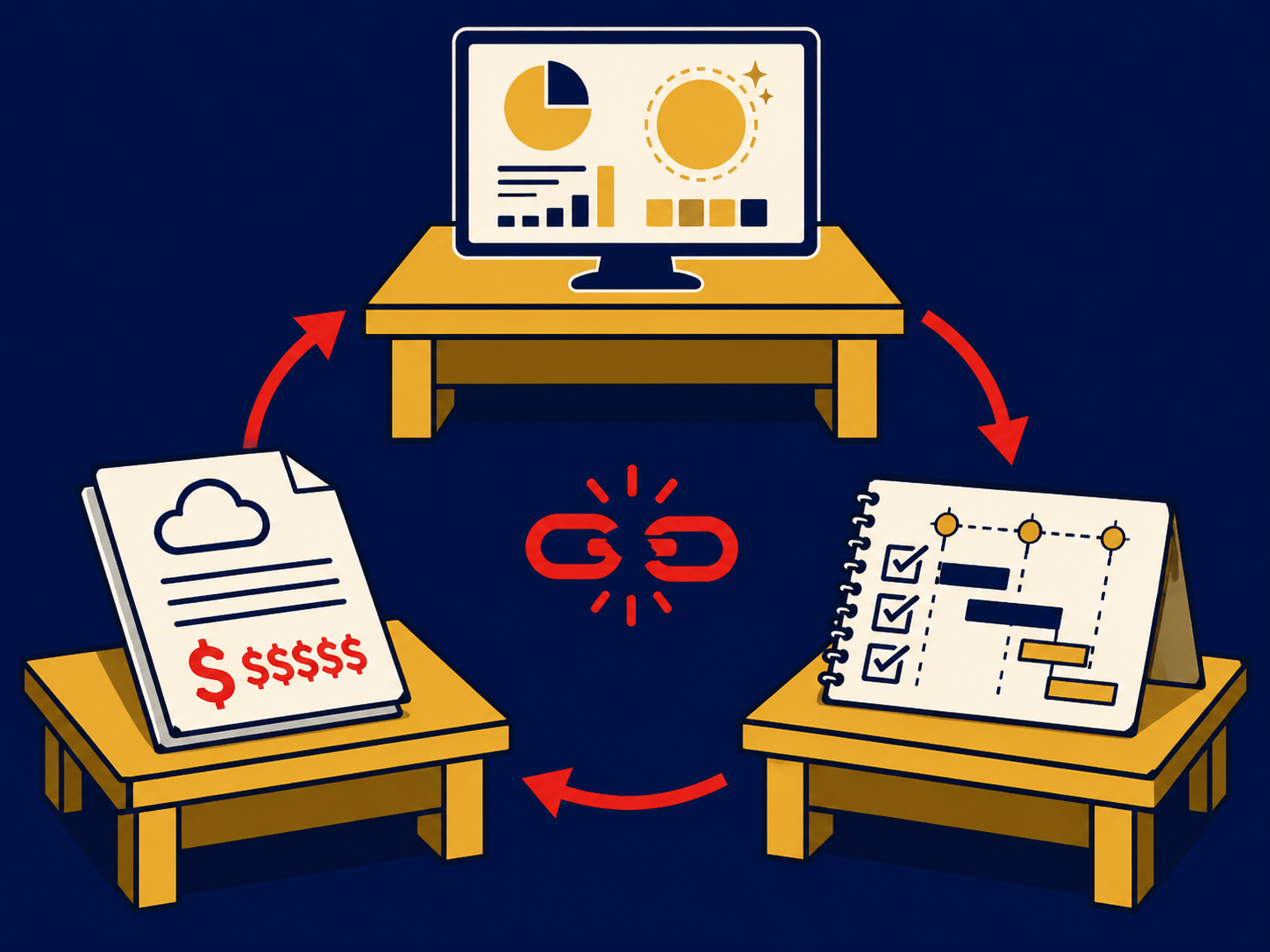
Pure internal builds require sustained investment in security staffing, tooling, and leadership that most mid-market organizations cannot maintain at the level the function demands. Pure external models hand off operational delivery without handing off organizational accountability — and the gap between those two things is where most managed security failures actually happen.
Hybrid models — internal ownership of risk decisions and vendor relationships, paired with external delivery of monitoring, detection, and response — are where most mature mid-market organizations actually land. Not because hybrid is inherently correct, but because it reflects the operational reality: internal teams bring context, external providers bring scale, and the model works when the accountability boundary between them is explicit before an incident rather than discovered during one.
The sections below are about whether hybrid makes sense for your organization specifically — and if so, how to structure the decision rather than default into it.
What you’re trying to protect — and from what
Before comparing models, the prior question is: what does your environment actually look like, and what are you trying to defend?
Most mid-market organizations have a mix of cloud infrastructure, SaaS applications, identity systems, and on-premise or co-located assets. The threat surface is not uniform, and the coverage any security model provides is only as good as the telemetry it has access to. A managed security model that doesn’t cover your cloud environment isn’t a security model for your organization — it’s a partial one.
Before evaluating models, map what you’re actually protecting: where your data lives, where your users access systems from, what your identity environment looks like, and where a breach would cause the most damage. That map determines what coverage needs to include — and whether any model you’re evaluating actually covers it.
Most buyers skip this step and start with vendor demos. Vendors are happy to let them.
Whether you can sustain what you’re considering
The build vs. buy decision isn’t a one-time choice. It’s a commitment to an ongoing operational model — and the question is not whether you can stand it up, but whether you can sustain it.
For internal builds, the sustainability questions are specific: Can you hire and retain security analysts in a market where tenure averages 12 to 18 months? Can you fund not just the initial build but the ongoing tooling, tuning, and staffing costs — which can run past $2M annually in a fully-loaded 24/7 operation — for three to five years? Do you have the internal leadership to manage the function through analyst turnover without losing institutional knowledge?
For external models, the sustainability questions are different but equally specific: Is the vendor’s pricing structure stable over a multi-year term, or does it escalate in ways that compound the cost? What happens to the relationship if the vendor is acquired or the service team turns over? Are you operationally dependent on their tooling in ways that would make switching expensive?
Sustainability is the question most buyers don’t ask at the decision stage — and the one that most often determines whether the model works three years in. Once you’ve picked a model, the next failure point is what the contract actually commits to — and what it quietly doesn’t. What managed security contracts don’t volunteer — and what to ask before you sign →
What you can’t outsource regardless of model
Regardless of which model you choose, certain functions cannot leave the organization.
Risk decisions — what constitutes an acceptable level of exposure for your business — belong to internal leadership, not to a vendor. Incident response accountability — who answers to regulators, boards, and customers when something goes wrong — belongs to the organization, not to the vendor. The vendor can support those functions. The vendor cannot own them.
Most organizations that build internally understand this by default. Many that buy externally discover it only when an incident surfaces the gap between what the vendor covers and what the organization is still responsible for.
Before deciding how to deliver security, decide what internal ownership is non-negotiable regardless of the delivery model. That inventory shapes everything else — how you structure an internal build, what you need an external contract to commit to, and how you design a hybrid model that keeps ownership where it belongs.
Whether your actual risk tolerance matches the model you’re considering
Cost and speed are the criteria vendors surface. Risk tolerance is the one they don’t — because it’s harder to quantify and because an honest answer might not favor their product.
Internal builds give you control and context. Your team knows your environment, your business, and your risk profile. What they give up is scale and speed — a small internal team cannot match the threat intelligence or detection velocity of a mature external SOC.
External models give you speed and coverage breadth. What they give up is context. A managed security provider monitoring hundreds of clients simultaneously knows threats in general. They know your environment only as well as you’ve enabled them to — through integrations, onboarding, and ongoing communication that most buyers underinvest in.
The honest risk tolerance question is: what is the cost to your organization — financially, operationally, reputationally — of a breach response that’s slower, less informed, or less coordinated than it should have been? The answer to that question should drive the model, not the vendor’s pricing deck.
The questions to answer before you evaluate vendors
If you’ve worked through the sections above, these are the five questions your decision should be able to answer before a vendor enters the conversation:
What does our threat surface actually look like — and does any model we’re considering cover all of it?
Can we sustain this model for three to five years, not just stand it up?
What internal ownership is non-negotiable regardless of what we buy — and is that ownership currently resourced?
What is the actual cost to our business of a security failure — and does the model we’re considering reduce that risk in proportion to what it costs?
If the person driving this decision left tomorrow, would this model still work — or does it depend on institutional knowledge that lives in one person?
If you can answer all five with specifics, the vendor evaluation that follows has a real rubric. If you can’t, the vendor evaluation will be shaped by whoever presents most convincingly — which is how most mid-market security decisions go wrong.
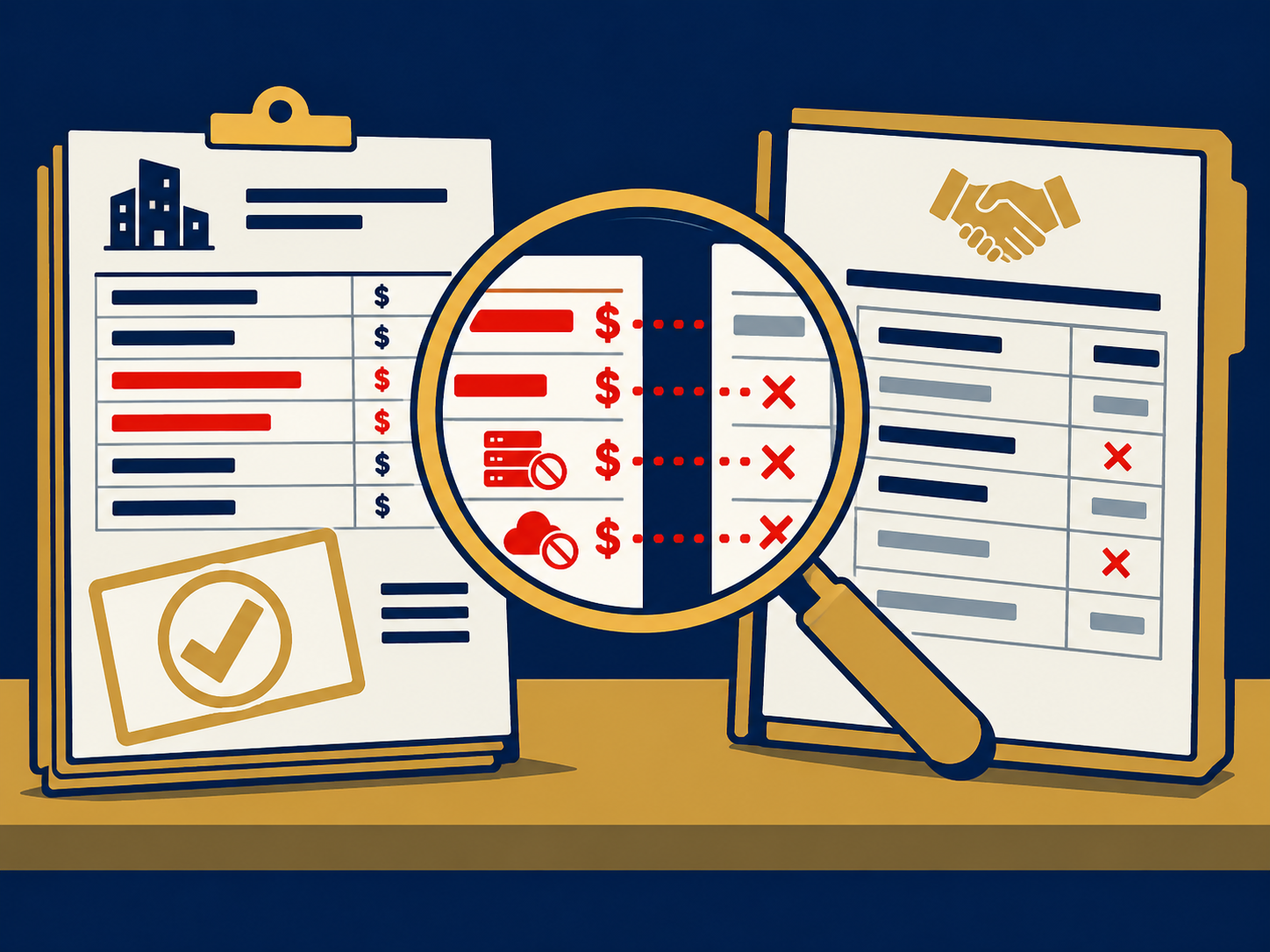
Most managed security contracts are written to protect the vendor’s ability to claim SLA compliance — not your ability to exit, escalate, or hold them accountable when something goes wrong. That’s where the exposure lives. That’s what the contract needs to address before you sign.
Already leaning toward an external model? Read what the contract needs to say before you sign → Build vs. Buy Security: The Real Risk Is What Neither Option Guarantees
Find out what you actually bought → Get Started