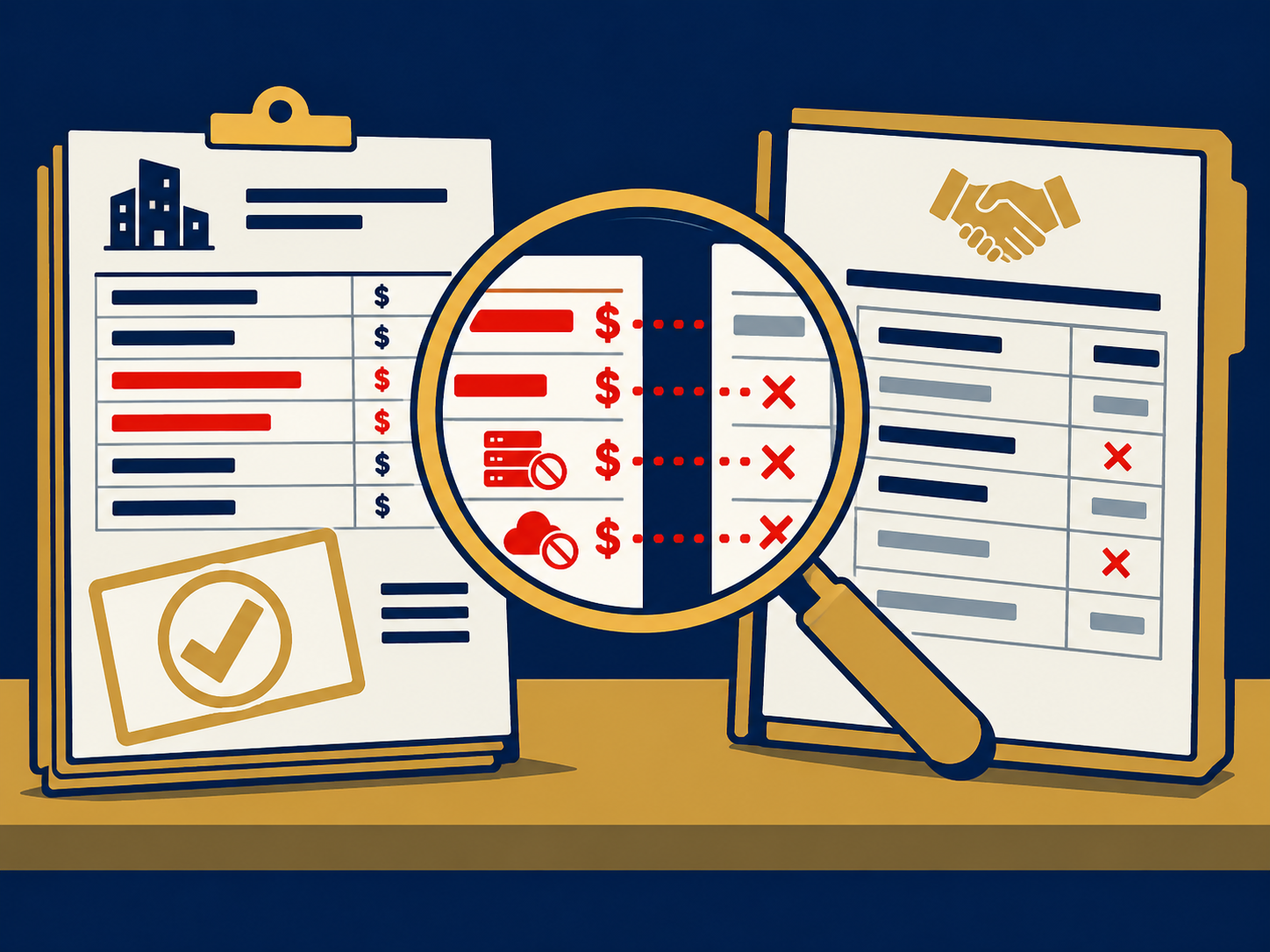
Contact center AI looks impressive in a demo. The intent detection works. The bot answers instantly. The analytics dashboard lights up with insights. On paper, it solves cost pressure, staffing gaps, and customer expectations at once.
Then your first real customers hit the system, and the story changes. Escalations spike, agents complain about yet another tool to wrangle, and your leadership starts asking hard questions about ROI. You are not alone. According to research shared on ComputerTalk, as many as 80% of contact center AI projects fail to meet expectations, nearly double the rate of most IT initiatives.
If you are evaluating why contact center AI failure is so common, the problem is rarely the technology in isolation. The problem is the gap between controlled demos and messy, high‑stakes reality.
This article focuses on that gap and what you can do about it.
Why Contact Center AI Looks Good In Demos
AI vendors are usually not misleading you in the demo. They are just showing your future AI in the easiest possible world.
In a demo, data is clean, workflows are simple, and the questions are predictable. The AI is fed a carefully curated knowledge set, requests follow a narrow script, and edge cases are conveniently out of scope. You see the best case, not the typical case.
In your environment, the AI needs to interpret regional accents, half‑finished sentences, frustrated customers, and products that have been customized for specific accounts. It needs to navigate policies that have been updated three times since last quarter and processes that vary by region or partner. None of that complexity is visible in a standard demo.
The result is a predictable pattern. AI that looked smart in a proof of concept begins to struggle against three obstacles: unclear goals, messy data, and incomplete integration.
The Hidden Causes Of Contact Center AI Failure
Contact center AI failure is rarely about a single bad decision. It usually comes from several issues compounding at once.
1. Fuzzy Business Goals And Success Metrics
Many deployments start with a general objective like “reduce handle time” or “improve self‑service.” These goals are legitimate, but they are not specific enough to guide trade‑offs or measure success.
Research from ComputerTalk notes that about 41% of contact centers cannot define ROI for their AI tools, which makes impact unmeasurable and easy to cut when budgets tighten. Without explicit goals, you end up with:
- Pilots that stall because “value is not clear”
- Tools that are technically live, but barely used
- Conflicting expectations between IT, operations, and finance
In practice, this looks like AI that handles some FAQs, but no one can say whether it improved customer satisfaction, reduced churn, or made staffing more predictable.
2. Poor Data Quality And Fragmented Knowledge
Generative AI and intelligent assistants depend on context. If that context is contradictory or incomplete, you get wrong or inconsistent answers.
Several studies have found that 70 to 85% of generative AI deployments underperform due to messy call recordings, inconsistent CRM data, and siloed systems. The result is a form of contact center AI hallucinations, where the AI responds with something that sounds plausible but is operationally wrong.
Real‑world examples are already public. In the Moffatt v. Air Canada case, the airline’s chatbot gave misleading advice about bereavement fares based on outdated or uncoordinated information. The court ultimately held the airline responsible for what its AI told the customer. The lesson is simple: if your AI is not grounded in a single, validated source of truth, you are increasing both customer risk and legal exposure.
3. Limited Integration With Core Systems
Many AI pilots begin as a layer on top of existing systems instead of being integrated into them. That helps you move quickly, but it also limits what the AI can actually do.
When your AI cannot see order history, account notes, or current entitlements, it is reduced to a smarter FAQ instead of a true agent or copilot. That leads to:
- Agents alt‑tabbing between the AI, CRM, and knowledge tools
- Bots that cannot resolve issues that require a simple status check
- Duplication of work, where the AI collects information that the agent then has to ask for again
Conversely, when one US insurance firm connected its AI knowledge platform directly to CRM data, answer relevance improved and new hire training time dropped noticeably. The difference was not a new AI model. It was better context and integration.
4. Misalignment Between Sales Promises And Delivery Reality
A common failure point is the handoff between vendor sales and delivery. Enthusiasm at the contract stage can mask a lack of detail about what is actually being implemented.
If your delivery team does not understand what the sales team promised, four problems tend to appear:
- The AI is configured to generic use cases rather than your specific goals.
- There is no clear internal owner to make decisions and absorb trade‑offs.
- Timelines are set for “light configuration” while the project actually needs integrations and training.
- Change management is treated as an afterthought.
The result is an AI rollout that is technically on track, but practically misaligned with what stakeholders believe they bought.
5. Overpromising Automation And Underestimating Human Work
When AI is sold primarily as a cost‑cutting tool, it is often pushed to replace human agents instead of augment them. That sets everyone up for disappointment.
The Commonwealth Bank of Australia tried to replace 45 agents with AI. Within months, they had to rehire because the AI could not handle complex calls or edge cases. That is not an isolated story. Deloitte has reported contact center turnover averaging 52% annually, costing a mid‑sized 500‑seat center roughly 4.5 million dollars a year in replacement costs. If you add stress by giving agents only the hardest calls, with no meaningful AI assist, you intensify burnout instead of reducing it.
At the same time, three quarters of consumers say they prefer live agents for many interactions. When you design experiences that trap them in loops with no human escape hatch, you see abandonment, complaints, and damage to your brand.
Why Customers And Agents Lose Trust In AI
Even if the technology is sound, adoption can still fail. Trust is often the missing piece.
Customers Feel Forced, Not Helped
Nearly one in five consumers who used AI for customer service reported no benefit at all, a failure rate almost four times higher than AI use in other tasks, according to the 2026 Consumer Experience Trends Report by Qualtrics. Consumers also ranked customer service AI among the worst applications for convenience, time savings, and usefulness.
Privacy concerns are rising as well. More than half of consumers, around 53 percent, worry that companies will misuse their personal data when using AI in interactions, and about half fear that AI will block them from connecting with a human agent. Almost as many are concerned about AI driving job losses.
Isabelle Zdatny of the Qualtrics XM Institute points out that many companies deploy AI primarily to cut costs instead of to solve real problems. When that happens, customers feel like they are interacting with a cost control measure, not a service enhancement. Without transparent communication about when and why AI is used, and without clear paths to a human, even a technically strong AI can create negative experiences.
Agents See AI As A Threat, Not A Copilot
Resistance is not limited to customers. In 2025, 41% of Gen Z and Millennial employees admitted to sabotaging AI strategies, and 10% said they tampered with performance metrics to make AI appear underperforming. These numbers underline how deeply AI can be perceived as a threat instead of a support.
Agents worry that:
- AI will take their jobs.
- AI will judge their performance unfairly.
- AI will add more tools and steps to an already complex workflow.
When agents are not included early, they tend to route around the new tool or use it minimally. You then end up with “AI available” on paper, but very little AI impact in practice.
The Operational Risk Of Standing Still
You might look at these failure rates and decide that avoiding AI is safer. The research suggests the opposite.
By 2025, as many as 80% of contact centers are predicted to face operational inefficiencies and potential collapse if they do not adopt more advanced solutions such as agentic AI. Operational inefficiencies in legacy environments can raise costs by 25 to 30% every year. At the same time, competitors that are using AI effectively report roughly a 10% higher customer satisfaction score, according to Gartner, which translates into better loyalty and retention.
Traditional scripted chatbots are already undermining customer experience. Pre‑scripted tools cause frustration for many users, and 82% of customers say they have abandoned a brand after poor automated interactions. If you stay with only those tools, you carry the cost of higher churn, slower resolution, and growing dissatisfaction.
The risk is not “AI versus no AI.” The risk is whether your AI approach reduces friction or simply adds a new kind of failure on top of existing problems.
How To Close The Gap Between Demos And Real Calls
If you want to avoid common patterns of contact center AI failure, you need to design around your constraints, not the vendor’s ideal scenario.
Clarify Outcomes Before You Choose Technology
Before you debate models or platforms, be explicit about what you want to change and how you will recognize success. For example:
- “Reduce average handle time for billing calls by 20% without lowering CSAT.”
- “Deflect 30% of password reset requests to self‑service within six months.”
- “Improve first contact resolution for Tier 1 technical support by 15%.”
These targets give you a way to evaluate options, resist scope creep, and say no to features that are interesting but off‑mission. They also give you a language to use with finance and leadership when you revisit ROI.
This is also where you should decide whether you want to start with contact center AI automation for routine flows, contact center AI agent assist for human agents, or a mix of both.
Build A Clean, Governed Knowledge Layer
Most AI failures trace back to poor information hygiene. You can reduce that risk by:
- Consolidating policies, procedures, and approved content into a central knowledge hub.
- Removing or archiving outdated documentation.
- Defining owners for each domain who can validate and update content.
- Establishing clear rules for what the AI is allowed to answer, and when it must escalate.
The fintech example in the research illustrates this clearly. Their first AI launch used raw support content and produced conflicting answers and hallucinations. When they relaunched with an AI knowledge hub containing validated data, Net Promoter Score and customer satisfaction improved.
If you are already thinking about ai platforms vs point solutions, this is where platform choice matters. A cohesive platform can help manage knowledge centrally, while point solutions often re‑create silos.
Integrate AI Into Workflows, Not Beside Them
AI that sits outside the agent desktop or the customer journey becomes optional. AI that appears in the same screen and step where a decision is made becomes part of the workflow.
For agents, that might mean:
- Answer suggestions that appear in the CRM interface they already use.
- Real‑time guidance grounded in the current customer record.
- Automated after call summaries that flow directly into case notes.
A financial institution that embedded its AI into the agent desktop saw improvements in first contact resolution and reductions in average handle time because agents were not juggling multiple tools. This is also where tight integration with CRM and ticketing systems matters for context.
For customers, this means bots that can actually see order status, entitlement data, and recent interactions, rather than forcing them to repeat information or bounce between channels.
Design Escalations And Human Hand‑Offs Upfront
One of the fastest ways to undermine AI is to trap customers in an endless automated loop. You avoid this by defining clear escalation points, such as:
- When the AI does not understand after a set number of attempts.
- When the request involves billing disputes, cancellations, or vulnerable customers.
- When a customer explicitly asks for a human.
The goal is not to prove that the AI can handle everything. The goal is to ensure that when AI is not the right tool, the transition is quick, informed, and visible.
Treat Change Management As Core Work, Not Cleanup
AI in the contact center is both a technology implementation and a workforce transformation. You will need to:
- Communicate the “why” to agents, including how AI will support their work.
- Provide hands‑on training so agents can test, question, and suggest improvements.
- Set up early feedback loops where supervisors and front line staff can flag issues and request changes.
One US bank doubled AI adoption once they built structured feedback and supervisor review into their rollout. Agents began to view AI as something they could shape, instead of something being imposed upon them.
Without this work, you risk active or passive resistance, from low usage to deliberate metric manipulation.
Monitor, Retrain, And Adjust Continuously
Customer behavior shifts. Products evolve. Policies change. Your AI will drift unless you treat monitoring and optimization as ongoing responsibilities.
You should plan for:
- Regular performance reviews across accuracy, containment, CSAT, and handle time.
- Targeted retraining when you see patterns of misunderstanding or low‑confidence responses.
- Adjustments to escalation rules as you learn which cases AI handles well and which are better for humans.
Continuous tuning is not an admission of failure. It is the cost of keeping AI relevant as conditions change.
How To Communicate AI Use Without Eroding Trust
Transparency is now a trust requirement, not an optional courtesy. According to recent expert surveys, roughly 84% of AI practitioners agree that companies should disclose AI use to customers. When people discover after the fact that they were speaking with a bot, what could have been a neutral interaction can turn into a negative one.
You can mitigate this by:
- Clearly identifying AI at the start of the interaction.
- Explaining what the AI can do well, such as status checks or simple updates.
- Making the path to a human obvious and easy.
You should also align your AI strategy with your broader artificial intelligence policies around data use, privacy, and ethics. If customers are already worried about data misuse and loss of human access, hidden or ambiguous AI usage just confirms their fears.
The Role Of Platforms Versus Point Tools
From a distance, every AI option can look similar. Most of them use comparable underlying models, and many promise fast value. The difference shows up when you try to scale beyond the first use case.
Point solutions are good at addressing narrow problems fast. For example, an out‑of‑the‑box bot for order status or a dedicated agent assist plug‑in for one channel. The trade‑off is that each point tool tends to have its own configuration, knowledge, and analytics. Over time, this can recreate the same fragmentation that made your pre‑AI stack difficult to manage.
AI platforms, by contrast, are meant to coordinate multiple agents, channels, and workflows in a more unified way. They typically provide:
- A shared knowledge and data layer.
- Common governance over prompts, safety, and escalation.
- Cross‑channel analytics that show where automation is helping or hurting.
This is not a binary choice. Many organizations start with a focused tool, then move to a platform when they see enough value and demand. The key is to decide early how far you expect AI to travel in your contact center so you do not get stuck in a dead‑end architecture.
Bringing It All Together
When you look closely, contact center AI failure does not come from one dramatic mistake. It comes from smaller gaps that accumulate:
- Demos based on idealized scenarios instead of your reality.
- Unclear goals and ROI definitions.
- Fragmented data that feeds AI conflicting truths.
- Limited integration that turns AI into yet another detached tool.
- Overpromising automation and underinvesting in people.
- Weak transparency that erodes trust among both customers and agents.
You can invert this pattern. That starts by defining the outcomes you care about, organizing the data and knowledge that your AI will rely on, and planning the human side of adoption from day one.
Instead of asking, “Which AI tool looks most impressive,” you can begin asking, “Which combination of AI, process, and governance gives us fewer surprises, more predictable service, and decisions we can defend when something goes wrong.”
Need Help Turning AI Promise Into Contact Center Reality?
We work with teams that are wrestling with these exact questions. Our role is not to push a specific AI product. It is to help you frame the problem clearly, compare ai platforms vs point solutions, and identify which mix of contact center ai automation and contact center ai agent assist makes sense for your environment.
We start from your constraints, not a generic roadmap. Together, we clarify the outcomes you want, assess the data and systems you already have, and narrow the field to providers that can integrate with your stack and support your agents instead of sidelining them. From there, we help you pressure test demos, define success metrics, and plan a rollout that can withstand real customers and real calls.
If you are trying to avoid becoming another contact center AI failure story, and you want a path that balances ambition with defensibility, we can help you find and negotiate the right solution.