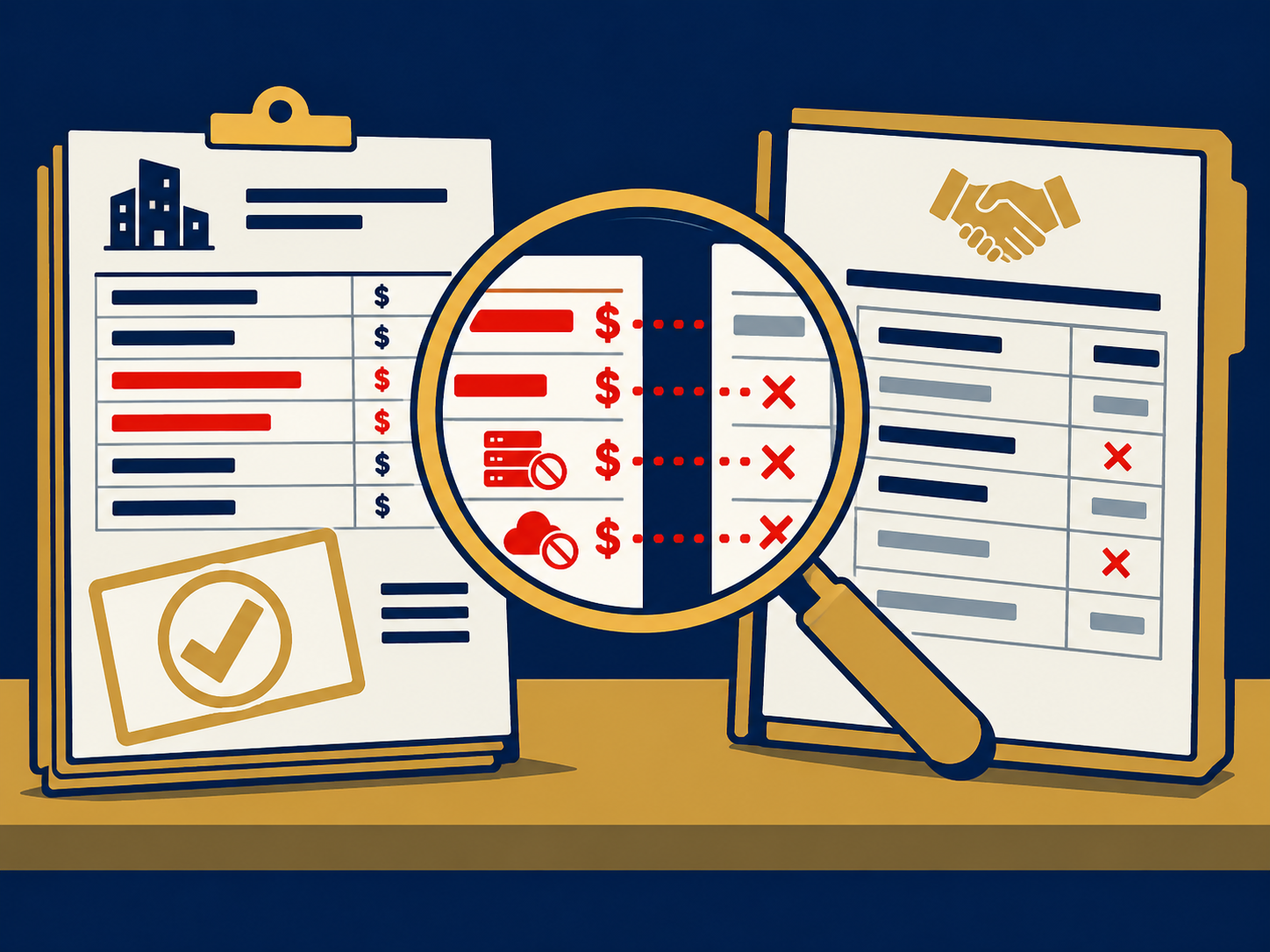
When you hear “AI hallucinations,” it is easy to assume the model is the problem. In contact centers, that assumption is often wrong. The more you look at contact center AI hallucinations, the clearer the pattern becomes. The AI is usually behaving as designed. It is the data environment around it that is broken.
In other words, what looks like a model failure is often a data failure that has finally become visible at scale.
For B2B IT and CX leaders, that distinction matters. If you treat hallucinations as a mysterious AI quirk, you will keep tuning prompts and swapping vendors without fixing the root cause. If you treat them as symptoms of a data mess, you can turn an embarrassing risk into a more defensible, governed environment for both human and virtual agents.
This article looks at the data reality behind contact center AI hallucinations, why the mess is so common, and how to build a grounded approach that your operations, compliance, and executive teams can support.
What Contact Center AI Hallucinations Really Are
AI hallucinations in contact centers occur when your virtual agent or AI copilot generates an answer that sounds confident but is wrong, misleading, or invented. In customer service, those errors are not theoretical. They show up as misquoted policies, incorrect pricing, fabricated contract terms, or promises your business has never made.
As one 2023 analysis noted, generative models like GPT, Claude, or Gemini can confidently produce false or fabricated information because they predict the next likely token based on patterns, not on verified knowledge. In a lab, that is interesting. In a live contact center, it is operational risk.
That risk is no longer niche. A 2025 report cited by CMSWire found that 50 percent of U.S. employees see inaccuracies from generative AI, including hallucinations, as the top risk of using AI at work.
In practice, hallucinations in contact centers tend to follow a few recognizable patterns:
- Confident but wrong answers about policies, fees, or eligibility
- Outdated information that no longer matches current terms or systems
- Fully fabricated details, such as nonexistent discounts or made up compliance steps
- Overly creative “guesses” when the AI does not know and is not grounded in a source
The through line is simple. The model is filling gaps. The gaps exist because the data around it is inconsistent, incomplete, or poorly governed.
Why The Risk Is Bigger In Contact Centers
Contact centers make hallucinations both more visible and more costly.
Unlike internal use cases, your customers see the output immediately and can act on it. Wrong answers propagate in the wild as chargebacks, disputes, social posts, and complaints. The same dynamic applies when AI is embedded in contact center AI agent assist. Even if the response is “only” a suggestion to a human agent, the speed and confidence of AI can nudge agents into trusting bad information.
The stakes are not theoretical. Several high profile cases have already reshaped how organizations think about AI hallucinations:
- In 2023, a Deloitte report to the Australian government included AI generated citations that did not exist, which later forced Deloitte to refund part of a roughly 300,000 dollar contract and raised questions about verification practices.
- Also in 2023, Alphabet lost roughly 100 billion dollars in market value after its Bard chatbot gave an incorrect answer about the James Webb Space Telescope in a promotional video, pushing the company to implement additional answer vetting programs.
- In late 2024, a Canadian tribunal required Air Canada to honor a discount after its AI chatbot invented a “bereavement fare” that did not exist, and held the company responsible for what the bot said.
Those examples were not caused by malicious models. They were caused by AI systems that were not properly grounded or governed, sitting on top of incomplete or misaligned information.
Your contact center is susceptible to the same pattern if your data environment matches what many CX leaders quietly admit: fragmented knowledge bases, competing versions of policies, and limited governance around what agents can say and when.
The Data Mess Behind Most Hallucinations
Most CX teams do not have a “model” problem. They have a data integrity problem that looks like a model problem once AI exposes it at scale.
Several recent analyses of contact center AI emphasize that hallucinations are often driven less by flaws in the model and more by poor data integrity, including out of date, fragmented, or inconsistent knowledge bases. That tracks with what you see on the ground.
Common data patterns behind hallucinations include:
- Out of date or orphaned knowledge articles
Old FAQs live on in your knowledge base long after policy changes. AI trained or grounded on those artifacts will reproduce them confidently, long after your legal and finance teams have moved on. - Competing sources of truth
Policy updates arrive in email, PDF, SharePoint, and intranet announcements. Human agents cope through informal workarounds. AI, especially in contact center AI automation, sees conflicting inputs and has to “choose” which one to believe. - Fragmented customer and product data
When customer entitlements, product catalogs, and pricing live in different systems with partial integration, AI is forced to infer or generalize. That is a recipe for wrong answers about eligibility, discounts, or renewal terms. - Limited context around exceptions and edge cases
Contact centers often rely on tribal knowledge for exceptions. Experienced agents know which customers qualify for exceptions, which policies are enforced flexibly, and which are not. If that nuance is not captured structurally, AI will hallucinate or over apply rules. - No clear negative boundaries
Many knowledge bases are built for “what you can say,” not “what you must never promise.” Without explicit do not promise constraints, AI can mix and match acceptable language into unacceptable commitments.
In other words, your model is operating in a noisy, contradictory environment. When it fails, it is usually following instructions too literally, not being reckless.
How RAG Changes The Hallucination Equation
Retrieval Augmented Generation, or RAG, has become one of the most effective ways to reduce hallucinations in customer service. Instead of relying on the model’s training data alone, RAG systems pull relevant documents or records from a verified knowledge base at query time and use them as grounding for the response.
That does two things for your contact center:
- It constrains the AI to talk about what is actually in your policies, procedures, and product data
- It creates an observable link between each answer and its supporting sources
RAG is not a silver bullet. Analysts have noted that if your retrieval layer is poorly governed, still based on outdated articles, or chunked in a way that splits key context, you can still get grounded hallucinations that sound plausible but are anchored in the wrong or incomplete content. Recent CX governance discussions have highlighted the need for semantic chunking, clear version control, and tight scoping of what the AI can access at runtime.
The point is straightforward. RAG reduces hallucinations when it has clean fuel. If your data estate is messy, RAG will faithfully retrieve your mess.
Governance Standards That Are Emerging
As AI adoption accelerates, you are starting to see emerging standards for how contact center AI should interact with enterprise data.
One example is the Model Context Protocol, or MCP, which has been discussed as a way to formalize how AI systems safely connect to external tools, knowledge bases, and real time data. MCP style approaches focus on governance around what the AI can call, which data sources are approved, and how context is passed so that sensitive or non compliant content is not accidentally surfaced.
For regulated industries like financial services or healthcare, that type of protocolized access matters. It moves you from “the bot can reach anything” to a smaller, auditable set of curated contexts that can be reviewed and versioned.
On top of that, organizations are layering guardrail logic that enforces:
- Confidence thresholds below which the AI must ask for clarification or escalate to a human
- Policy compliance checks before final answers are exposed to customers
- Toxicity and bias filters that block or rephrase problematic language
One 2025 case study highlighted how layered guardrails cut misinterpretation risks in contract analysis for a European company, which in turn improved trust in their AI assisted review workflows. The same principle applies to AI in your contact center: limit the sandbox, then govern what can leave it.
Why Human In The Loop Still Matters
There is a growing consensus that hybrid models, where AI and humans work together, are more resilient than fully automated contact center AI. Several 2025 analyses stress that human agents remain a vital safety net for verifying AI generated responses and preventing misinformation from reaching customers, particularly in complex or high stakes scenarios.
For your environment, that means making a few practical choices:
- Use AI to handle repetitive, low risk questions end to end, with clear guardrails and conservative escalation rules
- Use AI as an assistive layer for more complex cases, where agents see the AI’s reasoning and sources and can override or edit before sending
- Keep humans in control for decisions with financial, legal, or health implications, even if that slows things down slightly
The analogy some CX leaders use is a GPS. The AI can suggest routes and highlight traffic, but you still decide to ignore it when you see a road closed sign. The same pattern applies when an AI suggests a questionable fee waiver or a contract interpretation that conflicts with your legal team’s stance.
Moving From “Mystery Failure” To Observable System
To reduce contact center AI hallucinations at scale, you need to treat them as an observability problem, not only a model problem.
Recent tooling in this space has focused on real time evaluation and runtime protection. For example, Galileo’s Luna 2 model has been cited as an approach that evaluates outputs across multiple dimensions like correctness, bias, and adherence to guidelines, at significantly lower cost than manual review. The core idea is that responses are scored and filtered before they reach the end user.
You do not need the same tooling stack to adopt the principles:
- Monitor AI interactions for escalation rates, agent overrides, and downstream churn or complaint patterns
- Build feedback loops where expert reviews are turned into reusable evaluators or rules, a process sometimes called Continuous Learning via Human Feedback (CLHF)
- Use controlled test suites that simulate emotional or ambiguous inputs and edge cases before exposing new AI capabilities to all customers
Over time, that moves you from “we hear when something goes very wrong” to “we can see drift or rising risk and adjust before it becomes a headline.”
Practical Steps To Clean Up The Data Mess
If you want fewer hallucinations, you need fewer surprises in your data. That is both a contact center operations problem and an enterprise information architecture problem.
A pragmatic sequence looks like this:
- Audit your knowledge and policy landscape
Start with a mapping exercise. Which repositories does AI currently use, directly or indirectly, in your artificial intelligence initiatives? How current are they, and who owns each one? Many organizations discover multiple versions of the same policy across wikis, PDFs, and internal portals. - Define a single, governed source of truth for AI
You do not need to consolidate every document. You do need a clearly labeled corpus that is approved for AI grounding. That corpus should have owners, review cycles, and explicit inclusion and deprecation criteria. - Make exceptions explicit
Tribal knowledge is where hallucinations thrive. If agents routinely apply judgment around edge cases, capture that logic as structured rules, playbooks, or decision trees. AI cannot respect nuance that only exists in someone’s notebook. - Tighten the loop between policy change and AI behavior
When pricing, eligibility, or terms change, AI should not be the last to know. Integrate your policy management workflow with your AI knowledge base so that updates propagate predictably, not ad hoc. - Limit what AI is allowed to infer
Use strong instructions and guardrails: do not invent policies, do not guess at eligibility, do not fabricate references. When in doubt, ask a follow up question or escalate. That kind of prompt level constraint is especially important for contact center AI failure scenarios you know would be high risk. - Govern how AI touches transactional systems
As AI moves from answer engines into action engines, for example adjusting orders or initiating returns, your data governance must extend to which systems AI can call, under what conditions, and with what approvals.
You are not just cleaning up for the model. You are cleaning up for every future human or virtual agent that has to work inside your environment.
How This Changes Your AI Strategy
If you are planning or revisiting your contact center AI strategy, hallucinations are not a niche technical detail. They shape how you select vendors, structure pilots, and communicate risk to stakeholders.
A few implications for your roadmap:
- Platform versus point solutions
Fragmented point tools can exacerbate your data mess if each one connects to a slightly different slice of your knowledge. A more unified approach, as explored in discussions about ai platforms vs point solutions, can make it easier to enforce consistent grounding and guardrails. - Automation boundaries
As you expand contact center AI automation, define explicit red lines where only humans can decide. Hallucinations are more dangerous when AI is allowed to execute irreversible actions without human review. - Risk framing for executives
When you brief leadership, frame hallucination risk in business terms. This is not “AI might be wrong sometimes.” It is “without data governance, we could promise discounts we do not offer, misstate regulatory obligations, or mis-handle vulnerable customers, with clear legal and brand exposure.” - Measurement and accountability
Track not only first contact resolution or handle time, but also the rate of AI assisted interactions that require correction, lead to follow up contacts, or result in complaints or disputes. Those are the needles that matter for defensible operations.
Conclusion
Contact center AI hallucinations are often described as a model flaw. In reality, they are usually a mirror held up to your existing data and policy environment. Outdated knowledge bases, conflicting policies, and undocumented exceptions were already eroding consistency in human handled interactions. Generative AI simply spread that inconsistency faster and with more confidence.
If you want AI that you can defend to your customers, regulators, and board, the path runs through data integrity, not just model performance. Clean, governed knowledge. Clear boundaries. Human oversight where stakes are high. And an observability layer that turns “we hope it is working” into “we can see how it behaves and adjust.”
The upside is that the work you do to reduce hallucinations does more than protect you. It makes your entire customer service operation more predictable, more explainable, and easier to improve over time.
Need Help Untangling Contact Center AI Hallucinations?
If you are seeing hallucinations from your virtual agents or copilots, you are not alone. Many teams discover that their first AI deployment exposed a decade of ad hoc knowledge, policy drift, and fragmented tools.
We help you step back from the noise. Together, we clarify what outcomes you want from AI in your contact center, map the data and policy landscape that supports those outcomes, and identify providers that can ground, govern, and scale your approach instead of amplifying existing problems. We focus on the trade offs, not the hype, so you can pursue automation with guardrails that legal, compliance, and operations can align behind.
If you are evaluating new AI capabilities or need to course correct from an early deployment, we are ready to help you find a solution that fits your environment and your risk tolerance.