Rising software costs look like innovation. Most of the time they aren’t.
The technology in your stack today may be more sophisticated than it was five years ago, but the increase in cost often exceeds the increase in capability. The gap between what enterprise IT actually delivers and what enterprise IT actually costs has been widening for years, and the explanation is pricing models, not technology.
In enterprise IT, the packaging costs more than the software.
How Pricing Gets Built on Top of Technology
Every enterprise technology category has a version of the same pattern. A genuine technical capability exists. Engineers figure out how to build it. The product team figures out how to sell it. And somewhere in that translation, the technical architecture gets converted into a billing structure that has little relationship to what the technology actually costs to build or run.
Networking is one of the clearest examples. The technical problem is straightforward: move data securely from point A to point B. The billing structure that grew around it is not. Layer two versus layer three. QoS profiles charged separately. Committed access rate. Branch license. Maintenance license. Security license. Performance boost license. A license to turn on specific features sitting dormant on hardware the buyer already owns.
One technology, decomposed into billing surface area.
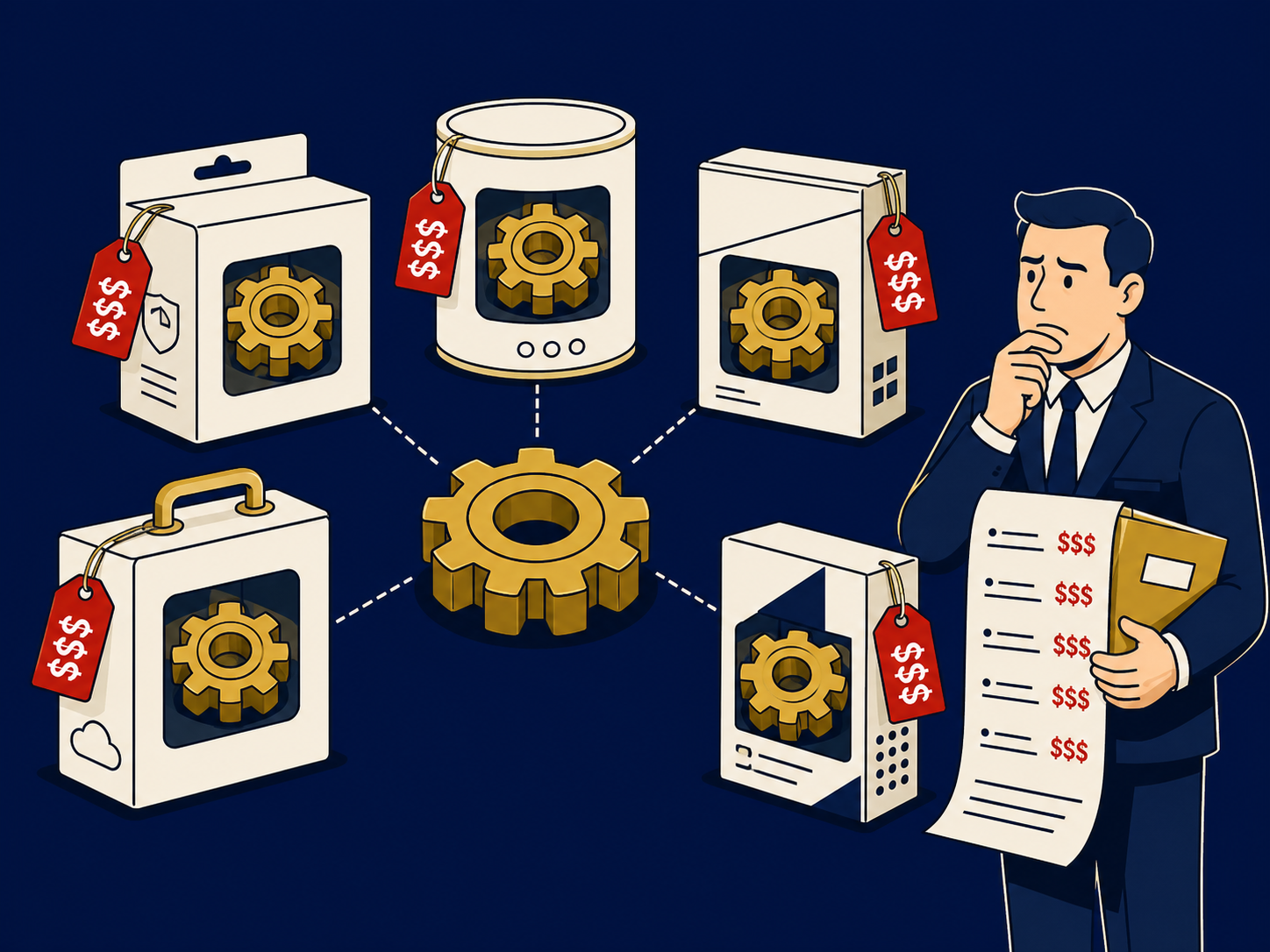
The same pattern runs through security, cloud infrastructure, productivity software, and collaboration tools. A capability exists once in the product. It appears multiple times on the invoice. The buyer pays for each instance without always knowing the underlying capability is the same.
The Line Items You Are Already Paying For
The specific version of this problem that costs buyers the most is the feature they already own but are paying extra to access.
Security vendors bundle threat detection, endpoint protection, and identity management as separate SKUs. The underlying telemetry, analytics, or detection workflows often overlap significantly across all three. The buyer who purchases each component separately pays for the same core capability multiple times, packaged differently.
Networking vendors sell SD-WAN as one product and security as another, often alongside a third product for cloud access. In many deployments, the traffic inspection capability that justifies the security product is already present in the SD-WAN. The buyer is paying for an insurance policy on something they already have.
Cloud platforms charge for storage, compute, and data transfer as independent line items. The cost of getting your own data out of the environment you paid to put it into can exceed the cost of storing it. The technology is yours. The access to it is priced separately.
Hardware is a version of this too. The chassis sitting in the data center has slots the buyer is paying for and has never used. The cross-connect at the colocation facility is on the invoice because someone provisioned it years ago during a migration and it was never deprovisioned. The answer to why it exists is often that no one knows.
None of this is accidental. Vendors have a structural incentive to maximize the number of separately billable components in their stack. Each component is a renewal event, a pricing lever, and a switching cost. The complexity is the point.
Why This Is Hard to See From Inside the Negotiation
Enterprise IT pricing complexity is designed to be evaluated from inside the vendor’s own framing. Buyers who struggle with it are usually not unsophisticated. They are working with the information structure the vendor built.
An RFP process asks vendors to propose solutions. Vendors propose solutions that map to their billing structure. The evaluation compares vendors on their own terms. The buyer leaves having selected the best option among the choices they were offered, without necessarily having asked whether those choices reflected the actual problem they needed to solve.
A company evaluating SD-WAN and security separately will almost never discover on their own that a single architecture could address both. The vendor selling the separate products has no incentive to consolidate them. The vendor selling the integrated product has an incentive to position it, not to explain why the buyer is currently overpaying on two separate contracts.
The question that does not get asked in most evaluations is the simplest one: do we already own this capability somewhere in our stack?
What to Look For Before the Next Renewal
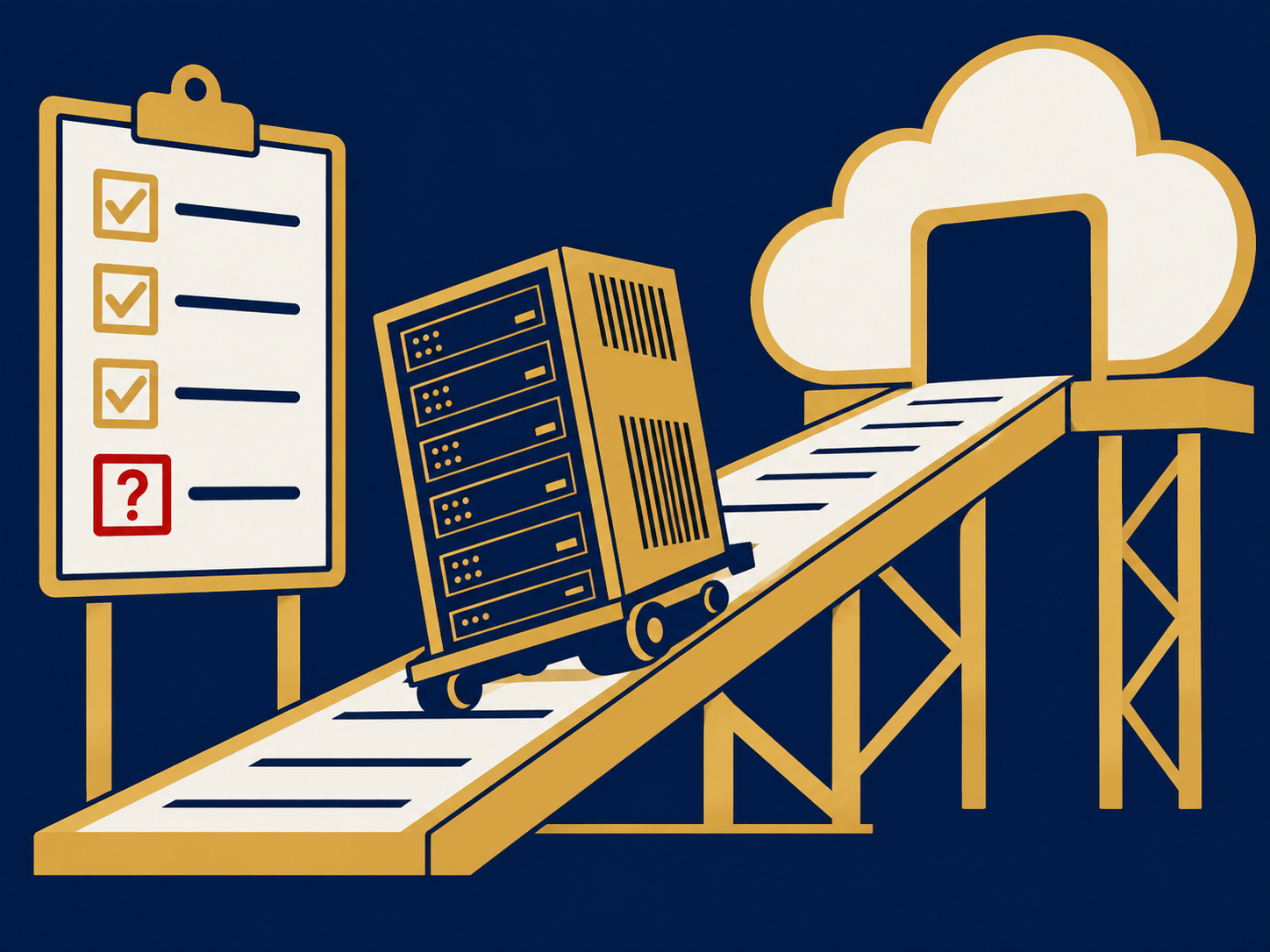
The buyers who recover the most from pricing complexity are the ones who audit their current stack before entering a renewal or evaluation, rather than after. These are the questions worth asking.
Which capabilities in the current stack overlap? Most organizations running five or more security tools have at least two that share core detection logic. Most organizations running separate SD-WAN and security contracts have at least partial overlap in traffic inspection. The overlap is not always obvious from the product names. It becomes visible when you map what each tool actually does at the technical level, not the marketing level.
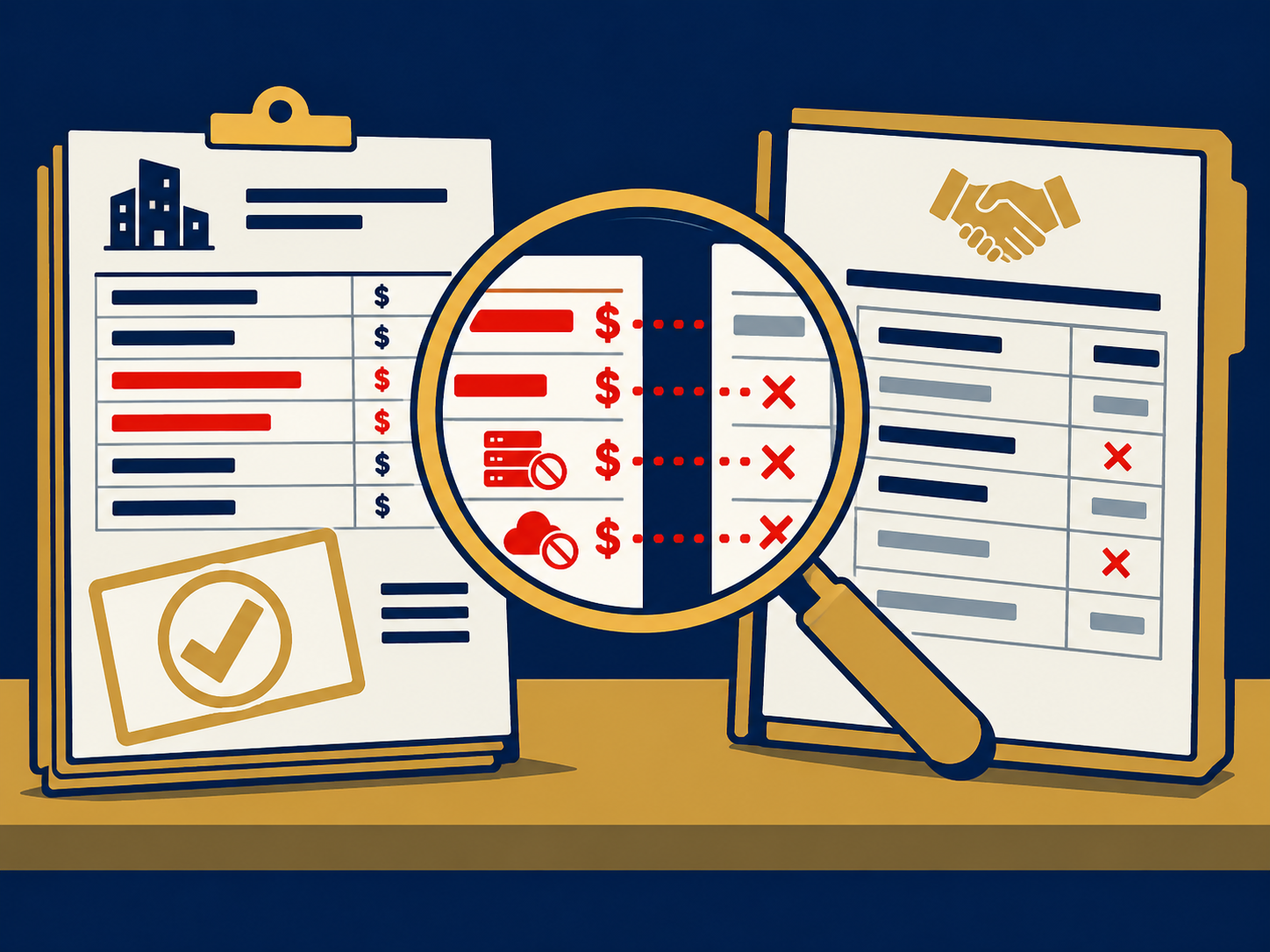
Which line items exist because of a decision made more than two years ago? Licensing structures accumulate. The cross-connect, the legacy circuit, the maintenance agreement on hardware that is no longer primary: these persist on invoices long after the operational reason for them has expired. A renewal is the right moment to ask whether each line item reflects a current business need or an inherited decision.
Which capabilities are being purchased as separate products that share the same underlying technology? This is the hardest question to answer without independent data, because the vendor has every incentive to maintain the separation. A security platform that includes endpoint detection, identity monitoring, and threat response as three separate license tiers may be running one detection engine underneath all three. The buyer paying for all three tiers is not necessarily getting three times the capability.
The honest version of this audit almost always surfaces at least one category where the buyer is paying for a capability they already own or a component that has outlived its operational purpose. The honest version almost never happens inside a vendor’s renewal process, because the renewal process is designed to confirm the existing structure, not question it.
The Bottom Line
Enterprise IT pricing is often less about technology and more about how technology is packaged, licensed, and renewed. The organizations that control costs most effectively are not necessarily buying less technology. They are identifying where capabilities overlap, where legacy decisions still drive spend, and where pricing structures have drifted away from actual business needs.
Before signing the next renewal, ask a simple question: are you paying for something new, or are you paying again for something you already own?