When to Replace SIEM Instead of Renewing
February 27, 2026

Digital risk has moved faster than many security stacks. If you are asking when to replace SIEM instead of renewing, you are usually not questioning the idea of SIEM itself. You are questioning whether your current platform can keep up with your data, your attackers, and your budget.
The hard part is not spotting pain. It is deciding when that pain justifies a disruptive move away from a tool that still handles core logging and compliance, and that your teams know well.
This article is about that decision. When to replace SIEM, when to augment it, and when renewal is still defensible if you tighten scope and expectations.
Why SIEM Replacement Is On The Table Now
Security information and event management is still a foundational capability for most organizations. You need security log collection, retention, search and reporting, whether you rely on a classic SIEM or a newer cloud platform. The question is whether your current SIEM is still the right vehicle for that work.
Several forces are pushing this decision forward.
You are ingesting far more data from cloud services, SaaS, remote endpoints and OT than your SIEM was originally scoped to handle. Many security teams now see SIEM costs consume 30 to 50 percent of the security budget due to data volume and storage requirements. As that spend grows, it becomes harder to defend renewing a system that still produces slow queries and noisy alerts.
At the same time, legacy SIEMs were designed for on premises, perimeter oriented environments and rule based detections. Modern attacks exploit cloud misconfigurations, identity abuse, and lateral movement across hybrid infrastructure. Traditional correlation logic struggles to connect those dots in real time, which is why you see long dwell times and missed multi stage attacks.
You are not alone in questioning the fit. According to Sumo Logic’s 2025 Security Operations Insights report, 73 percent of security leaders are actively evaluating new SIEM options because their existing tools were not designed to support intelligent, end to end security operations. That shift in the market is an indicator that your own concerns are not isolated or premature.
If you are wrestling with why SIEM costs are rising and what you can reasonably expect from a SIEM today, it may help to step back from features and look at the decision patterns.
Signs Your SIEM Renewals Are No Longer Defensible
You rarely get a single clear signal that says, “replace this now.” You see patterns across performance, cost and human impact that make each renewal harder to justify.
1. Cost Growth Without Commensurate Value
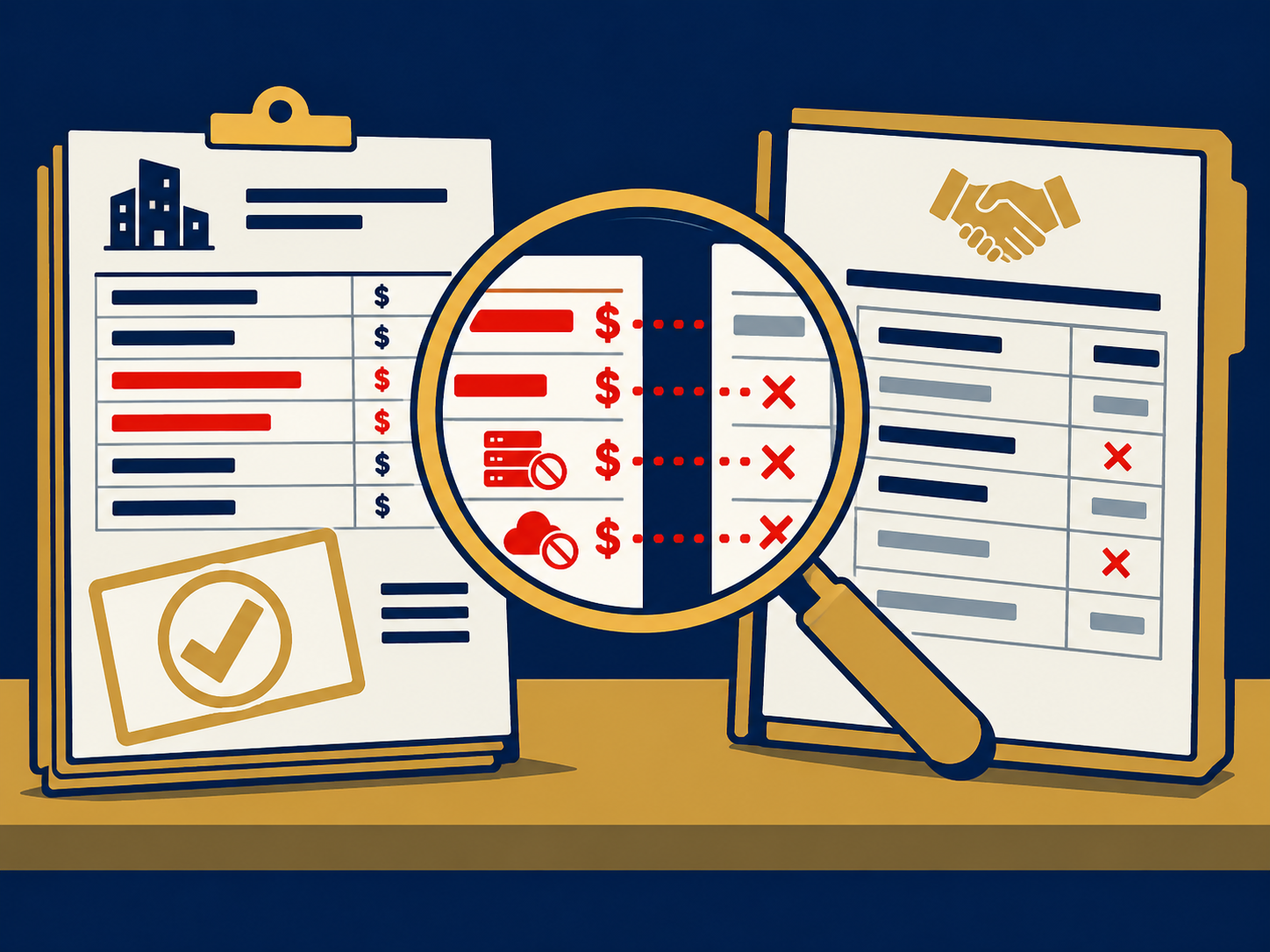
If your SIEM line item is growing faster than your security budget, you are in common territory. Licensing models that charge by ingested or stored data often drive cost spikes as your cloud and endpoint footprint expands. You start retaining fewer logs to control spend, which quietly undermines your detection and investigation capabilities.
You may have already felt this yourself or explored why SIEM becomes expensive in more detail. When you reach the point where:
- you are turning off data sources to stay under an ingestion tier
- you are archiving or deleting logs earlier than your security log retention policies require
- you are unable to justify SIEM spending to finance without resorting to fear driven arguments
then cost is no longer just uncomfortable. It is actively distorting your security posture.
If the vendor proposal for renewal forces you to choose between coverage and budget, that is often your first strong indicator that a replacement or augmentation strategy must be evaluated.
2. Performance That Slows Detection And Investigation
A SIEM that cannot keep up with your queries is more than an inconvenience. It alters your operating posture.
When basic searches take several minutes, or complex queries stall for 10 to 15 minutes or more, your analysts adjust their behavior. They run fewer hunts. They avoid more advanced pivots. They stick to canned dashboards because every deviation feels expensive.
Legacy architectures that rely on relational databases or proprietary flat file storage have trouble scaling to modern data volumes and query patterns. The result is slow, brittle performance exactly when you need speed and flexibility.
A practical test is simple. Ask yourself:
- Are you avoiding certain types of investigations because the SIEM cannot answer them in a timely way?
- Are you running retrospective threat hunts days after an incident, because real time search would impact production?
If the answer is yes, your SIEM is not enabling faster detection and better investigation. It is in the way. That is a strong sign you should reconsider renewal.
3. Alert Fatigue And Rules That No Longer Reflect Reality
Many organizations discover that 60 to 70 percent of their custom SIEM correlation rules have not fired a meaningful alert in months. Others find the opposite problem, with thousands of low value alerts that consume analyst time but rarely surface real incidents.
Both patterns indicate the same underlying issue. A platform tuned for static, rule based threats is now operating in an environment where attacker behavior shifts quickly and where insider and identity based threats are rising.
If your analysts spend most of their time triaging false positives instead of investigating genuine risk, you are not just experiencing noise. You are facing a talent and resilience challenge. Burnout, missed threats, and slow responses are predictable outcomes.
In that scenario, renewing the same platform with the same logic will not change the fundamentals. You likely need a different detection and triage model, one that leans more on behavior, context, and automated correlation.
Operational Stress Indicators You Should Not Ignore
Beyond cost and performance, there are operational signals that tell you your SIEM is struggling to support your real environment.
4. Limited Visibility Across Cloud, Identity And OT
Legacy SIEMs were built for firewall logs, IDS alerts, and server events. Your current risk profile probably looks very different.
You may be dealing with:
- multiple public cloud providers and managed services
- SaaS platforms that hold customer and financial data
- identity platforms that act as a primary control layer
- OT or industrial environments with unique protocols and constraints
Older SIEMs can collect data from these sources, but often only through brittle connectors and manual integrations. They rarely provide unified, normalized visibility that lets you follow an attacker from a phishing email, through an identity compromise, into a cloud workload.
If you cannot see coherent attack paths across your core systems, then your SIEM is a log store, not an operational nerve center. That limits your ability to detect and respond to the most relevant threats.
5. Manual, Slow Response Workflows
In many SIEM deployments, every significant alert still triggers a manual sequence. Analysts gather more context, open tickets, coordinate with IT, and track containment steps in spreadsheets or disconnected tools.
Manual processes are not just slow. They are inconsistent. Two similar incidents can be handled very differently depending on who is on duty and how overloaded they are.
If your incident timelines are measured in hours for steps that could be automated, then your SIEM is acting as a passive reporter rather than an active part of your response capability. In a threat landscape where speed is critical, that gap becomes harder to defend.
6. Upgrades And Maintenance That Consume Excessive Energy
Legacy SIEMs often require significant engineering effort to upgrade, tune and maintain. New data sources mean new parsers. Version updates require planned outages and careful back ups due to the risk of data loss or corruption.
If your team is spending more time keeping the SIEM running than using it to reduce risk, you are in a familiar pattern. The platform is absorbing resources that could be better used for threat hunting, automation and process improvement.
At that point, renewal is less a technical decision and more a question of opportunity cost.
When Renewal Still Makes Sense
Not every pain point demands a complete replacement. There are cases where renewal is still reasonable, especially if you can narrow the role of your existing SIEM.
You might choose to retain your current SIEM if:
- It performs reliably for core log collection and compliance reporting.
- Your cost position is stable and you are not forced to drop critical data to stay within budget.
- You can augment detection and response with complementary platforms while keeping SIEM as a long term archive and reporting engine.
In this model, you treat SIEM as infrastructure for retention and audit, not as the primary brain for detection. You renew because the system does what you now explicitly ask it to do, and you shift higher order capabilities elsewhere.
If you take this route, you still need a plan for how to justify SIEM spending in a way that leadership and regulators can support. Being clear about the limited mission of the platform makes that discussion easier.
Replace, Augment, Or Optimize: How To Decide
Once you have recognized that your current SIEM is under strain, you have three broad paths:
- Optimize what you have.
- Augment it with a modern detection and response layer.
- Replace it entirely over time.
Your choice should be driven by outcomes, constraints, and timing rather than by vendor narratives.
Start With The Outcomes You Need
Before you decide on replacement, clarify what “better” means for you. Common target outcomes include:
- reducing mean time to detect and respond
- decreasing false positive rates and analyst burnout
- gaining unified visibility across cloud, identity and on premises
- simplifying compliance reporting and audits
- stabilizing or reducing total cost of ownership over a defined period
If you cannot describe what success looks like for your security operations, any SIEM decision will be hard to defend later.
Assess Your Constraints Honestly
Constraints will shape your path more than feature comparisons. Consider:
- Regulatory demands for log retention and reporting.
- Contractual commitments and exit costs with your current vendor.
- Internal capacity for migration, integration and training.
- Appetite for parallel operations during a transition period.
Full SIEM replacement usually involves running old and new platforms in parallel for several months, rebuilding correlation and playbooks, and retraining analysts. If your team is already stretched thin, an augmentation strategy that layers modern analytics on top of your existing SIEM may be more realistic in the short term.
Match The Approach To Your Situation
You might lean toward optimization if your primary issues are misconfiguration, unused features or lack of rule tuning rather than fundamental architectural limits. A focused clean up and redesign of your use cases could unlock value at lower risk.
Augmentation fits when:
- your SIEM is strong on logging and compliance but weak on real time analytics
- your budget can support an additional platform with clear, near term benefits
- you want to test modern capabilities before committing to full migration
Replacement becomes the likely answer when:
- your SIEM no longer scales with your data volume
- costs force dangerous compromises in visibility
- performance and alert fatigue materially slow detection and response
- the vendor roadmap does not address your core gaps in a timely way
In those cases, renewing may simply extend a pattern that you already know is unsustainable.
Building A SIEM Exit Or Modernization Plan
If you reach the conclusion that renewal is not in your best interest, you still need a careful plan. The goal is to avoid trading your current pain for a long, disruptive migration that erodes trust and consumes operational focus.
Phase Your Migration Around High Value Use Cases
Instead of trying to move everything at once, identify a small set of critical missions where your current SIEM is underperforming. Common candidates are:
- cloud workload monitoring
- endpoint and identity focused detections
- high priority fraud or payment flows in financial services
Stand up the new platform around those use cases first. Run it in parallel with your existing SIEM. Compare alert quality, investigation speed, and operational load.
As confidence grows, you can phase in additional log sources and retired correlations. This approach gives you observable evidence that the new platform improves your posture before you fully decommission the old one.
Maintain Compliance And Retention Without Overengineering
One of the most practical roles for an existing SIEM is long term log retention for compliance. You may decide to keep it as a lower cost archive, or you may transition to alternative storage that meets your security information and event management requirements without full SIEM functionality.
In either case, be explicit about:
- which data sets are needed to satisfy regulatory obligations
- what retention windows apply to each
- how you will retrieve and report on historical data during and after migration
Make sure your audit and legal stakeholders understand and sign off on the plan. Uncertainty around retention is one of the fastest ways to slow a migration that is otherwise justified.
Design For Integration, Not Just Replacement
Modern security operations rely on connected tools rather than a single monolithic platform. As you plan for SIEM replacement or augmentation, consider:
- how your new platform will integrate with ticketing, SOAR, EDR and vulnerability management
- how enrichment data such as asset context, user attributes and threat intelligence will flow
- how playbooks will span multiple tools instead of being locked into one
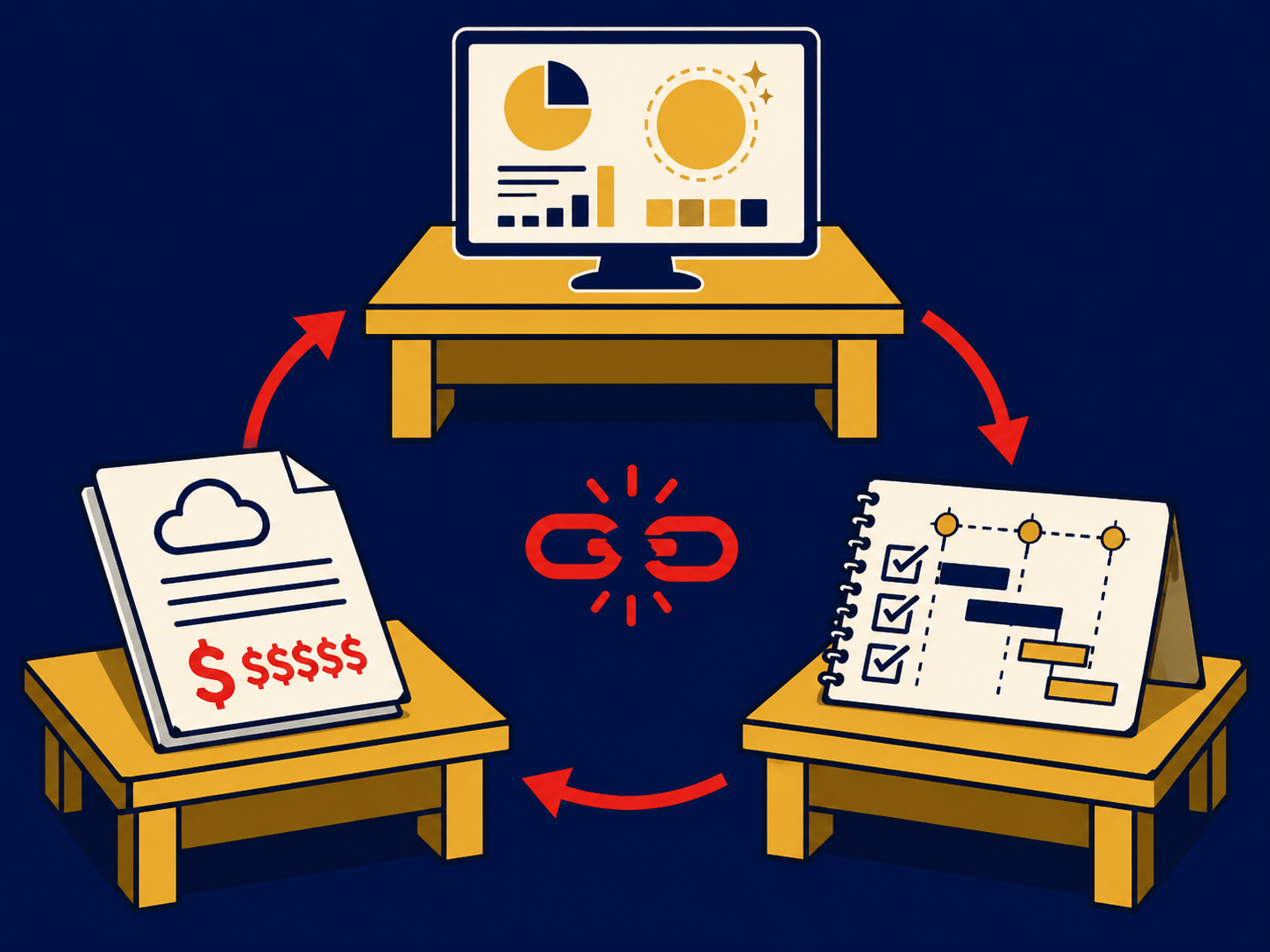
A SIEM decision that improves detection but fractures your broader workflows will not feel like a win over time.
Measuring Whether The Change Was Worth It
You will eventually need to prove that your decision to replace or augment SIEM improved your security and your business outcomes. That proof should go beyond tool specific metrics.
Consider measuring:
- reduction in average time from alert to triage completion
- percentage decrease in false positive alerts per analyst
- time savings in routine investigations and compliance reporting
- visibility improvements across critical systems and data flows
- budget impact over one to three years, including license, storage and staffing
Link these metrics back to the reasons you questioned renewal in the first place. If you can show that you stabilized cost, reduced operational friction and improved response, then your SIEM decision becomes easier to defend to executives and boards.
If you want more background on cost dynamics, you can also revisit why SIEM costs are increasing and how that impacts your long term planning.
Conclusion
Deciding when to replace SIEM instead of renewing is less about chasing the newest platform and more about recognizing when a foundational tool no longer supports the way you actually defend the business.
You should consider replacement or augmentation when:
- your SIEM costs are rising faster than its value and are driving visibility compromises
- performance and alert fatigue meaningfully slow detection and response
- visibility gaps in cloud, identity and OT create blind spots for your most relevant threats
- manual, fragile processes dominate incident response and maintenance
Renewal remains reasonable when you have consciously narrowed the SIEM’s role to what it does well, and when you have a credible plan to cover its gaps through other capabilities.
The most defensible decisions are those that connect your SIEM strategy to clear outcomes, explicit trade offs, and a migration plan that preserves compliance and continuity.
Need Help Deciding Whether To Replace Your SIEM?
We work with teams that are asking the same questions you are asking now. Should you renew and optimize, augment with a modern detection layer, or build a path to full SIEM replacement over time.
We help you frame the problem in business terms, map your current and future requirements, and evaluate options in a way you can explain to leadership and regulators. That includes looking closely at your data growth, retention obligations, integration needs, and the human impact on your security team.
If you need to decide when to replace SIEM instead of renewing, and you want a recommendation you can defend, we can help you compare approaches and identify providers that fit your constraints. Talk to us about your current SIEM posture, the outcomes you need, and the pressures you cannot ignore.