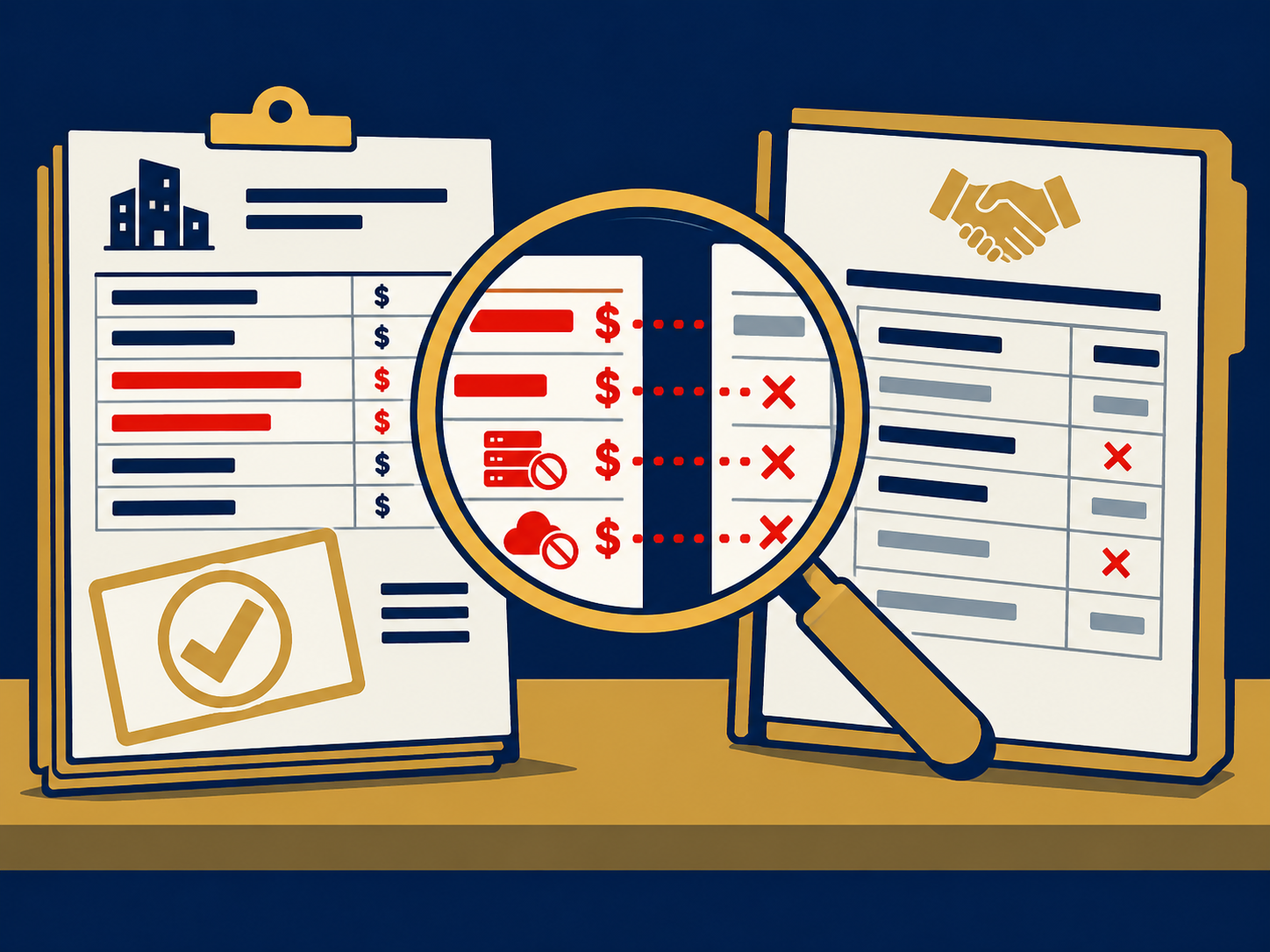
Security Log Retention Policies Driving SIEM Costs
February 27, 2026

Security log retention policies are supposed to protect you. In practice, they are also one of the quietest but most powerful drivers of SIEM cost. If you are wondering why your security information and event management budget keeps creeping up every renewal cycle, start by looking at what you keep, how long you keep it, and where it lives.
You are not just storing logs. You are storing compliance evidence, forensic history, and operational breadcrumbs for every system that matters. That is exactly why regulators care, and it is also why poorly defined retention decisions can double or triple your SIEM spend over time.
This article is designed to help you connect the dots between security log retention policies and SIEM costs, so you can meet your obligations without writing a blank check.
What Security Log Retention Policies Actually Are
At a basic level, security log retention means archiving event logs for a defined period so you can support investigation, compliance, troubleshooting, and monitoring. A log retention policy formalizes how long different log types are stored, how they are handled over their lifecycle, and when they can be safely removed.
According to recent guidance, organizations typically retain logs for at least one year to satisfy common regulatory expectations, while industries like banking under Basel II may need 3 to 7 years, and healthcare under HIPAA may need up to six years of records related to protected health information. Those numbers are not theoretical. They directly shape the volume and duration of data your SIEM must ingest, index, and store.
A mature policy usually covers more than a single number. It addresses classification, duration, storage tiering, access and encryption, automated lifecycle management, and how to handle legal holds when you cannot delete data as originally planned. Each of those choices has a cost implication on your SIEM or surrounding observability stack.
Why Retention Matters For Compliance And Risk
Security log retention is a compliance decision, but it is also a visibility decision.
Regulatory frameworks like PCI DSS, HIPAA, Sarbanes Oxley, GDPR, and CCPA all impose specific log retention requirements. For example, PCI DSS 4.0 expects at least twelve months of log history with three months immediately available, while SOX can push you to keep financial system logs for seven years, and HIPAA may require six years of records related to PHI. Failing to meet those standards can expose you to financial penalties and reputational damage.
Retention is also central to your investigative capability. Logs provide the evidence you need to reconstruct an attack timeline, trace lateral movement, and understand the full scope of a compromise. If security logs are missing, investigators are left with blind spots that extend the time it takes to find vulnerabilities and increase the total cost of a breach.
Most organizations keep at least 90 days of readily accessible logs, and many treat six to twelve months as a best practice baseline for effective incident response. Cyber insurance providers increasingly expect you to have a defensible retention posture as well, because well maintained logs reduce investigation time and claims costs after an incident.
So the pressure is clear. You are expected to retain more, for longer, and to retrieve it quickly when something goes wrong. The question is how to do that without pushing your SIEM spend out of control.
How Log Retention Drives SIEM Costs
If you look at why SIEM becomes expensive, retention is usually in the mix. Storage volumes grow, ingestion charges compound, and search performance expectations stay the same. You end up paying more each year just to stand still.
Several dynamics tend to drive costs:
- Volume growth without classification
When every log is treated as equally important, your SIEM ingests everything at full fidelity. Over time, that means more data to index, more storage consumed, and higher recurring fees. This is especially painful for verbose sources like firewalls, IDS, and application logs. - Retaining hot data longer than necessary
Many SIEM pricing models implicitly encourage you to keep data in the most expensive tier by default. If your retention policy does not distinguish between hot, warm, and cold data, you effectively pay premium rates for years of history you only touch during an occasional audit or investigation. - Multiple copies in different tools
You might be centralizing into a SIEM, but it is common to also retain logs in backup systems, observability platforms, or point tools. Each additional copy of long term data multiplies the storage cost of an already large dataset. - Regulatory requirements interpreted as “keep everything forever”
Requirements like seven years for SOX or six years for HIPAA audit logs can drive overcorrection. Instead of scoping those requirements to specific systems and log categories, some organizations extend the longest retention window to all logs. The result is a steep increase in long term storage volume. - Inefficient architecture and lack of tiering
If your SIEM deployment does not separate frequently queried data from cold archives, you end up sizing the platform as if every log must be searchable in real time. That is an expensive way to satisfy a retention policy that only occasionally requires historical search.
You can see the pattern. Security log retention policies by themselves do not explode your budget. It is the combination of broad, undifferentiated policies and SIEM architectures that treat all retained data as premium data.
Regulatory Requirements You Cannot Ignore
You do not control the external rules, but you do control how precisely you interpret them.
Common frameworks all push you toward more rigorous retention:
- PCI DSS 4.0 expects at least 12 months of log history, with three months immediately accessible for security systems that handle cardholder data.
- Sarbanes Oxley ties retention to financial systems, which can require seven years of related logs.
- HIPAA requires six years of records related to protected health information, including audit logs that demonstrate who accessed what and when.
- Broader privacy and security regulations like GDPR and CCPA expect you to show accountability, which often means demonstrating that monitoring and response were appropriately logged and maintained.
In practice, most organizations respond by retaining at least 12 months of audit, IDS, and firewall logs as a general best practice. Many go beyond that, especially in financial services and healthcare, to ensure availability during audits and investigations.
The opportunity for you is to narrow the scope. The strictest retention windows often apply to specific systems and data classes. If your policy makes that explicit, you can focus long term retention on the logs that actually support regulatory reporting and legal defense, instead of everything that ever hit your SIEM.
Components Of A Cost Aware Retention Policy
A comprehensive security log retention policy has to preserve security intelligence and compliance evidence, but it does not need to preserve every debug line in hot storage forever. The most effective policies combine clear scope with lifecycle management.
Common components include:
- Audit categories and data classification
You define which logs are security critical, which are compliance relevant, and which are primarily operational. Groundcover emphasizes this classification step as key to deciding retention duration and priority. - Retention periods by category
Instead of one blanket number, you specify that high value audit logs might be kept for seven years, security telemetry for 12 to 24 months, and routine operational logs for 30 to 90 days before aggregation or deletion. - Storage locations and tiers
Hot, searchable storage for recent data. Warm storage for less frequently accessed history. Cold or archive storage for long term compliance evidence. Clear mapping here is what lets you move cost out of the SIEM while still meeting your obligations. - Access controls and encryption
Long retained logs are often sensitive. Your policy should define who can access what, how access is recorded, and what encryption standards apply across hot and cold storage. - Review and disposition procedures
You establish how logs are reviewed, when they are compressed or moved between tiers, and when they are securely deleted once no longer needed for business, legal, or regulatory purposes. - Alignment with regulatory and legal hold requirements
Legal holds change the equation. Your policy should define how retention timers pause when litigation or investigations require you to preserve evidence longer than usual.
When these elements are explicit, your SIEM engineers are not guessing. They have a map for what must stay hot, what can shift to cheaper storage, and what can be removed safely. That is where cost control begins.
Centralization, SIEM, And Storage Strategy
Centralizing logs into a SIEM is still a best practice. It gives you correlation, detection, and consistent management that are almost impossible to achieve through isolated point tools. A SIEM can archive logs, correlate them, and support advanced analytics that would be difficult to build from scratch.
The challenge is that centralization is not the same as central storage. You can centralize visibility without keeping all history inside the SIEM engine itself.
Leading approaches include:
- Central SIEM for hot data, data lakes for cold data
Observability pipelines can send real time logs to your SIEM for detection and simultaneously push a copy into cloud storage like S3 or Azure. That creates a cost efficient data lake for long term history while keeping your SIEM smaller and more focused. - Immutable offsite storage for integrity
Attackers often try to delete or alter local logs to hide their tracks. Keeping copies in immutable offsite storage means you can still rely on those records during investigations and audits. - Node based or resource based pricing for long term retention
Some observability platforms use pricing that is linked to infrastructure size rather than raw data volume. Groundcover, for example, applies node based pricing for predictable long term retention costs while keeping logs searchable and enforcing policies automatically across Kubernetes environments.
The key for you is to treat your SIEM as one layer in a larger observability and retention architecture. Hot investigations and daily detection live in the SIEM. Cold compliance evidence and low frequency forensic data can live in the lake, backed by clear policies and the ability to rehydrate data into the SIEM when needed.
If you are already feeling the strain, it may be worth revisiting broader guidance on why SIEM costs are increasing and why SIEM becomes expensive. Retention is usually one of the structural drivers behind those trends.
Best Practices To Balance Retention And Cost
Security log retention policies do not need to be a choice between compliance and budget. You can design them to do both.
Several practices consistently help:
- Start with outcomes and audit needs
Define exactly which questions you must be able to answer during an audit, a breach investigation, or a legal review. That outcome driven approach clarifies which logs are non negotiable and which are optional. - Define audit categories and monitoring scope
Group logs into clear categories, such as authentication, access control, privileged activity, network perimeter, application transactions, and system changes. Then specify for each category how long you must keep full fidelity records versus aggregated summaries. - Centralize collection, not just storage
Use your SIEM or unified logging platform as the central point of correlation and analysis. Even if you offload cold data to cheaper storage, it should flow through a consistent observability pipeline so you can search and reconstruct events without stitching together multiple ad hoc tools. - Maintain redundant but efficient backups
Redundancy is important, especially for incident response. The goal is to avoid duplicate hot storage rather than eliminating secondary archives. Offsite encrypted backups and immutable storage can provide resilience without multiplying SIEM indexes. - Integrate threat intelligence and user activity tracking
High fidelity logs that map to user behavior and threat context are often more valuable than raw volume. By focusing your long term retention on logs that support threat forensics and behavioral analysis, you can safely reduce less informative categories. - Automate lifecycle management with policy enforcement
Manual retention management does not scale and it introduces risk. Automated enforcement of retention policies across distributed systems, including Kubernetes clusters, keeps rules consistent, reduces operational overhead, and prevents storage cost surprises as logs age and transition through tiers. - Improve real time monitoring and alerting before archiving
LogicMonitor highlights the importance of detecting abnormalities in real time before data is archived. If your detection is strong, you are less dependent on frequent ad hoc queries across years of history, which makes cheaper archival tiers more viable. - Forecast log volume and cost growth
Retention decisions are not static. Forecast how new applications, new geographies, or new regulations will expand your log footprint. That forecasting lets you proactively adjust your SIEM architecture, retention windows, and budgeting before renewal surprises arrive.
Taken together, these practices move you toward a proactive approach. You implement clear retention policies, use unified platforms with automation and AI to handle volume, and protect data through encryption and access control. The result is faster investigations, fewer human errors, and more predictable SIEM bills.
If you are in the middle of budgeting conversations, resources like how to justify SIEM spending and security information and event management can help you frame this as a risk and governance decision, not just a storage line item.
When Retention Policies Signal It Is Time To Rethink SIEM
Sometimes retention is the symptom that reveals deeper issues with the platform itself. You might see warning signs such as:
- You cannot align retention periods with regulatory needs without hitting hard technical limits.
- Search performance collapses when you expand time windows, which makes long term retention less useful in practice.
- Licensing models penalize you for responsible retention by tying hot storage and archival storage to the same expensive tier.
- Adding new log sources to meet compliance requirements creates disproportionate cost spikes and architecture rework.
In those scenarios, you are not just dealing with a policy problem. You are running into structural constraints in the existing SIEM and surrounding tooling. It may be time to evaluate whether the platform can keep up with your retention and compliance roadmap.
If you are asking hard questions about your current approach, it can help to look at guidance on when to replace SIEM. The goal is not to chase new technology for its own sake, but to ensure that your retention, detection, and cost structures are aligned for the next several years, not just the next renewal.
Conclusion
Security log retention policies are not a paperwork exercise. They are one of the primary levers that shape your SIEM architecture, your investigative readiness, and your long term security spend.
If your policies are vague, your SIEM will naturally expand to ingest and store everything at premium cost. If your policies are precise, aligned with regulation, and backed by clear data lifecycle management, you can preserve what matters, protect your investigative posture, and still keep SIEM costs under control.
The most resilient organizations approach retention as a strategic decision. They decide what evidence they must be able to produce, how quickly they need to access it, and what they are willing to spend to achieve that posture. Once that clarity exists, technology choices become easier to compare and easier to defend.
Need Help Right-Sizing Retention And SIEM Spend?
We work with organizations that are wrestling with exactly this problem, how to meet demanding security log retention policies without watching SIEM costs escalate every year.
Our role is to help you frame the requirements, translate regulatory language into concrete log categories and retention windows, and then identify providers and architectures that support those needs at a sustainable cost. That might mean rethinking how you tier storage, how you use observability pipelines and data lakes alongside SIEM, or when it makes sense to evaluate a different platform.
If you are weighing changes to your security log retention strategy or questioning your current SIEM costs, we can help you compare options in plain language and choose an approach you can defend with leadership, auditors, and your security team.