The Company Actually Running Your Teams Calls Isn't the One You Signed With.
July 21, 2026

You think you chose a Teams Voice provider. What you actually chose was an entire infrastructure stack, and you never got the chance to evaluate it.
The question you think you’re answering
When you shop for Teams Voice, you compare price per seat. You compare feature lists. You compare which provider your IT team already likes. That feels like the whole decision.
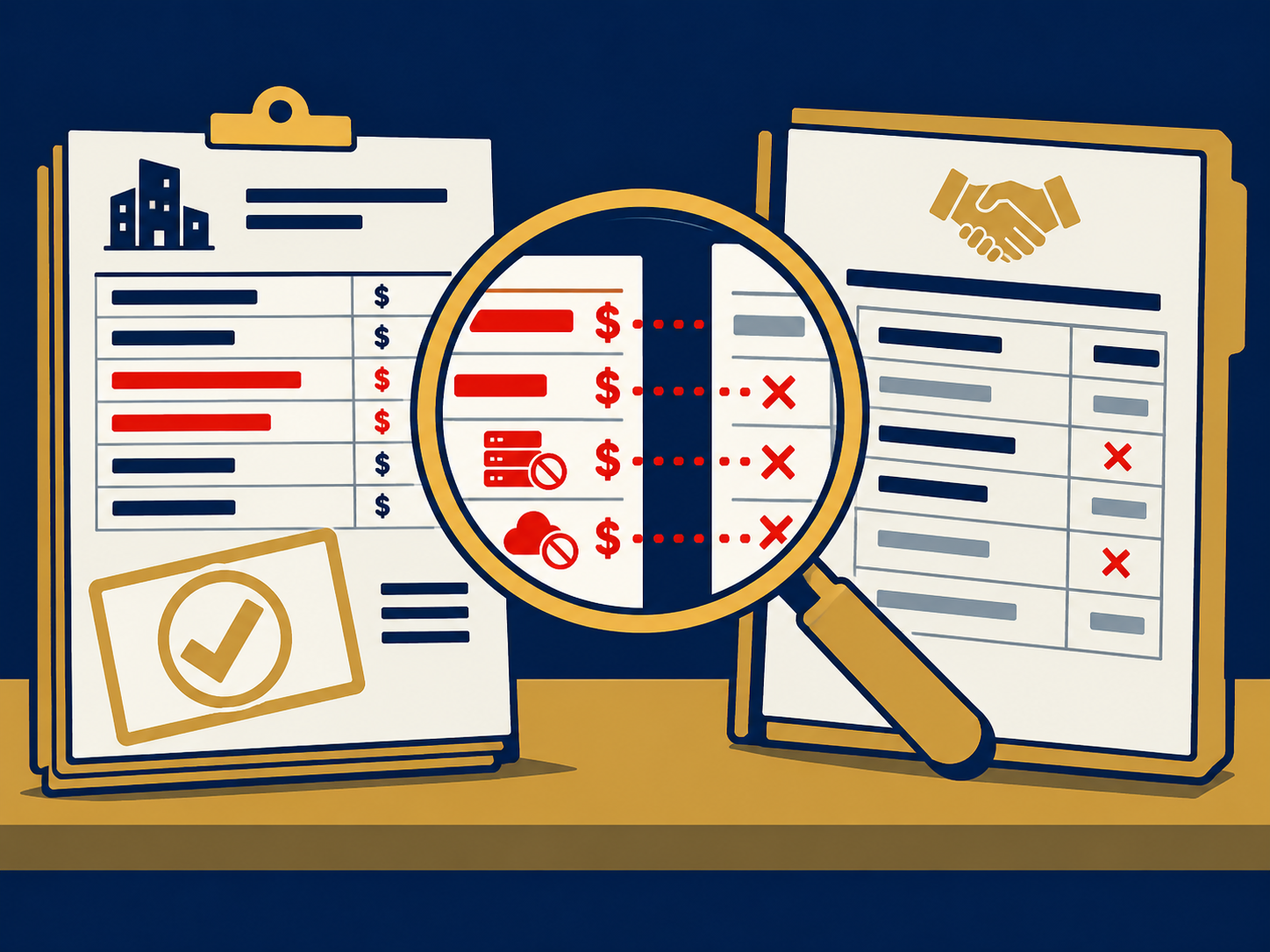
It isn’t. The provider you’re negotiating with is rarely the company that actually carries your calls. There’s a piece of equipment sitting between Microsoft Teams and the phone network, called a session border controller, or SBC, and a different company almost always builds and runs it. Your invoice has one name on it. Your infrastructure has another.
That underlying architecture determines how you handle compliance recording, outage survivability, future migrations, and what you can integrate years from now.
The real question isn’t “which provider has the best price.” It’s “what architecture am I inheriting, and who actually controls it.”
Most buyers never realize they’re making an architecture decision, because the buying process presents it as a carrier decision.
What’s actually underneath the contract
Omdia’s Enterprise SBCs and VoIP Gateways Market Tracker has ranked AudioCodes the leading global enterprise SBC vendor by revenue market share for three consecutive years, 2021 through 2023, most recently at 23.1% of the worldwide market. Most buyers have never heard the name, even when their own calls run through AudioCodes equipment every day.
This isn’t a knock on AudioCodes specifically. It’s proof of a blind spot that applies no matter which company is actually underneath your contract. In most Teams Voice deployments, buyers never learn who provides the underlying SBC platform, because the entire conversation stays focused on pricing, licensing, and calling plans. A National Channel Account Manager at AudioCodes called it, in plain words, “the best kept secret in telecom.”
What to ask before you sign
Start with one direct question: who builds and runs the SBC underneath this service. If they answer instantly and clearly, that’s a good sign. If they hesitate, or the answer is vague, that tells you something too.
Next, find out who is responsible for keeping that equipment current. Microsoft updates certificate and security requirements on a schedule you don’t control. Somebody has to track those changes and apply them before a deadline hits. Find out if that’s a dedicated team, or an afterthought.
Finally, ask what happens to your service the day the company on your invoice and the company running your infrastructure disagree about who’s responsible for a problem. Before you sign, make sure you know who owns the platform, who maintains it, who supports it during an outage, and what future capabilities depend on it.
What this costs you later
Here’s what that gap looks like when something actually breaks. Your provider tells you Microsoft’s side is fine. Microsoft tells you the SBC vendor needs to investigate. The SBC vendor tells you the carrier owns the issue. Meanwhile, your help desk can’t receive calls, and you’re the one explaining the outage to your own team while three companies point at each other.
That delay isn’t abstract. For a business running a support desk, a dispatch line, or any inbound call volume, every minute spent figuring out who’s actually responsible is a minute your business isn’t reachable.
Where independent representation changes this
Most buyers only find out who’s actually running their infrastructure after the first outage, when it’s too late to negotiate anything. Independent representation means someone asks these questions before you sign, not after, so you already know who to call, and who’s accountable, the first time something breaks instead of the fifth.
Does this apply to you right now
If you’re currently evaluating Teams Voice providers, or your renewal is coming up in the next few months, this is the moment to ask these questions, before the contract is signed, not after the first outage.
If you’re managing multiple vendors across your technology stack already, and you’re not fully sure which ones are actually running critical infrastructure underneath the ones you talk to, this is where to start. It covers what’s actually at stake when your vendor list is hiding more vendors underneath it, and what independent representation changes about the outcome.
We’ll show you what real-world fit looks like across 967 providers. Get Started.
No pitch. No prep. Just answers.