Your Security Architecture Is Creating Costs You Never Approved
July 24, 2026
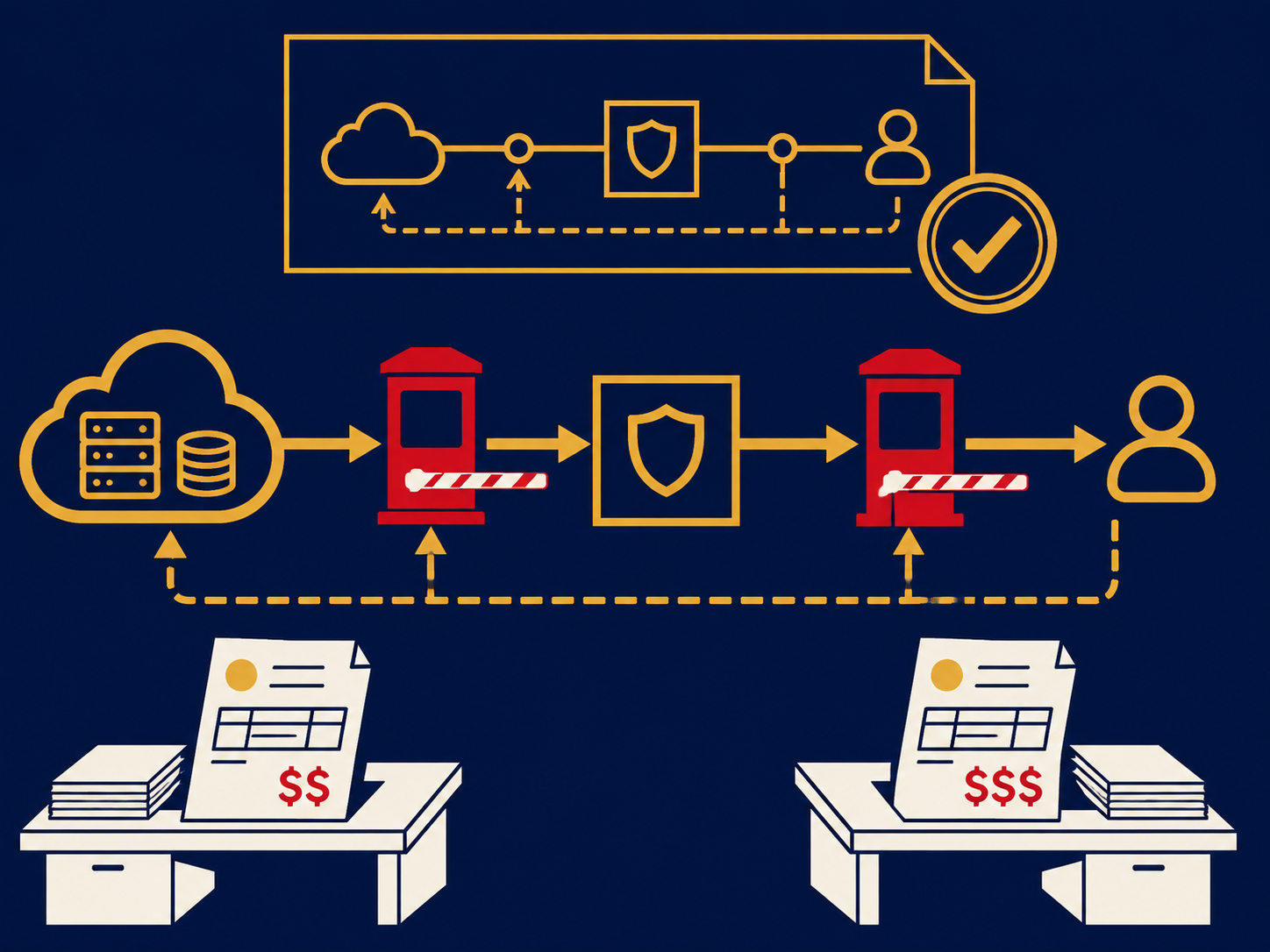
Some cloud security architectures can cause the same traffic to incur charges more than once. Once leaving the cloud environment to reach the inspection point. Once returning or continuing on its route.
You approved the security tool. You approved the inspection policy. There’s a good chance nobody calculated what that traffic route would actually cost once it was handling real, daily volume.
Here’s the mechanism. Some cloud security architectures send traffic out of the cloud to reach an external inspection point, a proxy checking for threats, before it reaches the user. Depending on the provider, region, and connectivity model, both legs of that trip can generate separate egress charges. Doug Houghton, who works with enterprise network architecture at Alkira, described one version of this in a full conversation on Signed: You’re Paying for the Same Network Twice , using rates around 9 cents a gigabyte over the internet or 4 cents over a dedicated circuit, charged in both directions.
Those specific rates won’t apply to every environment. Your cloud provider, region, connectivity model, and contract determine your actual costs. The broader principle is what matters: a security decision determines your traffic path, and the traffic path determines what you pay. This exact charging pattern won’t exist in every architecture, but the need to understand the cost of your own route does.
Most teams never trace this path far enough to see it. The charges show up fragmented across different categories, cloud data transfer, gateway processing, circuit fees, security platform usage, and nobody connects them back to the single architecture decision that created all of them.
Why the gap stays invisible
The architecture gets approved once, during a security project, by people evaluating threat coverage, not billing structure. Whoever signed off on the inspection policy was answering a security question. Nobody in that meeting was asked what the traffic route would cost once it was live, because that wasn’t the question on the table. Everyone assumed someone else had already done that analysis. In many organizations, nobody had.
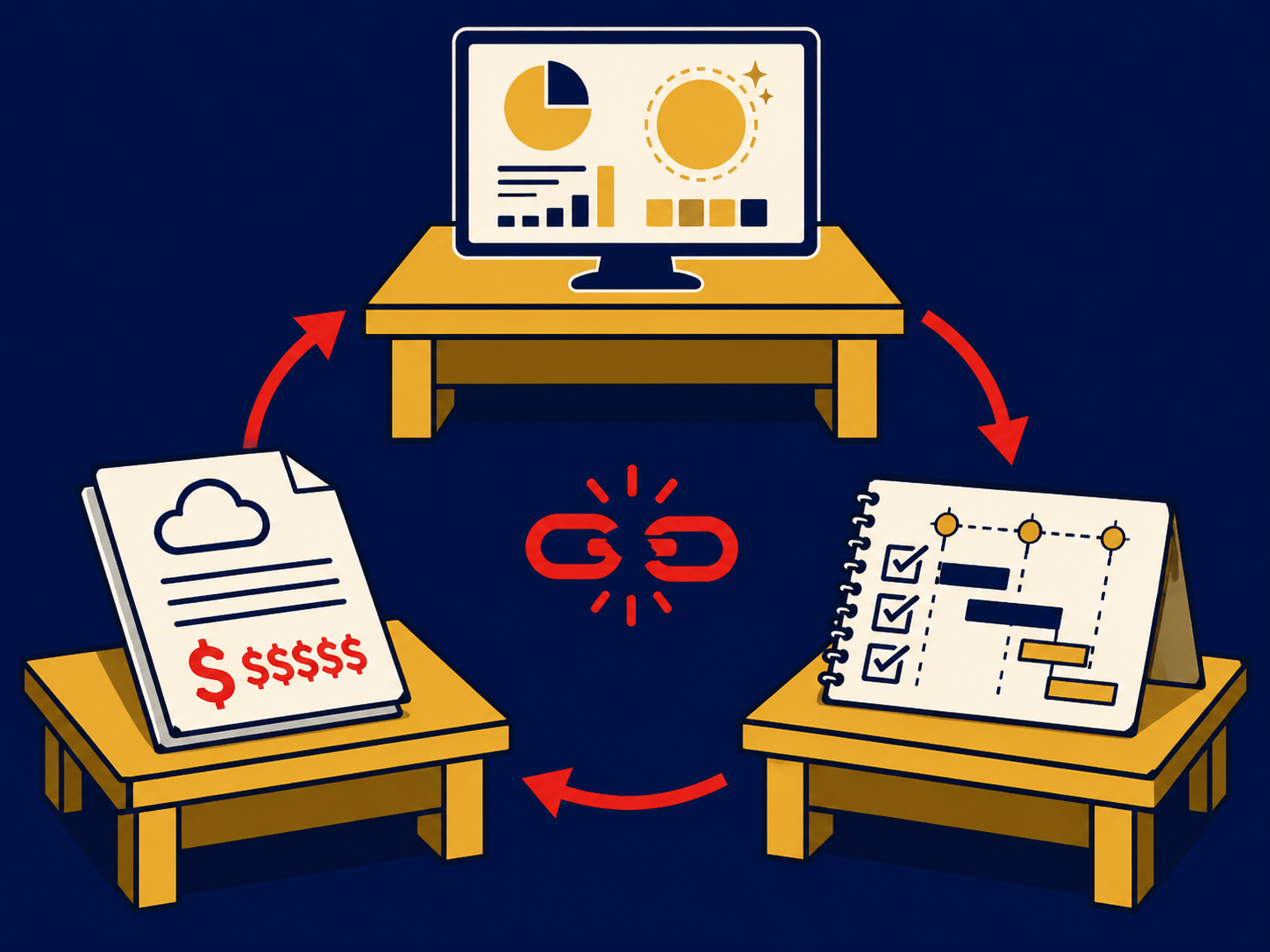
The cost consequence shows up later, spread across invoices reviewed by different teams, months after the decision that created it. Nobody’s bill says this charge exists because of a decision made in a different department months ago.
This isn’t automatically a wrong decision. The architecture may still be worth its cost, for the threat coverage, the centralized policy control, or a compliance requirement it satisfies. The real failure isn’t that it costs money. It’s that the cost was never part of the conversation that approved it, and nothing about the setup makes that cost visible after the fact either.
What this actually costs
Take Doug’s example rate as a reference point, then run the same math against your own contracted rate and your own traffic volume, since discounts, regions, and connectivity type all change the real number. For a business running meaningful cloud traffic through this kind of inspection path, the total adds up to a real, recurring cost that nobody modeled before the architecture went live.
It compounds quietly. The longer the setup stays this way, the more expensive it gets to unwind, since other systems build dependencies on the route as it currently exists. What starts as an unmodeled line item becomes, a year or two later, a redesign project with real migration cost attached to it, simply because nobody looked closely enough early on.
How to check your own exposure
Ask your network or security team a direct question: what is the actual traffic path our production data follows before it reaches the user, and how many billable boundaries does it cross along the way. If nobody can answer that from memory, that’s worth investigating on its own, whether the answer is “we haven’t checked” or “this architecture is more complex than anyone documented.”
For each boundary that traffic crosses, note the actual monthly volume moving through it and the rate your contract attaches to that crossing, not a public list price. That’s what turns “there might be a hidden cost here” into an actual number.
Pull your cloud and network invoices side by side and look for transfer or processing charges that could be tied to the same underlying traffic. If the same traffic is generating charges in more than one place, determine whether each charge is expected, justified, and included in the original architecture’s assumptions.
Why an independent architecture review matters
Most buyers evaluate a security architecture on what it blocks, never on what it costs to run. Independent review means someone maps the actual traffic path, the real billable boundaries, and what they cost at your own rates, before the architecture is approved, not after the invoices start arriving.
Does this apply to you right now
If your cloud or network costs have crept up over the past year and nobody can fully explain why, or if you’re about to approve a new inspection architecture, this is worth checking before you sign off on the next one.
If you’re not sure whether costs like this are already showing up somewhere in your stack, this is where to start. It covers what to do when spend has spiraled past what anyone approved, and how to find out why before the next renewal.
We audit what you’re actually running, not just what you’re paying for.
**Get Started
**No pitch. No prep. Just answers.