How to Justify SIEM Spending Without Cutting Security
February 27, 2026

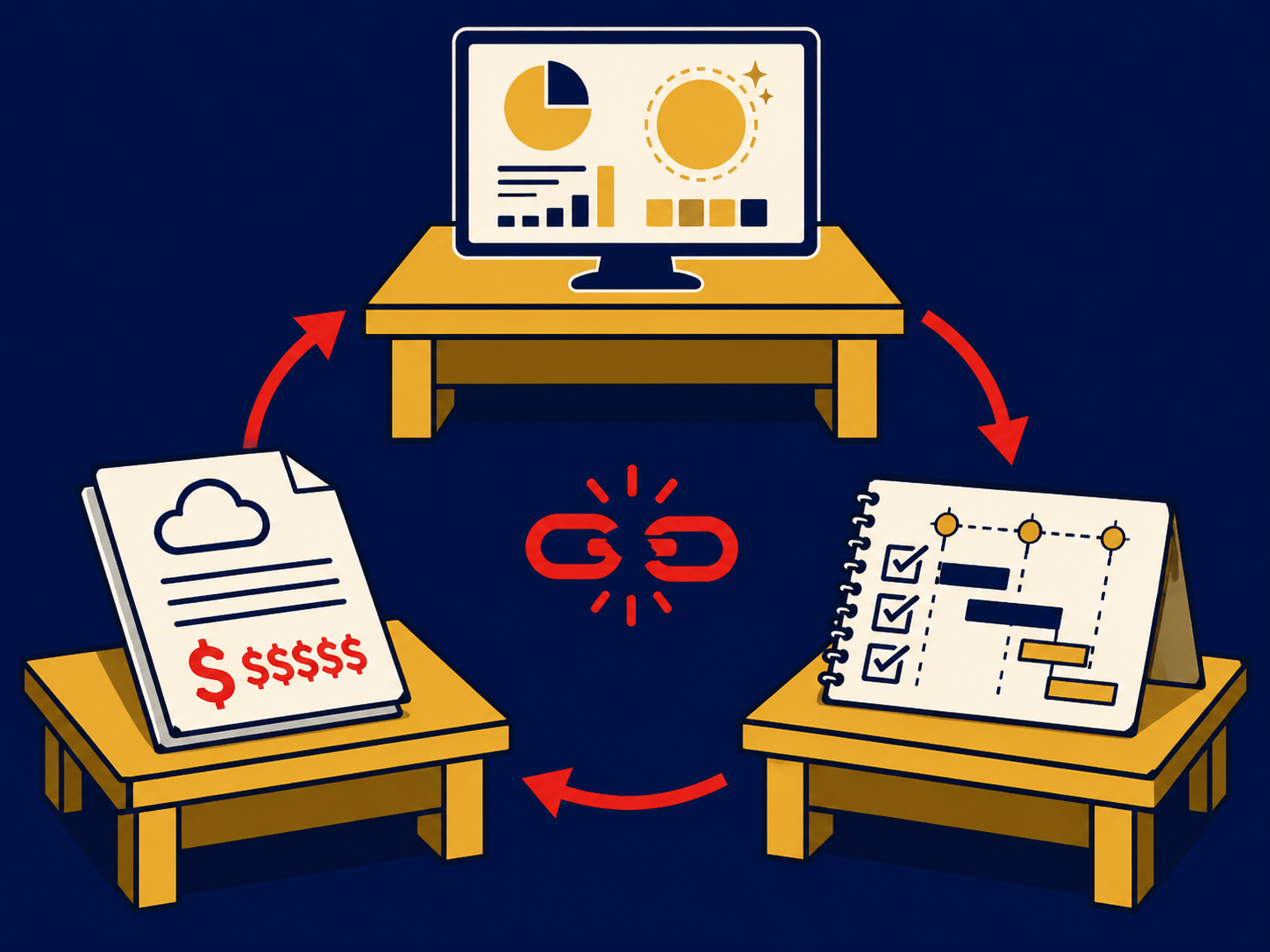
Rising SIEM bills are rarely just a “tool” problem. They are a signal that your security data strategy, your architecture, and your reporting story to leadership are out of sync.
If you are trying to figure out how to justify SIEM spending without cutting security, you are really trying to answer a different question: how do you prove that every dollar you invest in SIEM meaningfully reduces risk, improves response, or simplifies compliance, instead of simply indexing more logs.
In this article, you will connect SIEM spend directly to outcomes you can defend, use data to reset expectations with finance and leadership, and identify where to optimize cost without weakening security coverage.
Reframe SIEM Spend As Risk And Outcome
When your SIEM line item grows, CFOs look for cuts. If you stay in “tool cost” language, you lose leverage. You justify SIEM spending by tying it to risk avoided, time saved, and incidents contained, not features purchased.
Security Information and Event Management is the control that lets you see and act on what is happening in your environment in real time. It collects and correlates logs from infrastructure, applications, identities, and endpoints so you can detect and respond to threats faster, support investigations, and satisfy auditors. Without that visibility, you are not just saving money. You are accepting blind spots.
Modern SIEMs are also central to:
- Real time threat detection and correlation across multiple systems
- Efficient incident response through automated alerts and workflows
- Compliance and audit readiness through standardized reporting
- Centralized log management for investigations and forensics
That is the frame you want leadership to see. You are not buying a log collector. You are buying a way to detect and contain the kinds of incidents that show up in headlines and board reports.
Expose The Real Cost Of SIEM, Not Just The License
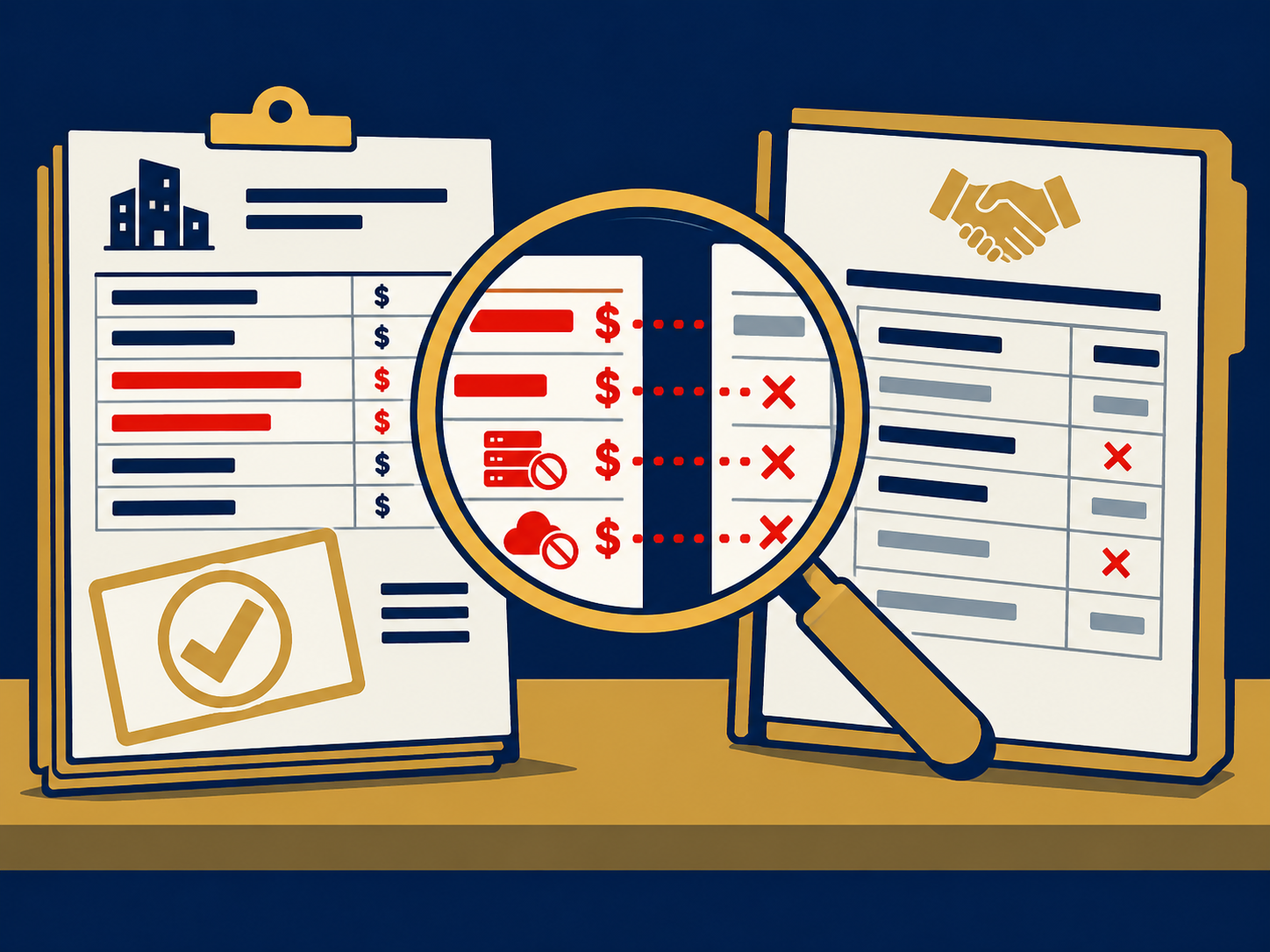
To justify SIEM spending, you need to acknowledge something uncomfortable. The advertised price is usually the smallest part of what you are actually paying.
For example, one analysis found that a SIEM license advertised at roughly 125 dollars per month translated into 700,000 to 900,000 dollars in annual total cost of ownership for a self managed deployment once you included infrastructure, labor, and hidden network fees, especially for high volume environments ingesting multiple terabytes per day, as reported by UnderDefense in March 2026. License numbers rarely include:
- Cloud infrastructure to run clusters in multiple availability zones
- Cross availability zone data transfer costs, which can reach thousands per month for multi terabyte daily ingest, according to UnderDefense’s 2026 report
- Storage tiers and retention for hot, warm, and frozen data
- Engineering and operations staff required to keep the system healthy
Labor is usually the largest line. In Elastic style environments, UnderDefense notes that a realistic team often includes an Elasticsearch SRE, a detection engineer, and a data engineer, totaling roughly 468,000 to 702,000 dollars per year in salaries and overhead for a 24/7 capable operation.
When you add those numbers up, a managed SIEM or co managed model at 60,000 to 180,000 dollars annually can become easier to defend. Not because it is cheap, but because you have a more predictable and often lower total cost of ownership than running everything yourself at scale.
If you want your SIEM budget to survive scrutiny, bring this full picture to the table. You are not hiding cost. You are showing where the real money is going so you can have an honest conversation about trade offs.
Know Why SIEM Costs Are Increasing For You
If your SIEM costs keep climbing, that is not random. There are specific drivers you can map and control. Before you talk about cuts, you need to understand the “why” behind the bill.
Key pressure points usually include:
- Data volume growth as you add new systems, apps, and geographies
- Retention policies that treat all logs as equally important
- New security and compliance requirements that pull in more sources
- Architectural decisions such as multi AZ deployments with unoptimized routing
If you have not already, it is worth stepping back to understand why SIEM costs are increasing in your environment. Many organizations discover that their SIEM did not “become” expensive by itself. Their logging strategy did.
You can then segment your data sources into:
- Must have for security, such as authentication, endpoint telemetry, critical application access, network edge, and cloud control plane
- Nice to have for investigations and performance tuning
- Low value for security, such as verbose debug logs, repetitive health checks, and high frequency heartbeats
Once you see the mix, you can decide what truly belongs in your SIEM and what should move to cheaper storage or be filtered out entirely.
Cut Ingested Noise, Not Security Coverage
You do not justify SIEM spending by arguing that you should watch less. You justify it by proving that you are watching the right things and not paying to store noise.
One global cybersecurity firm managing more than 600 million devices and ingesting 1.15 terabytes of security data daily faced that exact problem. Their Microsoft Sentinel costs were rising fast because data volume was growing at 18 percent annually. Within 14 days of deploying an AI powered volume control and routing layer from DataBahn, they cut daily SIEM licensing costs from 1,800 dollars to 700 dollars and saw roughly 400,000 dollars in annual savings across licensing, storage, and infrastructure.
The most important detail is how they did it. They did not turn off log sources. They:
- Applied more than 900 data volume reduction rules to suppress irrelevant events like heartbeats and highly verbose logs
- Achieved a 60 percent reduction in ingested log volume while maintaining and often improving detection quality
- Standardized and simplified data schemas so queries became easier and cheaper to run
The pattern is replicable even if you use different tooling. If you focus on eliminating low value events and routing non critical data to cheaper storage, you can realistically reduce your SIEM ingestion volume by 50 to 60 percent without weakening your security posture.
You will have an easier time justifying SIEM spend when you can tell leadership, “We cut log volume in half by removing noise, freed budget to add higher value detections, and improved cost predictability.”
Use Retention And Routing As Cost Levers
Retention and routing are two of the strongest levers you have to control SIEM cost without sacrificing security. Long hot storage for everything is almost never the right answer.
Start by aligning your security log retention policies to risk and regulatory need. Ask:
- Which logs do you need in hot storage for fast detection and response
- Which can move to warm or frozen storage after a short window
- How long do you actually need each category to be searchable for compliance and investigations
Some vendors create what UnderDefense calls a “licensing trap” where you need a more expensive license tier to access cost efficient frozen storage. For example, organizations might pay an additional 200,000 to 300,000 dollars annually to unlock searchable snapshots and cheaper long term storage. For mid sized and large enterprises, that higher license can still be the right decision if it cuts overall storage and infrastructure costs and keeps you compliant.
You can combine smarter retention with routing strategies such as:
- Filtering out non security relevant events at the collector before they hit your SIEM
- Sending non critical operational logs to cheaper object storage or observability platforms
- Aggregating, deduplicating, and compressing logs so duplicates do not inflate the bill
Organizations that take this seriously often see long term SIEM storage costs drop by up to 60 percent while improving performance and maintaining forensic quality through secure log storage. The outcome you want is clear tiers: SIEM for high value security data, lower cost storage for everything else.
Translate SIEM Value Into Metrics Leaders Understand
You cannot justify SIEM spending with “better visibility” alone. You need numbers that show how it changes outcomes. The core of your story should revolve around time, quality, and coverage.
Useful metrics include:
- Mean Time to Detect (MTTD) for critical threats
- Mean Time to Respond (MTTR) from detection to containment
- Alert to incident ratio, the percentage of alerts that become real, investigated incidents
- Log source coverage for your most important systems and business processes
- Detection accuracy, including false positive and false negative rates
As of 2026, mature security operations centers often aim for an alert to incident ratio of roughly 15 to 25 percent. That means one in four to one in seven alerts is a genuine, actionable incident rather than noise. Staying in that band indicates that your SIEM is generating quality intelligence rather than overwhelming your analysts with junk.
Executives tend to respond well when you can say things like:
- “Our MTTD for critical threats is now measured in minutes, not hours.”
- “Our MTTR is under one hour for high severity incidents.”
- “We tuned our SIEM and reduced false positives by 40 percent, which freed analysts to focus on real threats.”
Real world cases show the effect. One financial institution reduced MTTR from hours to minutes through SIEM tuning and automation. A healthcare provider cut false positives by 40 percent. Those are clear, defensible improvements that map directly to lower breach likelihood and impact.
When you track these metrics over time, you can tie SIEM changes directly to improvements in security outcomes, rather than just more logs or more dashboards.
Show Cost Avoidance, Not Just Cost
The primary return on SIEM is not new revenue. It is avoided loss. To justify SIEM spending, you need to put real numbers behind “what might have happened without it.”
Public breach data can help. For example:
- The Maricopa Community College data breach cost roughly 20 million dollars in damages and remediation
- The Target breach carried estimated expenses ranging from 17 million dollars to potentially 1 billion dollars, depending on legal outcomes and long term impact
- The Navy Intranet breach led to roughly 10 million dollars in remediation costs
You do not need to claim that your SIEM prevented a specific “Target sized” event. Instead, you can model scenarios:
- “If our SIEM prevents even one moderate breach in the next five years, at a likely cost of X to Y million dollars, then our annual SIEM investment of Z is justified.”
- “By cutting detection time from days to minutes, we reduce attacker dwell time and the scope of potential compromise.”
You can also quantify operational efficiencies:
- Reduction in manual compliance preparation time because reporting is automated
- Lower investigation time per incident due to centralized logs and correlation
- Fewer hours wasted on false positives because of SIEM tuning and machine learning
Time is a variable your finance team already understands. If you can say, “We cut the time required for audit preparation by 50 percent and reduced incident investigation time by 30 percent,” that becomes a clearer ROI story than any feature list.
Use Machine Learning And Automation To Improve ROI
Machine learning in SIEM is not just a buzzword. It is one of the more practical ways to justify SIEM spending by improving outcomes while constraining headcount growth.
ML driven SIEM capabilities can:
- Reduce false positive alerts with adaptive and supervised learning models that learn from analyst feedback
- Identify unusual behavior patterns that would be hard to catch with static rules
- Automate responses for well understood threats, such as isolating compromised systems or disabling accounts
- Continuously tune detections as your environment and threat landscape change
As of 2024, ML driven SIEM has shown ROI gains by:
- Lowering operational costs since analysts spend less time triaging noise and more time on real threats
- Shortening incident response time through automated actions that do not wait for manual approval
- Reducing risk by detecting emerging threats earlier and limiting dwell time
When you combine automation, SIEM, and sometimes SOAR capabilities, you can often hold your security team size relatively flat while scaling coverage and complexity. That is a very different conversation with leadership than, “We need to hire three more people.” It becomes, “We are investing in automation that allows the same team to handle more threats, faster, and with fewer mistakes.”
Decide When To Optimize, Expand, Or Replace
At some point, the question is not only how to justify SIEM spending. It is whether you are justifying the right SIEM and the right operating model.
There are three broad scenarios:
- You are underutilizing a capable SIEM
You have features like ML, automation, or efficient storage tiers that you are not using. In this case, the right move is to tune, filter, and automate before you consider a rip and replace. - Your architecture is the problem
You are doing multi AZ clusters with unoptimized routing, shipping debug logs directly to SIEM, and keeping everything in hot storage. Here, you adjust architecture and why SIEM becomes expensive becomes a design problem, not a product problem. - Your SIEM no longer fits your size or threat model
Your data volume, complexity, or compliance needs have outgrown the solution. At that point, the more honest question is when to replace SIEM instead of endlessly tuning.
Whichever scenario you are in, the decision standard is the same. Can you show that this SIEM, operated in this way, gives you the best combination of risk reduction, cost predictability, and operational clarity that you can realistically achieve.
Anchor Your Justification In A Simple Story
Finance and executives do not need every parameter in your logging pipeline. They need a clear story that connects SIEM to business stability.
A defensible justification sounds like:
“Here is the risk we are managing, here is what our SIEM enables us to see and do, here is how we reduced waste and noise, and here is how we measure whether it is working.”
If you frame your argument around security information and event management as an outcome enabler rather than a passive expense, conversations about budget become less adversarial and more strategic.
You can summarize your position along three lines:
- We have reduced unnecessary ingestion and storage while protecting coverage
- We have improved detection speed, response time, and alert quality
- We have aligned retention and architecture to compliance and cost constraints
From there, the remaining question for leadership is not “Why are we paying for SIEM.” It is “Are we comfortable with the level of risk we are accepting if we fund or underfund it at this level.”
Conclusion
You justify SIEM spending without cutting security by shifting the conversation from “How much are we paying” to “What risk are we reducing, and how efficiently are we doing it.”
That means mapping your true total cost of ownership, cutting log noise instead of log sources, using retention and routing as active cost controls, and measuring SIEM performance in terms leadership cares about, such as MTTD, MTTR, alert quality, and compliance effort. It also means recognizing when machine learning, automation, or even a different SIEM or operating model will get you a better balance of security and predictability.
When you can show that your SIEM program reduces incident impact, speeds response, and lowers the effort of staying compliant, the budget conversation changes. You are no longer defending a line item. You are defending an operating posture that keeps the organization resilient under pressure.
Need Help Making Your SIEM Spend Defensible?
We know that SIEM decisions are rarely just about tools. They are about how much risk your organization is willing to accept, how predictable your costs need to be, and how clearly you can explain the trade offs to stakeholders who do not live in security metrics every day.
We help you clarify what you actually need from SIEM, where your current approach is leaking value, and which providers or architectures fit your volume, compliance, and budget realities. Together, we evaluate whether you should optimize your current stack, move to a managed model, or plan a structured replacement, and we frame that decision in language your leadership team can support.
If you are ready to turn “why is SIEM so expensive” into a clear, defensible investment case, we can help you find and negotiate the right solution for your environment.