Why SIEM Becomes Expensive When You Collect Everything
February 27, 2026

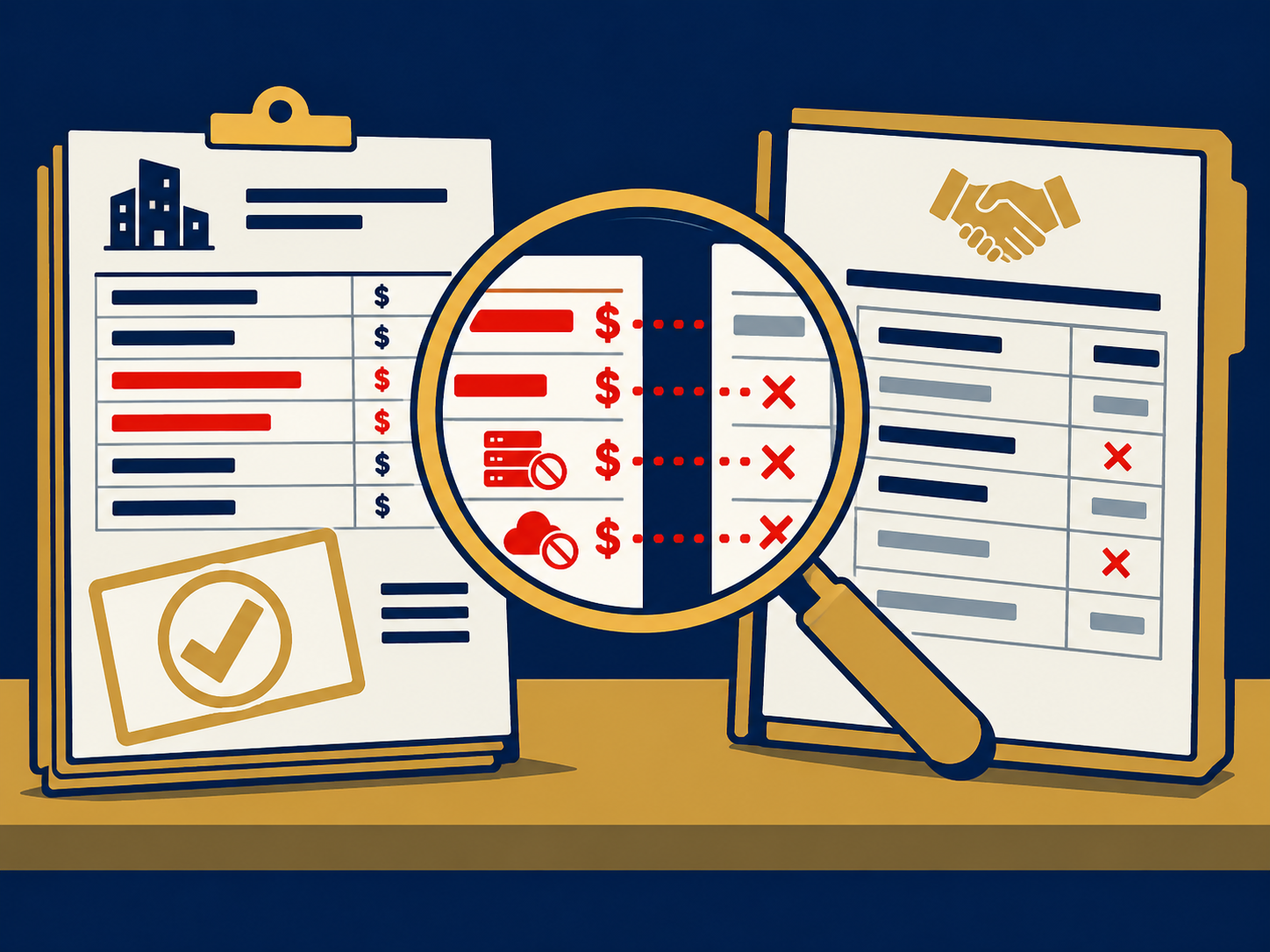
Digital security tools rarely fail because you bought the wrong platform. More often, they fail because you asked that platform to do something it was never priced or designed to do. That is the heart of why SIEM becomes expensive when you collect everything.
If you are sending every possible log, trace, and event into your Security Information and Event Management (SIEM) system, you are not just paying for visibility. You are paying a premium for noise, duplication, and delay. Over time, that choice can quietly crowd out other security investments, increase mean time to detect, and make each renewal harder to defend to stakeholders.
This article explains why SIEM becomes expensive in a collect‑everything model, where the real costs show up, and how you can improve your security posture without simply buying more capacity.
Why SIEM Becomes Expensive When You Collect Everything
At a high level, SIEM becomes expensive because vendors typically charge you for volume. You pay to ingest, process, and keep every byte of data, including large volumes of low value or redundant logs. As your environment grows, that cost curve gets steeper.
Multiple analyses highlight the same pattern. SIEM costs rise rapidly due to the logging, storing, and managing of large volumes of security data that must remain accessible for analysis and compliance, as described in a 2024 review by Lauren Farrell. A 2023 guide from ReliaQuest points out that organizations often end up sacrificing other security investments just to keep up with SIEM licensing and storage fees tied to this exploding data volume.
The result is predictable. When you collect everything, you are no longer paying primarily for detection quality. You are paying for throughput. The more your business grows, the more that decision compounds.
How SIEM Pricing Models Reward Volume
You feel the impact of collecting everything through the pricing model the SIEM uses. While each provider describes it differently, most models come down to paying for:
- Events per second or per day
- Data volume in gigabytes or terabytes
- Number of monitored devices or users
In SIEM as a Service offerings, for example, common 2025 rate structures include 1 to 5 dollars per 1,000 events, 50 to 200 dollars per gigabyte of data, 5 to 25 dollars per device, or 100 to 500 dollars per user per month. Even at the low end of those ranges, a high volume environment can quickly translate into very large monthly fees.
If you rely on a managed SIEM, pricing typically starts from around 15 dollars per asset per month, with actual costs influenced by service level, customization, and deployment model. That can be a fair exchange if your volumes are under control. It can become a budget problem if you are ingesting everything by default.
In a resource based or consumption based model, the risk shifts to you. You must accurately predict how much capacity you will need, how your environment will grow, and how incident spikes will affect data volume. In practice that is difficult, and it makes SIEM spending unpredictable even if the list price looks reasonable up front.
Where Collect‑Everything SIEM Costs Actually Come From
You do not experience SIEM cost as a single line item. It shows up across your security operations lifecycle. When you collect everything, each stage becomes more expensive and less predictable.
Data Collection And Ingest
Every new source that sends data into your SIEM increases cost. This includes:
- Firewalls and network appliances
- Servers and endpoints
- Cloud services and SaaS platforms
- Identity and access management tools
- Application and API logs
Ingestion based pricing means you pay for every log that crosses the boundary. Omer on Security describes a scenario where collecting 1.5 TB of data per day can translate into roughly 900,000 dollars per year in data collection and ingest costs alone.
If you collect everything, you are paying these ingest fees for:
- Duplicated events
- Debug or verbose logs that do not support detection
- Low value telemetry that is rarely queried
- Events retained only to meet broad or undefined requirements
The problem is not that these logs have no value. The problem is that you are paying SIEM prices for all of them, whether they contribute to meaningful alerts or not.
Hot Storage And Retention
Once data is inside the SIEM, it must be stored, indexed, and kept accessible. This is where long retention policies and collect‑everything habits collide.
Hot storage, where data is quickly searchable and used for real time analytics, is particularly expensive. Omer on Security outlines an example where 7 TB of data per day retained for 90 days in hot storage can add roughly 200,000 dollars per year in storage cost alone.
Regulatory frameworks such as GDPR, HIPAA, PCI DSS, and SOX often require you to keep logs for 12 months or more. A 2024 analysis notes that these compliance and regulatory requirements significantly increase SIEM costs because they enforce stricter security and retention practices that must be met, often with tiered storage where hotter tiers cost more.
If you keep everything hot for longer than necessary, you are paying a premium to store data in the most expensive tier, not because you always need it there, but because you did not define what belongs in hot storage and what does not. You can dig deeper into how retention choices influence cost in our guide on security log retention policies.
Detection, Analytics, And Investigation
Collecting everything does not just increase storage cost. It increases the cost of analytics and investigation.
Automated analytics, correlation, and threat detection require compute power. Cloud based SIEMs often charge based on bytes scanned, CPU cycles, or query duration when you run searches or analytics jobs. Unpredictable cybersecurity workloads make it hard to model these costs in advance. Spikes in query activity during incidents translate directly into higher processing spend.
ReliaQuest highlights another side effect. The process of ingesting, parsing, and indexing large volumes of data introduces latency. Mean time to detect (MTTD) often averages around three hours in traditional SIEM environments, in part because so much data must be processed and made searchable before it can contribute to alerts.
When you collect everything, you are effectively paying more to go slower. Your analysts must sift through more noise. Your detection rules must run against larger datasets. And your investigative queries must scan more records to answer simple questions. Each of those steps has a cost in both compute and time.
Archive, Retrieval, And Egress
To control hot storage costs, many organizations shift older data to colder or archived storage tiers. That can help, but only if you account for the downstream impact.
Archive processing often comes with its own fees. Rehydrating logs from cold storage into hot tiers to support an investigation can be expensive, especially if you need to search across long time ranges or multiple regions. Cloud egress charges add another layer. Moving 2 TB per day of logs from one cloud to another, for example, can exceed 50,000 dollars per year in outbound data transfer fees alone, according to Omer on Security.
If your default is to keep everything indefinitely, each investigation that touches archived logs can trigger a spike in costs that is hard to predict or explain to non technical stakeholders.
Operational Labor And Complexity
Collect‑everything SIEM strategies are also labor intensive. You need specialists to:
- Design and maintain the SIEM architecture
- Integrate new data sources and normalize log formats
- Tune rules and analytics to reduce false positives
- Manage storage tiers and retention policies
- Monitor performance, scaling, and capacity
Even in a single SIEM platform, these tasks often involve roles such as cluster administrators, data engineers, and detection engineers. A recent analysis of one popular SIEM stack estimates total labor costs in the range of 360,000 to 540,000 dollars per year in base salaries, or about 600,000 dollars when you include overhead and benefits.
With a collect‑everything model, each new source and each new requirement adds more work. Over time, your security team spends more energy feeding and caring for the SIEM and less energy on improving actual security outcomes.
Why Traditional Cost Controls Often Backfire
Once SIEM costs start rising, you may be tempted to apply quick fixes. Shorten retention. Filter logs at the source. Turn off verbose logging in noisy systems. Use native filters to drop categories of events you rarely query.
These adjustments can reduce near term cost. They also introduce new risks.
Analyses from 2024 note that traditional cost control measures, such as aggressively shortening retention or filtering out noisy sources, often reduce costs at the expense of visibility, compliance, or long term investigative capability. If you cut too deeply, you can create blind spots that matter precisely when an incident occurs months later.
The root cause, highlighted in multiple reports, is that too much low value and less relevant security telemetry is ingested and stored without any prioritization before it reaches the SIEM. You are paying premium rates for data that contributes very little to detection or investigation.
In some cases, organizations try to use AI powered or relevance based ingestion to trim SIEM volume. That approach can help, but if filters are based only on short term frequency or perceived relevance, you risk dropping low frequency events that are essential for understanding an attack chain over longer time windows.
The Performance Penalty Of Collecting Everything
Cost is not the only consequence of collecting everything. There is also a performance penalty that can weaken your security posture.
When every event from every source flows into the SIEM:
- Parsing and indexing pipelines slow down
- Dashboards and searches become sluggish
- Detection rules run against larger and less curated datasets
- Alert queues grow with more low value findings
The ReliaQuest case study on at source detection offers a practical contrast. By reducing raw data sent to the SIEM and focusing on higher value telemetry, one organization cut SIEM ingest by 860 GB per day and reduced SIEM licensing costs by 43 percent while also improving detection speed. That result reflects a broader pattern. Less, but higher quality data, usually improves both cost and performance.
If your current environment delivers slow queries, delayed alerts, and analysts overwhelmed by noisy events, collecting everything is likely a significant contributor.
The Compliance Trap: Retention Without Strategy
Compliance is often cited as the reason you must keep everything. The reality is more nuanced. Regulations rarely require you to store every possible log in hot SIEM storage forever. Instead, they require you to:
- Retain specific categories of logs for defined periods
- Demonstrate the ability to reconstruct events and support investigations
- Protect the integrity and confidentiality of stored data
A 2024 analysis emphasizes that compliance and regulatory requirements are a major factor in rising SIEM costs, particularly because of stricter data security and retention practices that default to longer hot tier storage. However, it also notes that proactive solutions that reduce data volume and optimize storage can mitigate these costs while still meeting compliance obligations.
The compliance trap occurs when you equate “defensible” with “keep everything”. In practice, a more defensible posture looks like:
- Clearly defined log categories and retention periods
- Documented criteria for what belongs in hot, warm, and cold storage
- Processes for promoting specific data to hotter tiers during investigations
- Evidence that your retention strategy is intentional and enforced
If you are revisiting your compliance model or preparing for an audit, it can help to review how your SIEM fits into your broader log retention architecture. Our guide on security log retention policies walks through that decision in more depth.
Why SIEM As A Service Still Gets Expensive
You might expect SIEM as a Service to solve many of these issues. In practice, it solves some and introduces others.
Managed SIEM or SIEM as a Service offerings remove part of the operational burden. The provider handles infrastructure, upgrades, and, in some tiers, monitoring and incident response. However, multiple analyses show that these models can still become expensive, especially when you collect everything.
Key drivers include:
- Volume based pricing on events, data, devices, or users
- Additional charges for advanced analytics, UBA, or SOAR features that can add 30 to 100 percent to base pricing
- Professional services for implementation, integrations, rule creation, and tuning that can add 10,000 to over 100,000 dollars in upfront cost
- Higher ongoing fees when you purchase full service monitoring and response, often 2 to 4 times more than self service options
If you do not actively manage what you send into a managed SIEM, you can offload labor but still end up with a cost structure that grows faster than your budget. Over time, that can force you into reactive decisions that undermine the value of the service.
Moving From Collect‑Everything To Collect‑Intentionally
The opposite of collecting everything is not collecting almost nothing. It is collecting intentionally.
A more sustainable SIEM strategy focuses on:
- Outcome clarity
Define what you are trying to achieve with your SIEM. Faster detection, better incident investigations, compliance coverage, or all of the above. Your outcomes should shape what you collect and how long you keep it. Our overview of security information and event management can help you reframe SIEM as an outcome tool rather than a log warehouse. - Signal quality over volume
Prioritize data sources that produce high value signals. Identity and access events, privileged activity, critical application logs, and network traffic from key control points often provide better detection value than verbose debug outputs from every component. - Tiered collection and retention
Not every log needs the same treatment. You can route different categories of telemetry to different destinations. Some belong in the SIEM hot tier, some in cost effective log archives that remain queryable when needed, and some may be summarized or aggregated before ingestion. - At source enrichment and filtering
Instead of dropping data blindly, enrich and normalize events closer to the source, then forward higher value, higher context logs into the SIEM. The ReliaQuest case study illustrates the impact of this approach, with large reductions in SIEM ingest and cost while improving detection speed. - Aligned retention with clear trade offs
You do not need a perfect model to start. You need a documented one with explicit trade offs that leadership understands and supports. That makes your SIEM strategy defensible, even when you choose not to store everything indefinitely.
If you are working through these questions now, it may help to revisit the bigger cost trends. Our article on why SIEM costs are increasing looks at structural shifts that affect almost every organization, regardless of toolset.
Making SIEM Spend Easier To Defend
Ultimately, you are not trying to win an argument about volume. You are trying to defend a decision about value.
To make SIEM spend easier to explain and support, you can frame it around:
- What outcomes you are buying, not just what data you are storing
- How your SIEM strategy reduces time to detect and time to respond
- How it supports regulatory and audit requirements in a targeted way
- How you are avoiding waste by not paying premium rates for low value data
When stakeholders ask why SIEM has become so expensive, you should be able to show how your current model handles volume, retention, and analytics, and where you are actively managing those levers. Our guide on how to justify SIEM spending provides a structure for that conversation with finance and executive leadership.
When To Question Your Current SIEM Approach
Rising SIEM invoices are a signal, not always a verdict. The critical question is whether your current approach is still the best way to get the outcomes you need.
You may want to reassess your model if you notice patterns such as:
- SIEM costs rising faster than the rest of your security budget
- Teams disabling or avoiding analytics because queries are too slow or too expensive
- Frequent debates about retention with no clear owner or decision criteria
- Increasing reliance on third party tools or manual workflows outside the SIEM to get usable insights
- Difficulty connecting SIEM investment to measurable reductions in risk or incident impact
In some cases, the right move is to tune what you collect, how you store it, and how you use it. In other cases, the more defensible decision may be to evaluate a different model or provider. Our article on when to replace SIEM outlines the trade offs that matter most in that decision.
Conclusion
SIEM becomes expensive when you collect everything because the unit you are paying for is not insight. It is volume. Every additional log you ingest, process, and retain multiplies costs across ingestion, storage, analytics, archives, and operational labor.
Collecting intentionally does not mean accepting blind spots. It means recognizing that not all data deserves the same treatment, at the same price point, for the same duration. When you align SIEM data collection with specific outcomes, tier your retention, and reduce low value noise before it hits your SIEM, you improve both your cost curve and your security posture.
For IT and security leaders, the goal is not to own the biggest SIEM. It is to own a SIEM strategy that you can explain in simple terms, defend under scrutiny, and sustain as your environment grows.
Need Help Turning “Collect Everything” Into A Defensible SIEM Strategy?
We work with organizations that are feeling the pressure of rising SIEM invoices and unclear value. Our role is not to push a single platform. It is to help you clarify what you actually need from SIEM, then match you with providers and architectures that support those outcomes without forcing you into a collect‑everything cost curve.
We help you:
- Map which logs you truly need in your SIEM and which can move to cheaper tiers
- Align retention and collection policies with compliance, audit, and investigative requirements
- Evaluate SIEM and adjacent solutions in the context of your budget, staffing, and risk priorities
- Build a SIEM roadmap you can explain to executives, auditors, and your own team
If you are questioning why SIEM has become so expensive, or you are not sure whether to tune, augment, or replace your current solution, we can help you sort the options and move forward with confidence. Reach out and let us know what you are trying to achieve, what you cannot compromise, and where the pressure is coming from. Together, we can design a SIEM strategy that fits your reality, not just your log volume.