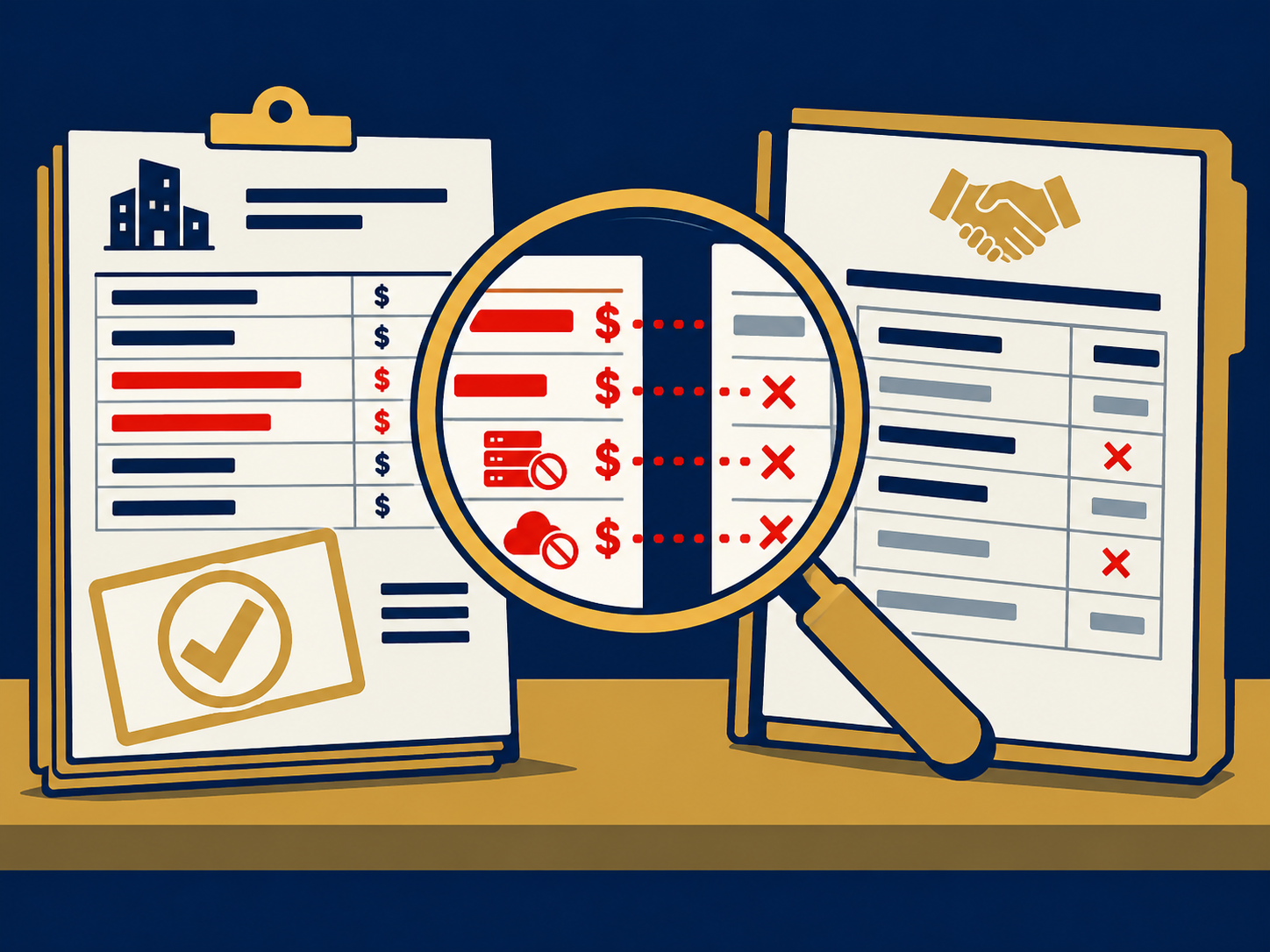
Tommi Ellis: [00:00] Client says to a carrier, I no longer need this asset. It’s not in contract. I’d like you to disconnect it. Carrier goes, cool, no worries. Client’s too busy to look at their invoice next month. It continues to bill. That happens a lot.
Max Clark: [00:16] Mm.
Max Clark: [00:24] So here’s a good one, right? So an elevator pitch, right? Or like the quick answer. an enterprise sends you their phone bill. What’s the most money you’ve ever seen hiding in one?
Tommi Ellis: [00:35] man, that is so it’s hard to answer and I’ll explain why. Whether it’s an account, sometimes you have smaller accounts with like we had an opportunity and we their client, 270 lines, right? You would assume like not much savings, it’s somewhat of a smaller account. And we still found them 4,000 a month, so almost 40,000 annual savings. And then you have some of the big enterprise clients that they have been effectively managed to a point of
Tommi Ellis: [01:05] until us so then there’s not as much savings as you would have expected. so you know I think one of the biggest savings I’ve seen is probably about annually 1.2 million
Max Clark: [01:25] I mean that’s significant.
Tommi Ellis: [01:26] Yeah.
Max Clark: [01:27] What’s what’s hard about those numbers for me, it’s always and this was pointed out to me, it’s like if you’ve got a hundred billion dollar company and you save one point two million, they’re like, Okay, we’re not even gonna spend the time to like who
Tommi Ellis: [01:36] Yeah.
Max Clark: [01:37] cares, right? But then, you know, the other side of that, if you say it’s two hundred and seventy lines, you know, that’s not a huge business. No. And so then you start talking about like, you found salary. You found like somebody’s salary, you know, in that process, which is you know, which is wild.
Tommi Ellis: [01:53] I think it’s so important though because I think a lot of people when they associate TEMS it’s like cost reduction and yeah that’s great. It’s we want to find reduction, right? But for us, it’s really about what you just explained. It’s the soft ROI giving, you know, those team players, whether they’re in IT and finance or finance, time back in their day. They’re not having to crunch, I mean, cell phone bills. And so it’s really the soft ROI that’s really exciting for us.
Max Clark: [02:20] Okay, so let’s jump forward on this a little bit. I’m gonna come back to a lot of my like initial questions, but since we’re talking about Tim, I have I I mean
Max Clark: [02:30] You know, I joke that like I talk on the phone and solve problems. But when it really comes down to it, I you know, I’ve been negotiating IT contracts for decades now. I mean like the the core. Yeah, I mean really like like I’m I’m the old guy, right? But so coming up on thirty years in the industry of and a and a core piece of that has always been identifying, sourcing and purchasing, and whether that was hardware or then services, software, data centers, network services. But again, like you talk about like
Max Clark: [02:59] And it’s simplistic to say, you know, I negotiate contracts for a living, right? but then when you start talking about Tim, Tim becomes a different animal, right? And and and you you just said, which is like triggered this, is like Tim has this idea of like, or cost savings apparatus. But like that’s like a really a really small function of Tim. And now
Tommi Ellis: [03:19] So,
Max Clark: [03:19] so so explain start starting at zero. Like explain Tim to me.
Tommi Ellis: [03:24] Okay. So, you know, typically known as telecom expense management, but with all the advances, it’s really more technology expense management that’s available out there. And you know, savings again is icing on the cake, but for us, it’s really about you I’ll use mobility first and then we can talk wireline. It’s really about just getting the data. For us, the first step is getting access to the portal or maybe three billing statements, and then we run the numbers and we figure out, okay, here’s what you’re spending and here’s what you
Tommi Ellis: [03:53] Should be spending based on each line consumption, right? And then also eliminating zero usage. So you know, we come across clients that either A weren’t looking at it at all, we’re just rubber stamping, and then there’s some that have been managed. And so the next step is really defining the processes of our the client and saying, How do you do things today? Us, our team is really there to understand those challenges, and then our next step is building out.
Tommi Ellis: [04:24] Like a portal for them based on their processes and based on their needs, and then they go live. and so for the client themselves, they rely on us entirely. And one thing I will say is like, you know, it’s not like, hey, here’s a portal, have fun. with Intertem, it’s really human-led, data-backed, which means they’re gonna have an amazing portal. It’s especially if that multi-carrier, they have everything in one spot rather than multiple portals.
Tommi Ellis: [04:53] But it’s gonna be designed for them and then they get they’re gonna have a named account manager to support them. So some clients might say, you know, I don’t want to log into your portal. Great, that’s what the account manager is for. and some get a little bit more tactical within it. and then on the wireline side, I mean that’s where like invoices can get out of, you know, especially depending on the number of locations, the amount of invoices is just
Tommi Ellis: [05:23] unmanageable unless you have a full telecom team in-house. Right. and so cost allocation is huge on the wireline side, right? Because they want to see like these charges should be allocated to a GL code, a cost center. So again, we gather the information, we learn about the client’s processes, challenges. We use that to build out the portal to reflect it. And then we have an account manager to support them on the end.
Max Clark: [05:51] So I mean I mean so I guess I guess the way I phrase this is like then who’s your customer inside the enterprise, right? Like are you is it the IT team? Well you I mean so we used to have like a telecom team, then an IT team, those are kinda merged. Yeah. You know, right? So is it the IT team? Is it the finance team? Like who’s who’s the ultimate customer here?
Tommi Ellis: [06:09] For this.
Tommi Ellis: [06:09] Yeah, so that’s interesting that you said that you had like a telecom team and an IT team, but they’re merged. 99%, it’s really a function of the IT team to manage. and it’s one task out of a hundred tasks that they have, right? It’s not their main focus. and so a lot of things can get lost in translation with that. But another really key point of contact within an organization is obviously finance.
Tommi Ellis: [06:39] So those two, usually CIO, CFO, IT director, controller, we really, the ideal situation is having them both on the call, understanding the challenges, and focusing on how we fix both. Obviously finance is going to want lower reduction in spend, more controllable expenses, and then IT is like just get this off my plate as quickly as possible.
Max Clark: [07:06] Well,
Max Clark: [07:06] I you know, I mean what what is the the you know AP cycle for most companies, right? Like it comes in and it has to go to an approver and the approver goes, Yep, it’s approved. Yeah we have you know fill in a blank wireless, you know, yep, yep, invoice is approved, right? And you know, I’m I’m laughing about you know what you’re saying like the wireline, you know, billing, right? Because there’s we work with a lot of vendors who
Max Clark: [07:32] you’ll sign a contract with that vendor and then they’ll invoice you and then their their behavior is like, we credit you after the f initial invoices and then they make you whole in the credits and after the fact and you’re like who can make sense of this craziness you know and and y you know I reflect on that a lot because you know our my team like we do this every day. Yeah. So it’s like okay you kinda understand what’s going on here and can help people through it but you’re like if you weren’t doing this every day of your life. You know it’s nuts. It’s completely nuts.
Tommi Ellis: [08:00] Yeah, yeah, like I worked for Verizon Wireless for twenty years, right? Ten in the retail stores, ten as a corporate trainer. and I don’t want to look at my influence.
Max Clark: [08:12] You know,
Max Clark: [08:12] there’s a couple of it that goes on to right? I I was asking about ownership because you know, if you’re going somebody doing billing review inside of an IT team, right? This is not like your senior IT resource, it’s going down line by line and figuring this out. And the same thing in a finance team, right? Like you’re not going and then this problem just gets worse and worse. The number of lines increases, right? You know, and and wireless has gotten somewhat better because now we have, you know, more of like this flat rate concept around, you know, what is each line cost, what’s each phone cost. But then keeping track of like who has a phone.
Max Clark: [08:42] Who doesn’t have a phone where the phones are? Yeah, what are you paying? Did you get credits? Do your credits come in or anything? Yeah, right. And what I tell people you look at it is just every every company has like a steady-state churn of people, right? Like, and that’s just you know, there’s like healthy churn, there’s unhealthy churn, right? You know, and you get in different industries you have different churn, like if you’re running a call center, your churn’s really high. Yeah. But you know, a thousand-person company.
Tommi Ellis: [09:11] time.
Max Clark: [09:12] has a lot of people coming and going yeah every month just as a thing. It’s just the nature of the business. And and that opens up a lot of problems, right? Because now you’re like, okay, did you deal with the person that churned out stuff and the person that came in stuff and and who’s keeping track of all that?
Tommi Ellis: [09:27] Which is
Tommi Ellis: [09:28] so important about you know not really being a TEM that just says, Hey, here’s your portal. We’ve consolidated all your data. With that high turnover, the TEM might have trained that point of contact initially, but when they leave, did that person train the replacement on the portal and how that works? Which lends to the point that you really need a human-led data back situation. Because, you know, our clients they could have churn, it wouldn’t matter.
Tommi Ellis: [09:58] There’s still an assigned account manager that will then train the next person on what they need to know. And maybe they don’t need to know anything because we’re taking ownership of it. Maybe they want to be more involved, and so we’re gonna train them on the tools and what to look for, and maybe they have recommendations, you know, clean eyes, fresh eyes, is that the phrase? where they can give us ideas of what makes more sense for their portal or what reports they like to see. And I think too a lot that we’re seeing is usually have a really great temper.
Tommi Ellis: [10:27] person within these enterprises that’s the problem is they’re getting close to retirement so we’re constantly saying like let’s get in place before they leave because once they leave all of that you know data leaves with them all that you know how to manage those invoices how to inspect them how to deal with the carriers that leaves with them and so yeah it’s
Max Clark: [10:54] But that’s I mean that like goes into the a question of like a company that wants a DIY, right? Like, we’re just gonna handle ourselves. We’ve you know, what’s what’s my favorite line, right? We’ve got it handled. You’re like, okay, that by nature means you know that you don’t have it handled because nobody thinks that they actually have it handled if they’re actually doing it, right? Yeah. Because it it’s just like these holes get so deep so fast. But you know, i it’s different from like a share shift or a change, right? If you’ve got an existing service and you could say, hey, this thing isn’t working for us, but we know what we want.
Max Clark: [11:24] because we already have experience with it versus we’re net new to this entire thing. You know, an organization that’s completely net new that hasn’t had a background and experience working with a Tim before how do you take this to that customer, that company and say, look, you’re gonna pay us money, but you’re gonna, you know, X, Y, and Z is gonna happen as a result of it.
Tommi Ellis: [11:47] Sure.
Tommi Ellis: [11:48] And one of the things that we do really well is try to find enough savings to where there’s no out of pocket. Right. So there’s that. But then there’s also with those clients that have no experience with TEMS, those are actually more exciting for me because I get to enlighten them of how much we can actually support their business, right? Especially again, the savings are great, but the ROI, the soft ROI, in terms of, you know, that really requires that discovery with the client. What is it?
Tommi Ellis: [12:17] look like today? How many people do you have on it? What’s each person responsible for? Do you have a mobility person and a wireline person? And now with the ever-changing of technology, cloud, SaaS, how many AWS licenses do you have? It’s just a lot of figuring out what are your challenges. So whether it’s a brand new to TEM or they’ve had a TEM before, it still kind of requires that deep discovery about where are you at, where do you want to be, and how do we help you get there, right?
Tommi Ellis: [12:48] So I get excited when someone is like what up Tim? I’m like yeah let’s go
Max Clark: [12:55] telco
Max Clark: [12:55] nerd. I know. it’s okay, so you you you and you also you already said this, right? Which was, you know, Tim has now evolved.
Max Clark: [13:05] It used to be telco, right? Back in the days when we had PRIs and and and analog lines and we still have analog lines and everybody wants to talk about the analog lines going away. It’s like let’s say let’s talk about the thing that nobody wants to talk about, which is your POS lines are being decommed. Like come on. but so you you know, you had this like telco to wireless, right? And we still see a lot of like a lot
Max Clark: [13:29] companies that are like trying to figure out are they reimbursing personal devices. By the way, please don’t do that.
Tommi Ellis: [13:34] Yeah.
Max Clark: [13:35] Bad idea.
Max Clark: [13:36] We’ll talk about that later. reimbursing personal devices, going into corporate owned devices, and then now, you know, like TEM being rebranded from telco to technology. You know, licenses, right? That’s same thing with insurance. You know, you look at the cost of a modern productivity suite or, you know, whatever you’re using, right? That gets expensive really quickly. It’s a lot of drag on the business if you’re paying for stuff that you’re not I mean, so other than I guess we could ask, we talk about like differences between overutilization, underutilization, and then zero
Max Clark: [14:05] utilization, right? How you track that and and help people through that process.
Tommi Ellis: [14:09] Yeah, so on the mobility side it’s easy because you can see like zero usage. If there’s no usage, we look at 90 days, super easy. Cloud, we have software that runs it, right? So we ingest it from like AWS, Microsoft 365, Google. We can ingest the information, run it through software, and determine these aren’t being utilized enough, these are overutilized, you’re not really optimized within your environment, you have too many licenses, whatever the case, and then
Tommi Ellis: [14:39] Show them pretty quickly with cloud, here’s what you spend, here’s what you should be spending. again, I that’s the telecom nerd in me. I’m super pumped about this because it really hasn’t been addressed as it should be. SaaS, look at AI. We talked about this a little bit earlier, how often you hear AI in a day being in this industry. and you have clients out there getting chat GPT, getting Claude, getting Gemini, and then not tracking, is it being even used?
Tommi Ellis: [15:09] utilized right how many are you buying how is it being built is it tokens or I mean there’s just a lot it’s almost like a new universe it’s like a new opt or opportunity for us
Max Clark: [15:21] And also for like
Max Clark: [15:23] I don’t want to say like tracking, but it’s more like training and utilization, right? Like we’ve decided we have an AI transformation initiative, we want people using AI, and like we’ve rolled AI licenses out to our entire enterprise, and like, by the way, 70% of our employees aren’t touching the AI tool. Yeah, like it’s like a like hello, we should do something about that.
Tommi Ellis: [15:42] my gosh, Max, I just was called out for this personally. So like two weeks ago, I’m going into a point where you know I’m doing a lot of events, doing speaking engagements, creating a lot of proposals, videos with voiceovers, and my AI wasn’t being utilized as I should. I was using like chat GPT, like reformat this email. but I am so pumped with Claude. Like I’ve created multiple presentations a lot quicker than I would have in the past. I’m editing.
Tommi Ellis: [16:11] them quicker, I’m doing voiceovers. I mean I don’t feel my age as much. I’m like, yeah, I’m getting this. So yeah. The training of anything that you roll out and purchase as an organization is necessary.
Max Clark: [16:27] Wow. What size does a company need to invest in 10?
Tommi Ellis: [16:33] Okay.
Tommi Ellis: [16:33] Yeah, great question.
Max Clark: [16:34] Like
Max Clark: [16:34] where where and like where’s the threshold between like we’re gonna try to figure out I guess there’s a couple of thresholds, right? There’s like the we’re gonna DIY it, but we’re not doing it well because it’s like we’re gonna give it to Max and Max is gonna like just rubber stamp all the invoices when they come in because I’ve got twenty thousand other things I’ve gotta do, right? So there’s like there’s that, then there’s probably like the donut or the barbell, right, where you come up and then you get the other side of it where you know, okay, you’re you’ve got a hundred people devoted to work. And I would still I would still probab I’d argue in a lot of things that we see.
Max Clark: [17:05] Going to somebody that does this professionally full-time for a living is still more efficient than trying to have some of these things in-house. I’m curious
Tommi Ellis: [17:09] Yeah.
Max Clark: [17:11] your take on this.
Tommi Ellis: [17:12] So I’d
Tommi Ellis: [17:12] say, you know, 200 employees is really when they need to start establishing how is my telecom, whatever it is, mobility wireline clouds, ask, how is it being procured? How is it being managed? what are we paying for it? and then, you know, two hundred is just like a soft number because do they have a team that’s managing it? Do they have spare people to help? but then we also
Tommi Ellis: [17:42] Have you know typically let me go back? So, typically 200 employees, you’re gonna get most likely 400 mobility lines out of that, right? Mostly now employees have their smartphones, they have a tablet, they might have a jetpack, they might have a you know a SIM card within their laptop. It’s super easy to get up to like the 500 line mark. I think though, when you’re at 300 plus mobility lines and above, you need help, you need an expert. the Excel.
Tommi Ellis: [18:12] Spreadsheets become too cumbersome, it gets too insane. on the wireline side, I’d say usually a good starting point is like $75,000 a month in spend up into that point. It’s manageable. Is it being optimized? No, it’s just to your point with their the the rubber stamping. Yeah. I mean, one of our clients is huge. They have almost 50,000 employees. And so I’m sure that they could carve out
Tommi Ellis: [18:42] a telecom team but we do our job we do it really well and they don’t have to it would be way more expensive for that organization to bring it in in-house for headcount rather than lend on us for the expertise that we have the software that we have and really the w I don’t want to say OCD but we’re going line by line on these invoices and so who wants to do that
Max Clark: [19:08] I have
Max Clark: [19:08] I had a client and a phrase that he used one day was we don’t want to be in the business of and it was blank anymore, right? And it was and the and the point that he was making was as they were going through and figuring out like what was their actual business and then within their IT organization, how are they optimizing to support their business? And then what was necessary, but not within that sphere of like this is what the business does and this is how IT supports the business, then everything else beyond that we should be leveraging external team, you know, we should be doing something else with, right? This becomes
Max Clark: [19:37] The argument for like cloud and op ex always. I see it most pronounced in security, right? People think that they want to have their own like in-house security team, and it’s like you can go to full MDR for less money than what you would spend at like pretend that you’re staffing, you know, like a security team, and and that doesn’t even give you like adequate coverage. It’s always it’s always a fascinating kind of thing, but I counter that always the pushback becomes control because people have bad experiences, and when they
Max Clark: [20:07] have a bad experience but vendor that wasn’t being managed or wasn’t being wasn’t actually fulfilling what they were contracted for, the the the like snapback is I need to solve this by having control and I can solve the control issue by having it in house because then I can have everything and I can have control over people. You’re like, well do you really have control? Like are you sitting there watching them work 24 hours a day? and and so like there’s like this weird dynamic that always floats back and forth.
Tommi Ellis: [20:33] Yeah, we also come across like it’s really up to us to make that let’s say the IT director and let’s say they don’t have experience with a TEM, right? There’s a lot of fear that we’re gonna expose
Max Clark: [20:48] Yeah.
Tommi Ellis: [20:49] maybe what they weren’t catching. And so it’s really up to us to put them at ease, put leadership within that organization at ease and say, we’re the we’re experts at it. This is what we do from the morning the time we wake up to the time we clock out. We have the software.
Tommi Ellis: [21:03] We built it out. It’s just a fact that we’re gonna find more savings with our knowledge and tools.
Max Clark: [21:13] You know
Max Clark: [21:14] what’s what’s funny about that? Funny is not the right word. so I’ve been in the IT space for almost 30 years. And in that time, the only time I’ve ever seen, you know, we’ll call it outsourcing, and outsourcing replace somebody is when that person was being fired and they needed to fill that gap before they could rehire internally. Yeah. And so that whole like idea of like, I don’t want to bring in some out you know vendor to do this thing because it’s gonna degrade.
Max Clark: [21:44] A hundred percent the times I have always seen it. It’s no, we want you not doing that because you need to do this other stuff for us and like your value to the company is not like are you reading every line in a five hundred page invoice to like make sure it’s correct, you know? I mean
Tommi Ellis: [21:59] Or are you focusing on strategic business initiatives and like adding your ideas, your creativity? you know, there’s a lot of low sa like we can get anyone to do data entry and data review, but is it specific to telecom? Are they knowledgeable about it if they’re trying to outsource it or keep inside? it’s just there’s so many variables, I guess I would say.
Max Clark: [22:26] and there’s a lot of
Max Clark: [22:32] Let me see, like acronym expansion. I’ll use acronym expansion, right? Tell me more. Well, because you have right, you know, it was like manage mobility, telecom expense management, then you have wireline versus wireless, then you have technology, now we have SaaS management, you know, and then all these things kinda get thrown together and then you and then pe and then it’s like, well in addition to do mobility management, which means X, Y, and Z, we’re also gonna do your MDM or UEM services on top of these things. And then you you know, it’s like a lot of this is like like
Max Clark: [23:01] How much of this is good for the customer, right? And how much of this is just bad and like is just, you know, companies trying to increase their wallet.
Tommi Ellis: [23:09] Yeah. I think that, you know, in our space specifically around mobility and wireline, it’s such a opportunity for that organic growth, right? So, you know, whether you get in there with mobility for the client, they that might be their first pain point. And then you have the ability to ask them the question, well, what does your wire line look like? and so it’s stackable, because I thought of this because you brought up MDM. No one wants to deal with MDM.
Tommi Ellis: [23:39] Okay. don’t don’t really solution. I’ve worked with it for many years
Max Clark: [23:47] The carriers don’t make it easy for us at all either.
Tommi Ellis: [23:49] No,
Tommi Ellis: [23:49] no. but that gives me the ability, you know, Interten, we don’t procure MDM licenses, but we can absolutely help you manage it, and people need help managing MDM. and then especially, you know, deployment of MDM. I’ve had I had a huge client purchase MDM from us and we were doing everything really to get them to side by side them on implementation. and it really depends, are the devices already out in the field?
Tommi Ellis: [24:19] Are they brand new? If they’re brand new, yes. If they’re out in the field, we really have to have a very detailed plan in order to do this. and I think it w it was a year before they actually started utilizing it because it’s just even even having us push them, like here’s how we can help you, let’s create an API, let’s get a deployment quicker, it’s scary to a lot of people.
Max Clark: [24:43] I have done so many migrations, like and like data center migration. Yeah. Like, let’s move five thousand servers from one data center to another, right? You know, kind of migrations.
Tommi Ellis: [24:53] Yeah.
Max Clark: [24:54] And I have seen this every way you could imagine in terms of like let’s figure this. I I did a migration inside of a data center where we were expanding from a smaller cage to a larger cage and we couldn’t have any downtime, was quote unquote, right? And we had like extension cords running from one side and we were like wheeling, we were le it was a sun, it was a sun
Max Clark: [25:13] 4500 with storage attached to it. We’d like managed to like derack it and put it onto a dolly cart, and then we had like, you know, because they have redundant power supply. So you’re like, we’re like we’re like doing this like the most insane cockamami thing you’ve ever imagined in your life. We did it, right? And after all this experience, now I’m just kinda like the I’m the band-aid guy. I’m like
Max Clark: [25:34] No matter how you do it, you’re gonna find stuff. The sooner you get to finding the stuff, the sooner it is you can fix the stuff. And like and if you just if you try to do that like drawn out over like, well we’re gonna do this, you know, X amount percent every weekend, you’re gonna be doing that for the rest of your life. Versus just like, we’re gonna do the whole thing and it’s gonna be a nightmare come Monday, but everybody knows it’s a nightmare and you tell the entire organization, nothing’s gonna work, it’s gonna be a nightmare. Yeah. And everybody shows up and it’s like, well that’s working and that’s working and that’s working. No, it’s not a nightmare, it’s okay, some stuff isn’t working.
Max Clark: [26:04] We’ll figure it out, you know?
Tommi Ellis: [26:06] But
Tommi Ellis: [26:07] how cool is it that they have people like you that they can hire to help them through that because to your point you’re you’ve done it. You’ve been there. It’s not you know that you’re gonna have the challenges and come up against stuff that you have to figure out, fix, whatever. but you’re not going into it blind whereas an end user
Max Clark: [26:28] Yeah.
Max Clark: [26:29] So so
Max Clark: [26:29] Tommy, I have a funny thing with this one, which is a lot of what I do it’s it’s I would say that until you’ve tried to do it yourself, you don’t really understand like that that like gap, right? And so that becomes so it becomes a struggle because I want to help people that have you know like avoid disasters and calamities because they haven’t done it before, but until they do it, they don’t understand like what’s the disaster and calamity that they’re walking into, right? So you have this like funny thing. You talk about like, you know, MDM provisioning.
Max Clark: [26:59] Right. Apple. Most incredible zero touch provisioning process ever. Yeah. But going through the actual process of getting your Apple Business Manager account set up and getting that link with the carrier and getting the carrier link back with ABM and getting that flow right. And then having the carrier actually provision devices that are actually attached to the profile in the first place that can get shipped out and then be zero touch configured seems really simple when you read the docs, and then in practice you’re like, there’s a carrier I’ll never use ever again for the rest of my life because they make this process insane.
Max Clark: [27:29] Or you know, going through and trying to say
Max Clark: [27:37] People’s experience with technology is usually on a consumer side, right? Yeah. I can just walk into the blank store and get a cell phone and walk out, right? Yeah. And then you get to an enterprise contract and you’re like, no, no, no. The the PowerPoint that the carrier produces to talk about the different products is over a hundred pages long, and everyone has a different skew, and we have to like we have to create some like magic cauldron sauce in order to create your product for you. Yeah. You know, and and so then I mean so then you’ve also got an interesting problem with Tim, right?
Max Clark: [28:06] is everybody has a different contract. So it’s not just are they being invoiced properly? Are they being invoiced properly for their specific unique contract?
Tommi Ellis: [28:17] Yes.
Tommi Ellis: [28:18] Which is so great because we, you know, we’re comparing every line item of invoice to the contract because we consume those and upload them into the tool as well to make sure that all of the charges it’s always interesting to me when you know they’re every carrier when you have a bill they’re so quick like you better pay it, we’re gonna terminate it. But if they owe us money from an in you know from a mistake, you have to really fight them.
Tommi Ellis: [28:47] to get that recovered.
Max Clark: [28:49] Why are bills
Max Clark: [28:50] wrong so often?
Tommi Ellis: [28:52] my gosh
Tommi Ellis: [28:52] for multiple reasons. sometimes the carriers are just not good at it. And I wanna we’ll talk offline about the carrier that you were talking about with IBM because I think we’ve I’ve had the same
Max Clark: [29:03] you know it is really.
Tommi Ellis: [29:06] yeah I mean it it’s just yeah it’s interesting that that that’s typically how it plays out.
Tommi Ellis: [29:18] The bills are like so a lot of the time we see, I’ll give you a couple of examples. One of them is client says to a carrier, I no longer need this asset. It’s not in contract. I’d like you to disconnect it. Carrier goes, cool, no worries. Client’s too busy to look at their invoice next month. It continues to bill. That happens a lot. Yeah. the other thing is taxes are wrong a lot. Yeah. you know
Max Clark: [29:46] It helps when they change every single month.
Tommi Ellis: [29:47] I know, I know. Don’t get me started on that. the other thing too, it’s like, is there redundancy? And sometimes that’s not the carrier’s fault, but the fact that they’re not proactive and trying to just do what’s right by the client. I do they need two circuits in that area? Was there a point? Probably. But did you ask them? it always makes me think of, you know, back in the day when I was still, you know, a manager in the retail store. cellular was already changing considerably.
Tommi Ellis: [30:17] It went from 3G to 4G and
Max Clark: [30:20] We don’t even know what it is, G yep.
Tommi Ellis: [30:21] Yeah. and you know clients would flood in to Verizon and I’d help them pay their bill and I’m like, how many lines do you have? And they’re like, two. Why is your bill 450? Because there’s no way I in my 20 years I’d never have seen a carrier proactively call you Max and say, Max, you’re on the wrong plan.
Max Clark: [30:41] I just got
Max Clark: [30:42] Apple watches for my kids. I buy all my devices directly from the store. I just have I just purchased them outright. I like owning the devices, right? Yeah. my activation charge was for the entire for I I purchased the device from the from the from the carrier. I’m like, I did not purchase this device. You know, and again I do this for a living, but like getting that fixed is insane. Like my wife has like I get off these phone calls, my wife is like, Who are you talking to? And I’m like, well, you know
Max Clark: [31:07] day four of this, right? You know, and and I know there’s light at the end of the tunnel, but like you just have to deal with it. We do we have a we do a first bill review
Tommi Ellis: [31:17] Okay.
Max Clark: [31:18] with our clients after we install service with them. I love that.
Max Clark: [31:21] Now what’s funny about it is we’re look we’re doing it for two reasons. The the first reason is because a hundred percent of the time the bill doesn’t show up to where it’s supposed to show up. Like my favorite move is like it’s like, we didn’t include the suite number. You know, so the so it’s just being like dropped off. It’s just you know it’s just being dropped off. You’re like, well you installed service to the suite, the suite number was on the installation. Like we know that we know the stuff is shipped there. but so we we we’ve included this as a thing because it’s it’s like you either c you know, like the first
Max Clark: [31:51] invoice you catch then and you try to avoid the the nightmare from happening or you deal with it when the nightmare happens and so we just started being like we’ll just deal with it up front yeah and and it we basically expect it like certain we just we just know it’s like these things you know what they’re all bad. I mean I’m not gonna give anybody some like like like the a smiley face sticker here.
Tommi Ellis: [32:18] Some are good, yeah. They’re all good, but some of them are notorious for you know not proactively trying to help the customer. And the thing is, is I’ve seen it and I don’t know if you’ve seen it, there’s a lot less focus from the carriers when it comes to customer experience. So,
Max Clark: [32:40] Thank you.
Tommi Ellis: [32:41] you know, w I started with airtouch paging. I don’t know if you remember
Max Clark: [32:44] I yes I know that yeah.
Tommi Ellis: [32:46] and then moved into cellular. and
Tommi Ellis: [32:51] you know, our motto back in those days was like, does the client want a free car charger or a case? you’re undecided, take both. free phones to everyone. Anytime you called in a customer service, like first call resolution, I’m gonna help you out. did we make a mistake? Let me give you that credit back. But
Max Clark: [33:10] Yeah.
Tommi Ellis: [33:10] even, you know, in the in the stores, in customer service of these carriers, it’s they make it harder and harder to actually do what’s right. And what I mean by that
Tommi Ellis: [33:21] is those carriers that we keep talking about that make mistakes, fine. Make a mistake, but take accountability and fix it.
Max Clark: [33:28] Well, okay, dirty secret. How many of those stores that people see with a carrier’s logo on it are actually owned by the carrier versus a three,
Tommi Ellis: [33:35] Yeah.
Max Clark: [33:36] right? Like there’s a lot of layers to this that people don’t even realize are going on in the first place.
Tommi Ellis: [33:41] Right. I’m talking purely from a direct standpoint, but I know what you’re saying indirect, like the reseller stores is a vast it’s a different experience. but as a whole, I feel like it’s less of I liked living in that world where it’s like I want to keep you no matter what it’s going to take. Now I see a lot more, and this is with all carriers. It’s like, okay, you leave, okay.
Max Clark: [34:08] Well, yeah. boy. I I’m I I think I’ll save some of this follow-up for later here. Mobility changed
Max Clark: [34:21] Prior to mobility, and by the way, I hate the mobility term, but it’s what the industry wants to use. Prior to wireless. Prior to prior to wireless.
Max Clark: [34:30] You know, it was pretty straightforward, right? You had a location and you had s assets delivered to that location. Mm-hmm. And then you had like, you know, and we got into the whole games with PRI long distance, long distance PRIs versus normal PRIs, local, you know, zone A through Z billing, you like all this other nonsense that people nowadays do not have to deal with and they’re very fortunate for that. but then y you know, you talk about it like all of a sudden you go to people with devices. Mm-hmm. You know, and then how many devices the average person have? And like and like companies not and people are not realizing like, you know
Max Clark: [35:00] Each employee, all of a you a lot of devices. That changes a lot of the paradigm though, because now you’ve got you’ve got like what you’ve got procurement, support, security, repairs, warranty, RMA, like all this other stuff out there. And so like for from a somebody who’s been doing this for a long time, like how does that really impact the enterprise?
Tommi Ellis: [35:22] Yeah, huge. So first of all, what you all just explain is life cycle, right? From A to Z. it there’s so much that is involved with mobility slash wireless now in terms of you know, I’ll speak from experience. So when I was at a previous role, every time I was promoted or maybe changed from one geography to another, I was handed a new phone.
Tommi Ellis: [35:52] And do you know what I did with my one that it replaced? Put it in my drawer.
Max Clark: [35:56] Put it in a drawer.
Tommi Ellis: [35:58] So by the time I left I had maybe five phones in that drawer. So think about what the those all could have been turned in, recycled, reallocated. That’s one person out of thousands and thousands of employees. So it’s to your point there are so many facets. It’s about it’s obviously about the invoices. It’s about how are you
Tommi Ellis: [36:22] procuring them? What do you need done with these devices? We recommend an MDM. Do you need help provisioning that? Do you need them kitted with accessories? What happens when an employee leaves? Do you want us to reclaim it? Do you want us to look for recycling opportunities? Yeah,
Max Clark: [36:37] What do you do when the device breaks?
Tommi Ellis: [36:38] help desk. help desk I think from a TEM is just an untapped amazing sauce.
Max Clark: [36:46] Let’s talk about
Max Clark: [36:47] that. Yeah. Let’s talk about that. Because a lot of it the perception becomes like, we’ll just have our IT team deal with
Tommi Ellis: [36:52] Yeah.
Max Clark: [36:52] it. Right? And and this is this is like a thing for me because it’s like you see all these tech companies that do layoffs, and it’s like, everybody gets to keep gets to keep their devices. And it’s like, well, it’s easier for you to let them keep the device and trying to reclaim and like f you know, deal with the devices. Like you’re gonna ship five thousand devices to like somebody, like what are you gonna do with that device? Right. But this is this is like a thing, right? Where it’s like IT teams cannot deal with this.
Max Clark: [37:16] Mm-hmm. But people think the IT teams can deal with this.
Tommi Ellis: [37:20] Yeah,
Tommi Ellis: [37:20] they’re allocated that job duty way more than they should be. It sh it it’s a full-time job. If you’re within a company, it can’t be like this is your role, and then we’re gonna add mobility management on top of it. It’s a whole role. And so in terms of like the help desk, I always use this comparison. So after I left that carrier, it was Christmas and
Tommi Ellis: [37:50] My son’s iPad went into that death spin, black apple, black apple. So I, because I worked there when it launched, I know how to troubleshoot it. So I did a hard reset, plugged it into iTunes. I couldn’t get it to flip out of that death spin. So I called my carrier and you know, on hold, finally get transferred to level one or level two, which I don’t know why that was necessary. I pay the insurance.
Tommi Ellis: [38:20] Every month. I’m assuming they’re gonna go, let me let us let let me send you a certified like meal. Right. Great. nope. They made me do all of that again on the phone with them, and then at the end of an hour and 45-minute call, they finally said, Yeah, it needs to be replaced. So imagine how impacting that is on an IT team within an organization. They’re still having, they don’t have a secret sauce into the carriers.
Tommi Ellis: [38:50] They’re still you have an employee, their phone’s not working, maybe the screen’s out, maybe their voicemail is not whatever the case, they’re still having to call one of these carriers with a long wait time,
Max Clark: [39:00] Yeah.
Tommi Ellis: [39:01] probably transferred at least once, most likely twice. And so for help desk from a TEM, it’s allocated, it comes to us. We still have to interact with those carriers. Let us do it. You can call into us, and we’re like, all right, cool, we’ll call you back.
Max Clark: [39:18] Right.
Tommi Ellis: [39:19] We’re gonna figure
Tommi Ellis: [39:19] it out for you and then either it’s a device replacement or I can get on the phone with you and like walk you through fixing it yourself.
Max Clark: [39:26] Well, because the other example that happens in companies all the time is they’re like, it’s an Apple device, go to the Apple store. Send the employee
Tommi Ellis: [39:30] Yeah.
Max Clark: [39:31] to the Apple store. And you’re like, wait a minute, hold on second. You know, there’s like a level where you can tell an employee, like, go spend the next four hours at the Apple store to get your phone fixed, right? Which is like a comp you’re like, now it’s like the device is broken, productivity is is dead. Now you have to book an appointment, go spend however much time at the store. Then if you’ve got the Apple warranty, maybe you get an in-store replacement, or they ship it out and come.
Max Clark: [39:55] Back, right? So you’ve got that delay. And then you have a point where that breaks, where it’s like, I guarantee you, there is a power dynamic inside this company. When you get to a certain level or a certain person, that entire process is not gonna fly. Where it’s like, Bob needs to go to the Apple store and waste half his day. And you’re like, I can hear Bob cussing. Bob’s going
Tommi Ellis: [40:15] I’m
Max Clark: [40:16] to down the hall. You know, like it’s not this is not working.
Tommi Ellis: [40:20] That goes back to what I was saying about customer experience. Anytime you’re sent or transferred on the phone, sent to another location, that customer experience is already dipping, right? It’s about that accountability, that ownership. You you’re kind of bringing trauma from my retail days. because I don’t want that client customer to leave the store. I don’t want to send them somewhere else for an opportunity to buy accessories or whatever the case. Like let me help you, let’s figure it out.
Tommi Ellis: [40:50] Apple’s not the easiest, you know, they they they’re very set in their ways and they’re successful because of it, right? Locked devices, things like that, but you know, it doesn’t make it easier for the client.
Max Clark: [41:05] Let’s talk about we we touched on this earlier. Let’s just go ahead and get into it because we’re s we’re there, right? BYOD versus corporate owned cell phones. boy. So the the initial the initial like push thing on this one is it’s like, it’s just easier to to to like give employees a stipend for their personal cell phones. but that is like opening Pandora’s box.
Tommi Ellis: [41:35] On
Tommi Ellis: [41:35] so many levels.
Max Clark: [41:37] Let’s talk about
Tommi Ellis: [41:38] Yeah, so the first thing is the average stipend is about $75 that when organizations have a BYOD. It ranges, right? $50 to $90. Average is about $75. Our goal is to get each line item lower than $75. So you’re already seeing those cost savings. But then you start thinking about security. the need of an MDM.
Tommi Ellis: [42:05] I can tell you as an employee if it’s my personal phone, I don’t really want an MDM on my personal phone. I know you’re giving me money back to use it for business, but I’m also using it for things like Candy Crush, and I might not want you to see that. Yeah. Right? there the unfortunate thing is the day that we’re in with scammers, and you know, people can remotely grab onto your phone via Bluetooth at Starbucks and grab your data. So
Tommi Ellis: [42:34] So if there’s not an MDM to protect it
Max Clark: [42:38] Yeah.
Tommi Ellis: [42:39] or containerize the data, that’s an issue. The other thing that people need to think about is what’s the bandwidth required to manage those stipends? It might have taken a lot of bandwidth off IT, but that just shifted to finance.
Max Clark: [42:57] Right.
Tommi Ellis: [42:58] So there’s a lot of things, the security aspect, the billing aspect,
Tommi Ellis: [43:05] The you know are some of your employees just getting, you know
Tommi Ellis: [43:11] I don’t know, like virgin mobile, rather than are they getting a carrier that they really need? Right. You know, carriers differ. They’re all getting pretty close to each other in terms of coverage, but there’s definitely areas that I shouldn’t have carrier A or areas carrier B, you know what I mean? Like it’s really I think if an employee is being expected to use a device for their work at all, it should be secure and it should
Tommi Ellis: [43:41] be managed effectively.
Max Clark: [43:43] So I
Max Clark: [43:44] have I have so so a few things, right? Seventy-five dollars, anybody’s paying seventy-five dollars for a f cellular line at this point, like is insane, right? Like it’s it’s just that we’re you’re that’s insane. I get to two things really quickly. The first one is
Max Clark: [44:01] you are now using a cell phone number that you don’t control to interface with your customers and your vendors. And until people realize like that’s not a again, it’s like you have to have the pain before you kind of realize like this is I’m I can I can say all the cautionary tales, but then you’re gonna have somebody leave the company and you’re gonna realize that your only point of contact with a vendor was that person’s cell phone that you don’t have control over. And you don’t even know that they were being called, or a customer interface with that cell phone number, it’s gone, right? Like that’s a problem.
Max Clark: [44:32] But I’ve I’ve seen a much bigger issue. I mean all these things are really important, right? MDM, containerization, data control, being able to wipe a device remotely when it gets lost or stolen, you know, policy enforcement, disabling Bluetooth, all really important things. My number one thing that I talk about with IT departments now is e-discovery.
Tommi Ellis: [44:53] Okay.
Max Clark: [44:54] And
Max Clark: [44:55] and so and so here becomes the here becomes the thing. If you when you get into sort any sort of legal action.
Max Clark: [45:01] The legal action has a discovery demand. First you have a hold, right? You get the notice like we are filing a lawsuit against you. Now’s your notice to not to preserve evidence, right? So even before the suit’s filed and you get to official discovery, you get a hold notice. Then you get your discovery demand. And your discovery demand says, give us everything related to anything that’s ever occurred in the history of the universe related to this topic and all these ancillary topics around this topic that might be important to us. Sure. Okay.
Max Clark: [45:31] If you have not been through this before with an IT team app going through boy, Tommy.
Tommi Ellis: [45:36] I want to learn from you.
Max Clark: [45:39] First off, most SaaS applications, when you price them, my advice to everybody is like get on whatever tier you need for the business, but always budget for the top tier, because the top tier is where a single sign-on and e-discovery lives. So if you’re using Slack, for instance, e-discovery, all your e-discovery tools are not in the base tier, they’re in the expensive tier. So when you have an e-discovery process, you need all of a sudden you have to license up. The issue with personal devices is you’ve been text messaging people. Yeah. You’ve been calling people, you’ve been emailing people.
Max Clark: [46:09] So now I have a legal requirement to get the device out of your hands, which is your personal device, which has your Candy Crush on it, which has your photos of your kids and everything else you’ve got going on. You have to physically give me your device. I have to image your device, and I have to turn it over to whatever vendor we’re going to use to then search through the device to figure out what you you know if you have anything related to whatever the discovery demand is.
Tommi Ellis: [46:33] I have so many questions.
Max Clark: [46:35] Now here’s where this gets really fun. If you say
Max Clark: [46:39] No, I’m not giving you the device. As a company, I have to I have two things happen. I have to fire you. Okay. And I can still be sanctioned for spoilation. Okay. Spoilation is just a legal
Tommi Ellis: [46:47] Okay.
Max Clark: [46:49] term that says that like I had control over your device and I’m not producing the evidence, so therefore I you know, the judge will s the the court can rule that by not giving the evidence, the j you know, the jury has to infer that I’m guilty, right? Like it’s it’s this fun thing.
Tommi Ellis: [47:05] But if
Tommi Ellis: [47:05] it’s a stipend setup, like a BYOD. What do you mean
Max Clark: [47:09] device because I’m letting use it for work.
Tommi Ellis: [47:11] you’re letting me? I bought it. I have questions about this. So as an employee, let’s say that situation, as an employee, and you come to me and you’re like, I need your personal device because of e-discovery. I don’t want to give you my device. I I am essentially I paid the hardware, I’m paying the monthly.
Max Clark: [47:29] the back.
Tommi Ellis: [47:29] Legally I’m still required.
Max Clark: [47:31] Legally you
Max Clark: [47:32] I can’t force you. I have to fire it. Fire. but but under the under what happens is is because I have allowed you to use your device for work and access work.
Tommi Ellis: [47:45] Aleluya.
Max Clark: [47:45] Right. It it creates this envelope of control where I’m s I have control over your device because you’re using it for work, but
Tommi Ellis: [47:52] Yeah.
Max Clark: [47:53] I don’t physically have control over the device. And and this is this is a non theoretical issue, right? Like this is this is also the r argument why like
Max Clark: [48:02] don’t use WhatsApp to message people, right? Because you you you know again how do you go through discovery? Well you have to get the device and then download all the WhatsApp history and you know and y you know it turns into a really big raging mess.
Tommi Ellis: [48:19] You’ve seen a lot?
Max Clark: [48:22] It is
Tommi Ellis: [48:26] Like I’m wondering if recently it’s growing and then I would wonder what attributes to it.
Max Clark: [48:32] I think my my version of this is this is gonna get worse. Because for a long time your mechanism for discovery was limited to how much time your associates could could funnel, your paralegals could funnel through paperwork. Okay. And then as we went electronic, then we have more records of where you could have information that I want access to on discovery.
Max Clark: [48:58] So it broadens my discovery demand in the you know, in the leap action, right? So it widens what we’re gonna request. and then
Max Clark: [49:09] Which still, you know, like certain tooling will let you then do searches and like find things, but you still have to say, I’m looking for this, right? And so my my expectation now with with AI and the ability to say there is no penalty for the volume of data that you want to search for and then correlate, what do you do? You increase your demands for data because you have no there’s no tax on you because you have to have an associate reading you know, reading through reams of paper. You can put it through a process and you could say we’re gonna search everything and look for correlations or community.
Max Clark: [49:38] Communication between these things because you never know what the smoking gun could be, right? Like somebody s says something in a text message with their spouse about whatever thing and is like, boom, we gotcha.
Tommi Ellis: [49:51] Well
Tommi Ellis: [49:51] and then the media. Is it a text? Is it an email? Did you browse something? Do you have WhatsApp?
Max Clark: [49:55] It’s
Max Clark: [49:57] I think it I think it gets worse, right? And it’s a
Max Clark: [50:03] Now and the IT side of it is if you were again, if you’re use and this is why shadow IT also becomes a really big issue, right? Because IT then doesn’t have control. Shadow IT, everybody everybody equates I shadow IT like the IT department wants control, but it’s really it’s a GRC issue. It’s a governance, it’s a risk, it’s compliance. Because if you’ve got these things that are not in control of the company, but then something happens and the company needs to go do deal with it, you know, it’s not like and again, we’re not talking like, we don’t have
Max Clark: [50:33] Like, oops, we’re gonna like not fill out this report. It’s like, no, no, no, you’re in a legal action. You’re right. There’s seriously bad things that can happen to you if you don’t produce it. So when you use 365 workspace, any any tool that has e-discovery, you get a search interface. The search interface lets you do a couple things. You you can put a a hold on everything, you can say people can’t delete their email anymore.
Max Clark: [50:55] You know, that’s like a in a s like, you know, you can set that profile up and that rule all of a sudden in your engine. And then you could say, you know, search the entire company for any email that mentions this. And then you get a re and then you get the data out. So you don’t ha it’s not so it’s it’s nice because it’s not invasive. You can do it in a sound you know, you you get this thing where you can like non invasively do that kind of stuff versus saying, Hey, FedEx may yourself.
Tommi Ellis: [51:19] Yeah. I will cry. Not that I have anything detrimental in my phone, but it’s like that’s that’s people’s life.
Max Clark: [51:26] If you have a thousand cell phones, I mean a thousand points, you know, companies gonna switch. Let’s say you’re small, 200. You have 200 employees of 200 cell phones. Okay, I need I need you to FedEx me. 200 people, you have to FedEx your cell phones to the company. We’ve hired a, you know, we’ve hired a company to do data forensics and analysis. They’re gonna plug your phone in, we need your passwords, because we plug the phone in, we need to unlock the phone, we’re gonna run it through the forensics engine, so that way it can download all your data, and then we’re gonna ship you your phone back. Whoa. And that’s the process.
Tommi Ellis: [51:56] Yeah,
Tommi Ellis: [51:56] no. I’m not down. I mean it’s about, you know, MDM and it’s cost avoidance, right? I can lower your spend, but it’s also avoiding
Tommi Ellis: [52:10] like lawsuits. Which is why we recommend an DM. The other big thing on the MDM I want to mention before we move on is the tracking of the device, right? sure. Yeah. So that’s huge and I didn’t mention it before, but you know I had a a client that they had hot spot hotspots. It was on a tarmac. so they would distribute these hotspots to field techs on the tarmac. It was an airline. and they would lose them all the
Tommi Ellis: [52:40] time. And so I’m like, I gotta figure out how I can help this client. And actually well,
Max Clark: [52:45] Yeah.
Tommi Ellis: [52:46] you can’t even put an MDM on the hotspot really. So operating system. I know. So I had to learn that myself and then you know we created this like Frankenstein like buy the Samsung, we’re gonna lock down the voice, but then it’s trackable, we’ll put an MDM on it, and then you can find it. So geolo geolocating is huge with an MDM and the cool thing is is we can integrate with any
Tommi Ellis: [53:10] MDM, which means when you’re in the portal, you’re not only seeing like average spend for this device, average consumption, but you’re seeing all those details that the MDM lays in.
Max Clark: [53:21] Well
Max Clark: [53:21] the nice thing also about that what you’re talking about like it was it was fly Alaska Airlines. Alaska Airlines has moved to a I don’t know when they did this, but because I don’t fly them often, but they have an iPad and an iPad like check-in process. So you give them your barcode, they’re using an iPad to scan it, right? And and you know, I you know Apple to the credit, the iPads are relatively rugged devices. They’re great. And but you’re like, okay, now you’re buying a consumer device that you can buy at scale. You’re not you’re not buying like i esoteric hardware that you have to manage. You’ve you’ve got you know PWA.
Max Clark: [53:50] or you’ve got some app that you can push out to your field pretty efficiently, like I would expect to see more and more of that as time passes. This show exists because of what we do at itbroker.com. If you’re in the middle of a real tech decision right now.
Max Clark: [54:04] New technology, vendor selection, a contract that doesn’t feel right, an MA event that just landed on your lap, and so on. We help buyers like you get it right. Independent strategy, sourcing and contract negotiation. No kickbacks, no sales quotas, just someone in your corner. Schedule a call at itbroker.com. Back to the episode.
Max Clark: [54:24] we talk about licenses a little bit with like SaaS apps, right? Because now you’ve got another, you know, we talk we talk about like devices for mobility to people and and like the changes and like and SaaS becomes like the ultimate expression of that. Of like you’ve got a you’ve got an email license and you’ve got a productivity license, each other are the same. you’ve got a voice license, you’ve got a CRM license, you’ve got a this license, right?
Max Clark: [54:49] And that’s like the the entry part to cloud. And then you’ve got your cloud consumption where your applications actually sit. But but a lot of this is being tackled from different directions, right? Like there’s this big push in the industry around like f finops for cloud, you know, and then we’ve got Tim coming from the other side. Are these industries merging? Are they still discrete and unique to each other? Does a company need a you know Tim for their licensing plus FinOps for their cloud? Like how do you overlap?
Tommi Ellis: [55:15] Well,
Tommi Ellis: [55:16] I would say that they absolutely need a TEM still because whoever I’m purchasing the licenses from isn’t always going to be like, hey, let’s optimize. It’s the same thing with the mobile the mobility device. I mean, you need an unbiased person to look at what you’re spending, what you should be spending, all the time.
Max Clark: [55:37] Yeah.
Max Clark: [55:38] I I laugh because I I mean it’s so it’s so hard not to jump in on this one. Microsoft 365s, if you have not downloaded the Chinese menu of their SKUs of the different license tiers for it, I mean it is the longest, smallest font document you can find in a PDF. And you’re like, you know, we’re gonna be E3 versus E5, and you’re like, no no no no no. No no no no no no no no like first off, there’s like there’s like six classifications of like different things.
Max Clark: [56:08] you can be right. Not to mention like your frontline licenses and these different SKUs and even all the other things. You’re like, are you P1 or P2 enabled on top of an E3 license plus this other thing? And it it you know like you gotta be crazy to try to do this yourself. Well
Tommi Ellis: [56:21] Well and
Tommi Ellis: [56:21] there’s it’s so it’s still in major change mode. So however it’s built today, you know, I’m already needing people that are like, Yeah, we built this thing, it’s gonna be built totally different and there’s gonna be so many changes that come around AI specifically around how it’s built, when it’s built, what is built, what thresholds that you can have. It’s constantly changing, which it means is is your team within the organization
Tommi Ellis: [56:51] Are you allocating additional time for them to learn as all these changes take place? Which lends to it’s even more of a reason to use a TEM because that’s our job, to stay on top of how it’s built, what it looks like, what you how how you can maybe even go to another carrier and get it built differently that fits your model better. yeah, I think in that case, you’re just gonna see tons of other changes that come out and evolving.
Max Clark: [57:21] But that’s okay, so that’s an interesting point because then you’re kind of alluding to the technology changes but the underlying issue always stays the same.
Tommi Ellis: [57:28] Yeah.
Tommi Ellis: [57:29] I mean so typically our motto is staying within who they have and optimizing. I typically don’t as a TEM we’re not recommending, you have four thousand with carrier A, let’s switch you to carrier B. it’s too it’s just too impacting for the business. but if AI is gonna be a little bit different, just how these different organizations bill it
Tommi Ellis: [57:58] based on licenses, consumption, tokens, billing. I spoke to a a new provider that bills like more of like like an old school mobility plan. that’s that’s requires every day, you know, learning what is this gonna look like next year and staying in front of it because we have clients that we’re responsible for.
Max Clark: [58:27] when I was a little child, I got on the internet with a moto, right? Like I’m gonna I’m gonna rate limit our house. Like this is what the internet was like when I was a kid. When I was your age, you know, twelve hundred bot, like let’s have fun. you know, now we’re deploying eight hundred gig circuits, right? You know so it’s like you know, it’s it’s foundationally it’s chang you know, it’s changed, but it’s still it’s still the same thing. It’s like still you have to get something somewhere in order to connect to something else and do this thing, right?
Max Clark: [58:57] And as much as people want to reinvent how their ARAP processes work inside of a company, like it i it s ever since we we got to this like double entry accounting, like you it hasn’t ch like really like what what your interface to it now you interact with it has changed maybe a little bit or maybe
Max Clark: [59:18] how many geocodes you have, right? It’s changed and like what your classifications are and are you doing cost counting into different you know, yada yada yada, right? But like the actual practice of accounting hasn’t really changed so far.
Tommi Ellis: [59:28] Sure.
Max Clark: [59:30] And and I I kinda wonder like how much of that is true like in the temp space as well. Like what we’re talking about. It’s like, okay, so now we have AI, right? And we have to figure out are we tracking tokens, are we tracking subscriptions, are we tracking caching? You know. But you’re still talking about like are we tracking it and can we justify the expense of it? Is it being used or not? Can we optimize it? Or I guess the other part of it in my n in my world is like, are you actually just providing information to people to then make decisions off of?
Tommi Ellis: [59:59] Yeah.
Max Clark: [01:00:00] Yeah.
Tommi Ellis: [01:00:00] It all boils down to visibility, right? Does the client do they know, are they are they able to easily ascertain like what do they have, how it’s being utilized, which is what is the sole purpose for a tem to give you to pretty much translate invoices, right? and so that’s really where Tem comes in and provides that expert expertise, the vis the visibility, right?
Tommi Ellis: [01:00:29] And that we talked a little bit earlier about, you know, some people think like, the CIO is trying to solve a different problem than the CFO is. And it truly it’s not, they’re just looking at it from a different lens. so it’s just giving both of them visibility
Max Clark: [01:00:47] Yeah.
Tommi Ellis: [01:00:48] is the most important thing. So then they can make the right decisions, and then usually TEMS can consult and give recommendations that are super unbiased based on being carrier agnostic.
Tommi Ellis: [01:00:59] Yeah.
Max Clark: [01:01:03] I I wanna I’ll think about how to phrase this.
Max Clark: [01:01:09] Do you think that IT and finance teams are getting better? Well, lumber procurement and separate to this are getting better, or are they reinventing or relearning the same problems? You know, talk about like, you have somebody who’s now aging out of an organization, right? And you have a knowledge, you you know, you you’re you’re about to lose a big part of knowledge that you just don’t have access to. I see this in networking where you know now, you know, companies that are organizing, you know, with younger employees that like don’t have experience with networking. They’ve never
Max Clark: [01:01:39] touched it before their their version of it is like just work in my house and I’m wireless right and and there’s like foundational I’m like seeing this weird thing where it’s like it’s like we used to talk about like the IBM pro you know like programmers like the dinosaurs but then you they’re gonna go extinct and then it like turns out that they are not extinct and they’re very expensive now because everybody still needs them but there’s no skills replacement. So you know are we are companies getting better at this or is it just this constant like cycle of like reinventing the same
Max Clark: [01:02:09] problem over and over again in different ways.
Tommi Ellis: [01:02:11] I think they’re
Tommi Ellis: [01:02:11] reinventing. I will say though that with a
Tommi Ellis: [01:02:19] With a younger workforce that comes in, there is more open-mindedness to solutions that can help these companies, right? you know, even in joining my recent role, my director of marketing, she’s younger than me, but I’ve learned so much from her. It’s things that I haven’t even looked, even known, I didn’t know what I didn’t know, right?
Tommi Ellis: [01:02:50] That definitely takes place in an organization where you have you know the younger generation, but they’re not taught like the old networking ways, which lends to my trainer heart that it really depends on the organization. I think all these organizations owe their employees the training that’s necessary to do what they need to do and marry the two. Marry the new technologies that are coming up to make everything more efficient, but also respect the data that you still need.
Tommi Ellis: [01:03:20] to move on. Right. So I think it’s a it’s a fine line.
Max Clark: [01:03:23] okay let’s talk about let me let me I’m gonna change gears here though this will be fun. So top three mistakes that you see with new accounts. Like like somebody is you’re onboarding, right? Like what what are the top three things that are like just yeah always repeating?
Tommi Ellis: [01:03:42] The f
Tommi Ellis: [01:03:43] one of them is
Tommi Ellis: [01:03:45] We can help you more extensively the more the quicker we can get access to your data. So one specific thing is I always recommend an HR feed integration for mobility. You shouldn’t have a mobility environment without us tapping into your HR feed because when people leave we’re able to see it. When
Max Clark: [01:04:07] Right.
Tommi Ellis: [01:04:07] people on board we can help you. things like that. So HR feed is a big one where it we get a delay
Tommi Ellis: [01:04:16] Based on bandwidth or whatever the case of getting the data that we need to really shine in a way that we can. The other thing I would say, and this has happened, I’ve been in Tem for 10 years. It’s like it’s my accounts are they’re optimized.
Max Clark: [01:04:32] Yeah.
Tommi Ellis: [01:04:34] I know for sure. There’s no savings to be found. Right. Every time I’ve been told that, I found savings. That’s a big one where, and that sometimes is that fear, right? That fear, like,
Tommi Ellis: [01:04:45] no, they’re gonna shine this huge light on maybe some things that I I didn’t know to look for it. So it’s really not my fault, but I didn’t know to look for it.
Max Clark: [01:04:55] That’s always so funny. I mean I get the fear with it and I understand it and it’s a phenomenon. But I mean again it’s like your your job for the organization is to get the outcome. You know, and like AI is really proving this quickly for people. It’s like it’s not your job to necessarily be like doing the work. Your job is the outcome, is the deliverable. And like are you getting a good deliverable or not? Right. Like this becomes a big argument in a lot of cases for outsourcing for people.
Tommi Ellis: [01:05:21] Yeah. yeah, I I agree with that. so, you know, getting enough data, assuming that your your accounts are as optimized as they can be, and really just, you know, the ultimate is that the fear of outsourcing this this job and just not being
Tommi Ellis: [01:05:45] comfortable with the concept of a TEM. I mean all I so I was with Wire Verizon Wireless for 20 years as the trainer and then I left and joined a mobility expense management company based out of San Diego. And I was trying to explain to my family like I think I got the job in January and then we were hanging out in Easter all together, right? And they’re like so what do you do?
Max Clark: [01:06:08] I love that question.
Tommi Ellis: [01:06:12] know if I understood what I did at that point. so just to articulate it sometimes is a challenge. Now it’s like second nature. Yeah. But there’s still a lot of people, organizations out there that don’t really know the value of a Tim. Right. And so that’s probably one of the biggest
Max Clark: [01:06:34] okay, so this is kinda like a a thing on procurement maybe, but
Max Clark: [01:06:39] Do you think that negoti do enterprises negotiate good contracts and then fail to enforce them? Are they are they, you know, like like how where is this breaking down the most, right? Is this a, you know, we’re not we’re not picking the right SKUs, we’re negotiating the wrong contract, we’re not getting any pricing up front, and then, you know, so that then it creates this problem? Or it’s like, we actually had a decent contract, but then we didn’t enforce it or validate it back to it? Or is it like, we had a good contract, and then three years pass?
Max Clark: [01:07:10] And now we don’t have a good contract because we never looked at our contract again.
Tommi Ellis: [01:07:15] So
Tommi Ellis: [01:07:15] I think, you know, it depends on the company, right? It depends on the skill set of whoever’s negotiating the contracts, the knowledge that that person has. more so than not, and this is what I love about the channel, is that that’s what partners and agents are for, really to step in and help them with that negotiation, help them with that knowledge. and then also the Tem can help too, right? So I think with the
Tommi Ellis: [01:07:45] the options out there for these large enterprises by tapping into an agent to help them, I think it’s it’s unparalleled. And I think pulling in a TEM, you have extra visibility, support. So again, I think it depends on the organization and the person that’s sitting in that seat doing the negotiating. So I’ve met enterprise like CIOs that were responsible for it and they knew their stuff. They knew how to negotiate and they knew what to negotiate.
Tommi Ellis: [01:08:15] And then I’ve met, you know, that that wasn’t their bag. That wasn’t really where they shined, which is where a partner would add value.
Max Clark: [01:08:21] So what’s the biggest
Max Clark: [01:08:22] myth for Tim? Like Yeah, I mean what’s the biggest myth for Tim that’s just flatly incorrect?
Tommi Ellis: [01:08:30] I think
Tommi Ellis: [01:08:30] the big one is a lot of people assume that TEMs are trying to take remove jobs that are doing the job internally today, right? You have that fear of like the IT director, the controller, whatever role that’s in, that that if w they bring in a TEM, then my jobs are at risk, right? that’s really not the case. We always, you know, we’re the experts, we have the
Tommi Ellis: [01:09:00] software we our goal is to free you up not replace you so you can really focus on what matters to the organization because really going through hundreds of invoices is not that’s
Max Clark: [01:09:11] Yeah.
Tommi Ellis: [01:09:12] not worth your huge salary
Max Clark: [01:09:20] I told you before that we do you know first bill reviews, right?
Tommi Ellis: [01:09:23] I love that by the way.
Max Clark: [01:09:24] And a lot of what we’re doing with that, and we and and look, but there’s there’s so many things that we, you know, and this is funny because there’s so many things that you know I’d learned over the years that you just do, and then you actually start writing processes around and you’re like, okay, that’s interesting. We didn’t have, you know, like we need why do we do that? Why is that important? A lot of the first bill review is just that did they receive the invoice or not? Right? Like, let’s be real. Like a lot of it’s just like, did the invoice get delivered to someplace where it could get paid? Isn’t that crazy? Holy Mo.
Max Clark: [01:09:56] But you know, but I we intentionally do not say that we do TEM ongoing. Like this is not like I I we’re not in a in a you know an expense management, expense, you know, like that’s just not we’re not wired to it. But now part of your go-to-market motion, you have partners, you know, and you have partners that are, you know, whether they’re they’re you know consultants or MSPs or advisors or whatever they’re calling themselves, there’s a lot that are actually out there saying that they do tem as well. But
Tommi Ellis: [01:10:24] Yeah.
Max Clark: [01:10:25] like there’s a different
Max Clark: [01:10:26] between saying you do it and say and actually doing it well. Of course. And so how how do you like I mean A right like as you’re talking to to new partners, especially ones that like have this like we do Tim, you know, in air quotes, how do you negotiate that and like navigate those
Tommi Ellis: [01:10:41] Yeah, it’s about asking those questions. Tell me about the TEM services that you provide. Are you reporting? Are you providing customized reporting? Are you optimizing every month? Right? And that’s even between other, you know, there are some TEMs out there that get complacent. What I mean by that is that first audit, it’s really good. They do, there’s some heavy lifting that’s put in that. And then month six, the
Tommi Ellis: [01:11:10] client saying hey I found there’s a six thousand dollar charge on my invoice why didn’t you catch it because there’s the proactiveness has fallen right I got you as a client I’ve done a deep dive audit I’m giving you reporting I’m still adding value you have a tool you have an account manager but am I allocating that time to look through every line item on the invoices in month six month nine I think that’s huge
Max Clark: [01:11:39] So this so this is part of what I was saying earlier around this you know idea of like you know the like control you know the the this like stack of like do it yourself, done with you, done for you kind of thing and people that have had bad experiences, you know, on that other on that other level, you know, that that inclination is to bring it back internally because then they have you it’s like, then it’s somebody’s job to find us six thousand dollars, right?
Tommi Ellis: [01:12:02] Yeah.
Max Clark: [01:12:04] I mean it’s hard to sell against a negative experience when when you’re in the same cla you know category, right? Because you’re like, well, you hired somebody that was like two people that have no business being in the temp space in the first place. I’m sorry they told you they did that. Like that has got to be aggravating as well.
Tommi Ellis: [01:12:18] It’s so
Tommi Ellis: [01:12:19] aggravating, but it’s also understandable. Like I understand from the agent’s perspective, the MSP’s perspective, that they want to be able to provide a bigger portfolio of services for their client. And sometimes they do a decent job, depending on what their their client base is, how much time they’re allocating to the actual TEM actions. we see more so than not when you go on a like a website that is partner and they have
Tommi Ellis: [01:12:48] Have 10 services, a lot of the time you’ll find out that they do have it there, they have another 10 that they’re rebilling.
Max Clark: [01:12:56] Right, for way labeling.
Tommi Ellis: [01:12:57] Right. And so I still have the opportunity with that partner, tell me what you love about that. What don’t you like? Right? So there’s still ways to kind of offset that. What I get fearful about is, you know, I’ve also talked to partners that are like, yeah, I’m doing my audits, I just run everything through chat GPT. And I’m like,
Max Clark: [01:13:18] no.
Tommi Ellis: [01:13:20] So, you know, there’s it’s just really about when I’m engaging with these part me understanding what level and and then maybe I can complement it. Like you’re doing deep dive
Tommi Ellis: [01:13:36] audit or invoice review for a wireline let’s say or what’s what are you providing on the mobility side? We’re experts, let us help you. What about we have a pro team services team that does all of staging, kidney, recycling, recovering? Are you able to do that? you’re doing it today but it’s taking a lot of your time? Let me do it. So you can focus on hunting whales. Like I mean so there’s a lot of ways to counteract that, but it’s really understanding what level of service are you providing as a temp.
Max Clark: [01:14:10] Manage mobility. Again, great funny name, right? It’s like until you’ve actually worked with any of the wireless carriers directly for any amount time, you’re like, we don’t really need this. And then you use them for a little while and you’re like, I will never talk to those people directly ever again for the rest of my life. walk
Tommi Ellis: [01:14:27] Right. Absolutely.
Max Clark: [01:14:30] me through
Max Clark: [01:14:31] Zero the first ninety days. Like onboarding onboarding with you guys. Like what’s the first ninety days?
Tommi Ellis: [01:14:37] So it depends on the product and what I mean by that is mobility’s fast. It’s always fast because what I can do is say, Hey Max, give me three invoices, a device report, and like your raw data download. I could run that through and present to that client within five business days, here’s what you’re spending, here’s what you should be spending. At that point the client’s like, Yes, let’s go. and so you’re looking like to build their portal as well too, because then we start scheduling
Tommi Ellis: [01:15:07] So we show them the results, we start scheduling calls, discovery calls around like what reports are needed, a process call, tell me your processes today, so we can align with it or whatever we need to do, right? So, and then building out the portal of course. So mobility is a 30 to 60 day onboarding. clouds like that too. So, cloud, as long as we can ingest the data, we can kind of show you your results within like do a POC, show
Tommi Ellis: [01:15:37] you the results in five to seven business days and then to build out the portal based on their customizations 30 to 60 days. Wirelines a little bit more tricky just simply because the carriers require before I can act on behalf of you I need to be on that account via a letter of authorization. Carriers are not always quick to respond on those. So unfortunately our hands are tied until they give us access. And then there’s a lot more invoices.
Tommi Ellis: [01:16:07] probably a lot more cost allocation that we need to determine. So we’re still having those reporting calls and customization calls and discovery call based on processes and building out the portal. You’re looking more of a 60 to 90 day onboarding for the portal to be live and how they need it to be.
Max Clark: [01:16:25] Okay, so part of this, you know, I’m I’m like
Max Clark: [01:16:28] you know, my the way my brain works with this stuff, like immediately go like, okay, what’s actually happening here? Part of what you’re talking about really is is inventory. Right? So so now so now you’ve got an interesting thing, right? Where it’s like you’re getting bills from a k you’ve got a contract with a carrier, you’re getting invoices from a carrier, you’ve got the what the company thinks they are actually running, and then you’ve maybe got another source of truth, like you’re talking about like a HRS, which by the way I love HRS integration with IT. It’s like the best thing that’s ever happened in my life.
Max Clark: [01:16:57] How do you reconcile that mess and what becomes the actual source of truth, right? Like, you know, because you can have four different answers to the same question in some case.
Tommi Ellis: [01:17:07] The source of truth is always the carrier portal. So our data has to reflect what’s in the carrier portal. And if there’s an error within the carrier portal, it’s up to us to work with the carrier to rectify that. So both of the tools match. Our we don’t really want the clients to have to go into the direct portals anymore. Now that’s our job. but typically your carrier portal is the source of truth based on the asset.
Tommi Ellis: [01:17:37] To the billing, to the expense, it’s all attached. And so it needs to be accurate, and then our we make sure our portal reflects it.
Max Clark: [01:17:45] So
Max Clark: [01:17:45] then you’re doing a lot of work to actually reconcile or or write style. Yeah. Looking for a different word. I’m gonna try to invent a word there of like this will be actually like we have a thousand employees, we’ve got twelve hundred phone lines. Like what actual employees actually like who’s here and who’s not? Yeah. You know, like you know, and like, the name that was on this doesn’t exist in our system, but there’s still usage on the line. Like what do you do? Right? Like
Tommi Ellis: [01:18:10] Saying that
Tommi Ellis: [01:18:11] the portal the care portals are the most accurate, right? Especially when we are onboarding them, we’re gonna find a ton of mistakes, we’re gonna get the cleaned up, and then so they can use our tool as their source source of truth because it’s gonna match what their carrier’s portal shows after we get in there and fix it with the carrier, right?
Max Clark: [01:18:33] So one of
Max Clark: [01:18:33] the things I hate in terminology is like project management on my side of the table. Because really what that means is like there’s a carrier and there’s usually the customer, the client. And like I can’t force either of them to really work. We can like yell at them. Yeah. And we but you know you talk about like invoices, portal access, LOA, that you have to wait for the carrier.
Max Clark: [01:18:55] I would say like what else do you need from a client and where do these things stall? Right. Because I’ve had this experience a lot where it’s like, you know, maybe somebody signs it hot trot and then it goes to somebody else and that other person’s like, I don’t need to deal with this. Yeah.
Tommi Ellis: [01:19:09] again kind of different on the two or the different products, but where we typically see the delay on the mobility side is that HR feed. where we see on the wireline side is the either the signing of the LOAs by the client so we can submit them to the carrier to get access. Because we do all the heavy lifting, right? I would ask you, Max, like tell me all your cares and if you have your account numbers golden, right?
Tommi Ellis: [01:19:39] And then it’s up to us to like move forward with that data. So we actually draft the LOAs, just have the client sign them and then put them in there. simultaneously though, there care some carriers are better than others in getting us that access. So we’ll start on those while we’re waiting for the carriers that aren’t so good to get access. But I think those are the those are the biggest hold-ups. We just need the data.
Max Clark: [01:20:06] You’ve done a really good job of of of the of the spiel pitch tagline, whatever you want call it, like human-led data backed, right? and this is, you know, so this is a big position for intratem.
Tommi Ellis: [01:20:18] Yeah.
Max Clark: [01:20:20] What does a human do daily, weekly, monthly, that’s different from just a platform or, you know, software?
Tommi Ellis: [01:20:28] Yeah.
Tommi Ellis: [01:20:29] so it’s gonna depend on we have account managers and then we have like our auditing team. So they obviously have different tasks. So one thing I will say, our we have the most amazing auditing team. They are they literally are they’ll run it through our portal, but then they’re also checking it from human eye line by line the invoice because software isn’t always perfect. or it doesn’t understand why there was the variance.
Tommi Ellis: [01:20:59] So that’s really and then on the account manager side, it really goes to the point where if if it’s a real portal-driven 10, let’s say, thanks for the other portal that I have as a client. Thank you for that.
Max Clark: [01:21:16] Right, give me
Max Clark: [01:21:16] another place to go to work, right?
Tommi Ellis: [01:21:17] Yeah, and then if I don’t have a named account manager and I need your help, like I don’t understand the portal, or maybe I do, but I need a report bill, but there’s not a go to account manager and I’m having to hope that whoever I get a hold of understands me, understands my account, is the help desk US based, is like there’s so many variables from a client perspective that having a human people want to deal with
Tommi Ellis: [01:21:47] humans. That’s really just the bottom line. They don’t want to be throwing a portal at them. I know it sounds easier, but it’s not always easier. Some you know I have clients that have never touched the portal. Right. And then I have clients that are like, get out of the way Tommy. Like they got it. Yeah. It’s gonna depend on the client and that TEM has to be able to adjust to who their client is.
Max Clark: [01:22:13] So I mean so like what’s where’s the line though? Because at some point it doesn’t scale, right? Like having people, you know, you hit you hit a wall at some point of just like you know, you need to have like thousands of people, right? Like
Max Clark: [01:22:27] So how how do you scale this business where you have a human in the loop, you know, and and what we’ve said, like, you know, people just throwing this into, you know, their AI tool of choice, like they hallucinate all the time in really hilarious ways when you actually know what you’re looking for. Yeah. Like like every day of my life and I’m using one of these things, you’re like, that is not
Max Clark: [01:22:50] You know, but but the so but so you got like and software is infallible, right? Software is bugs, software’s written by people, now it’s being written by AI. You know, bad data going into software means bad stuff coming out of it. But but so you know you’ve got this like friction point, right? Of like, you know, okay, we’re a human company, but how do you scale that?
Tommi Ellis: [01:23:07] Yeah,
Tommi Ellis: [01:23:08] I think it’s just by making that commitment to our clients. Like if I obviously my job is to bring on partners who then bring on more clients so we can hire more account managers. It’s all going to be tied in together, but at the end of the day it’s our commitment, it’s our vision of how we want to provide our services to clients. And so it’s really just about ensuring that you know, it’s not a one-to-one. It’s not like a client per account manager. That account manager has
Tommi Ellis: [01:23:38] I don’t know, let’s say 20 accounts, which is pretty manageable. I’ve been with other, you know, or talked to other organizations where there’s a lot more accounts under the account managers. So it’s really just my leadership, which they’re amazing at, is always tapping into what are our accounts look like? What, how are our account managers feeling? I mean, I will say we just won an award for like happy one of the happiest workplaces. I think it speaks.
Tommi Ellis: [01:24:07] volumes simply be f because typically when you have happy employees you have happy clients, right? And so
Max Clark: [01:24:15] vice versa.
Tommi Ellis: [01:24:16] absolutely. And so you know it’s just where we stand.
Max Clark: [01:24:22] So you get an
Max Clark: [01:24:23] LOA on the account, which you know the the dominant thing for that, it gets you access to the portals, gets you access to be able to get invoices, right? Because you’re not being you’re not receiving the invoice, like it’s not being redirected to you. You’re not paying people’s invoices for them. Or are you?
Tommi Ellis: [01:24:36] Both. Okay.
Tommi Ellis: [01:24:37] so typically when we sign up, especially on the wireline side, because mobility we can get the invoices, but on the wireline side there’s a lot more carriers that maybe don’t have smaller carriers, maybe that don’t have the greatest portals with all the data that we need.
Max Clark: [01:24:51] Or Carison will not send you a PDF in the email, right?
Tommi Ellis: [01:24:53] Exactly.
Tommi Ellis: [01:24:54] Right. So s sometimes we’ll request duplicate. Like intra ten needs one and the end user needs one. But most cases the clients are fine knowing that intra ten is gonna receive it, we’re gonna scan it, we’re gonna upload it. And that’s where you’re gonna ha yours is in our portal. Right. Right? and then in terms of the bill pay, can we provide it? Yes. And we do it really well.
Max Clark: [01:25:13] So, okay, that’s cool. Like so what what actions will you do for the client? Like you get the LOA, which gets you access to portals, right? And then and then you know the the dominant thing of course with that is getting inventory and and billing data and invoices out of it, right? So then it becomes like beyond going and building an inventory and doing invoice validation and and billing verification and and and tax, you know, la da la da la.
Max Clark: [01:25:43] Like what what else can you you know, what else can you do? What else do you do and like what’s common and
Tommi Ellis: [01:25:50] Like what’s the core offering and then what are some optional maybe boltons? Yeah. So this is how we differentiate, right? So we don’t do our goal is to get them into ongoing management. So we don’t have sp on the mobility side at all, we don’t offer like a standalone optimization. It’s like we’re not gonna charge you 35% of your annualized savings. We’re gonna roll you in to like five bucks a line and we’re gonna do a deep dive optimization slash on.
Tommi Ellis: [01:26:20] it and every month we’re gonna continue to do that. Wirelines the same thing. We typically our my our first
Tommi Ellis: [01:26:32] First initiative is not necessarily saying, Hey, do you want us to do an audit, clean up your environment, and then back out? It’s always gonna be like, listen, we want to provide you ongoing management. So the benefit to the client is we’re not charging them 35% of annualized savings as well as their management fee. Okay. however, we did just create a standalone audit for the simple fact because I know there’s partners out there that specifically work with like MA, right? Those two organizations.
Tommi Ellis: [01:27:02] That are merging, one acquired the other, they first need to understand what they have. So we built out a standalone audit. Here’s another way we differentiate with our mobility management, and typically you’re looking like under a thousand lines, five dollars a line. Anything above that, we’re gonna talk, we’re gonna figure out what you need, where you need to be. you’re getting with that the account manager, the portal, cost allocation, the HR feed integration. We can pretty much integrate with.
Tommi Ellis: [01:27:32] Anything like ServiceNow, like Concur. So if they want their interface and their source of truth to be ServiceNow, we can make that happen. They’ll get the help desk. They’ll also get the staging, the kiting, all of that’s included. Whereas typically, when you go to other like companies, it’s like we’re gonna give you the portal and some reporting. Do you want to add MACD? Do you want to add provisioning? Do you want to add help desk? And then you’re up to like 650 a line.
Tommi Ellis: [01:28:02] Right? That’s not it’s like all it
Max Clark: [01:28:05] I so I think this is a good point, right, to kind of like come back on this so you know, thousand person company, five dollars a line, you know, five thousand sixty thousand dollars a year is less than an FTE. Yeah. Right? And by the you know, like this this is the this is the point that I like try to like make all the time, which is there are efficiencies in are you in the business of doing this or are you not in the business of doing it? And if you don’t want to be in the business of doing it, do business with somebody in the business of doing it because you know, like d like double that number, right?
Max Clark: [01:28:35] thousand, I mean come on, right? Like it’s it’s I think the joke is, you know, the ratios for IT to, you know, head count you for like employee head count, you know, has gotten crazy. I mean some of the things I see now are are nuts. The percentage of savings is always an interesting model for me because if they could be like a really clean engagement with the customer. And it gets really messy really quickly though, right? Because you’re like, I can save you a million dollars, but you have to like rip out everything you currently have and replace everything with this other thing and
Max Clark: [01:29:04] And now you owe me, you know, $350,000, right? And then like and then you get to this thing where you’re like, well, we can’t rip out everything we have and replace it. So like is that real savings or not? Yeah. And how do you, you know, like and and so I’ve I’ve had this discussion with a lot of, you know, you know, CIO, CTO, CFOs, right? Like, where it’s like, you know, the FinOps thing. You know, it’s always like, yeah, it’s great that your report told me to do X. I can’t actually do any of that. So like what does that actually mean?
Tommi Ellis: [01:29:31] Yeah, well,
Tommi Ellis: [01:29:32] so first the contingency model I think, you know, when we created the one for the wireline, it was needed just based on the MA partners that are focusing on that. Right. And you’re we’re obviously incentivized like find as much as you can because we’re gonna get thirty five percent on that. Right. But when you say that
Tommi Ellis: [01:29:54] The you had said like typically the tens are going for rip and replace. That’s not a truth traditional 10 that’s offering that. And what I mean by that is our goal is not ripping and replacing, it’s optimizing within the carriers they have, so it’s less impactful to the client. Versus that might be more of like a partner that offers 10, they’re obviously going to want to
Tommi Ellis: [01:30:24] Rip and replace.
Max Clark: [01:30:26] Wireless is easy to go through and say, Hey, you’re paying seventy five dollars a line and you’ve got two hundred devices with zero usage we can turn off and you know, you’ve got data plans that don’t make sense for you anymore. And so we can just fix your SKUs within your existing infrastructure because like you haven’t looked at this in four or five years and you didn’t realize there’s like some custom skew promotion option out there and in the process we can replace all of your old devices with new devices because there’s a six or seven on our device credit. Very different motion from Bitcoin.
Max Clark: [01:30:55] back and saying like wireline you know you’ve got an MPLS network which you know even without talking about like SD WAN or other like OTT you know over the top stuff yeah you know that carrier wants s you know Ethernet and not NPLS now and if you switch from an MPLS product to an Ethernet product you get more speed less money right like that’s like you know right
Tommi Ellis: [01:31:19] Yeah.
Max Clark: [01:31:20] you know
Tommi Ellis: [01:31:20] On
Tommi Ellis: [01:31:20] the wireline side, it is vastly different, which is it that solidifies the benefit of a partner-tem relationship, right? So when we partner with agents, MSPs, like you had said, on the wireline side specifically, we don’t want to impact partner agency commissions at all. Our goal, even though we offer within our core expense management, MACD, moves out, exchanges, disconnect.
Tommi Ellis: [01:31:50] It’s really introduced wanting to do the not-so fun things. The moves, the changes, the disconnects. And then when a client requests like an ad or replace, then we build it into our portal that it shoots an email to that assigned agent, right? So we, as we’re going through, let’s say a wireline audit, we’re having calls, maybe off to the side with the partner. Hey, there’s some old technology. This needs to be ripped in place. Even if it is impacting to the client.
Tommi Ellis: [01:32:20] It’s going to save them a ton of money and it’s going to have better efficiency. So of course, why wouldn’t they do that? That’s where the partner-tem relationship is key to make sure that, you know, again, we’re not trying to get commission on ads.
Max Clark: [01:32:35] The
Max Clark: [01:32:38] I mean we should talk about it, right? There’s the you have a segment in the industry of aggregators and rebuild, right? And especially in the wireline, you know, your example really early on in this conversation was like, you know, if you’re getting five thousand invoices you know from different people, you know, my argument that I’ve made with a lot of people is like core value proposition for these companies in this aggregation space is single invoice normalized contracts across the whole thing.
Max Clark: [01:33:06] But then, okay, so so you’re not playing in that space. Well, okay. But so so you know, a a 10 doesn’t play in the aggregation retail space, right? And the same thing with wireless. We see a lot of wireless companies that are doing manageability and part of their whole shtick is again they’re rebuilding, you know, and they’ve got, you know, maybe they’re saying that we’re doing contract aggregations we’re gonna get you a better rate or whatever, yada yada yada. some cases maybe that’s true, in some cases maybe it’s not, but that’s also a different relationship, right? For that customer to be a
Tommi Ellis: [01:33:35] Yeah, I mean, at the end of the day, they both solve for the same challenge, right? An aggregator and a traditional tem in terms of trying to lower costs, management of invoices and inventory. they’re just billed differently. Like I’m gonna bill you a percentage of your monthly spend. Typically an aggregator is just gonna upcharge what they’re getting from the carrier and it all shakes out at the end. It’s just done differently.
Max Clark: [01:34:00] Okay, so let’s okay, we talk let’s talk about that, right? So from a I hate this I hate I hate using ROI. I always hate it, but it it’s become it is just like how
Tommi Ellis: [01:34:07] That’s
Tommi Ellis: [01:34:08] a buzzword. Like AI.
Max Clark: [01:34:10] RY, right,
Max Clark: [01:34:11] TCO and R I. But you know, when you engage a Tim, right, you talk about like you’re gonna go through and you’re gonna try to audit and you’re gonna try to pay for yourself. Now I would argue, you know, like in the wireless example, that’s gonna pay for itself instantaneously. Right. But you still have that process of going through and saying, Hey, you know, I’m gonna charge you this much money, I’m gonna try to save you as much or more in order to pay for myself. but you still have that conversation cycle now you have to go through with whoever IT procurement.
Max Clark: [01:34:40] legal, finance, whatever to say, this is why it’s worth it for you to spend this money with me.
Tommi Ellis: [01:34:46] Yeah,
Tommi Ellis: [01:34:46] I mean we’re that confident, especially on the I mean we’re confident with mobility and wireline, but as you know, mobility is easier to reduce costs. Right. it’s actually we write it into our contract. Like we’re gonna save you enough to offset. so in in most in some it it depends on the account, but in a lot of cases we’re offering the agre the guarantee. On the wireline side, it’s a little bit different. but it’s really again I’m gonna go back to for us, we’re not chasing the safety.
Tommi Ellis: [01:35:16] as much as we’re chasing the adding additional support for your team without having to hire a full-time employee because we’re always going to be less expensive than a full-time employee and we’re going to do it better.
Max Clark: [01:35:34] So the most hostile
Max Clark: [01:35:40] I don’t even assessment validation process I’ve ever been through with a CTO. And by the way, this was a company that was spending $20 million a year on AWS, and we were going through a a process of of you know that it was called FinOps, right? It was FinOps process. And it was like literally it identified what was gonna be half, like reducing their cost by half. And and the platform that was on the table charged a percentage of spend, right? So like it was gonna save millions of dollars up front, and then it was gonna charge them a percentage of.
Max Clark: [01:36:10] Their ongoing spend afterwards. And what this person said is like, okay, well, after you’ve done the optimization work for me, why should I keep paying you?
Tommi Ellis: [01:36:18] Yeah.
Max Clark: [01:36:18] Yeah. And it was like, and you were like, you know, but it was a it was a very interesting insight to a psyche, right? Like, you know, you’re like, who hurt you as a child? But but that, you know, so but it’s the same thing, right? You know, you’re gonna walk into an environment, you just say, I’m going to charge you $5 a line, but I’m gonna find more than $5 a line savings for you. So you have an initial.
Max Clark: [01:36:40] you know, like we’re gonna save you a ton of money, this first, you know, this trailing 12 months is gonna be a completely different world for you. But then, you know, month 13, 14, 15, 18, 22 should be quote optimized savings, you know, and does that at that point, does that change the nature of the relationship with the customer? Or they look at and they’re like, we love this because we don’t have to deal with this anymore.
Tommi Ellis: [01:37:03] Typically our so we don’t lose clients. We haven’t lost any of our wireline, and I think we’ve lost two percent of mobility was our churn on mobility. so we’re confident in what we deliver. again it depends on the client. Do I get concerned when they’re like, Do I need you month thirteen? I mean, yeah, I have to sell against it. And the way that I do that is first of all, mobility, it is going to change. I could clean it up today, and in three months.
Tommi Ellis: [01:37:32] It’s gonna be a train wreck again. and then I also sell the value of month 13. You’re still gonna we’re gonna optimize every month. We’re gonna do it within bill cycle. We’re not gonna wait till your bill cycles and then because the money’s already lost. Right. it’s the proactiveness on the wireline side and mobility. It’s proactive rather than reactive, right? And so then we get into that discussion is okay, month 13, who’s gonna manage the invoices? Who’s gonna manage the inventory?
Tommi Ellis: [01:38:03] What does that look like? And maybe month one through twelve, what benefit did you get off of the customized reporting? And typically by month eleven, they’re like sold. I’m in forever.
Max Clark: [01:38:14] Right. Well ’cause then they have to like figure out like are we gonna hire somebody and how much does that cost? Yeah.
Tommi Ellis: [01:38:18] It’s gonna be more expensive than us.
Max Clark: [01:38:23] I you know
Max Clark: [01:38:25] What’s your relationship like with the carriers, right? Because, you know, this is this is a fun one for me because in a lot of ways carriers are signaling they want to, you know, retreat away from account management. We talked about this, you know, and are looking at their partners to service customers for them, right? They don’t want to they don’t want to do this function internally anymore. So you’ve got one hand where it’s like you’re gonna offload that account management from the carrier, which is carrier signaling that they want. The other side, like your function is to like keep them honest and like give them less money, right? So
Tommi Ellis: [01:38:54] I think
Tommi Ellis: [01:38:55] that whole attitude is changing vastly in terms of the relationship between TEMS and carriers. And I say that because right now we’re working directly with a couple of carriers, their account management team, looking at their accounts in terms of finding them savings in organization. So they’re more open to working with TEMS to complement their services because I mean
Tommi Ellis: [01:39:24] let’s be honest the customer service and account management has decreased in terms of customer experience from the carrier side right doing what we do it’s so important to build the relationships with the carriers and maintain and you know maintain those relationships because a lot of times we need stuff
Max Clark: [01:39:46] Yeah. Well the other part of it, I mean, you know, pissed off customers leave, so you know, happy customers stay. Mm-hmm. Churn in this industry is wild, you know, for these for these companies. So
Tommi Ellis: [01:39:59] Yeah,
Tommi Ellis: [01:39:59] some companies change every two years because they’re like, Yeah, exactly. I mean it’s a train wreck, but yeah, there’s definitely that cost incentive.
Max Clark: [01:40:10] we talk about disruption. who who’s who’s who signs your check? Like what I mean by that is like like what what l is this a finance budget line item? Is this an IT budget line item? Like who’s paying for you inside of these inside of your customers?
Tommi Ellis: [01:40:27] Inside where so yeah that typically is going to be split between IT and finance. That that the other thing that we can do is when we’re managing a client’s telecom spend, mobility client spend, then the client’s gonna give us direction on the GL coding and the cost allocation, and we can even cost allocate our own cost. Yeah.
Max Clark: [01:40:47] that’s cool. Okay.
Tommi Ellis: [01:40:49] So let’s say that you know
Tommi Ellis: [01:40:52] maybe they’re by locations and each location needs to pay a percentage of our cost. Or maybe it’s all allocated to finance or all allocated to IT. Typically that’s what we see. It’s either one of those, IT finance, or it’s spread.
Max Clark: [01:41:08] Another favorite famous quote from one of my one of my clients.
Max Clark: [01:41:13] And and I’m I’m trying to I’m I’m trying to think how much I can say here without getting in trouble. Basically, somebody inside the company came to him and was like, You guys are really expensive, IT. And his response was just it was he was like, No, we’re I he’s like, What are you talking about? I’ve got a team of like he was like three or four people, like super efficient. He’s like, We’re cheap. All of y’all are really expensive. Yeah. I just I just buy it all for you, you know. Like I don’t I don’t it was really funny talking about it. It’s so true though.
Tommi Ellis: [01:41:39] Yeah.
Max Clark: [01:41:44] Let me think here. I wanna I wanna think about where I should go, where we haven’t talked about this. we talked about you had you touched on like partners and like MSPs and consultants and and advisors and like this whole this whole other world. what does a good partner do that a mediocre, average bad one doesn’t? Like you know
Tommi Ellis: [01:42:07] Yeah.
Tommi Ellis: [01:42:11] I’d say, you know, just open to the good ones are open to letting me shine. And what I mean by that is they still have control, it’s still their client. I’m not trying to take their client, but they’ll they’re more like open to like, yeah, Tommy, run with the discovery meeting. because at the end of the day, I don’t want my partners or agents, consultants, advisors to have to be responsible to be the subject matter expert on my solution.
Tommi Ellis: [01:42:41] Yeah.
Max Clark: [01:42:41] Isn’t that like people can take that too far too at the same time what they just check out? It’s like here’s here’s a company, go services count for me.
Tommi Ellis: [01:42:50] Yeah, I mean
Tommi Ellis: [01:42:50] that doesn’t really work badly for us. I mean, we have a mix, right? So we do have some partners that are kind of like, hey, they introduce us to the client. That partner though trusts us enough to do what we need to do. We close it. We have obviously cadence calls with that partner to update them. but that typically isn’t a bad thing for us.
Tommi Ellis: [01:43:18] it just every partner’s different, right? And that that’s my job as you know, the channel development is to understand that when I’m ever company. How I engage with
Max Clark: [01:43:29] It’s also every client is different. Everybody wants
Tommi Ellis: [01:43:33] them, how do I yeah.
Max Clark: [01:43:36] Yeah, it’s you know, it’s so wild the the variety of it. For for a company that’s evaluating a Tem
Max Clark: [01:43:48] What are the what are the five questions that they I mean like the RFPs are insane and they’re gonna get worse again, AI is gonna but like what’s the actual five questions that really matter?
Tommi Ellis: [01:43:58] Yeah,
Tommi Ellis: [01:44:00] I’d say the first one of the questions is you say that you can customize your portal.
Tommi Ellis: [01:44:11] Talk about the customizations needed, required. Every company out there is going to say, yeah, I can customize. Then the next question needs to be how long does it take to implement a customization? Right? For us, we’re a single tenant environment, typically can be done in five business days. I’ve seen my team do customizations on during a call. It doesn’t have to go to a sprint release.
Max Clark: [01:44:35] Right.
Tommi Ellis: [01:44:36] Right? The other question is, you know.
Tommi Ellis: [01:44:42] Are you deep diving on these invoices every month? Are you looking for errors every month? What is what your what’s your level of effort between month three and month nine? Is that gonna change?
Max Clark: [01:44:57] Right.
Tommi Ellis: [01:44:59] are you a 10 that did that does one service really well and kind of on the other?
Max Clark: [01:45:06] Who’s gonna actually answer that honestly though?
Tommi Ellis: [01:45:10] That’s true. So let me think of a different question from a client perspective. I mean, really, I would ask for references. Right. If I’m prospecting a TEM, I would absolutely ask for references. and I would ask, like, what is that account management? What can I get from that? What does that look like? Can I have calls weekly if I want? Can I have calls monthly or quarterly? What reporting? What’s responsible for that account?
Tommi Ellis: [01:45:40] manager to do to support me outside the portal.
Max Clark: [01:45:45] So mentioned portal customization time. Like what’s a big red flag of like, you know, run away, get out?
Tommi Ellis: [01:45:54] A big red flag for Thames.
Max Clark: [01:45:56] Yeah, like for a
Max Clark: [01:45:57] custom a company evaluating Tim, like if they’re talking a bunch and like, you know, what’s like what’s the thing, the the red flag, it’s like head for the hills.
Tommi Ellis: [01:46:04] I would definitely say someone who leads with a portal. If that’s like software is built every day now. I think I mean and some partners are doing it and they’re doing it good. They’re building their own software. I encourage it. but a portal is it’s software.
Max Clark: [01:46:20] Right.
Max Clark: [01:46:21] Yeah.
Max Clark: [01:46:26] I mean so we should talk about like contract terms then. I mean, you know, ’cause you get into these things where it’s like percentage of spin versus cost per line versus cost per per you know cost per spin, right? So like different billing mechanisms in it. But then right, what else are we talking about? Like, you know, term length out clauses, are you guaranteeing service quality or you know, somebody finds out month six that like their bill hasn’t been audited for the last three months? Like what kind of protections should be people be adding into their agreements with a Tim to, you know
Max Clark: [01:46:56] Yeah. I don’t want to say make sure they’re getting a good outcome, but just if the relationship’s hours to the point that they aren’t being held hostage anymore.
Tommi Ellis: [01:47:02] Yeah,
Tommi Ellis: [01:47:03] great question. I think that in our agreement, well I think that every agreement from a 10 to a client there should be outs for both parties. Okay. and if that if I’m not getting what I was promised and we’re in month seven, I should be able to remove myself from that contract. Right. And our agreement is very open to that. We’re confident in what we can provide, we’re gonna put it in writing. and so in
Tommi Ellis: [01:47:32] In terms of length, I think a standard is 24 months. It’s really too up to the partner. Sometimes partners will be like, nah, it’s 236. Or my client really needs it to be 12. 12 is a diff difficult thing with a 10 because let’s say your onboarding time is three months. Right. I’ve really only provided nine months of service. Have you seen what you needed to see? Probably, but so 24 months really makes the most sense.
Max Clark: [01:48:01] okay, so
Max Clark: [01:48:06] Talk about mergers and acquisitions a little bit, but let’s talk about PE. So,
Tommi Ellis: [01:48:09] Okay.
Max Clark: [01:48:11] you know, 10 is a PE roll-up target. PE doesn’t have the best reputation for acquiring businesses and providing more value or service or cost efficiency to the ri you know customers as a result. Yeah. Now, not to say that all PE is bad, but you know, the initial reaction to it becomes experientially bad, right? how
Max Clark: [01:48:36] As PE is more and more active in this space, obviously I mean so let’s back up, right? It means the space is good. Yeah. PE’s not gonna play around and put money in places where they sh you know, where there’s no value to the customer, right? So like this should be a really good signal to enterprises everywhere you should be looking at this, right? There’s a reason why PE’s here. So I but
Max Clark: [01:48:58] You know, as we as you see consolidation happening, you know, consolidation means integration, means whatever platform you’re on, Esther’s other one, it’s gonna mean software-led, you know, software focused things. How do you think this is gonna change the industry going forward and what customers are experiencing and like you know, your pitch and your your sales cycle you know as a result?
Tommi Ellis: [01:49:20] So I’ve worked with clients that have had a PE come in. My thing is that I want to be best friends with all the PEs out there. I feel like I could complement their solution and kind of negate that rumor or sometimes they get a bad rap. They’re looking for efficiencies within the business. Let me help.
Max Clark: [01:49:41] I’m not talking about PE’s buying your customers, I’m talking about P’s buying TEMs, Tem roll-up specifically.
Tommi Ellis: [01:49:52] Yeah, I haven’t seen a lot of that. I mean other kind of companies are buying TEMs. TSDs are buying TEMs. Mm-hmm. Yeah. kind of, you know, I would recommend that the P’s do their do their due diligence in partnering with the Tem. Or acquiring the TEM.
Max Clark: [01:50:17] There’s there’s companies like so like you talk about TSDs buying TEMs. Yeah. Right. And that there’s some that were like, we’re actually gonna expand services to our customers. And there were some that was like defensive, like if we don’t buy this company, somebody else is gonna buy this company. There’s a lot of different emotions going on there. Some it’s just revenue and customer acquisition. Like we go buy this company, we can acquire more customers, we now have access to their billing data, we can go sell them other things, right? Advisory services. Yeah.
Tommi Ellis: [01:50:42] Okay.
Max Clark: [01:50:43] Nowhere within that dialogue though is we’re buying this company because we think we can be now the best at providing this service to the customer as a result of us actually doing this integration. That gets pretty messy.
Tommi Ellis: [01:50:55] It definitely
Tommi Ellis: [01:50:56] gets messy. I mean it’s always difficult when I’m on a discovery call and that comes up, right? I would just encourage really to figure out as a client I would encourage like dig deeper. As a P I’d say make sure that you’re marrying or buying the right one. so again, there’s different variables.
Max Clark: [01:51:20] Right. Let’s talk about some war stories. let’s let’s do the obvious one the first one. Like biggest single billion error you’ve you’ve seen and how long was it running for before it was caught?
Tommi Ellis: [01:51:34] man, so because I don’t do that, I don’t I’ve s I can give you like what we save monthly and annually, but from like a one like a one asset track, I don’t have that data. but what I will say is you brought up hot signs a little bit earlier.
Max Clark: [01:51:54] yeah, let’s talk about last less.
Tommi Ellis: [01:51:56] Cool.
Tommi Ellis: [01:51:59] So
Tommi Ellis: [01:52:00] I think for me POS line replacement is exciting because bring me those bills and and as a as a 10 and a partner we can help you. I you know what I mean?
Max Clark: [01:52:15] There is
Max Clark: [01:52:15] so much noise and people screaming from the rooftops about pots replacement and like nobody cares. You know, the thing about it is like until you get the bill and somebody actually notices that their pot slime has gone from forty to four hundred dollars and how long does that take before it actually trickles in? And depending on what kind of organization it is, it’s like that thing could be hidden for a long time before they even notice, cause like, you got you know a ha a dozen pot slides because of your elevators and your building. Like like how long does that stay hidden before people actually
Max Clark: [01:52:45] Or was it turned off and nobody noticed until they had something and then like you know?
Tommi Ellis: [01:52:49] Yeah,
Tommi Ellis: [01:52:50] I mean it’s one more benefit of having a ten, ’cause we would have caught that in month one. but and what I will tell you, because you asked me the biggest charge, I’ve seen a potsline bill for two thousand.
Max Clark: [01:53:00] Yeah,
Max Clark: [01:53:02] that tops me. Okay, I’m I’m a little bit over a grand, but Yeah.
Tommi Ellis: [01:53:06] So like that’s why I I get excited about it ’cause I’m like
Max Clark: [01:53:10] Look
Max Clark: [01:53:10] at it. I mean, okay, so we’re, you know, California, right? California, you know, pots well I mean we’re gonna go on a pot’s tangent here might as well. Right. So so
Max Clark: [01:53:21] Phone companies want to retire their copper. They don’t want to service this stuff anymore. Sure. You know, there’s a lot of different reasons. they don’t have to have competitive access for it, right? You know, their f their fiber infrastructure they’re putting in, competitive access to their fiber infrastructure, right? Like it’s good for them. Yeah. By the way, G Pond is fantastic. I love the problem. Everybody should be on G Pond. Go get fiber, right? Okay. But
Tommi Ellis: [01:53:42] Yeah.
Max Clark: [01:53:43] you have California, for instance, is refusing to let ATT sunset pause because it’s a circuit of last resort.
Max Clark: [01:53:52] You know, and and and so now we have lawsuits going on. Always. You know, and so we’re gonna date ourselves when this thing actually comes out, but who cares, right? But so like pot’s retirement isn’t an absolute, you know, it’s like it feels like it’s gone, and then like, by the way you can’t get rid of it. Yeah. Hope it’s gone, hope you can’t get rid doesn’t that I mean that’s a lot of fatigue people are dealing with also with this messaging of like gotta get off your pot’s lines.
Tommi Ellis: [01:54:15] Mm.
Tommi Ellis: [01:54:15] I
Tommi Ellis: [01:54:15] think it it’s it it shows the value of having a consultant, a partner, advisor, a tem really to be the experts that kinda help clients through that process. It’s nothing new. It’s just like when I worked at AirTouch Cellular and I would have people come in with a huge bag phone and I’m like, It’s time to let it go. And and they would be like, No, hard, no. I’m keeping this. I’m like, look at this phone I have for you. I don’t want to get rid of it. It’s a three watt. I get like great reception and like
Tommi Ellis: [01:54:45] That country. I don’t so it’s
Max Clark: [01:54:50] I don’t think
Max Clark: [01:54:51] actually know that. Like I’m so I’m I I you know, my my like nerd thing just like fired off big time. I I mean that’s
Tommi Ellis: [01:54:57] Yeah, it was good times.
Tommi Ellis: [01:55:00] so I just think that clients need support today more than ever with all the technology that’s coming out being replaced. That’s essentially what we’re here for.
Max Clark: [01:55:13] I don’t wanna say like it’s not an issue that needs to be dealt with, right? But like we we you know like round numbers are easy. Thousand person company, right? Thousand person company, when you look at the technology spin in a thousand person company, right? You know, and and let’s say the thousand person company has four buildings, right? Pretty normal ish, you know, usually it’s big buildings and come some small buildings.
Tommi Ellis: [01:55:35] Sal
Max Clark: [01:55:36] Right. That that thousand person company with ten buildings at this point in this day or sorry with four buildings in this day and age, you know, we’re talking about door access control system, gate, you know, firelight safety, elevator shaft, you know, they don’t have fax machines anymore. Some do, we have a whole bunch of them, but most don’t. Right. So now you’re talking about a pots problem. This is why I’m saying like this is like pots has become like, you know, the cellular version of 5G of like this is the biggest problem we have to tackle. And I’m like that that company has
Max Clark: [01:56:06] 20 pot slides. Yeah. You know, like an aggregate. You know, but but you know what I Like an aggregate like now should somebody care about those 20 pot lines? Yes. And should somebody be looking at those 20 pot lines? But what’s hilarious for me in my seat is like you’d think that this was like the second coming. Yeah. And it’s like the most important thing we need to talk about is pots. And it’s like, it’s like, yo. Yeah. It’s like, yo, we got we got much bigger things we need to be focused on.
Tommi Ellis: [01:56:30] For sure. Is it the most important thing? No. But it hurts me to know that people are being overbilled so aggressively. That’s where my
Max Clark: [01:56:40] Yes.
Max Clark: [01:56:41] Yeah. And for me it becomes
Max Clark: [01:56:46] You know, your example, if you now have twenty pots lines building two thousand dollars a month and I equate that immediately to salaries, right? Like how many people’s salaries are being spent. Yeah. because being around long enough to go through lots of rifts, you know, like it’s really personally offensive to me if like you could have solved that problem and that would have
Tommi Ellis: [01:57:07] Yeah.
Max Clark: [01:57:08] right. So I’m not saying you shouldn’t pay attention to it, I just think it’s really funny. The industry is like beating its chest so hard on pots that like I can’t I can’t deal with it.
Max Clark: [01:57:18] okay let’s let’s do all these super fast right speed round speed round right boy I’m gonna get you in trouble. One word that describes carrier billing systems.
Tommi Ellis: [01:57:29] Ugh, broken.
Max Clark: [01:57:32] Best
Max Clark: [01:57:32] negotiation lever nobody uses.
Tommi Ellis: [01:57:35] that nobody uses. That’s a tough one.
Max Clark: [01:57:38] Well I mean you use it but like companies the companies don’t use.
Tommi Ellis: [01:57:42] I mean really to threaten to lead to another curriculum.
Max Clark: [01:57:46] people do use that, okay. iPhone or Android, which is cheaper to actually run?
Tommi Ellis: [01:57:54] I’m always gonna be iPhone. My husband’s always gonna be Android. I think like I’m never gonna switch him to an iPhone and he’s never gonna switch me to an Android. In terms of cost
Max Clark: [01:58:04] Yeah,
Max Clark: [01:58:04] cost to acquire, cost to manage, cost to repair, you know, how often they break and replace.
Tommi Ellis: [01:58:10] I
Tommi Ellis: [01:58:10] say Android is gonna be the least the less expensive. Route. Is it the best? No. Those are fighting words.
Max Clark: [01:58:17] a tool or habit you can’t work without. No it’s
Tommi Ellis: [01:58:20] Now it’s claw.
Max Clark: [01:58:21] Claude. Okay. I l I’m I’m I get that. Yeah. best career advice you’ve got in 30 years of telecom?
Tommi Ellis: [01:58:31] I think especially if you’re in technology, even more so in the channel, never burn bridges. It’s such a small world. Always present your best foot forward no matter who’s in the room. that person that you have no idea could be your boss next month. So I think that’s the I think it’s important that people understand how small technology is in terms of the people working.
Tommi Ellis: [01:59:00] One minute.
Max Clark: [01:59:02] Awesome.
Max Clark: [01:59:03] Tommy, thank you very much. Hopefully this will quick and painless. Awesome.
Tommi Ellis: [01:59:04] Thanks, man. It was definitely painless. Anyway, thank you. I appreciate it.
Max Clark: [01:59:10] That’s it.
Tommi Ellis: [01:59:13] Dang, very good.