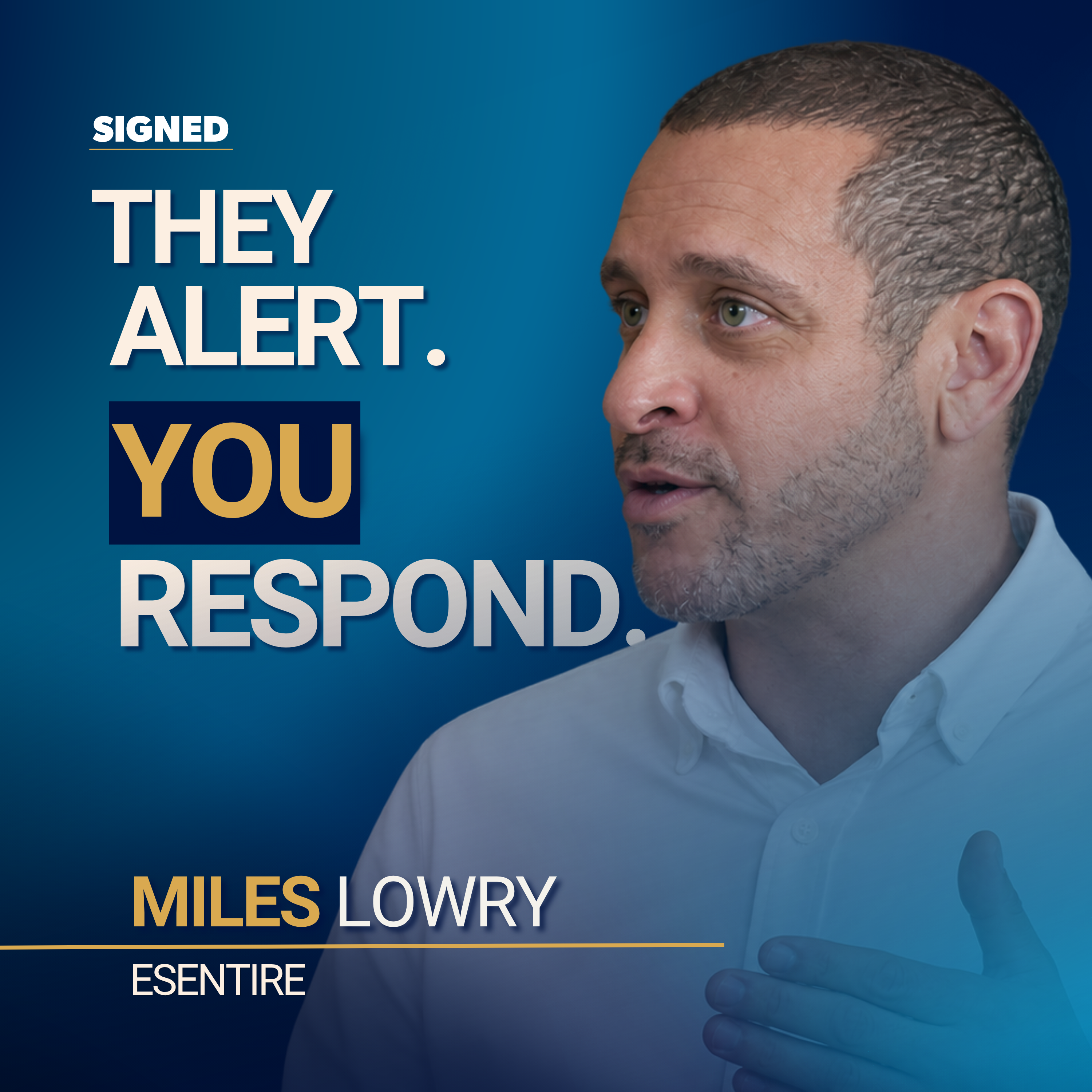
Episode 217
Your Teams Voice Provider Isn't Who's Actually Running Your Calls
July 21, 2026
Most Teams Voice buying decisions start with carrier pricing. This conversation argues that’s backwards. Before comparing price per seat, you need to know who’s actually running the infrastructure, what you’re locking yourself into, and which risks stay invisible until after deployment.
Eric Burton runs National Channel at AudioCodes. He spent two decades selling dial tone on the carrier side before moving to the infrastructure side, the seat where most Teams Voice projects actually win or lose.
This is what most providers never walk you through before you sign, whether you’re evaluating Teams Voice for the first time or sitting on a renewal right now.
Find the Risk You’re Already Dealing With
- We’re about to sign a Teams Voice contract and I don’t actually know who’s running the infrastructure behind it. How do I find out? → Jump to 07:36
- I just found out, by accident, that a different company runs our voice infrastructure than the one we signed with. Why didn’t anyone tell us? → Jump to 13:26
- We deployed our SBC and now IT is saying something about a certificate deadline. What happens if we miss it? → Jump to 17:49
- We’re being told Direct Routing versus Operator Connect is just a simple technical choice, and it feels like our carrier already picked one for us. What are we actually locking ourselves out of by choosing the easy path? → Jump to 22:57
- We’re moving to Teams Voice and nobody’s mentioned emergency call routing by floor or room. Is that actually something we’re required to have? → Jump to 52:06
- Our CISO keeps asking about survivability and we don’t have a good answer. What should we actually be telling them? → Jump to 54:39
- We’re about to buy phones for a Teams rollout and someone found a cheaper “compatible” option. What are we actually giving up? → Jump to 58:07
- We’re a regulated business switching Teams Voice providers and someone mentioned compliance recording. Is this actually a trap? → Jump to 1:12:45
- We just turned on an AI meeting notetaker and I’m not sure who can actually access the data. How exposed are we? → Jump to 1:17:21
- If you were writing the guide for a company buying Teams Voice for the first time, what are the three questions they should ask before signing? → Jump to 1:49:50
Chapters
02:07 Why a 20 year carrier veteran switched sides to build voice infrastructure
07:36 AudioCodes is the number one session border controller (SBC) vendor by market share, and buyers don’t know it
13:26 Why your Teams Voice provider never discloses whose equipment is underneath
17:49 The Microsoft certificate deadline that stops voice service if you miss it
22:57 Direct Routing versus Operator Connect, and why the carrier picks for you
30:09 Why the simple setup today can box you out of what you need later
52:06 The E911 locatability requirement most buyers assume someone else handled
54:39 The CISO’s active shooter question that changed a routine vendor eval
58:07 Certified versus compatible hardware, and what you give up choosing compatible
1:04:34 The conference room hardware conversation that derails contracts at signing
1:12:45 The compliance call recording trap hiding in a carrier switch
1:17:21 The AI meeting notetaker risk hiding inside Copilot and SharePoint permissions
1:25:34 How one university turned meeting data into a state funding advantage
1:49:50 Three questions every buyer should ask before signing a Teams Voice contract
What We Mentioned
- Microsoft Teams Direct Routing and Operator Connect
- Omdia enterprise SBC market share research
- MTLS certificate validation for direct routing SBCs
- Kari’s Law and Ray Baum’s Act (E911 locatability requirements)
- AudioCodes Live (managed SBC cluster)
- Interactions Insight (AudioCodes compliance call recording)
- Meeting Insights (AudioCodes AI meeting tool)
- Otter.ai data handling lawsuit
- Microsoft Copilot and SharePoint permissions
- University of Central Florida (advisor case study)
- VOCA (AudioCodes native Teams contact center)
- LiveCX (AudioCodes bridge between Teams and third-party contact centers)
- Voice AI Connect / LiveHub (AI bot and carrier connectivity)
- Genesys, Five9, NICE inContact (referenced as premium contact center platforms)
About Eric Burton
Eric Burton is National Channel Account Manager at AudioCodes, the company Omdia ranks as the leading global enterprise SBC vendor by revenue market share for three consecutive years, 2021 through 2023. He spent the prior two decades on the carrier side, at Level 3, Nuvox, and Sprint, before joining AudioCodes in 2021 to build its agent channel program.
Connect with Eric: LinkedIn | Audiocodes
About Signed
Signed is the podcast for buyers in a market built for sellers. Host Max Clark, CEO of ITBroker.com, sits down with CIOs, CFOs, operators, and founders who’ve lived inside real enterprise tech deals. New episodes weekly.
Listen: itbroker.com/podcastBook an intro call: itbroker.comFollow: @itbrokerdotcom
Buy tech without regret.
Transcript
Eric Burton (00:00)
Now, and this is important, super important to talk about and discuss, particularly around, everyone looks at Meeting Insights, our product, as a note-taker, and it is that, but it's much more. But specifically to note-takers in general.
I was at a conference and my opening state was how many sizzles are in the crowd?
how many of you are excited about these note takers in your environment? The hands went down so fast, it was
you see Otter right now is being sued because they're not protecting that data and they're using that data.
again, referencing Microsoft,
teams recording. You can record that conversation. Where is it being stored? Is it on your individual laptop? Is it going to your SharePoint? Who can access it? Is
Max Clark (00:48)
You're listening to signed the podcast for buyers and a market bill for sellers. I'm Max Clark, CEO of itbroker.com. Every week I sit down with the people who build, sell and operate enterprise technology. And I asked them the questions buyers don't get to ask in a sales cycle. No pitches, no demos.
just the conversation you wish you could have before you sign. Because the IT market wasn't built for you, it was built for the people selling to you. This show exists to even that out.
My guest today is Eric Burton from Audio Codes. They make the session border controllers that almost every Microsoft Teams voice provider depends on to interoperate with Teams. They also make the certified Teams phones, survivability appliances that keep your voice running when the internet doesn't, and VOCA, their AI first contact center for Teams. Eric runs National Channel at Audio Codes, and he spent two decades on the carrier side before that, level three, Nuvox,
So we've seen this from both seats, the dial tone side where most buyers anchor and the infrastructure side where most projects actually win or lose. We talked about why buyers consistently scope Teams voice projects backwards, what enterprises miss when they treat survivability and compliance as light items and where the context center decision lives and how that just put it in Teams is a real option. Here's the conversation.
Max Clark (02:07)
I want to start with this. Eric, you spent 20 years in the carrier side, level three, Nuvox, Sprint, fundamentally selling dial tone to enterprises. We look at the timeline. In 2021, you went to audio codes. And that's the opposite side of the conversation. What did you see from ⁓ the carrier side that made you want to switch to the infrastructure side?
Eric Burton (02:35)
That's a great question. The main piece of that, going to audio codes, again, something new in the carrier space. the time, I wasn't familiar with audio codes. ⁓ Being on the carrier side, you don't see a lot of the integration points and things of that nature ⁓ within an enterprise environment. And as I started to learn more about audio codes, it was like, wow, these guys, they're the connectivity piece, particularly in voice environments.
And so was intrigued about that going, okay, you this isn't just, you know, the same old carrier, know, slinging DIA, PRI, SIP, you know, et cetera. This is something very different. And the added thing of, I'd worked with this gentleman before, hey, let's build something. Let's build an agent channel here at Audio Codes. And so that appealed to me. Let's build something new.
that they haven't done before here. They have the bar reseller side of the house that's been very robust and growing. And so it was a new chapter, new journey that was very intriguing with new tools.
Max Clark (03:50)
So for somebody that's never heard the name, what is audio codes exactly? I mean, if you were talking to a CFO who's on the technical side of things, what would you explain audio codes to them?
Eric Burton (04:01)
Yeah, the main piece of audio codes, the thing that has been static from day one of 32 years in the space is audio codes has always been focused on voice solutions. And I would even say we're voice experts. I've heard other engineers with the TSDs after they start to understand and unpack all the things that we do, they go, wow, you guys are like ⁓ a Swiss army knife.
in the voice space. ⁓ But for that CEO, I'm going to say we're a voice connectivity ⁓ organization at our core. We're able to connect those pieces and parts. And in today's day and age, we're moving and evolving into that voice innovation company with all the AI tools and things of that nature. Again, focused on connectivity. AI has lots of parts. You've got LLMs, you've got speech tech, text to speech, you've got
you need to integrate different pieces and parts into that from ⁓ PSTN connectivity and collaboration pieces and translation, transcription, et cetera, et ⁓ There's a lot to kind of be able to bring together for those tools to work properly in an enterprise environment and where that connectivity piece that's able to do that.
Max Clark (05:20)
Take me a little bit deeper from the marketing slide, right? Connectivity is becoming this like generic term. When you say voice connectivity, what does that actually mean to somebody?
Eric Burton (05:33)
Force connectivity, I'm talking about ⁓ connecting that infrastructure. Say it's analog, ⁓ we have our media packs or ⁓ our SBCs, our Session Border Controllers. ⁓ A good piece to understand there, Session Border Controller, just to level set. I wasn't necessarily, I'd heard the term, but I didn't necessarily, when I came to AudioCodes, I wasn't sure exactly what that device did.
Just to build the foundation, that SBC, ⁓ it's a fancy router translator ⁓ firewall that enables disparate systems to now communicate with one another. So for example, ⁓ Teams does not speak PSTN. PSTN does not speak Teams. You put a session border controller in the middle, now those two disparate systems can communicate with one another. ⁓ Taking it a step further,
⁓ Again, looking at a Teams environment, hey, this enterprise, we've decided to go Teams voice, but we've got this ⁓ third party context in our application. Let's see, it's Genesis, and we want to integrate those two. Great, we put an SPC in the middle, and now we can, those two platforms can communicate and pass traffic to one another. And it could be as simple as analog. We need to bring analog in the environment. Great, we can do that. That meet point.
is a conduit to those voice platforms. ⁓ It's kind of like the graph scenario in a Microsoft ⁓ environment. Microsoft sees Teams as kind of that graph connectivity to all the other things that help you get your job done day in and day out, whether it's as simple as Word to SharePoint and the other tools. it's that keystone in that
infrastructure to help voice ⁓ systems communicate with one another.
Max Clark (07:36)
⁓ According to Omdia, your audio code is the number one enterprise SBC vendor by market share.
Why do most buyers not know that? Even when it's very likely they're, you know, if they're on Teams, their Teams provider or the provider they're talking to for Teams is running through Audio Codes equipment.
Eric Burton (08:01)
Yeah, it is the best kept secret in telecom. And I really lend that to you, we're an engineering company, and of the things that we do really well, that's up at the top. The things that we don't do really well is that marketing piece. ⁓ And so ⁓ we're getting better. We're getting better at that. We've gone through some rebranding and I think that is starting to change a bit. And really the onus is on me.
as a channel manager to get out and evangelize about what we do and who we are. ⁓ The other thing about Audikos is we're very siloed. We do a lot of different things, particularly in the voice space. ⁓ And in doing that, it's tough for someone to note all the pieces and parts. So we have subject matter experts that are stacked into those silos that ⁓
you know, stay up to date with the day to day and you know, the nuances, the changes, ⁓ the changes in enterprise environments and things of that nature and how our technology applies to those. And so ⁓ that's a challenge ⁓ as well. But again, as a resource, I want to be good at listening to uncover, hey, where are those pain points? And let me get you to the right people internally, the right resources so we can have focused conversations. And that's
That's really the key, but you're absolutely right. From a marketing perspective, we have work to do and ⁓ it's a challenge and we're looking forward to doing more.
Max Clark (09:43)
So channel seat aside then, when you talk with an end customer directly, what's the biggest misconception that you have to unwind, overcome in the first few minutes of that conversation?
Eric Burton (09:57)
That's
interesting. That's a great, and ⁓ I love talking about this because customers know us, particularly if they're ⁓ Fortune 500, they've used our equipment, they've used the media packs, they've used our physical SBCs. So the transition there is to get them to understand we're much more than that. We have these managed services that they can expand with and not ⁓ continue to add more to their workload. ⁓
So, you know, because inevitably when they see us, they go, yeah, you guys, you're the SBC guys. You're the, the, you're the, you do the media packs. You, you know, and I'm like, yeah, you're right. We do that. We do that well. But, you know, we've, taken that customer feedback and implementing those devices in, you know, every, well, not every, but a majority of the Fortune 500 companies and in their infrastructure, we've taken that knowledge and
their feedback and built these managed services based on what they wanted. And so that's the message really is letting them know, hey, yes, we do do those things and we still do those things, but we also provide those tools as a managed service. And when I say audio codes live, all that means is the marketing term for a fully managed SBC cluster in the cloud.
It's already built, it's set up, it's redundant, it's in place, it has thousands of customers on it. ⁓ We just need to plug you into it ⁓ if you desire. ⁓ that's really the message.
Max Clark (11:41)
I'm gonna come back to this. Let's talk about session border controllers, SPCs for a minute. Microsoft publishes a list of SPC certified for Microsoft Teams direct routing and then by extension, operator connect. And in an enterprise that's signing a a teams con, a voice contract within Teams, they're not looking at this list of certified SPC providers or what's actually underlying it.
Eric Burton (11:43)
Okay.
Okay.
Max Clark (12:09)
Why does this list matter and why is this a interoperability issue for Microsoft?
Eric Burton (12:17)
You know, Microsoft, think from a support standpoint, want to put their stamp of approval on those connectivity pieces as well. So that's why they created this list to, hey, this device is approved, so it should be working perfectly in our environment. And they go through, I mean, even our phones, they go through an extensive testing with Microsoft before they are stamped.
know, Microsoft certified or our meeting room devices, they have to meet certain criteria ⁓ for them to say, hey, you you're on board with our specifications ⁓ and how it should work, you know, ultimately, and I get it, ultimately to have that end user experience that Microsoft expects their users to have. And so ⁓ the certification, think it's important just to create that standard, but you're right. I think
You know, people aren't going to see the underlining device. Is it certified, you know, for a Teams environment? ⁓ Did that answer your question? ⁓
Max Clark (13:26)
Yeah,
we can follow this up here. So if I'm in the process of buying Teams voice, I'll use the term UCAS even though I hate it, there's a really high likelihood that the providers I'm talking to are running audio codes underneath as their actual infrastructure. Why does it never come up? Why is this not a thing that customers
Eric Burton (13:30)
Okay.
Max Clark (13:56)
are aware of, or the provider talks about like, it's just like this invisible thing.
Eric Burton (14:01)
It is, it is. And I think there's some non-disclosure ⁓ in place there. so, it's, well, that is the worst kept secret ⁓ out there. Everyone knows because I know one of the unnamed providers that we work with at the end of the day, from a support standpoint, I know the customers suddenly start getting emails ⁓ from audio codes, support personnel, and they're like,
Max Clark (14:07)
Mm-hmm.
Eric Burton (14:31)
wait a minute, this service is actually being billed through X carrier. And so ⁓ the customer figures it out. ⁓ And I had yesterday a guy said, well, why don't we just flip it to you? And I'm like, whoa, whoa, ⁓ I hear what you're saying, but let's not upset the apple cart here. So it's an interesting ⁓ dynamic.
Max Clark (14:37)
So and so,
Eric Burton (15:00)
that we have to address from time to time.
Max Clark (15:03)
I don't want to go on too much of a tangent already. mean, we're a few minutes into this, but the thing that's so in networking, can see, I mean, unless you're talking about like an optical layer, an MPLS, VPLS layer, right? You can see the network path in between, you know, the origination and destination. And this has been a funny thing for me for voice for decades now, which is you do not have any visibility to the steps of the chain between point one, you know, know, from one side to the other and
And just how rife it becomes with resellers and aggregators and intermediaries and, really, like, if you're getting really nuanced into it, you can see it as PDD, you know, post dial delay sometimes will come up and kick in. You kind of like, you know, sniff it out a little bit, but it's really amazing to me always just how much is hidden along the stack and, ⁓ and how difficult that becomes. Then when you're trying to troubleshoot and deal with
issues like if you thought, this company was actually, you know, let's say you're closer to the actual PSTN and then you you know, you thought they were closer than they actually are like that introduces interesting problems for you.
Eric Burton (16:17)
⁓ Yeah, you know, that's, you know, anyone that's been in telecom, I mean, just, you know, porting, for example, to me, that is the biggest mystery, you know, on the planet of why it takes 45 days to port numbers from one carrier to the other when you can go to your cell phone, you know, or mobile provider and they do it in seconds.
⁓ So, yeah, we don't need to get, we can, we can.
Max Clark (16:51)
We help companies with this a lot. will tell you, it doesn't actually take 45 days. there's, you really, if you know the secret and you know what you're getting yourself into, you can do it much quicker, but it's just, you're dealing with automated systems. It's like anything with an automated system. If you know how to talk to it with the right phrasing, then it, anyways, we can stay away from porting.
Eric Burton (16:55)
Right, exactly.
Right. Right.
Yeah, yeah, yeah. No, no, no.
Exactly. So, you know, there are those exactly, ⁓ you know, the wizards behind the curtain and, you know, those things that are going on and there's, you know, and they're legit partnerships and filling in gaps that, ⁓ you know, companies aren't, aren't, ⁓ you know, staffed or proficient in to achieve. so, ⁓ you know, it's one of those things is, you know, it's kind of is what it is, but ⁓
Yeah, there are multiple layers within the voice environments for sure.
Max Clark (17:49)
In March of this year, Microsoft enforced new MTLS certificate validation for direct routing SBCs. There was a small change. And for companies that had deployed SBCs, this is a hard date requirement of a change that has to come through, or otherwise, voice just stops. This isn't like, ⁓ we can ignore this forever. They have a date ⁓ like.
So I mean, you know, from your seat.
⁓ I mean, what should this tell a customer as they're evaluating SBCs and what they're getting themselves into? it's not, this isn't just like, we can deploy this and ignore it, right? Like there is care and feeding that has to go on here after the fact.
Eric Burton (18:39)
Yeah, absolutely. that really, again, that gets to that Microsoft relationship. ⁓ And we treat that relationship very ⁓ like gold internally. We've been working with Microsoft since 2006 and back in the OCS days. And then of course, OCS to link to Skype and now Teams. And that journey, you can see...
not only how our relationship has expanded, but even our product set has expanded to more and more more and in that stack. But it's important, we have direct lines to that, to Microsoft R &D, and we have individuals that are specifically reading those tech reports and releases and updates and things of that nature to make sure that we're not missing those firmware updates and upgrades and new certificates, etc.
⁓ So there is a lot that, know, voice is critical. It is, you know, it is still the most preferred form of human communication. And so it's, you know, we love an email, but we love to see each other talk. We love to hear the expression, see a smile, et cetera. ⁓ Or just, you know, talk to a human that can relate to you. ⁓
And so it's important and you got to get those things right. so, that relationship again, as particularly in a Teams environment has grown and grown and grown, has been very important, our ties to Microsoft. We are a Microsoft Gold certified provider. And for years, I would just look at that and kind of roll my eyes until I kind of...
it was broken down for me. was like, what does that mean? What does that mean in the marketplace? And of the 90,000 Microsoft certified providers out there or MSPs or resellers, et cetera, et I think it's 1 % are gold. So 900 globally have gone through those certifications.
built that relationship with Microsoft to basically, hey, we're on speed dial with you guys. We're on lockstep. And I think really that relationship has lent itself to the growth of our portfolio and our interactions with them.
Max Clark (21:16)
So does this highlight like the difference between, know, done for you, done with you, go at yourself and like the managed services overlay of, you know, do you want somebody doing this without you knowing it or interacting with you to help you do it and make sure it gets done or like, hey, FYI, you're to get an email notification and hopefully you're paying attention to, you know, your tech update firmware, you know, change management requirements. And, you know, if you're not like, oops,
Eric Burton (21:44)
Yeah, that's a lot of that. You're describing our service, you know, from an SPC perspective, you know, we that managed service we're managing, we're monitoring, we're doing those things proactively. And it's wild, you know, it's very, you know, it's super quiet from a customer perspective. They're not seeing those emails, those those notifications. ⁓ And so doing that all behind the scenes, sometimes I think we get taken for granted. It's just like.
you know, what are you guys doing for us? And then we lift open the hood from a support perspective and we can show them that, see these updates, ⁓ see these notifications or notices that we, ⁓ you know, reacted to and taken care of proactively. Here are the trouble tickets or the alarms that have gone off and we've proactively taken care of before you even see an impact. You know, when we show them those things, they're like, wow, you know.
There is more to this than just the box in the sky and ⁓ it just works. There is active things on a daily, monthly basis that are taking place.
Max Clark (22:57)
Teams, we started with direct routing and now we have operator connect. We still, and we have both. ⁓ For a person that's buying and voice enabling teams, usually they're going, they're interacting with a carrier, the carrier is picking for them and they don't know the difference. So from the buyer's perspective, what's the difference now between direct routing and operator connect and how should they be thinking about that to influence which way they go because of
things down the pipe that they may or may not be paying attention to at purchase.
Eric Burton (23:31)
Yeah, that's a great. That's a great question. That's a question we hit every day and.
I'm gonna keep this, well, okay, here we go. Go for it, okay. Both direct routing and Operator Connect are obviously, they're certified for that purpose of enabling Teams Voice. so the pathways are, they're similar in that they have the same components.
Max Clark (23:43)
Now go for it.
Eric Burton (24:08)
Operator Connect has Teams tenant, it has PSTN dial tone and it has an SBC. Operator Connect has the same components, direct routing has the same, Microsoft calling plans have those same components, they're there, it's just transparent. So Operator Connect is marketed as the simple, know, simple way to ⁓ integrate or roll out Teams voice. And that's fantastic. ⁓
but it eliminates a lot of flexibility for the client to go in a lot of different directions, particularly with a carrier and their voice is tied to that service. Say that PSTM provider ⁓ is having a day and things aren't going well and this happens repeatedly and the customer's ready to make other decisions. Great.
You know, with us, don't care. You can work with any carrier provider. Bring your own carrier, great, we can do that. Operator Connect, you're stuck with that provider. And I say stuck, it may, again, there are lots of credible carriers out there. I don't wanna slight that too much. ⁓ But the major differences I see, that simplicity, great. And it is, it is, it's all bundled one number.
⁓ There's no fancy integrations. ⁓ You you're not doing an integrate to migrate type of ⁓ move to teams from a legacy PBX system. ⁓ You're not integrating analog. Though you can do that through the admin portal to a degree, but it's not monitored per se. How do you know when it's not working? ⁓
you know, a third party contact center, it's built to simple, quick and, you know, and customer managed. They've got to manage it through that Teams admin portal to make the changes, add the voice policies. ⁓ They need to know a degree of the PowerShell scripting, ⁓ you know, ⁓ to make those changes and to manage it long-term. With direct routing, ⁓ you get all the flexibility. ⁓
you know, in that environment, you can add, and again, using our platform or using an SBC, you can start to connect pieces and parts in there and have unlimited flexibility to, again, allow those disparate systems to now communicate with one another in that environment. I'm not...
Max Clark (26:53)
I'm smiling
for, there's a few things that just that I'm trying not to like harp on too much. mean, the first one, of course, it's it's, it's, it's, telcos never have problems with their voice networks. A, you know, and B, ⁓ I want, I'm to come back to this a little bit, right? But like, you know, this is one of those things that gets ⁓ presented as being so simple. And then you actually go to deploy and configure and it's like,
Eric Burton (27:04)
Yeah
Yeah.
Max Clark (27:23)
It's really not simple. how comfortable are you with PowerShell and doing policy management inside of PowerShell to deploy against 1,000 users? You're like, ⁓ excuse me? ⁓
Eric Burton (27:35)
Exactly. And I've literally
had people tell me, ⁓ I watched a video on YouTube and I'm like, my gosh, boy. Okay. And maybe, yeah, hey, they're talented and they are, ⁓ you know, crafty enough to do that. Great, man. More power, more power to you. But a lot of those people end up coming back and saying, hey, you mentioned some tools that make this easy, you know, that has all the PowerShell scripting built in and very templatized, a GUI interface. You drag and drop it.
It syncs with the Teams admin portal. Matter of fact, I don't even think I need to go to the Teams admin portal anymore. Yes, you're right. We have those tools. And not only that, and you brought up something earlier that I wanted to, this reminds me of that. I wanted to touch base on it. The SPC sits in a very unique spot. It's in the middle. It's in the middle of Teams. It's in the middle of that PSTN or that carrier service.
being in that spot, we can see the ingress and egress traffic going back and forth. So we can say, okay, the call comes through, it hits the SBC and then it goes over here and wait a minute, something happened. So we can tell where and troublesheet and start to understand where those issues are happening. ⁓ You know, on the carrier side, well, we can see where it hit the switch, we can see where it goes out.
you know, down to the device level and IP level and, you know, I'm making something up here. Well, yeah, Susie's, she's using headphones and ⁓ maybe they're not team certified. I don't know, but that may be the source of her issue or we can see where it goes all the way through, but it's her device, you know, it's not hitting that port. So we can, we can see in that SIP ladder and in this diagrams, we can see exactly where things are happening. And so
from a troubleshooting standpoint, and the customer has the ability to view those tools. And again, all in a GUI interface, but they can click and dive down. when we show them this, they're like, ⁓ wow, I need this. I can't see this in Teams Admin Portal. You're right, you can't. ⁓ Because again, that SBC is that keystone in the middle that's able to look both directions and you can make some.
Max Clark (29:53)
Mm-hmm.
Eric Burton (30:02)
You can make some educated decisions or actually see where problems are happening. ⁓ anyway, sorry.
Max Clark (30:09)
I don't know, it's,
Direct routing is very complex and you can do almost anything with it. there's some pieces of that that come into it. It's like, what's the infrastructure you're using? What's the equipment that you have? What's the SPC? Who's the carrier? There's still lot of foundational blocks. But then within that, if you've got the right pieces of those blocks, can do a lot of interesting things with it. But it's incredibly complex. And the complexity becomes the killer of it for a lot of people.
And Operator Connect, it puts you in this very specific box. And as long as that specific box that you're in is OK for you, and maybe this is, I think about it a lot in terms of legacy or organizational size. I mean, SMB can be anywhere up to 1,000 seats, but.
you know, if you're in the SMB space, if you're in the small mid market, you know, you know, and maybe you don't have a lot of legacy infrastructure, then operator connects. Maybe the simplicity behind it is interesting, but then what always, you know, what I always look at when I'm, when I'm, when we're, know, advising people through these processes, it's like, okay, it's simple now, or maybe you're simple now, but then there's this stuff that you're going to probably want down the road. Do you need to do voice recording because you're moving into some sort of regulated, you know, process, right?
⁓ Like, whoops, that might matter to you. Can you integrate that or not? don't want to, let's not fall down the rabbit hole here too much on this one. ⁓ But actually, wait.
Audio codes aside, if you were talking with a buyer who's never bought Teams Voice before and hasn't been through this, what would you be telling them to ask their carrier about the actual infrastructure the carrier is running behind the scenes? Like, oh, we've got this fancy GUI, oh, we're going to do all this stuff for you, oh, here's how much it's going to cost. what do they need to know about what that infrastructure actually looks like to help them make a decision?
Eric Burton (31:58)
You
Yeah, and to me, that's just the tip of the iceberg. Because once you start down the Teams voice trail, there's a lot of other things that you may not be. It's more than just the voice piece. And you just mentioned it. Teams is great, but let's be honest, it has some gaps. Out of the box, ⁓ it has some gaps. So the question becomes, how do I fill those gaps?
to have Teams rival any enterprise UCAS ⁓ system out there, right? It's on par with everyone else. And when you start understanding where those gaps are and how to fill those gaps, it becomes important to understand, okay, we need to have an honest and open conversation about the experience that we want.
and you mentioned one of them, the compliance call recording. Great. Everybody sees it. team says recording. Yeah. I'm literally had people that, well, teams, why do I need that? It's like, you're in the energy business. You're in a regulated business. I assume you have ⁓ conversations with regulators that need to be documented and archived and kept for up to seven years, right? yeah. yeah, we do. Well.
You need compliance call recording in this instance, or financial or healthcare or insurance, all of those. That's a red flag, you need that. doesn't have an answer for that out of the box. ⁓ Conversational IVR, that's another piece. You can build the DTMF tones in Teams again, if you know the PowerShell scripting and how to do it, but why not press the
Press the easy button. You can integrate that into Teams very easily and have that one touch or one.
very easy to that destination to the caller that you want to reach just by your voice prompt or whatever. But integrating that into Teams, it's not there out of the box. So adding those AI receptionists and things of that nature, particularly in this day and age, those are important. And with Operator Connect, again, you're putting yourself in that box. And that's fine for some organizations.
But if you see yourself evolving as a business and really diving into that customer experience or providing a better employee experience, you're going to make some changes, particularly right now in you know, this buzzsaw called AI, however you look at it. ⁓ So, my opinion, you need to be very flexible and adaptable in your enterprise environment.
Max Clark (35:30)
Okay, so this kind of segs into managed services and I think the perception I'm gonna try not to be too long-winded on this but I'm gonna try to like get you to a point here. ⁓
there becomes this assumption of the service provider is responsible for doing all this stuff and I don't have to think about it. And then we talk about Teams, and Teams has a lot of workload that's on the admin, whoever's controlling the Teams tenant. And you have a Teams tenant, have a Microsoft 365 tenant, they're connected but not. then you've got
people rolling out voice services, they think about it from the standpoint of maybe professional services and who's going to document our call flows and program the call flows and the call trees and go out and touch devices on the desk and all these things. But from audio code standpoint, managed services infer something different from this like.
we're going to help you configure your phone system or we're going to help you admin your phone system. We're going to help you do Mac D on your phone systems and add new users. Or we're to help you, know, like deploy, you know, a thousand phones, 10,000 phones out into the field that are ready to go. So what, what is, what's that missing piece that people aren't thinking about that then audio codes is plugging with an additional managed services offering.
Eric Burton (36:57)
Yeah, and a lot of that gets to that, and stop me I'm not dialed in exactly with your question here. ⁓ It's that managing and monitoring piece that's critical ⁓ to ensure that environment viability, because it is cloud-based, and there's a lot of endpoints. Teams works, you're working over the top, you're over your internet connection, right? ⁓
you know, connecting in most cases, ⁓ you know, to these enterprise environments. A lot, there's a lot environmentally that can happen there, particularly if you're relying on one source into that, into your enterprise. So, ⁓ you know, not only the management monitoring, but again, being very consultive ⁓ in the approach, ⁓ just letting the, by the way, you know, you need to, you know, analog is a crazy
piece of that. That's something that has really blown my mind. It's just how much analog is still out there and relevant in enterprise environments and letting them know that, you're doing it this way now. We can still do it in Teams, but it requires, we can still activate that door controller through Teams. can still...
activate the Bogan overhead paging device. ⁓ We can still open the gate, know, all these things. The blue phone in the university environment, great. Yeah, we can still connect to that and send that to security. You know, all of those things where they go, ⁓ I didn't, didn't even think about that. You know, it's, and again, that lends a lot to our experience, again, implementing ⁓ in these enterprise environments to know the things and ask the questions to
Max Clark (38:26)
Mm-hmm.
Eric Burton (38:53)
make sure they're checking the box. It may not be all upfront and rarely is, but at least they know that, hey, I've got to address this. Meeting rooms, everybody in a Teams environment that implements a Teams environment, their thought process, we're going to make our conference room equipment, we're going to make it work in this Teams environment. Inevitably, nine times out of 10, a year later, they're going,
Yeah, we really need to, ⁓ we need it, we've got to update our meeting rooms, our conference room setups. No one's using them because it's not the same experience as it is sitting at my desk with a Teams app. And I'm like, remember we talked about this? And so making that transition to a Teams, if that is their core ⁓ collaboration or meeting,
tool, it's saying, hey, yeah, you need to make the investments. Let's make it it. When they walk in that room, they have the same experience as they do launching a meeting from their desktop. They're not pushing a button in the blinds or closing the lights or dimming. They're launching a satellite, right? So that experience is important. And it's something
Microsoft doesn't, and this is wild, when I really started to understand this, Teams, Microsoft doesn't see Teams as you see. That's just the tip of the iceberg, right? They see Teams, again, kind of like an SPC, they see Teams as this keystone in the Microsoft environment that, again, is a conduit to my Word, to my Outlook, to my SharePoint, to my...
it's my calendar, it's all right there, or now it's co-pilot, you know, and that's a whole nother conversation ⁓ in that Teams environment. And so when you talk to Microsoft, they want that full immersive experience of collaboration and access to those tools. And meeting rooms is a very important part of that. And... ⁓
Those other systems, they're great, they're expensive. They've invested a lot of money in them five years ago, 10 years ago, but they may not work super well in that environment. And there's many companies that can do that well.
Max Clark (41:28)
I'm going
to try to ask this with a straight face. But the perception is this is the responsibility. Solving a lot of these problems, it's the responsibility of Microsoft, or it's the responsibility of their carrier. Like, why aren't my phone calls working? Or what's going on that's wrong with this platform? Or I have quality issues. How is that the responsibility of the customer or the enterprise? And not like Microsoft.
Eric Burton (41:30)
Okay.
Max Clark (41:54)
Isn't my you know, shouldn't Microsoft be monitoring teams and shouldn't the carrier be monitoring these calls like?
Eric Burton (41:59)
You know, want to start again, coming to Audicodes and starting to wrap my head around around this thing. And you kind of, ⁓ you see why Microsoft set up this network of 90,000 certified professionals across the globe, because it is not their core. It's not their core business model to support their, all their stuff themselves. They can't, it's too massive. So they,
certify these people, these providers, these resellers, these professionals to help them support this mammoth infrastructure. so there's some things that they're doing to standardize and make things simpler for them. Meeting room is because just looking at that, because we talking about it earlier, right now there's
millions of, well not millions, there's a lot of different versions of Android that are ultimately driving those MTR devices and phones for that matter. So from a support perspective, that's a nightmare from Microsoft. Someone calls into Microsoft, well what version of firmware, what release are you on? And so now we're actually co-developing within the M-DEP platform, which is a standardization on that Android platform for phones for device.
Max Clark (43:05)
Mm-hmm. Mm-hmm.
Eric Burton (43:27)
for meeting room devices so that they can participate a little bit more and better supporting that space. And then there's, again, we're filling in the gap as well. Hey, we understand those things and ⁓ can go in and hey, why isn't this, Mr. customer calls us, why isn't this working? well, let's look, you're ⁓ three releases back, we need to update your firmware and.
then your ability to share from your laptop is gonna work perfectly, et cetera, et Those nuances and things, again, that we dive into and keep our fingers on the pulse of to fill in that gap. it's really, never been there, in my opinion, it's never been their core model to support their stuff solely and internally. And I think you could...
I think when people see that they go, yeah, you're right, because it happens everywhere, from their server systems to their desktops across the stack.
Max Clark (44:36)
You'd be surprised. I have people that, you know, think it's all perfect. And then they try to actually interact with Microsoft support, you know, because they've purchased a team's calling plan directly with Microsoft. And you're like, you know, like, it's gonna be painful. All right. Let's, let's, let's change gears here a second. We don't want to beat this to death. ⁓ Different phrases, ⁓ Continuity, redundancy, survivability.
We're talking about a service that now is being delivered, as you pointed out earlier, over the top of the internet to a cloud service for Microsoft. And two things that we know never happens. One, the internet never goes down, and two, Microsoft Teams never goes down. They're both 100 % perfect SLA uptime. If you do a Google search right now, how often did Teams go down this year? It's going to say zero, right? ⁓ What happens to Teams on the desktop? What happens to phones?
Eric Burton (45:12)
you
Max Clark (45:33)
on the desks or the meeting rooms and how many buyers are asking that and evaluating that as part of their selection criteria?
Eric Burton (45:45)
It is important, they are thinking about it, absolutely. And they should, and they should. ⁓ Well, I've been fortunate, I've been using Teams here and then a company prior to coming to Audio Codes for eight years. And I can count on one hand the instances where I've had a hard like,
I can go nowhere with Teams. I can't get in, I can't get out, et cetera, et cetera. So, and it now, you know, it is five nines uptime and availability, but we, you know, it does, you know, from time to time, the biggest issue I see is, is, you know, something desktop related, you reboot, and now we're back to everything's fine. But in these enterprise environments, particularly, let's take healthcare, for example, it's critical that it's, you know,
lives are on the lines here that we have service. And so the survivability tools, again, two things. It gets to the environment, the infrastructure that's built. Is it HA? Is it geo-redundant? Are there multiple providers from a dial tone perspective, from an internet perspective, ⁓ and other options there? Is there 5G backup?
Again, conversations that you need to think and have. And then, you know, we can take it to another level with our ⁓ SBAs, our survivable branch appliances. And what that does is it's a device, it's built on our SBC technology, it sits on-prem, and it has connectivity into that. And basically, I'm oversimplifying this, my engineers would have a heart attack right now.
but it's running a mini version of Teams on that device. And it is reaching out to Teams and ⁓ big teams in the cloud, in the Microsoft cloud. And it is ⁓ replicating, you know, any moves, adds, changes, any new users, et cetera, on a daily basis, that SBA. And it is sitting there constantly going to Teams, are you there? Are you there?
Are you there? Are you there? you're not there. we're live. And you can still make calls internally. You can still make calls externally. You can still receive calls internally, but it's limited. I equate this to, ⁓ it's a life preserver. It's the lifeline. It is emergency only. You're not gonna get the full functionality because your inputs are different. You're not gonna have
know, hundreds of SIP trunks ⁓ or, you know, they're at that device. You know, it may be POTS lines, it may be 5G or whatever to be able to get out and access the PSTN to send receive those calls. But, ⁓ so you got to build properly to say, what is my threshold for risk? And, you know, in an emergency instance, we...
What I'm saying is we gotta build it properly to be able to handle the inputs, the outputs externally, calls going in, calls coming out. We gotta build it properly to be able to make sure that those calls are getting in. Is that me? Yeah.
Max Clark (49:20)
Yeah, so there's a category of buyer ⁓ that treats voice as a utility. I'll stop there. And resilience, redundancy, survivability, continuity, these sorts of things don't come up until there's an outage. Then all of a sudden, it's it's not working. And you talk about, obviously, you mentioned ⁓ health care as an example. But who else should be thinking about local survivability and resilience?
Eric Burton (49:37)
There's an issue, yeah.
Max Clark (49:50)
you know, that that isn't like, you know, manufacturing retail regulated industry. I mean, I mean, you know, like if you're running an E911 piece app, right, like you care about redundancy and that's kind of, know, like it's it's it's foundational. But we start talking about like, you know, obviously, a hospital cares about, you know, redundancy. You know, they understand it, right. Life, patient care. But but who who else is this like? So is this I mean, is this is everybody should be thinking about this or is there's like
Man, this segment, it just avoids us all the time and we see so much pain here always.
Eric Burton (50:22)
Yeah, it's, mean, everyone is, every vertical ⁓ is thinking about it. Again, ⁓ it's almost like, you know, they've been preconditioned by the market. They understand that, there's just, you UCAS in general, hey, there's gonna be a potential for, you know, there to be a service impact from time to time. You know, it's almost like,
they accept that and for you and I, we're like, what? ⁓ That's crazy talk. ⁓ Because there could be thousands of dollars on the line ⁓ coming into that customer service center or that sales department or whatever. So they're all thinking about it. Again, it just gets to what is their threshold for risk? we...
I mean, we talked to them about it. Hey, what is your threshold for risk? If this goes down, what's your contingency plan? You know, how, you know, and we see a lot of people, well, they'll just use their cell phone.
And okay, that's their threshold for risk. That's their answer. So again, it's having that conversation to say, let's look at this in detail. Even from a 919 perspective, how do we wanna route? If some of these users are connected to Yphone, we need to create zones within the building so that we know when they dial,
They know that it's not just the building, it's on this floor, in this department, in this cube area.
Max Clark (52:06)
Well,
I'd be willing to guess that the majority of enterprises do not understand. mean, let me rephrase that. I mean, if you have a functional risk GRC function, you're going to understand that you have legal requirements with Raybombs and Carey's law around locatability within your footprint. Third floor, Northwest corner, room three has to get signaled across.
Eric Burton (52:12)
Uh-huh.
Mm.
Yes.
Max Clark (52:35)
I would say it doesn't surprise me or I'm not, know, just how many people don't like the organization is aware that they need it, but the people that are actually implementing it don't connect the dots. And then the organization thinks they have it, but then they don't, you know, and then.
Eric Burton (52:50)
That's
true. Those are real scenarios. again, not to just continually bring things up.
If I put my seller hat on, you keep bringing up these things that they need to address and you're like, my God, this is going to blow our sale. at the end of the day, to me, you're not being ethical if you're not bringing those things to the forefront. If I'm operating at a customer, I want to operate as a customer at heart. I want to check all the boxes. I want to make sure my flank is not exposed.
So we need to ask those hard questions and bring those things to light so that we can address them. They may be uncomfortable conversations, but we need to have them. We need to have them.
Max Clark (53:46)
Survivability, I mean, there's so many different layers to it, Because people will think about survivability in terms of if they're UCAS provider, they're a cloud provider that goes offline. What happens if this platform goes down? Which is, it happens depending on, there's better and worse ones, right? And the likelihood of that taking place. But then it's like, okay, if you lose internet, I mean, that's a really basic example. Do you ever done it internet? Do you ever done it, you know?
Well, you can you route inbound across a redundant inbound link? Do you have nat traversal issues at that point for sessions? Do your sessions have to reset? Again things that don't come up until people experience them the first time. Oh, we're gonna you just use our cell phones great Do you have a mechanism for your toll-free number to switch from ringing? know your IVR that doesn't go to anywhere now and then start ringing like Bob's cell phone Like how many phone calls can Bob take before Bob just turns his cell phone off?
Eric Burton (54:34)
Yeah. Yeah,
is Bob a professional juggler? Exactly. Exactly.
Max Clark (54:39)
Yeah,
and then within all that, you start talking about how few ⁓ UC deployments actually have any sort of understanding of local survivability, like the actual premise survivability. And I'm not saying that I had this experience. I didn't think about this until I was in a eval process.
And it was actually the CISO was driving risk for this organization. And the CISO was asking about survivability. And his exact words were for, ⁓ what was the phrase I'm looking for? ⁓ Active shooters. And this was a CPA firm that was doing a really kind of like boring audit function. I called them.
the you know, this case, the partner, the partner of the business that it brought us in. was like, well, are you guys dealing with something that I should know about? Like, what is going on here? Yeah. But you know, but yeah. So I mean, so for for buyer going through a voice evaluation right now.
Eric Burton (55:40)
Right, right.
Max Clark (55:51)
⁓ If survivability is not a question they've already asked, what is the question they should be asking at this point or the series of questions they should be asking as part of this evaluation?
Eric Burton (56:04)
Yeah, it's specifically around survivability. ⁓
You know, what are, how are we gonna handle, you know, what is our call volume, what does your call volume look like and in the case of an emergency, how are we gonna handle this? You know, it's.
Again, you just got to explore the conversation. I don't think there's a silver bullet ⁓ to it. And each environment is going to be a little bit different ⁓ based on, again, I've said this, their threshold of risk. But ⁓ having that conversation, you got to have that conversation. I don't know if I've this again. Did I answer your question? I'm not sure. ⁓
Max Clark (56:52)
Yeah,
I think the problem with threshold for risk questions becomes until you actually have the outage, you don't really understand what your real threshold for risk is. You get an answer, it's like, we don't really care about our voice, and then you lose the voice capability, and it's like all of a sudden, you're like, we can't talk to our vendors, we can't talk to our customers, they can't talk to us, we can't place orders, we can't process orders, we can't ship orders. You go down the list, you're like, okay, well, great, what do we do now? Audio codes makes
Eric Burton (56:58)
Right? Yeah.
Yeah, this is big deal.
Max Clark (57:21)
actual desk phones, you make meeting room devices. know, there's this like perception has been pushed into the market now that like the team's phone is just a device. It's got like a Microsoft logo on it. And what does what does Microsoft certification for physical endpoints actually mean? And what what breaks if it's not there?
Max Clark (57:46)
Quick break. If you're listening to this and thinking about your own technology decisions, that's what itbroker.com does. We're on the buyer side of the table, strategy, sourcing, contract review, optimization, no alliances, agnostic information, just buyer side expertise so you don't have to make this decision alone. itbroker.com, back to the show.
Eric Burton (58:07)
Well, the biggest thing, again, ⁓ when, I'll take a step, I'll take a step back, when Microsoft, ⁓ they put out their specifications of, hey, this is what a phone must do in a Teams environment. And they lay out those specifications and manufacturers have to manufacture, they must have these features and functions. ⁓ It must, you know, use these codecs
⁓ et cetera to ensure that voice or this type of mic pick up, et cetera, et So they lay that out ⁓ specifically to meet their expectations of that quality of service, ultimately that the end user and the customer is going to have. And so really that is the stamp when the manufacturer brings that device back and we send them to Microsoft to...
for them to test and they ensure that it goes through this testing process. And it's not, it hits the desk, the bench or whatever and they plug it in. I mean, it's weeks of testing. ⁓ I don't know exactly what they do, but I know that they've come back to us and say, hey, yeah, we need to address this, whatever. And we need to adapt. ⁓
that and solve for that problem or issue that they have uncovered in their infrastructure. that it becomes important from a feature standpoint that you just put any generic SIP phone to a Teams environment, you're not going to get all the functionality that Microsoft and you're not going to have access to all the tools that they've kind of built into that Teams experience based on those specifications for the device.
and for the specifications of Teams itself. And so that's where it becomes ⁓ important. ⁓ We have a ⁓ whole suite of generic SIP phones as well for other environments, for Zoom, for, we have phones for WebEx, et cetera, or just whomever. If they need a general SIP phone, they can purchase audio goods phones. And we have, they're less expensive.
And customers say, well, I just want to use this, you know, 425. Yeah, that's great, but you're not going to get that, you know, that rich experience that you expect with a Teams device. And then they need to make it, you know, if it's in a common area or a break room or, you know, it's a phone on a column in a warehouse, that may be fine for that user persona, right? But it may not, you know, so those are decisions they've got to make that they know that they're
If they don't purchase that Teams certified Teams native device, they're going to give up some functionality. At the end of the day, that's why. Same with the media.
Max Clark (1:01:08)
So, okay,
so we've got a market full of compatible devices, and then you've got certified devices. That's a pretty big distinction. And you highlighted cost, differential, right, being a big thing. So people driving, looking at it and saying, hey, I can buy this compatible device for a lot less cost. that kind of opens Pandora's box to having bad outcomes, right?
Eric Burton (1:01:17)
Yes.
Max Clark (1:01:36)
⁓ where do people get burned with this? Then they come back and say, shoot, we thought we bought this device and it wasn't this device and we need to revisit this.
Eric Burton (1:01:48)
Yeah, well, I mean, we hear this all the time, particularly, you know, legacy Cisco Avaya markets that are moving to, and hey, maybe a year ago they purchased some new SIP phones. Hey, can I recycle and use these SIP phones in this Teams environment? And the answer is you can go onto the Microsoft website and they have a list of phones that will work, you know, ⁓ but again, they're not gonna get all the functionality, you know, from those.
from that core Teams environment. And so that's where, again, they gotta make some decisions. And typically in an enterprise using Teams, we see about 20 % adoption of physical phones, right? And so, and primarily those are, it's kind of funny, it's the executives and it's for the common area. Everything in between, they're kind of like, ⁓ you know.
Use your mobile device, you know, use your, and again, I get it. It's a cost cutting measure. We're investing in the Microsoft license. We're investing in this move to Teams. You you used it during COVID from home from your laptop. Why do you need, you know, this device on your desk? ⁓ And we'll see some users, particularly if they have, you know, gray hair, they push back and they want that device, you know, on that desk. I think it's just, it's a familiarity and,
a thing that they want to have. ⁓ But again, about, we'll see a little bit higher adoption, like in higher ed or even in healthcare, but the majority in typical, ⁓ you know, corporate enterprise customers, about 20 % adoption, you're going to hit the highs and the lows and then special use cases, like they still have an admin that's answering calls and distributing calls. You know, they want the sidecar, they want a phone with buttons. That's the other thing. We have some models that,
you know, have the touch screen. They don't want them. They want the buttons. ⁓ It is the best seller. And we asked for feedback and it's like, I want buttons. don't, you and I'm like, but you don't have buttons on your mobile phone. Why do you want buttons? Anyway, it is what it is.
Max Clark (1:04:04)
It's
it's that's me and my cars now at this point. Like I need buttons. Buttons are really nice because you don't have to look at it to find it. You know, like you have this you have this thing where it's like it's it's you know, the the the screen requires your focus. A button requires feel like it's a it's a different sensation. Conference rooms, right? Like conference rooms are in. If you've never done a conference room, you know, meeting room like incredibly complex, sophisticated, integrated platforms, right? You know, cameras, speakers.
Eric Burton (1:04:11)
Exactly.
You're exactly right.
Max Clark (1:04:34)
know, mics in the ceilings, you know, maybe you're in a room with with shade controls. You know, now we're in a place where it's like, know, the conference rooms need to support multiple meeting platforms at the same time.
What are buyers underestimating and in in in like you know Because I've seen this I've seen a lot of times where you know enterprise will get all the way down to the end of making a selection and ready to sign a contract and and then I'll and then they're like what are we gonna do about this conference room hardware comes up and like
you you watch the train derail.
Eric Burton (1:05:08)
yeah,
particularly if they use the conference room a lot, it's a big deal. It's big deal. And so again, Microsoft lays out these specifications, the manufacturers have to build these specifications. And again, the whole mindset is from a Microsoft perspective, they want that same user experience when they walk in that conference room. They want it to be easy to join, easy to share, ⁓ easy to collaborate.
easy to get to content, ⁓ that's the stamp. And if you can't, you're not able to provide that, then you're not team certified. And I've seen this live. We'll see organization, they moved to Teams Voice, they've got four or five, six different conference room within the infrastructure. They change one, they upgrade one.
guess which conference room everyone starts using. That one, because it's easy, it's the ease of experience and it's easy for them to use. They don't need a manual or a playbook. They're not like John Harbaugh with the headset on, looking at that, trying to select the play of how to get the meeting launched. And so it's important. And then when they realize that, it's like, okay, yeah, we need to upgrade.
all of these, again, it's experience driven. And we do some unique things with our systems that make them, know, these companies that invested in these elaborate conference room setups, they're, I mean, they're thousands, 30, 40, north of 50 plus thousand dollars.
Max Clark (1:06:54)
50, 50 plus, yeah.
Eric Burton (1:06:57)
So they've put a lot of money into those mics, into those speakers, into those shade controls, into the light stimming. And we have interoperability with our devices. And again, it's kind of that whole audio codes, hey, we wanna connect and play nice with everyone. And so we have that interoperability with particularly one of our devices, RX-V200, it's the Compute. And we can...
integrate, as long as they have a USB ⁓ type of connectivity into that, we can integrate those into the device, maybe not into our controller per se. We do have some partnerships with ⁓ Sennheiser and, ⁓ gosh, the other one's escaping my name at the moment, but we have some collaboration with them where we can actually push that to our controller that sits on the
the conference table or desk where they can still do those things. They can turn up the mics, they can turn them down. They can switch screens, switch devices, light up different TVs. So that's some of the unique things that we do from Audicus. We wanna be able to play nice with everyone and be able to take advantage of that stuff that you've made that investment in. But you want to that easy, smooth environment.
when that user walks in and launches a Teams meeting. And not only that, we're interoperable, have that two-way interoperability with Zoom, with WebEx, and we have direct guest join with Google Meet. ⁓ I think that's in process of working out details with that, but that's gonna be down the road. So you can launch that Zoom meeting, and actually a Zoom logo pops up on the controller when you hit the invite.
⁓ So you get a very ⁓ similar experience. Maybe not all the functionality of a Zoom meeting, but you can launch the meeting and you recognize the tools and how to traverse through the meeting with that.
Max Clark (1:09:10)
your stat of, I'm actually, I think it's pretty close depending on your industry, 20 % of physical phones being deployed, right? So I think it's easy to hear that number and be like, that's not very many. But then you'd say for a 5,000 seat enterprise, it's 1,000 physical devices. And of those 1,000 physical devices, you're deploying these devices to your most sensitive places, right? Executive teams, management, ⁓
You know high visibility conference rooms, you know like places where if they don't work
there's gonna be fallout that's gonna be painful. ⁓ So there's this push in the market and sales and marketing and UC and all these different things about you don't need physical devices anymore and they don't matter and we should be software first. We should just use the desktop and we should just put a headset on or whatever, blah, blah, blah. You don't need phones anymore. And you get to be on the other side of this, which is...
An enterprise that was maybe pushed into don't think or worry about the devices because they're going away, but now you have to worry about the devices because people are yelling at you. What's that conversation like?
Eric Burton (1:10:26)
Yeah, that's fun. And again, a lot of groundwork up front. And two.
from a support standpoint. And again, this is, you know, we actually, make, we develop, we manufacture the devices that we use. if you're, know, if you've partnered with us, we have tools, for example, like Device Manager, where, you know, from an enterprise perspective, it's one click to, you know, to burst out a firmware upgrade or some type of change or add or ⁓ device, ⁓
management, and that's what it is, the device management. ⁓ And from that GUI glass, the same one that they can see all their, ⁓ you know, Teams traffic and the health and viability of all the calls, you can see those devices ⁓ down to the headset. ⁓ You know, actually, if they're using headset, you can see it in there that, particularly if it's Jabra, ⁓ you can see the battery. ⁓
you know, of that device. ⁓ And so, you know, it's important for that conversation, but we have, there are tools in place that it needs to be addressed. But a lot of upfront conversations there, and that does come up when they do purchase devices like, you know, how are we going to manage, how are we going to address and make sure there's a good end user experience with that customer, with that executive that has this phone on their desk that they...
They want it to work when they hit speaker, right? ⁓
And to explain to them, a lot of the ⁓ the problems that I've heard of, again, is kind of registration issues because that phone actually registers ⁓ with Teams in the admin portal as a device as well. So sometimes just a simple reboot solves the problem, right? Yeah, exactly. It is kind of like, yeah.
Max Clark (1:12:32)
Good old Microsoft, have you read it yet?
It's so frustrating
that it works. All these years later, you're just like, ⁓ you know, what do do?
Eric Burton (1:12:42)
But inevitably that's the last thing they do. It's like, no, no, no, this has got to be something, the port's dead, the software's gone to crap. No, just reboot it.
Max Clark (1:12:45)
I know, I know.
talk about call recording a little bit. ⁓ So ⁓ Interactions Insight is your, I'm reading my chicken scratch. Interactions Insight is your call recording product, right? And if you go through the branding of it, it's like, it's positioned towards compliance. And compliance is something where if you don't have it and somebody asks you for it, Like, ugh, know, like not a good day.
Eric Burton (1:13:12)
Yes.
Max Clark (1:13:29)
Who's buying call recording for compliance? And who isn't that should be? I want to phrase this more like, hey, you're going through this process. You're going down to Operator Connect. Can you overlay recording on it? ⁓ whoops, you can't. If you're FINRA or SIPC or another regulated industry, you maybe already have this function because you're moving into it. But what organizations?
are walking into a compliance recording trap without necessarily realizing it with a switch.
Eric Burton (1:14:02)
Yeah, anyone that has a, you know, some type of regulated function where they must archive those conversations and they have to keep them, you know, those conversations for seven years. So it's interesting. It's very interesting. We just had some conversations internally with our ⁓ interaction, ⁓ Interactive Insights crew. You know, there's a small window to make a change, you know, with that because once they're ⁓
in motion with a provider. ⁓
that provides that compliance call recording, ⁓ it's tough to make a change because there's data involved. And one of the problems in enterprises is data. They've got data all over the place. I think the CIOs, that's one of the things, the three questions that keep them up tonight is what's happening with our data. And it's been that way. It's in disparate.
and areas and locations and it's been that way for decades and ⁓ how do I wrap my arms around this? But with the compliance call recording, so you've got that window, particularly if you're changing environments, hey, we've got to make some decisions. Are we going to go with something that's an easy plugin to Teams or are we going to go with something that we have to do API connectivity to? ⁓ Do we want it simple or do
Do we want it more complex? Do we want familiarity with what we have or do we want to do something new? ⁓ And that's ultimately what those conversations get down to. All the tools are the same, the features and functionality. I think we have some that are ⁓ a bit groundbreaking and our SMEs can dive down that rabbit hole. ⁓ But at the end of the day, in that regulated, insurance, in energy, in... ⁓
hospital or healthcare environments, brokerages. We see law firms now, there's some, you know, think that nature. Law firms aren't necessarily regulated, but they wanna keep track of those conversations, they can be important. that's the whole thing. compliance call recording, the crux of that, again, because I've had people say, and I said this earlier, teams has recording.
You know, it'll handle that. But no, it must be able to be stored. It can't be touched. Yeah, it's archived, ⁓ secure, encrypted in transmission, in storage, and no one can mess with it. There's administrative controls in place to be able to access multiple people and layers of authentication in order for them to access.
Max Clark (1:16:42)
immutable metadata.
Eric Burton (1:17:03)
those recordings because ultimately, an instance where it becomes an issue for a company or organization is when they've got to provide those recordings to a court of law.
Max Clark (1:17:16)
Yeah.
Eric Burton (1:17:18)
So it's important.
Max Clark (1:17:21)
You've also got meeting insights, right? so the AI note-taking meeting tools are really popular. But this also, this is also like a, now you're creating data as well that becomes a compliance issue slash like e-discovery issue slash, like these things are another overhang that people aren't really paying attention to.
Eric Burton (1:17:26)
Okay, here we go.
Now, and this is important, super important to talk about and discuss, particularly around, know, everyone looks at Meeting Insights, our product, as a note-taker, and it is that, but it's much more. But specifically to note-takers in general.
I was at a conference and ⁓ I asked, you know, was asked to stand up and do a little bit of a talk on meeting insights. And I did, and my opening state was how many sizzles are in the crowd? And we had five or six that raised their arms. And I've said, how many of you are excited about these note takers in your environment? The hands went down like so fast, it was unbelievable. They spread like viruses.
⁓ you see Otter right now is being ⁓ sued because they're not protecting that data and they're using that data. ⁓ And the question is, you know, that customers need to be asking, where is this data going? How is it being used? Okay, there is a piece of this that's being touched by AI to do the summaries, to do...
Max Clark (1:18:44)
Mm-hmm.
Eric Burton (1:19:02)
the transcriptions, the translations, et cetera, ⁓ that is it being protected? Is now that captured recording, is it now part of the LLM model, learning model? ⁓ You know, is there that data, are we ensuring that that data is protected? Do we have the governance in place? You know, again, referencing Microsoft,
⁓ teams recording. You can record that conversation. Where is it being stored? Is it on your individual laptop? Is it going to your SharePoint? ⁓ You know, within the organization? ⁓ Who can access it? Is the new admin that's up front? Can she go, hey, ⁓ you know, let's say they have Copilot in the organization. They ask Copilot, hey, ⁓ can you tell me about any
calls with the C-suite that are revolving around meetings and acquisitions. And suddenly that admin, because SharePoint isn't set up properly, suddenly Copilot goes and grabs that data and they're the admin, the new admin has access to all the conversations about mergers and acquisitions. That's a problem. Yeah, yeah, yeah, never happened. Never happened at all. ⁓ Wink, wink. But it's real. It's real.
Max Clark (1:20:18)
Totally theoretical, this has never happened, it'll never happen.
Eric Burton (1:20:29)
So, you know, and that's our take on meeting insights. And this, it's my favorite tool within AudiCodes. I use it every, every day. It helps me ⁓ manage my interactions. And if they took it away from me, ⁓ I would be kicking and screaming. you know, you're going, okay, so what's the difference, Eric? Why is this important?
And we took a different approach. We took a ⁓ security approach, a ⁓ security first approach to it. And kind of like email, we create the central repository for all meeting data, right? Kind of like email, everything goes back to Outlook to Exchange, ⁓ and it's that central repository. So there in that central repository, we can put a lot of safeguards in place to make sure that that data is not going places it shouldn't.
go and there are hierarchy of people who can access that meeting data and it is locked down and we ensure that it's in place and we when we sell this to ⁓ or you know two organizations ⁓ you know we work with them to make sure we have that data governance and it's safe and not just anyone can access ⁓ this data because it it's it's a it's a real it's a real conversation but ⁓
And I think that a lot of this is the future again, that this mesh between these AI tools and this data ⁓ to be able to pull these insights that ⁓ organizations have never had access to before so that they can make decisions based on ⁓ actual conversations versus the subjective, know, what's the sales rep say if
hey, how did that meeting go with ⁓ your new client? we're great, yeah, blah, blah, You listen to the recording, you're like, that wasn't so hot, or whatever. ⁓ So you can then, when you have that central repository, ⁓ we can run different templates through it and pull different information out. For example, if it's an HR conversation about interviews and candidates, pull the needing,
Max Clark (1:22:35)
Yeah.
Eric Burton (1:22:57)
meeting data for the last five candidates that we interviewed for this position. ⁓ You know, what was there, you if you had a script of conversations, what were their answers? What was alike? What was not alike? If it's project management, what are the pitfalls that we're seeing in this project? How can we, you know, how can we quickly ⁓ resolve them? What's going well?
Where are our agents or our project managers? What are the struggles that they're running into? So again, access to these conversations and these summaries, you can start to determine, hey, where are we weak? You can start to put your finger on that. Where are we strong? And so the C levels, again, get very excited about being able to see and start to comb through this data and then even run deeper AI through it and really get deep.
⁓ into that. And our product is built, you know, not just to take the summary, but custom templates by department. It could be sales, it could be marketing. Hey, how's our new marketing campaign going? What's the feedback that we're getting? ⁓ You know, you get actionable data from actual conversations there and insights that are game changing. ⁓
And I could go on and on about this. is a ⁓ University of Central Florida. This is an incredible use case. It endures me for just a second using meeting insights. So their VP of ⁓ student success ⁓ gets wind of our product through the IT director at University of Central Florida. And she
She goes, my God, this is the answer to a big problem for us. So here's the landscape. University of Central Florida, one of the largest universities in the country, I think it's 13,000 employees, 70,000 students. And we have these advisors that are advising these students. There's roughly 300 to 400 students per advisor in that environment.
How do, so the question is how do we, how do we keep track of all these advisement sessions, these meetings face to face with these students? Okay, number one, and what's on the line if we don't have, have, are able to keep track of these conversations? So here's what's on the line. From a state perspective, if they keep their graduation rate above 60%, they get access
to all of these grants and state monies, millions upon millions of dollars that they get into the university if they keep their graduation rate above the 60 % or their student retention rate above the 60 % level, right? So now these conversations are important with these environments to identify the students that may be falling behind or getting in trouble, right?
It's impossible to keep with foreign students, but now we can capture those meetings date meeting data and prior to their next ⁓ event ⁓ or meeting with that student.
The advisor can go in, pull the meeting data from the ⁓ five meetings I've had with the student, ⁓ list the action items that we pulled out of that meeting. And then we can push those action items into planner, into ⁓ scheduler, into ⁓ Monday within the enterprise environment, in their environment.
And so they can document when those action items, hey, those boxes been checked off? ⁓ And so, or feed it into Salesforce to track that student, you know, across time. What are the outcomes? How do their grades look? They can see that they can tap into the other systems when the UCF, they can see their grades, they can see the outcomes, you know, where things are at and how I need to invest in them to make sure that they're being successful. ⁓
And so it's been a game changer for them to have visibility and being able to pull that past information and pull it into the next conversation to ensure ⁓ student success. so ⁓ phenomenal tool. it's really like you talk to the student advisor, she's like, this has changed our whole landscape within our university and how we touch these students. So it's a
Max Clark (1:27:46)
It's a, this is a perfect example. This is one of those moments of like, if you asked, you know, the Dean, said, do you care about Microsoft teams? If you're like, no, of course we don't care about Microsoft teams. I don't think about it. But then if you're like, well, do you care about student success? It's like, yes, it's my number one priority in the business, you know, in the university. And you're like, well, this is, know, and like connecting those, you know, here's, here's the technology that people don't understand or care about. But then you say, here's the outcome you actually want and here's how you get to it. And now you have capability that you never had before and you can actually do this. I mean, it's.
I love those. I love those things.
Eric Burton (1:28:17)
Yeah, meeting
insights is the, within audio codes, it's, and I've heard people say it's the tool that everybody needs that they don't know they need.
And once they get a taste of meeting insights and start to wrap their head around how this can impact their organization, they're like, wow. wow. We've never had access to this before. This is giving us actionable insights into things that we've never seen and really wrapped our head around. And then their use cases start expanding. And that's why our templates have expanded. like they go, OK, maybe their first ⁓
know, inference is just sales. Yeah, yeah, we can keep track of our sales conversations and we can coach the sales team on, ⁓ you know, better conversations. You know, we can see the analytics. Are they talking too much? Are they asking the right questions? You know, what questions are they asking? That's one of the things in the template. And so they can go in and list that and look at it and evaluate. And again, we all want at the end of the day, we all want
that are employee experiences and customer experiences. And this is one of those tools that directly impacts those outcomes. And again, nobody knows they need it, but they need it. And it's one of the biggest challenges within audio codes because we know how great it is. We use it every day. like,
Max Clark (1:29:41)
of that line.
Eric Burton (1:29:52)
I get a ⁓ notification that I have a meeting in 10 minutes. crap, I'm not ready. Hey, meeting insights, give me an agenda for the next meeting based on the last five meetings. And what action items have I have already checked off? And it spits it out to me.
five minutes as I'm sliding into my next meeting and I now have a script and sound like I'm super prepared and intelligent and really, I've been in back to backs all morning and now great, I can give this customer the attention that they expect when I get on the line with them.
Max Clark (1:30:41)
Tangentially connected, right? So the VOCA is your contact center. It's a native Teams contact center. But interestingly, it's also positioned as a bridge between Teams, the enterprise between Teams and Genesis 5.9, Nice, on and on and on. And that's a really interesting and specific market position for me. It stands out. Who? Let's start with who?
Eric Burton (1:30:49)
Yes.
Max Clark (1:31:11)
lands who you who deploys VOCA versus going up market let's sit down and if up market is the right term to the you know to the bigger brand or maybe down market into just teams cues like where where's you know like what what what is VOCA filling in in that
Eric Burton (1:31:17)
Okay. Yeah, yeah, yeah, yeah. Yep.
Okay.
Okay. In my opinion, VOCA addresses. Excuse me.
Here we go. Voka addresses a very specific market set that isn't, I feel doesn't get a lot of attention. ⁓ It's that, well, let's put a number behind it first. Let's say that 10 to 500 seat contact center that ⁓ maybe they have some customer facing interactions, but it's not.
You know, it's the primarily function is not customer facing like this premium, like the five nines, the Genesis, the, in contact to me, you know, those are the premium. is purposely built for that customer facing interaction, right? ⁓ it has all the bells and whistles, the sentiment analysis, the gamification, all that stuff that let's be honest, maybe not all enterprises need.
They want, hey, we want the things that you need and expect in a contact center application. That's Boca. It's that stripped down, here's the things you need and expect in a contact center application to work well ⁓ in a team's environment and nothing else, right? And it's growing and evolving and we continue to add things and add things to it. For example, later this year,
you know, workforce automation is coming into scope and will be part of. Right now it's not. So that's a major distinction. Now your question, so far, so forget, So the things that really attract those customers, ⁓ you know, they've gone to a Teams environment to VOCA that kind of fit within that
Max Clark (1:33:21)
Keep going. So far so good. Keep going.
Eric Burton (1:33:36)
that those parameters ⁓ are a lot of times they put off a decision to go to a contact center platform because they feel it's cost prohibitive based on those premium contact centers that are out there. They're fantastic, but you know, 150, $180 a seat, ⁓ that could blow a budget, you know, pretty quickly if that's not, you know,
fitting well within your business motion. so, ⁓ VOCA fits well ⁓ in that space that, hey, it's much more economical. meets our needs, our basic needs as a contact center. It provides those integrations and data dips, those data points that we need to have those customer interactions or our internal ⁓
help desk, our internal security, our travel desk, our sales hotline, et cetera, et Those things that may be more internal facing. And here's where it plays well with the Genesis, the Five9s, the InContacts, and way customers that we've seen customers go, huh, why do we have those interactions in our premium? Those actions don't really...
come to the level of that premium price for that seat, right? Those things we can offload onto VOCA, the help desk, the IT help desk, the travel desk, ⁓ security, ⁓ et cetera, et Those internal help desk, those bode well and fit well with those premium ⁓ to kind of offload the attractor and to provide a backup. A lot of these premium ⁓ contact center platforms are built in AWS.
We all know AWS has had some issues, never gone down, never go down. They've had some issues. So with these ⁓ highly focused customer facing contact centers, what do they do now if those go down? There are millions of dollars on the line in minutes if these calls aren't answered ⁓ proactively.
Max Clark (1:35:34)
ever goes down.
Eric Burton (1:35:56)
Here we can put VOCA in place as a backup and we have put VOCA in as a backup to that core system. Again, kind of an insurance policy, it's sitting there. Maybe it's entertaining some of those internal ⁓ help desk as it pays for itself, but it's also a backup to the main if, and there's a whole engineering and consultation and thing that goes into
setting that in place, that's some of the use cases that.
Max Clark (1:36:29)
So is this
complementary, competitive, or like a different use case? Because it's kind of like, it's feeling like a lot of different things, right? Yes.
Eric Burton (1:36:33)
Yes.
Yes, yes, it's all
of those. It's all of those. just, and again, that's at the Auditor's way is we want to create ways to connect with everyone to make it easy and play nice with everyone and complimentary products and services to.
you know, kind of grab the whole ⁓ enterprise, so to speak, or touch everything in that enterprise. So that's the play there. For those customers that they haven't, ⁓ you know, they're new to Teams, they haven't entertained a contact center platform, they really want to, but it's been cost prohibitive, man, VOCA is a phenomenal, phenomenal answer for them. It's one of the, they need to evaluate it, period. ⁓
You know, if they have the use case of, we already have the premium, ⁓ you know, maybe they're looking at replace that maybe they've come to the realization that, hey, we don't use all these features and functions and don't need them. We really have, we have these basic needs and that's it. You know, maybe they look at a transition or again, complimentary, hey, we can't do without this. You know, we're, ⁓ we must have these features and functions. We're very customer facing.
Maybe it can be complementary.
Max Clark (1:38:01)
There's a completely different angle to this with as well, because there's a lot of situations where you want ⁓ the context and our functionality, statistics reporting, compliance recording, whatever it is. But you want that native on your whatever your phone system infrastructure is. And so if you've migrated to Teams and you're using something external to Teams, now you have this thing that you have to deal with, which is how do you get that infrastructure?
you know, when you were on premise, it was like you had a phone system and then you put something, you know, bolt something on top of the phone system. And it was like everything then became, you know, it was, it was, was, you know, I say it was just jointed, but I mean, as soon as you go into a UCAS platform, in many cases, there's very specific functionality lines between UCAS and CCAS. And if you've got a seat that you want to have the experience of like, they're just another, you know, station persona off the phone system, but now you need to do these things on top of it. Like that changes stuff for a lot of people.
Eric Burton (1:38:49)
Yes.
It does, it does. And we have tools for that as well. Again, the Swiss Army Knife, ⁓ or I like to say the toolbox. ⁓ We're more than just a Swiss Army Knife. Yeah, we can flip it out. You don't want to cut down a tree with a small pocket knife, but we have tools that are specifically addressed these problems and issues. For example, Live CX. So let's say,
Max Clark (1:39:06)
Yeah.
Eric Burton (1:39:31)
know, teams, they've gone to teams, but they have this ⁓ in-contact contact center. And the context is running into the issue of, hey, we want to be able to pull subject matter experts who aren't agents in the contact center into conversations. How do we get them over there from teams? We want there to be a good experience. We don't want to dial out, you know, through the PSTN to get to the Teams platform in order to do that in live.
Max Clark (1:39:50)
Mm-hmm.
Eric Burton (1:40:00)
LiveCX solves that problem. basically, and again, we're leveraging our SPC technology. We can do this in the cloud. We can do it on-prem. We could do it in their cloud. It doesn't matter. We do this with other large UCAS providers that have the same problem ⁓ and need to connect to those third-party contact center applications. So from that SPC, we build sessions to both.
Max Clark (1:40:18)
Yeah.
Eric Burton (1:40:29)
and then they're able to traverse traffic. And this is again, very simple, ⁓ simplest way I can explain it without ⁓ compromising myself and my engineers again would.
Max Clark (1:40:34)
Simplicity example,
There's like little things with this you talk about the example of like I'm on the phone with somebody right now I'm on the phone with somebody and I need an answer and I need to pull Eric on right you presence and availability like is Eric even available to answer phone right now as he signed in like how do you figure that out before you start that the otherwise you then you fall down this this this hole, you
Eric Burton (1:41:04)
Well, that's one of
the powers of VOCA in a Teams environment because it's built on that Unity platform, ⁓ is essentially what Teams is, how Teams, well, again, oversimplifying, that's how it's built. And so there is no API connection. It is essentially, it's an extension of Teams, right? How VOCA ⁓ integrates into Teams. So you can see presence.
from ⁓ your desktop, from that Teams desktop. You can see who's available, who's not, who's on hold. And everyone in the organization can be an agent. So you can set different hierarchies. Okay, these are named agents. These are agents that are part of the contact center, but they're ⁓ available for call, like subject matter experts, for example. And we base it, one of the pricing models is sessions.
interacting with the platform versus a one-to-one agent to agent. know, everybody is so literally everybody in the organization in a Voka flavor can be an agent in the contact center, which opens up a lot of interesting possibilities to be able to interact with the contact center, the calls that are coming in there that are a if it's hit in the contact center, it's important. It could be it could be business.
It's business impacting, it's revenue impacting in a lot of cases. And so it's important to get those, know, after you go through all your AI ⁓ filters and handle the easy stuff, it's important to talk to a human and get the answers that you need ⁓ versus going through the 800 number and then getting transferred to the other 800 number and, wait, that's not the person you really need to talk to. We've all been there in that instance.
know, presence and skills-based routing and those things that are part of VOCA and really help in a team's environment, really helps a team's environment bloom ⁓ in the enterprise. They really converge together in a way that ⁓ makes it very compelling.
Max Clark (1:43:20)
Let me ask you a few more here to land the plane. And I'll ask this question from like the cynical viewpoint, right? Which is, ⁓ cynically, right? If an enterprise is buying, you know, team's voice and they're starting with a carrier, negotiating a price, you know, then after that, it's bolting on hardware and phones and then maybe compliance and then maybe survivability comes up or doesn't come up, right? You know, it's like traditional, you know, let's say top down.
Eric Burton (1:43:22)
Alright.
Hahaha
Max Clark (1:43:51)
⁓ A lot of audio codes, you're on the other side of this. And if the order was flipped in the buying process, SBC, survivability, recording, certified hardware, and then goes a dial tone, what changes for the enterprise inverting that?
Eric Burton (1:44:18)
wow, that's a great question. I haven't really thought about that. Yeah. ⁓
You got me here. ⁓
inverting that process if you're working backwards.
You've really stumped me, Max. This is good. This is good. ⁓
Yeah, sorry for the awkward pause. I really want to put some thought into this. ⁓
Yeah, so much of the decisions.
you know, from an infrastructure standpoint.
Well, for example, if you're a core Cisco environment, what prevents you from
doing, you know, other things within a Cisco environment because it's a Cisco environment, right? Cisco is made well to play with other Cisco devices and equipment, etc., etc., whether it's CUCM or their contact centers and anything like that. ⁓
So making those.
know, again, particularly in this day and age, putting an infrastructure in a place that ensures us a lot of flexibility to go in the direction that…
best meets our business needs versus, here's your carrier solution, here's the box, we're gonna put the square peg in the round hole. We're gonna fit you in, we're fiscal, push. ⁓ I think that would be my, make decisions based on, ⁓ again, particularly in this day and age with so many,
changes and different things ⁓ on the horizon. ⁓ Make sure you build in that flexibility to go best of breed and really build the custom. ⁓
solution for your environment. I may have gotten way off base with your question there, but again, kind of operating and put my, as a customer of heart and what would I do, I would ensure that I had that flexibility to, and to quickly be able to quickly pivot if it, we find out, oh wow, this isn't working, right? Put those things in place and again,
And SPC is a key component to being able to do that, not only with us, but with, I mean, that's SPC technology, whether it's Oracle or Ribbon or whomever, you know, the others that are in the space. If you start that, put in place that foundation, ⁓ you can make the right choices and decisions or pivots based on where you want to go. I mean, you know,
You know, IT.
And again, kind of looking at it from a CEO perspective, you know, they're worried about their data, ⁓ their board of directors, they're all jazzed about AI. ⁓ you know, I don't know if you've seen the commercial, I think it's PCW or someone and the guy just walks in the commerce room and starts going, AI, AI, AI. And everybody at the table is just bobbing their head like AI, AI. You know, everybody's excited about it. But, you know, the CIO is going, you know, how do we make this irrelevant?
Relevant and add value in our organization. That's that's kind of number two and the other is you know, the age-old IT is ⁓ You know IT is supposed to we're supposed to be able to do more with less We're we're supposed to be supposed to make us more efficient more productive you know if if if if if IT is our our shortcut to being more efficient and You know, where's my jetpack?
You know, that's the three things that the CIOs are, I think, the problems that they're struggling with these days. And so I think being able to traverse and pivot, because let's face it, to keep up with all the things that are happening right now, it's a full-time job, or at best, a part-time job, just to keep up with the changes that happened yesterday. I don't think anyone's doing that super.
super well, but we're all trying, right? So to be able to pivot and be flexible and to evolve our enterprise, to meet the market, and to, again, at the end of the day, have that customer, have the better customer experience that we all. The business intelligence that we're gaining from all the data and the tools.
Max Clark (1:49:11)
you
Eric Burton (1:49:18)
Is it translating into a better customer experience at the end of the day? And in my opinion right now, you gotta be flexible ⁓ and be able to pivot and move in different directions based on the changing climate in IT and technology to ultimately affect that customer experience, that ⁓ employee experience in the best possible ways. I don't know.
I felt like I went around my elbow to get to my thumb there, but... ⁓
Max Clark (1:49:50)
I'm intentionally biting my tongue. So don't worry about it. ⁓ Last one, last one. I'm skipping. You've answered a bunch of other ones here, so I'm not going to rehash. ⁓ You've sat on the carrier side and the infrastructure side. So you are sitting down, you're writing the guide for a company buying Teams Voice. We're going to title it, Three Questions Every Buyer Should Ask Before Signing a Contract.
Eric Burton (1:49:54)
Okay. Okay.
Yes.
Max Clark (1:50:20)
What are the top three questions?
Eric Burton (1:50:22)
Yeah, how long have you been doing it? know, who your partners are, who's behind the curtain, you know? ⁓
And I'm going to say this, and it almost contradicts what I just said about being to make a lot of different choices. Are you looking for a partner that can really bridge across all of these different silos that make teams run well? If you're looking at phones, do you want to go to Polly? Or would you like to do it the same provider that you're doing with your core Teams voice or direct routing or Operator Connect?
Do you need a ⁓ dover for your compliance call recording or would you prefer to maybe keep it under one umbrella with ⁓ one company that's kind of addressing all that needs? The contact center, do you want to do it with ⁓ Brand X contact center application that may or may not work well with Teams? Well, they all can interact with Teams. ⁓
do you want to do with the company that, hey, they can meet that need as well or productivity tools and that give you insights or meeting room equipment? Do they want to build that umbrella with one partner that can kind of handle it all? Wink, wink. So that was a horrible way of kind of plugging exactly who we are, audio code. So, and really that's our secret sauce. ⁓
from the infrastructure level to the SBC, all the way across the stack, we can meet those teams, particularly in a team's environment. So that's my question really to that CIO. And like I said, it kind of contradicts what I just said of choosing best of breeds, but I think all of our stuff is best of breeds. ⁓ But with that, we also have the tools to be able to integrate other things in that environment, such as live ⁓ CX.
our Voice AI Connect ⁓ as far as bot frameworks and ⁓ AI receptionist and ⁓ those tools that everybody are looking at now. have our live hub, which is really kin to Voice AI Connect to be able to do those ⁓ connectivity points for the LLMs, for the text to speech to text, for your SIP provider, your carrier.
all of those in one spot, being able to pull all of them together and it works for everyone with the bot. And it could be a bot that you've developed. It could be a bot that someone else has developed. It doesn't matter. Again, we're in the connectivity business and make it all work together. So we have those best of breed conversations, but hey, we also have the interoperability to work with anyone. And that's the beauty and also the problem
within audio codes is we can go in so many different directions, ⁓ which is good news. ⁓ Good news and ⁓ bad news sometimes internally. It's like, where do we go? What direction do we go? And it ultimately gets down to good, open, honest customer conversations. And hopefully they're just that. They're being
honest about their intentions of where they want to go as an enterprise and not just.
And I would add this, ⁓ having it with other stakeholders in the organization besides IT, you know, it's ⁓ very, very important. Expand your contacts within that organization outside of IT to really get a, what's important to IT may not be important to other people in the organization and to understand those problems as well because in my experience, and I think this is true, and I think most IT professionals
Max Clark (1:54:18)
Very important. Very important.
Eric Burton (1:54:38)
They're focused on their environment and they're building a moat around it and they're alligators in it and they want to protect that kingdom, right? ⁓ And I get it. But there are other, you know, those interactions with the other business ⁓ units within the enterprise, those inputs are important as to the direction. And again, how people at the end of the day ⁓ bolster their customer experience ⁓ and ultimately their revenue stream. ⁓
Max Clark (1:54:46)
Mm-hmm.
So Eric, as I promised before we started, here's my awkward wrap up ending. this has been amazing. Thank you so much for the time.
Eric Burton (1:55:14)
Now we're sounds perfect.
Max Clark (1:55:20)
feel like hopefully didn't feel too scattered. We touched so much here, you know, and if anything comes across when I have this conversation talking to you about this is just how much more there is going on here than just like, ⁓ let's just switch to team's voice. Let them just click a button and turn it on. Right. I mean, there's, ⁓ you know, for people that are venturing down this path, it is a very complex conversation and a very complex thing to figure out.
Eric Burton (1:55:49)
It is, it is, it is. But thank you. Thank you, Max. I appreciate your time and the opportunity. It's been fun and a new experience for me as well, but thank you.
Max Clark (1:55:57)
Thanks, Eric.
Max Clark (1:55:58)
That's signed. This conversation helped you think differently about your stack, share it with someone who's about to make a decision they can't unmake. New episodes every week, follow sign wherever you listen and find everything we do at itbroker.com. I'm Max Clark, buy tech without regret.