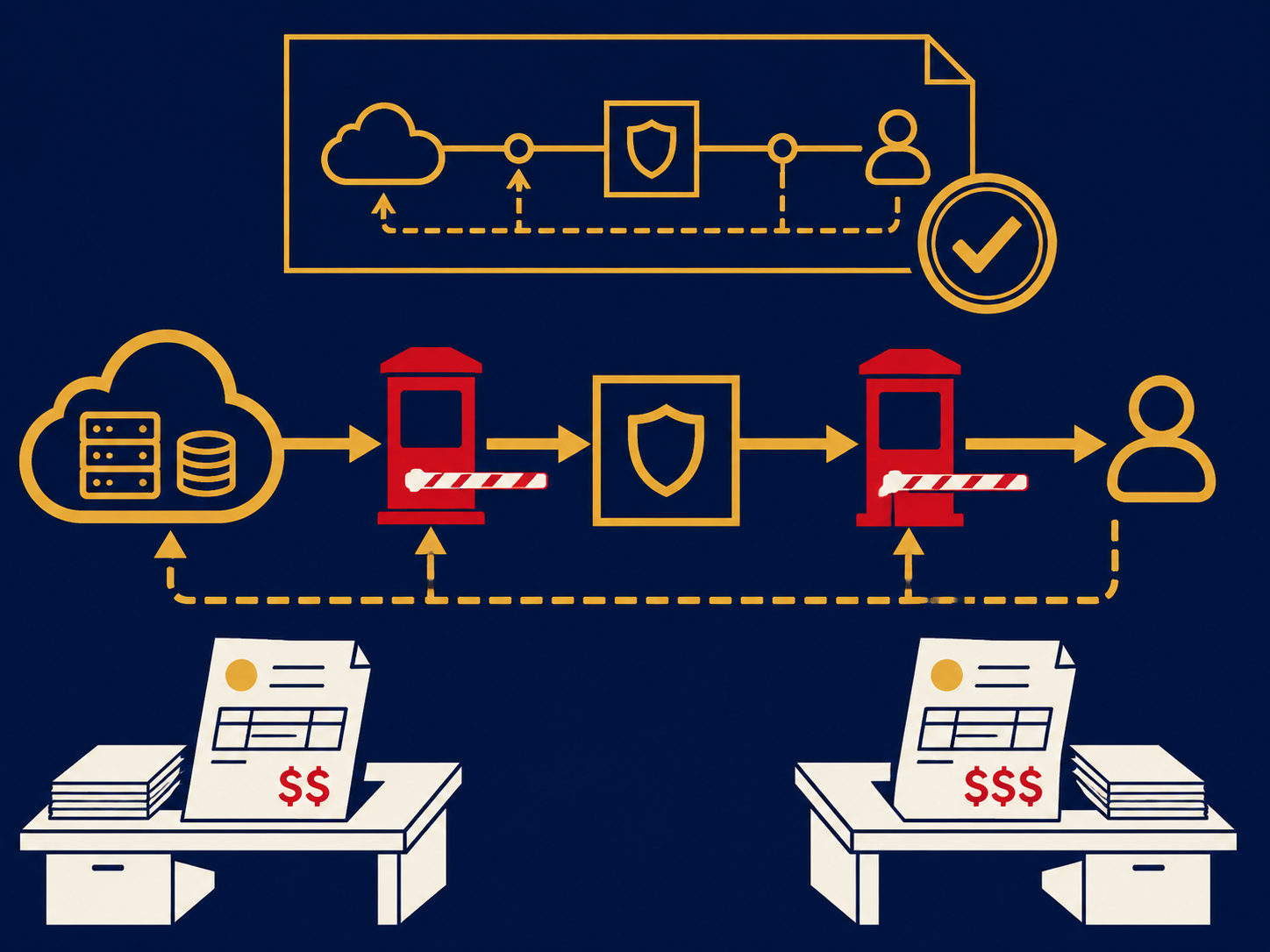
As organizations continue to embrace cloud-first strategies and remote work models, traditional perimeter-based security frameworks can no longer keep up. Applications, data, and users are no longer confined to a single office or network—they’re everywhere. This new reality demands a security approach designed to work in a borderless, cloud-driven world.
That’s where Security Service Edge (SSE) comes in. SSE represents the next step in cybersecurity, combining multiple advanced protections into a unified, cloud-native framework. It allows businesses to deliver secure, identity-based access to applications and data—no matter where employees are working.
At ITBroker.com, we work with organizations to implement SSE strategies that reduce risk, enhance productivity, and simplify complex security environments.
What Is Security Service Edge (SSE)?
Security Service Edge is a cloud-delivered security architecture that consolidates multiple security services into a single platform. Instead of piecing together separate tools, SSE integrates essential capabilities under one roof, ensuring both security and performance at scale.
Core Services in SSE
- Zero Trust Network Access (ZTNA)
Replace traditional VPNs with granular, identity-based access to applications.
- Secure Web Gateway (SWG)
Protect users from malware, phishing, and malicious websites while enforcing acceptable use policies.
- Cloud Access Security Broker (CASB)
Provide visibility and control over cloud applications to safeguard sensitive data.
- Data Loss Prevention (DLP)
Prevent unauthorized sharing or leakage of critical business information.
- Cloud-Native Infrastructure
Ensure global coverage and consistent performance with distributed security services.
Why Choose Security Service Edge?
Organizations that deploy SSE gain a number of strategic advantages:
- Unified Protection
Combine multiple security layers into one framework, reducing complexity.
- Enhanced User Experience
Deliver fast, secure access without the bottlenecks of legacy VPNs.
- Remote Workforce Security
Ensure employees working from home or on the road are protected as if they were on-site.
- Cost Efficiency
Simplify vendor management and cut costs by consolidating overlapping tools.
- Regulatory Compliance
Meet requirements such as GDPR, HIPAA, and PCI DSS with built-in reporting and enforcement.
Free whitepaper · PDF
9 Technologies Driving Cyber Security Tool Consolidation
Discover the nine cutting-edge technologies driving cybersecurity tool consolidation and bridging critical security gaps.
Get the Whitepaper→Security Service Edge vs Traditional Security Models
| Factor |
Security Service Edge |
Traditional Security |
| Deployment |
Cloud-native, globally distributed |
On-premises, perimeter-based |
| User Access |
Zero Trust, identity-based |
VPN tunnels, static trust models |
| Application Coverage |
Cloud, SaaS, and on-premises |
Mainly on-premises applications |
| Scalability |
Elastic, grows with demand |
Limited by hardware capacity |
| Management |
Unified, centralized console |
Multiple disconnected tools |
Security Service Edge vs SASE, SWG and CASB
SSE is the security half of secure access service edge (SASE): SASE adds networking, usually SD-WAN, under the same policies and often the same provider. Inside SSE, a secure web gateway (SWG) filters web and internet traffic, a cloud access security broker (CASB) controls data in cloud apps, and ZTNA replaces VPN access to private apps. Buy SSE when you want those controls from one service but are keeping your current network; consider full SASE if your WAN is also due for replacement. If you only need web filtering or SaaS control, a standalone SWG or CASB may be enough.
Common Misconceptions About SSE
Despite its benefits, some misconceptions about SSE persist:
- “It’s just a rebranded firewall.”
SSE is far more comprehensive, integrating multiple cloud-native protections beyond firewalls.
- “SSE is only for enterprises.”
Scalable solutions make SSE valuable for mid-sized businesses as well.
- “It slows down user access.”
Distributed cloud architectures ensure speed while maintaining security.
- “Migrating is disruptive.”
With the right plan, SSE deployment can be phased for minimal downtime.
Who Should Consider Security Service Edge?
In our experience, the businesses that gain the most from SSE share one or more of the following traits:
- Remote or Hybrid Workforces
Employees regularly access systems from home, client sites, or the road.
- Cloud-Heavy Operations
Reliance on SaaS, IaaS, or hybrid cloud environments to run mission-critical workloads.
- Compliance-Driven Industries
Healthcare, finance, government, and others needing airtight compliance frameworks.
- Multi-Site Organizations
Companies operating across multiple offices or global locations requiring consistent security.
- Businesses Seeking to Consolidate Security Tools
Organizations tired of managing separate VPNs, SWGs, and CASBs.
Implementation Insights
Deploying SSE is less about technology alone and more about aligning your security posture with your business objectives. At ITBroker.com, we help organizations take the following steps:
- Current State Assessment
Map out existing security infrastructure, risks, and compliance needs.
- Define Zero Trust Policies
Establish user identity and access rules for each application and dataset.
- Phased Migration Plan
Transition from legacy tools (VPNs, firewalls) to SSE without disrupting business continuity.
- Integration with Existing Systems
Connect SSE with identity and access management (IAM), SIEM, and endpoint protection.
- Continuous Monitoring and Optimization
Use real-time analytics to adjust policies, detect anomalies, and improve defenses.
SSE Pricing Models
While costs vary, most SSE solutions follow these common structures:
| Pricing Model |
Description |
| User-Based Subscription |
Charges per user per month, ideal for distributed teams. |
| Bandwidth-Based |
Costs scale with the volume of data transmitted securely. |
| Tiered Services |
Predefined packages with varying features and service levels. |
| Custom Enterprise Agreements |
Tailored contracts for large organizations with complex needs. |
FAQs About Security Service Edge
What does SSE stand for?
SSE stands for Security Service Edge, a cloud-native security architecture.
How is SSE different from SASE?
SSE focuses on the security services, while SASE (Secure Access Service Edge) combines SSE with network services like SD-WAN.
Can SSE replace VPNs?
Yes. SSE uses Zero Trust Network Access to provide more secure and scalable alternatives.
Is SSE only for cloud-based businesses?
No. SSE supports hybrid models, securing both cloud applications and on-premises systems.
How fast can we deploy SSE?
Deployment depends on scale, but many businesses see results within weeks using phased rollouts.
Facing this decision now? We’ll tell you where you stand.
No pitch. No prep. Just answers. We're paid the same whichever vendor you choose.