
Signed
The IT market is built for sellers. Signed is the podcast for the buyers.

You’re Paying for the Same Network Twice
Hidden network costs don’t come from traffic. They come from how your architecture is built. This episode breaks down how double egress and legacy design quietly drive up spend and complexity.
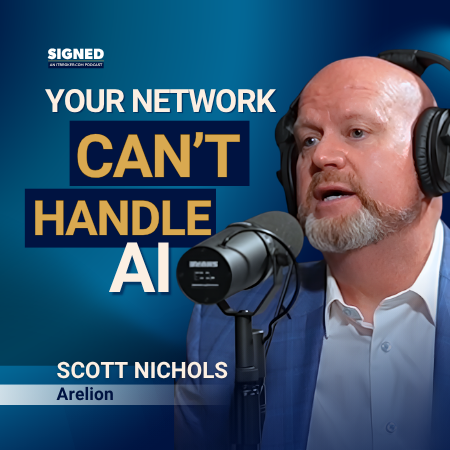
AI Is Exposing Bad Network Decisions
Most enterprise networks weren’t designed—they were inherited. In this episode, Max Clark and Scott Nichols break down how legacy decisions, cost tradeoffs, and vendor shortcuts create long-term performance and risk issues and why those problems only become visible after it’s too late to fix them easily.

The Market Is Built For Sellers
The IT market is built for sellers. This is where buyers learn what actually happens before and after the decision and what they need to get it right.

Why Companies Spend Millions on Data (And Still Get No Value)
Max Clark is joined by Ed Bailey, Field CISO at Cribl, to discuss why many companies invest heavily in collecting data but struggle to turn it into meaningful outcomes.

From 400 Calls in Queue to Zero Hold Time
What happens when your contact center hits peak demand… and the queue explodes?

Why Contact Center AI Projects Fail After the Demo
The demo was perfect. Then deployment happened. If your contact center AI “worked” in a pilot but fell apart in production—this episode explains why.

The Azure Bill That Ended Cloud
What if the real problem isn’t Azure… it’s putting the wrong workloads there?

DSPM vs DLP: The Data Blind Spots Killing Your Cloud Security
If you’re betting on “the cloud is secure” and a few DLP rules to save you, you’re exposed. Most breaches aren’t a tool failure, they’re a visibility failure. You can’t protect data you can’t see.

Inside the Network That Prevented Prison Riots
You know that moment when the alerts start flooding in, and your entire network goes dark? Systems down. Phones silent. Operations frozen. Now imagine that happening inside a prison. Six hundred of them. One outage away from chaos.

Why This School Ditched Cisco and Saved $250K
Ever feel trapped in the endless cycle of network refreshes, license renewals, and “surprise” upgrade costs?

How Do You Convince the Board to Fund Security?
You know the risks. The board knows the budget. So how do you bridge the gap? For most IT and security leaders, convincing executives to prioritize security is the toughest job they face.
Is Your IT System Killing Your Leads?
Every minute you wait to respond, another lead dies. Missed calls, ignored forms, slow follow-ups, your IT system might be the silent killer behind your pipeline collapse.

The IT Gap That Can Shut You Down
Imagine signing the lease, hiring the staff, setting the date and then realizing you can’t even open your doors. That’s exactly what happened to a fast-growing healthcare provider.

AI That Saves Agents: Not Replaces Them
Imagine your call volume doubles overnight, but your hiring budget is stuck at zero. Most contact centers would collapse. Heritage Federal Credit Union didn’t.

Backups Don’t Equal Recovery
They had backups. The storm didn’t care. When a major client demanded proof of uptime and recovery, a Florida-based marketing company realized their DR plan was just a plan, not a solution.

Your Fleet Is a Lawsuit Waiting to Happen
How many moving lawsuits are driving around with your logo on them right now? Fleet liability is no longer just a risk—it’s a ticking time bomb for your business. Accidents, claims, inflated insurance premiums, distracted drivers… the dangers are real, and they’re hiding in plain sight.

No Cyber Insurance. Still Got Paid.
What if you had no cyber insurance… and still walked away with the money?Most companies wouldn’t be so lucky. But one small manufacturer found themselves in the middle of a cybercrime event—and somehow, a loophole in the system worked in their favor.

A Child Died Dialing 911
It’s every parent’s worst nightmare—your child dials 911... and nothing happens. Most of us assume emergency services will be there when we need them. But what if your office phone, your cloud system, or your campus setup silently fails in a moment that counts?

Microsoft Wants You Off Calling Plans
Microsoft doesn’t just allow you to leave Calling Plans—they’ve built tools to help you do it. That’s not a glitch in the strategy. It is the strategy.

The Cyberattack That Killed a Patient
Could one missed alert put lives at risk? Hospitals were once worried about downtime. Now they're facing something far worse: real-world consequences when cybersecurity fails. One ransomware attack shut down a hospital—and a patient died. It was a moment that changed how healthcare leaders view risk forever.

They Got Breached Mid-Merger
What if the company you just bought came with a hidden cyber landmine? M&A is risky enough. But when cybersecurity gaps go unchecked during a merger, the consequences aren't just technical — they’re financial, operational, and reputational. And most leaders don’t see the breach coming until it’s too late.

Why Your IT Puts Your Patients at Risk
A 20-year-old server. A forgotten backup plan. A single system crash. In healthcare, these aren’t just IT oversights — they’re threats to patient lives. From delayed treatments to data breaches, outdated tech can trigger a cascade of consequences no provider can afford.

How a Forgotten Laptop Became a Security Time Bomb
What happens when a three-year-old laptop, long forgotten, quietly reconnects to your network? It sounds like a harmless scenario—until it isn't. In today’s digital landscape, what we forget can hurt us.
The Cyber Gap That Paralyzed a $2B Enterprise
3,000 apps. One entry point. Total compromise. In just hours, a $2B IT enterprise was paralyzed by ransomware, and what followed over the next 72 hours became a wake-up call for the entire industry.
You Don’t Need Another Sales Call. You Need an Answer.
30 minutes. No pitch. Just an honest conversation about where you are, what you need, and whether working together makes sense.
Thanks, . Pick a time.
Choose a 30-minute slot in the calendar. Your details are already filled in.
Calendar didn’t open? Pick a time on Cal.com.